

Published September 5, 2026
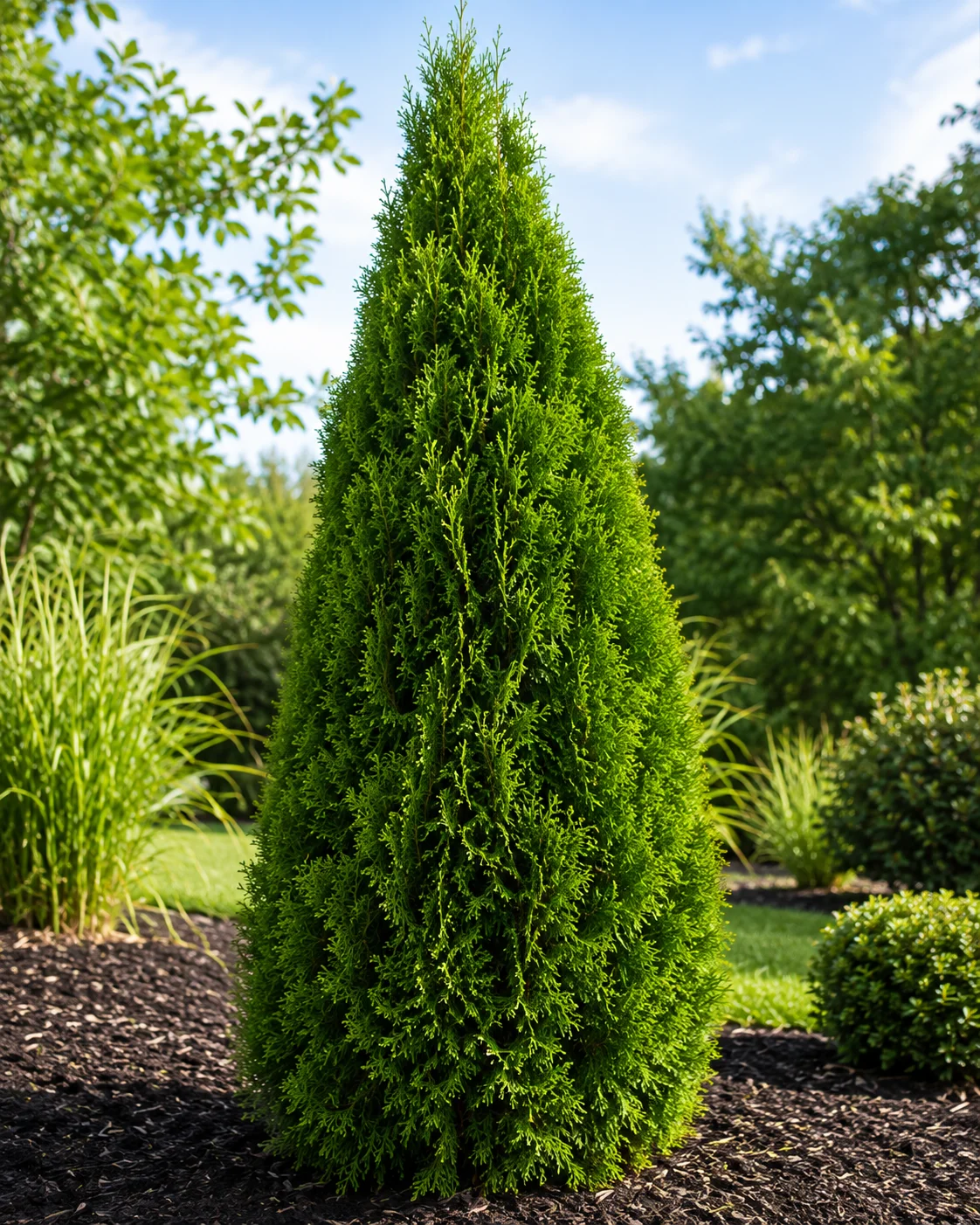
The Emerald Green Arborvitae, botanically known as Thuja occidentalis ‘Smaragd,‘ is one of the most planted privacy hedge shrubs in the country. This guide covers exact spacing numbers and realistic growth rates. It also covers two problems, bagworms and winter bronzing, that catch most first-time growers off guard.
What Is Emerald Green Arborvitae?
Emerald Green Arborvitae is a narrow, pyramidal evergreen. Nurseries developed it in Denmark in the 1950s. That’s why garden centers often sell it under its original name, ‘Smaragd,’ Danish for emerald. Unlike Green Giant arborvitae, which can shoot up to 40 feet, Emerald Green stays compact. That makes it a better fit for residential lots, foundation plantings, and tight side yards.
The foliage holds a rich green color through winter. Some other Thuja varieties turn yellow-brown in cold weather. This one doesn’t. That color retention, combined with its narrow footprint, makes it the default choice at most garden centers. Ask for “a privacy hedge that won’t take over the yard,” and this is usually what you’ll get.
Mature Size and Growth Rate
Here’s what to expect over the life of the plant:
- Mature height: 10–15 feet
- Mature spread: 3–4 feet
- Growth rate: 6–12 inches per year once established
- Time to reach mature height: 10–15 years
- USDA Hardiness Zones: 3–8
- Lifespan: Roughly 25 years with proper care
That growth rate matters for planning. Say you want an 8-foot privacy screen, starting with 3-foot nursery stock. Expect to wait 5 to 7 years to get there. Nurseries sometimes market these as “fast-growing.” Compared to Leyland Cypress or Green Giant, though, Emerald Green grows at a moderate pace, not a fast one. Set that expectation before planting, especially if privacy is the whole point.
How Far Apart to Plant Emerald Green Arborvitae
Spacing comes down to a trade-off. Do you want a fast, solid screen, or do you want to save money on plants?
For a fast, solid privacy hedge: Plant 2 to 3 feet apart, center to center. At this spacing, branches typically knit together within 3 to 5 years.
For a more budget-friendly hedge: Plant 4 to 5 feet apart. This cuts your plant count on a long property line. It just takes longer, sometimes 7 to 10 years, for gaps to close completely.
Distance from structures: Emerald Green spreads 3 to 4 feet wide at maturity. Plant it at least 3 to 4 feet from fences. Aim for 6 to 8 feet from your house foundation. This keeps roots away from the foundation and leaves room to walk between the hedge and any structure.
Here’s a quick planning example. For a 30-foot property line at 3-foot spacing, you’ll need about 9 to 10 plants. Start roughly 2 feet in from each end, since the mature spread extends outward from the center of each root ball.
Ideal Growing Conditions
Sunlight: Full sun to partial shade works best. Aim for at least 6 hours of direct sun for the best density and color. In deep shade, foliage thins out, and the plant leans toward the light source over time.
Soil: Well-drained soil is non-negotiable here. Emerald Green tolerates a range of soil types, from sandy to clay. It does not tolerate standing water, though. Root rot is one of the more common ways these plants fail, and it almost always traces back to poor drainage rather than the plant itself being fragile.
Watering: Water two to three times per week during the first growing season. This helps the root system establish. Once established, usually after year one or two, the plant becomes moderately drought-tolerant. It still benefits from deep watering during extended dry stretches in summer.
Planting season: Early fall and early spring both work well. Fall planting gives roots time to establish before summer heat arrives. That’s often the safer bet in warmer zones.
Common Problems and How to Handle Them
Winter Bronzing
It’s common for Emerald Green foliage to take on a bronze or brownish tint during winter. This happens especially after a hard freeze or in an exposed, windy spot. It usually isn’t a sign of disease. The green color typically returns with new spring growth. Does bronzing show up severely every single year? It may be worth checking whether the plant is getting hit by winter wind or road salt spray, both of which make bronzing worse.
Bagworms
Bagworms are the most common pest issue on arborvitae. They’re easy to miss until damage is already done. Look for small, cone-shaped bags hanging from branches. They’re usually most visible from late June through August. Left untreated, a heavy infestation can defoliate entire branches. Hand-picking bags in fall and winter often works for light infestations, and they’re easiest to spot then against bare branches. Heavier infestations may need a targeted insecticide, timed to when larvae are actively feeding in early summer.
Deer Browsing
Emerald Green is often marketed as “deer resistant.” That claim needs a caveat, though. In areas with high deer pressure, deer will absolutely browse on arborvitae. This happens especially during harsh winters when other food sources run scarce. It’s more accurate to call it “deer resistant under normal conditions” rather than deer-proof. Does your area see heavy deer pressure? Repellent sprays or physical barriers during the first two winters make a real difference while the plant is still establishing.
For detailed regional pest and disease guidance, university extension services are typically the most reliable source. Recommendations vary by climate and local pest pressure. The Missouri Botanical Garden Plant Finder offers detailed cultural information on Thuja occidentalis cultivars, including Emerald Green.
Pruning and Maintenance
This variety needs very little pruning, which is one of its real advantages. Left alone, it naturally holds a tidy, pyramidal shape. Want to shape it anyway? Do it in early spring before new growth emerges. Avoid cutting back into old, bare wood. Arborvitae generally won’t regenerate new growth from wood that’s already lost its needles. Light shearing works best done once a year, rather than repeatedly through the growing season, if you want a crisp hedge line.
Apply a slow-release, balanced fertilizer once in early spring if growth seems slow or foliage looks pale. In most reasonably fertile soil, though, established plants don’t need annual feeding to stay healthy.
What Does Emerald Green Arborvitae Cost in 2026?
Pricing varies significantly by size and region. As of September 2026, a small 3-gallon container typically runs $25 to $45 at big-box retailers and local nurseries. Larger specimens, in the 5 to 6-foot range, cost considerably more. Expect $60 to $150 per plant, depending on the nursery and your region. Buying smaller starter plants is the more budget-friendly route for a long hedge line. It just means waiting longer for full privacy.
Comparing this variety against other privacy hedge options for your climate? Our Best Privacy Hedge Plants by Region guide breaks down alternatives like Green Giant, Leyland Cypress, and Skip Laurel side by side.
Frequently Asked Questions
How fast does Emerald Green Arborvitae grow? It grows at a moderate rate, typically 6 to 12 inches per year once established. Marketing often calls it fast-growing. Compared to varieties like Green Giant, though, it’s considerably slower, and reaching full mature height takes 10 to 15 years.
How far apart should you plant Emerald Green Arborvitae for privacy? Plant 2 to 3 feet apart, center to center, for the fastest solid privacy screen. Wider spacing of 4 to 5 feet saves money on plants. It just takes several more years for branches to fill in completely.
Is Emerald Green Arborvitae deer resistant? It’s moderately deer resistant under normal conditions, but not deer-proof. Deer will browse on it in areas with heavy deer pressure, especially during harsh winters. Repellent sprays are worth using during the establishment period in high-pressure areas.
Why is my Emerald Green Arborvitae turning brown or bronze in winter? Winter bronzing is common and usually not a sign of disease. Cold temperatures and winter wind exposure cause the foliage to shift color temporarily. It typically greens back up with new spring growth.
How close to my house can I plant Emerald Green Arborvitae? Plant it at least 6 to 8 feet from your foundation. It spreads 3 to 4 feet wide at maturity and needs room for air circulation and maintenance access. Planting too close can also cause moisture issues against the foundation.
Does Emerald Green Arborvitae need full sun? It performs best with at least 6 hours of direct sunlight per day, though it tolerates partial shade. In deep shade, foliage thins out. Growth also becomes uneven as the plant leans toward available light.
What’s the difference between Emerald Green and Green Giant arborvitae? Emerald Green stays narrow and compact, reaching 10 to 15 feet tall and only 3 to 4 feet wide. That makes it ideal for tight spaces. Green Giant grows much larger, up to 40 feet tall and 12 to 20 feet wide, and suits properties with more room to spare.