

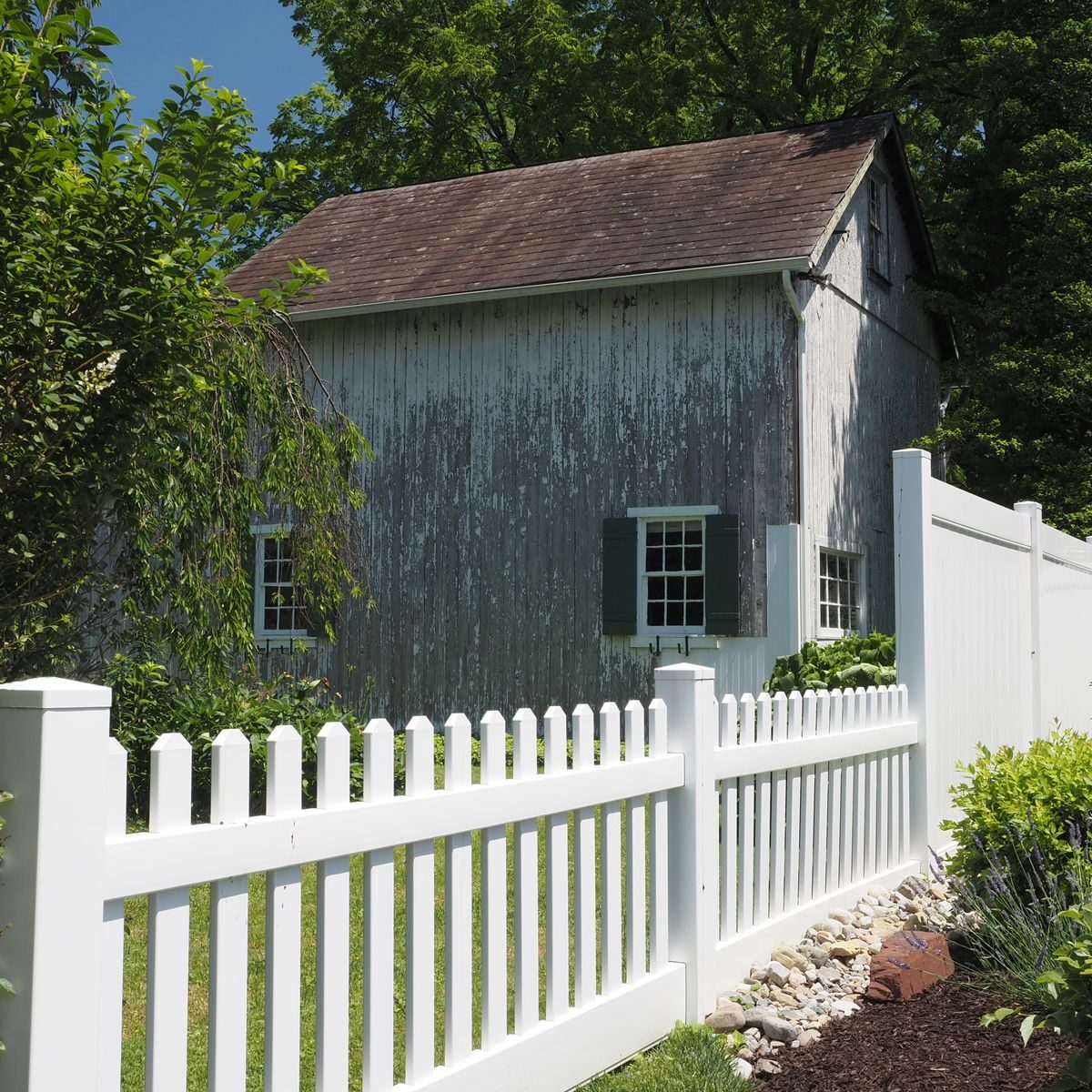
If your backyard feels a little too exposed — whether it’s a neighbor’s second-story deck, a busy sidewalk, or just the general lack of a defined outdoor space — a 6-foot vinyl privacy fence is one of the most effective solutions available to U.S. homeowners in 2026. It’s not just about blocking sightlines. A well-chosen fence raises your property value, reduces noise, adds a clear boundary, and gives you a genuinely private outdoor living space that you’ll use more often.
Vinyl has become the dominant choice for residential privacy fencing, and for good reason. Modern vinyl fences offer improved strength and cleaner lines than earlier generations, require virtually no maintenance, and outlast wood in most climates. However, with dozens of panel styles, post grades, and price tiers on the market, knowing what to look for before you spend a dollar is essential. This guide walks you through everything — styles, costs, installation requirements, regional considerations, and the smartest ways to buy in 2026.
Why Vinyl Is the Top Choice for Privacy Fencing in 2026
Not long ago, wood was the default for backyard privacy. That’s shifted significantly. A solid vinyl privacy fence is now the top choice for homeowners who want privacy without ongoing upkeep. Vinyl panels have no gaps between boards, won’t shrink or warp over time (which would create unwanted sightlines), and never need staining, painting, or sealing.
The lifespan comparison is stark. Pressure-treated pine typically lasts 15 to 20 years. Cedar and redwood extend that to around 20 to 30 years with proper maintenance. Vinyl, by contrast, delivers 30-plus years with nothing more than an occasional rinse. Over the full lifetime of the fence, vinyl consistently wins on total cost when you factor in the labor and materials required to maintain wood.
Furthermore, vinyl has improved dramatically in quality. The hollow, brittle panels that earned early PVC fencing a poor reputation have been replaced with thicker-walled, UV-stabilized products reinforced with internal steel or aluminum inserts. Today’s premium vinyl fencing is engineered to handle the wind loads and temperature swings of virtually every U.S. climate zone — from humid Florida summers to harsh Minnesota winters.
That said, vinyl does have limitations worth knowing. Solid privacy panels catch wind like a sail, so in high-wind regions like Oklahoma, Texas, or Florida’s Gulf Coast, reinforced posts and additional rail supports are not optional — they’re necessary. Additionally, vinyl is combustible, which matters in fire-prone regions. As of January 2026, California’s updated Fire Hazard Severity Zone map added 2.3 million acres to high-risk designations, and Zone 0 regulations now require non-combustible fencing within five feet of any structure. If you’re in a fire-risk zone, verify local compliance requirements before choosing vinyl.
Types of 6-Foot Vinyl Privacy Fence Panels
Understanding the available panel styles helps you match the right product to your needs, your neighborhood, and your local zoning code.
Solid or Full Privacy (Tongue-and-Groove) is by far the most popular style. Interlocking panels create a seamless wall with no gaps — maximum visual screening from all angles. This is the style most U.S. homeowners install for backyard enclosures, pool barriers, and property-line fencing. It’s the benchmark that most pricing guides use.
Shadowbox panels alternate boards on opposite sides of the rails, creating a “board-on-board” appearance that blocks most sightlines while allowing some airflow and light through. This style is popular in neighborhoods with HOA guidelines that restrict fully solid fencing on certain sides of the property. It also looks identical from both sides — an important consideration for maintaining good neighbor relations.
Semi-Privacy with Lattice Top combines a solid lower section with a decorative lattice panel across the top 12 to 18 inches. The result is a fence that feels slightly more open and ornamental while still providing strong privacy in the main panel area. This style pairs well with climbing plants and is a popular upgrade in cottage-style and traditional suburban landscapes across the Southeast and Mid-Atlantic.
Spaced Picket style uses individual pickets with consistent gaps between them. It’s generally used for front yards and decorative borders rather than true privacy applications, so it’s not the focus here — but it’s worth knowing the terminology when comparing product lines.
6-Foot Vinyl Privacy Fence: What to Look For When Buying
Not all vinyl fence products are created equal. These are the specifications that actually determine whether a fence holds up for 20 years or starts showing problems after five.
Wall thickness matters most. Look for posts with at least 0.150-inch wall thickness for residential privacy applications. Thinner-walled products flex under wind load and are prone to cracking in cold-climate freeze-thaw cycles. Premium products typically use “standard wall” or “heavy wall” construction — the product listing should specify this clearly.
Internal reinforcement is essential for posts. Vinyl fence posts are hollow and rely on steel or aluminum inserts for structural strength. The reinforcement insert must extend from about six inches above grade down to the bottom of the concrete footing. Any post sold without internal reinforcement options should be avoided for 6-foot applications.
Rail system quality determines long-term rigidity. Look for galvanized steel-reinforced bottom rails, which prevent sagging over time. Some manufacturers include steel inserts only in the bottom rail; others reinforce all three rails. More reinforcement means more rigidity, especially in wider panel runs.
UV stabilization protects against color fading and surface brittleness. White vinyl without UV stabilizers will yellow noticeably within 5 to 10 years in sun-intensive states like Arizona, California, or Florida. Look for products that specifically mention UV-resistant or UV-stabilized compounds in their specifications.
Color and finish options have expanded in 2026. While white remains the dominant choice, tan, beige, gray, and woodgrain laminate finishes are increasingly available from major manufacturers. Woodgrain finishes in particular have improved considerably — they replicate the visual warmth of cedar or redwood without any of the upkeep. Expect to pay a modest premium, typically 10 to 20% above standard white pricing.
2026 Cost Guide: What to Budget for a 6-Foot Vinyl Privacy Fence
Budgeting accurately requires separating material costs from installed costs — two numbers that look very different on a project invoice.
Installed cost (professional labor + materials): For 2026, use $47 to $82 per linear foot installed as your baseline planning range for most residential vinyl privacy fence projects. The national midpoint for a standard 6-foot solid-privacy vinyl fence runs around $55 per linear foot installed. A 150-foot backyard enclosure — typical for a suburban lot — therefore runs approximately $7,500 to $12,000 fully installed. Projects with multiple gates, steep slopes, tree roots to work around, or demolition of an existing fence push toward or above $90 per linear foot.
DIY material-only cost: If you’re installing yourself, vinyl fence panels and components typically run $15 to $40 per linear foot in materials. However, factor in concrete, post-hole digger rental (or purchase), caps, gate hardware, and waste material. DIY installations generally take 4 to 8 days and can save 30 to 50% on labor costs. For privacy fences and sloped properties, though, professional installation protects both your warranty and your investment. Most vinyl manufacturers void their warranty on fences not professionally installed.
Additional cost factors to budget for:
- Permit fees: $50 to $500 depending on municipality
- Property survey (if boundary lines are unclear): $400 to $800
- Existing fence removal: $3 to $5 per linear foot
- Gate installation: $150 to $500 per gate
- Site grading or leveling: $500 to $2,000
Coastal and urban markets typically run 15 to 25% higher than national averages. High-wind zones require reinforced installation, which adds 10 to 15% to typical costs. Spring and summer installations also cost more due to seasonal contractor demand — if your timeline is flexible, scheduling in fall or winter often yields better pricing.
Installation Tips: How to Get It Right the First Time
Whether you’re hiring a contractor or taking the DIY route, understanding the installation fundamentals helps you avoid the most expensive mistakes.
Call 811 before you dig — every time. This is mandatory and free. Call at least 48 hours before any digging to have underground utilities marked. Hitting a gas line or electrical cable is dangerous and creates significant liability. This step is non-negotiable regardless of how well you think you know your yard.
Post depth determines everything. A 6-foot fence with shallow posts will lean within the first year — guaranteed. For a 6-foot privacy fence, posts should be buried approximately 3 feet deep in concrete. More precisely, dig holes 30 inches deep with an additional 6-inch gravel base at the bottom for drainage. The reinforcement insert inside the vinyl post must run continuously from above grade to the bottom of the footing. In cold-climate states — particularly the upper Midwest and New England — posts must extend below the local frost line to prevent frost heaving. In Minnesota, Wisconsin, and Maine, that means digging 42 to 48 inches deep.
Post spacing matters for wind resistance. Standard post spacing is 8 feet on center for most residential vinyl panel systems. In high-wind regions, reduce that to 6 feet. A standard 6-foot solid privacy fence panel catches approximately 20 pounds of force per square foot in a 60-mph wind — that’s 720 pounds of lateral force on a single 8-foot-wide panel. Correct post spacing is what distributes that load safely.
Gate posts need special attention. A 6-foot gate opening and closing multiple times daily exerts repeated lateral stress on the hinge-side post. Gate posts should be set 4 to 6 inches deeper than standard line posts at minimum. Many professional contractors go 8 inches deeper as standard practice. Additionally, gate posts often benefit from a larger concrete footing diameter — 12 inches instead of the standard 8 to 10 inches.
Handle slopes correctly. On slopes steeper than 10%, use the stepping method — panels step down the slope in level sections that follow the grade. On gentle slopes under 10%, the racking method allows panels to follow the slope angle, with rails remaining parallel to the ground. Note that not all vinyl panel systems support racking, so verify this with your manufacturer before purchasing.
Permits, Zoning, and HOA Rules: What U.S. Homeowners Need to Know
Skipping the permit and zoning research is one of the most common — and costly — mistakes homeowners make. Violations are expensive, and required modifications after installation are worse.
Height limits vary by location and yard placement. In most U.S. municipalities, front yard fences are limited to 3.5 to 4 feet, while side and rear yard fences can typically reach 6 feet without a full building permit. Most residential vinyl fence installations at 6 feet don’t require permits — but pool enclosures almost always do. Pool fences must meet specific child-safety requirements: minimum 4-foot height (many jurisdictions require 5 feet), maximum 4-inch spacing between pickets, and self-closing, self-latching gates. Always verify locally, since these rules differ significantly between cities and counties.
Setback requirements apply everywhere. Most jurisdictions require a setback of 2 to 6 inches from the property line. In some states, particularly Texas and California, neighbor consent or notification may be required before installing a shared boundary fence. Verify your exact property line with a survey before marking post locations — even small miscalculations create encroachment disputes that are far more expensive than a survey.
HOA rules can be more restrictive than municipal codes. If your property is governed by a homeowners association, submit your fence plans for approval before purchasing materials. HOAs commonly restrict fence styles (shadowbox or semi-privacy rather than full solid), colors (beige or tan rather than white in some communities), and post cap styles. Getting HOA approval in writing before construction protects you from mandatory removal after the fact.
For authoritative guidance on local fence permitting and building codes in your area, the American Fence Association (AFA) provides resources and a contractor directory to help U.S. homeowners navigate their specific requirements.
You might also want to read our guide to how to choose the right fence contractor for your project before getting quotes.
Vinyl vs. Wood vs. Composite: Quick Comparison for 2026
If you’re still deciding between materials, here’s a concise breakdown based on current 2026 market data.
Vinyl delivers the best long-term value for low-maintenance households. Installed cost runs $47 to $82 per linear foot, lifespan exceeds 30 years, and ongoing maintenance is essentially zero. The trade-off is that damaged sections must be replaced rather than repaired, and vinyl performs poorly in fire-prone zones.
Wood (cedar or pressure-treated pine) offers the most natural aesthetic and the greatest design flexibility. Installed costs run $15 to $30 per linear foot, but factor in staining or sealing every 2 to 3 years at $3 to $5 per linear foot, and the long-term cost approaches vinyl. Cedar lasts 20 to 30 years with proper maintenance; pine lasts 15 to 20 years.
Composite provides the look of wood with the low maintenance of vinyl — at a premium. Installed costs run $30 to $65 per linear foot, with a lifespan of 25 to 30-plus years. It’s resistant to rot, insects, and UV fading, making it a strong choice for humid climates like the Gulf Coast, Pacific Northwest, and Florida.
In most U.S. regions and for most homeowners, vinyl wins on the total cost of ownership when maintenance is factored in. Composite is the better call for homeowners who want a wood aesthetic without the upkeep and are willing to pay the premium upfront.
Frequently Asked Questions
Q: How long does a 6-foot vinyl privacy fence last? With proper installation and minimal maintenance, a quality vinyl privacy fence lasts 20 to 30 years or more. Premium products with thicker wall construction and UV stabilization consistently reach the upper end of that range. The single biggest factor in longevity, however, is installation quality — particularly post depth and concrete footings. A fence installed correctly on Day 1 will outlast one installed poorly by a decade or more.
Q: Do I need a permit to install a 6-foot vinyl fence in the USA? In most U.S. municipalities, a standard 6-foot backyard vinyl fence does not require a full building permit. However, pool enclosures almost always require permits and must meet child-safety codes regardless of state. Additionally, some cities — particularly in California — have specific material restrictions in high fire-risk zones. Always check with your local building department before starting, since rules vary significantly between cities and counties.
Q: How much does a 6-foot vinyl privacy fence cost to install in 2026? Professional installation for a standard 6-foot solid vinyl privacy fence runs approximately $47 to $82 per linear foot in 2026. A typical 150-foot backyard project therefore costs between $7,500 and $12,000 fully installed, including posts, panels, rails, concrete, and gate hardware. Premium colors, slope work, and multiple gates push costs higher. DIY material-only costs run $15 to $40 per linear foot, with additional expenses for tools, concrete, and hardware.
Q: What is the best vinyl fence brand for privacy in 2026? Several manufacturers consistently rank well for quality in the U.S. market. Bufftech (CertainTeed), Westech, and Vinyl Fence Wholesaler all produce heavy-wall, UV-stabilized products with internal steel reinforcement options. At the retail level, brands available through Home Depot and Lowe’s vary in quality — always check wall thickness specifications rather than relying on brand name alone. Products sold by the panel without posts and hardware included tend to hide true costs, so compare full system pricing for an accurate comparison.
Q: Can vinyl privacy fence panels be installed on a slope? Yes, vinyl fencing handles slopes using two methods. For slopes under 10%, the racking method allows panels to follow the slope angle with rails parallel to the ground. For steeper slopes above 10%, the stepping method creates level panel sections that step down the slope at intervals. Not all vinyl panel systems support the racking method, however, so verify compatibility with your specific product before purchasing.
Q: How do I clean and maintain a vinyl privacy fence? Vinyl fencing requires very little upkeep — that’s one of its primary advantages. An annual rinse with a garden hose removes most surface dirt and pollen. For stubborn stains or mildew (more common in humid climates like the Southeast), a solution of warm water and white vinegar or a commercial vinyl fence cleaner works effectively. Avoid abrasive scrubbers that can scratch the surface finish. Never use bleach on colored or woodgrain vinyl finishes, as it can affect the surface coating over time.
Q: How far apart should vinyl fence posts be spaced? Standard post spacing for most residential vinyl panel systems is 8 feet on center. In high-wind regions — including the Gulf Coast, Great Plains, and parts of the Southwest — reduce spacing to 6 feet. Gate posts should always be set closer together and deeper than standard line posts, since the mechanical stress of a gate opening and closing daily is substantially greater than the static load on a standard fence panel.
Q: Will a vinyl privacy fence increase my home’s value? Yes. Quality fencing increases property value by an estimated 5 to 10% depending on location, neighborhood, and installation quality. Buyers consistently rank outdoor privacy as a high-value feature, particularly in suburban markets across the South, Southeast, and Midwest. A 6-foot vinyl privacy fence with a clean finish and proper installation reads as a premium improvement — not a budget fix — and tends to photograph well in listings, which helps attract buyers faster.