

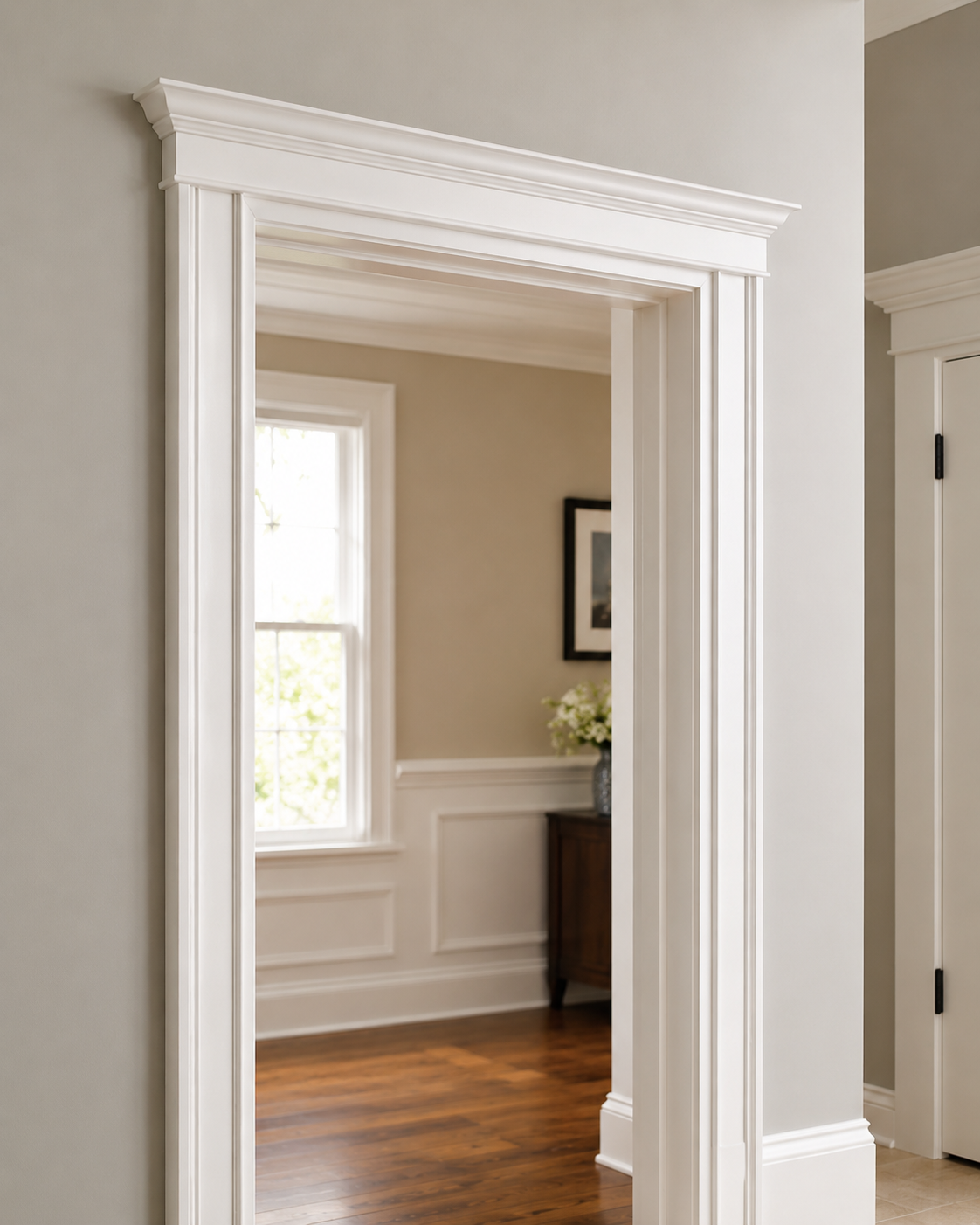
Walk into any well-designed home, and you’ll notice something even if you can’t quite name it. The doorways feel finished. They feel intentional. Often, that polish comes down to one small detail: the door casing. It’s easy to overlook, yet it quietly shapes how a room reads.
I’ve worked through several remodels over the years, including one older bungalow where swapping flat, builder-grade casing for a simple colonial profile changed the entire feel of the hallway. Nothing else moved. Not the paint, not the flooring, not the furniture. Just the trim. That’s the kind of impact door casing can have, and most homeowners underestimate it.
This guide breaks down what door casing actually is, the most common styles available in 2026, and how to choose one that fits your home’s architecture and your budget.
What Is Door Casing, Exactly?
Door casing is the decorative trim that frames a doorway. It covers the gap between the drywall and the door jamb. Typically, it consists of three pieces: two vertical side casings and one horizontal head casing across the top.
Beyond looks, casing serves a practical purpose too. It hides rough construction edges. It also protects the wall corners from everyday wear and tear. Without it, doorways look unfinished, almost like the project stopped halfway through.
Standard casing widths generally run between 2¼ and 3½ inches. However, wider or more ornate profiles are common in older or higher-end homes. According to This Old House, door trim boards can be flat or shaped, and they’re often milled slightly thinner along the inside edge for a cleaner fit against the frame.
Common Door Casing Materials
Material choice affects both cost and long-term durability, so it’s worth understanding your options before committing.
Pine remains the most budget-friendly choice for most U.S. homeowners. It’s easy to work with and takes paint well. However, it can dent more easily than hardwood.
MDF (medium-density fiberboard) offers a smooth, consistent surface at a moderate price point. It’s a popular pick for painted trim, since it resists warping better than solid wood in most climates.
Hardwoods, such as oak or poplar, cost more upfront. Still, they hold up better over time and often suit homes with a more traditional or high-end aesthetic.
PVC and composite materials work well in humid climates or areas prone to moisture, like bathrooms or entryways in coastal states. They resist swelling and rot far better than wood-based options.
Popular Door Casing Styles in 2026
Casing styles range from clean and minimal to highly decorative. Your home’s architecture should guide the decision more than personal preference alone.
Butted (Plinth Block) Casing
This is one of the simplest styles. Vertical and horizontal pieces meet at a flat, squared joint, often with a small block at the base. It suits craftsman-style and modern farmhouse homes especially well. Many homeowners like it because it’s beginner-friendly for DIY installation.
Mitered Casing
Mitered casing is the classic choice found in most American homes. The corners are cut at 45-degree angles, creating a clean, seamless frame. It works in nearly any design style, from traditional to transitional.
Colonial Casing
This profile features a rounded, layered edge and a slightly formal look. It pairs naturally with Colonial, Cape Cod, and traditional-style homes across the Northeast and Midwest.
Craftsman/Mission Casing
Flat, wide boards with clean lines define this style. It’s a favorite in bungalow and craftsman-style homes throughout California and the Pacific Northwest, where that architectural style remains especially popular.
Pilaster Casing
Pilaster casing includes vertical columns or fluted detailing, sometimes topped with a decorative capital. It adds architectural weight and works best in larger, more formal spaces.
Dentil and Lamb’s Tongue Casing
These are ornate, detail-heavy styles often seen in Victorian and historic homes. They require more skill to install correctly, and they typically cost more due to the added material and labor involved.
| Style | Look | Best For |
|---|---|---|
| Colonial | Rounded, layered edge, slightly formal | Colonial, Cape Cod, traditional homes |
| Craftsman/Mission | Flat, wide boards, clean lines | Bungalow and craftsman-style homes |
| Pilaster | Vertical columns or fluted detailing | Larger, formal spaces |
| Dentil / Lamb’s Tongue | Ornate, detail-heavy | Victorian and historic homes |
How Much Does Door Casing Cost in 2026?
Pricing varies quite a bit depending on material, profile complexity, and your region. As a general guide, materials typically run from under a dollar to a few dollars per linear foot for standard pine or MDF options. More detailed or hardwood profiles cost significantly more.
For a full single-door installation, including labor, many homeowners in 2026 report total costs somewhere between $150 and $500 for standard casing. Ornate profiles, exterior doors, or custom millwork can push that number well past $800 per door.
Regional labor rates matter too. Coastal metro areas and high-cost cities generally see higher installation costs than rural or inland regions. If you’re budgeting for a whole-home trim update, it’s worth getting a few local quotes before starting, since prices can shift based on your specific zip code and local material availability.
Door Casing Trends for 2026
Home design trends shift a bit each year, and trim is no exception. Right now, a few patterns stand out across the country.
Wider, flatter casing continues to grow in popularity. It pairs well with the minimalist, modern-farmhouse look that’s still dominant in new construction and renovations alike. Many builders now default to a simple, wide craftsman-style profile instead of the narrower colonial trim that was standard a decade ago.
At the same time, there’s a renewed interest in historic detailing. Homeowners restoring older properties, especially in cities with strong architectural heritage like Boston, Charleston, and San Francisco, are leaning back into period-appropriate styles. That includes dentil and pilaster casing in formal rooms.
Color is shifting too. While white and off-white trim remain the default, more homeowners are experimenting with painting casing to match or contrast with wall color. This creates a more monochromatic, cohesive look throughout a room. It’s a low-cost way to update a space without a full renovation.
Sustainability is also playing a bigger role in material choices. Engineered wood and FSC-certified lumber options have become easier to find at major retailers, giving eco-conscious homeowners more choices without sacrificing style or durability.
How to Measure for Door Casing
Getting accurate measurements before you buy materials will save you time, money, and frustration. Start by measuring the height of each side of the door jamb, from the floor to the top corner. Then measure the width across the top of the frame.
Add a small amount of extra length to each piece, generally around two to three inches per cut, to account for angled miter joints and any minor adjustments during installation. It’s always better to have a little extra material than to come up short mid-project.
If your walls or floors aren’t perfectly level, which is common in older homes, take measurements at a few different points along each side. Small variations are normal, but knowing about them ahead of time helps you plan for adjustments rather than being caught off guard.
How to Choose the Right Door Casing for Your Home
Choosing casing isn’t just about personal taste. A few practical factors should guide your decision.
1. Match Your Home’s Architectural Style
Start by looking at your home’s overall character. A sleek, modern home generally looks best with simple, flat casing. Meanwhile, a Victorian or colonial-style home often calls for more ornate detailing to feel cohesive.
2. Keep Consistency Throughout the Home
Designers consistently recommend using the same casing style throughout connected spaces. Mixing styles from room to room can make a home feel disjointed rather than intentional. If you’re updating one area first, choose a style you’re willing to replicate elsewhere later.
3. Consider Maintenance and Climate
If you live in a humid region, such as the Gulf Coast or parts of the Southeast, moisture-resistant materials like PVC or composite trim may outperform solid wood over time. In drier climates, wood options tend to hold up just fine. Our batt insulation guide covers similar moisture considerations for the walls around these openings.
4. Factor In Your Budget
Wider, more detailed casing costs more, both in materials and installation labor. If budget is tight, consider using a simpler profile throughout the home and saving more decorative casing for a single focal point, like a front entryway.
5. Think About Resale Value
Real estate agents often note that updated trim can improve a home’s perceived value without a major renovation budget. It’s a relatively low-cost upgrade that buyers tend to notice, even if they can’t always explain why a room feels more polished.
DIY vs. Hiring a Professional
Simple mitered or butted casing is a manageable weekend project for a confident DIYer. You’ll need a miter saw, a nail gun or finish nails, wood filler, and basic measuring tools.
That said, more complex profiles, like pilaster or dentil casing, often benefit from professional installation. Precise cuts matter a lot with these styles, and a small misalignment becomes very noticeable. If your walls aren’t perfectly square, which is common in older homes, a professional can also make the small adjustments needed for a tight, clean fit.
If you’re planning a broader interior refresh, our door threshold guide covers another trim detail worth coordinating with your casing at each doorway.
Final Thoughts
Door casing might be one of the smallest details in your home, but it carries real visual weight. Choosing a style that matches your architecture, staying consistent from room to room, and picking a material suited to your climate will help you avoid costly do-overs down the line.
Whether you’re renovating an entire home or simply refreshing one entryway, take your time with this decision. Small trim details add up, and a thoughtful choice here often makes a bigger difference than homeowners expect.
Before you buy materials, it helps to walk through your home room by room. Note which doorways feel outdated or mismatched. Photograph a few casing styles you like, and compare them against your home’s existing trim, flooring, and door hardware. This simple planning step can prevent costly mistakes and help you commit to a look you’ll still love years from now.
Frequently Asked Questions
What is the standard width for door casing?
Most standard door casing ranges from 2¼ to 3½ inches wide. Wider profiles are common in older or more formal homes, while narrower casing tends to suit modern, minimalist spaces.
What’s the difference between door casing and door trim?
These terms are often used interchangeably. Technically, “casing” refers specifically to the trim framing a door or window opening, while “trim” is a broader term that can include baseboards and crown molding as well.
Is MDF or wood better for door casing?
It depends on your priorities. MDF is smooth, budget-friendly, and paints well, making it a strong choice for most interior doors. Solid wood costs more but holds up better against dents and offers a more premium feel, especially when stained rather than painted.
Can I install door casing myself?
Yes, simpler styles like mitered or butted casing are manageable DIY projects with basic tools. More ornate profiles, however, often benefit from professional installation due to the precision required.
How much does it cost to replace door casing on one door?
Total costs, including materials and labor, typically range from around $150 to $500 for standard casing. Costs can rise significantly for ornate profiles, hardwood materials, or exterior doors.
Should all doors in my house have the same casing style?
Generally, yes. Keeping casing consistent throughout connected living spaces creates a cohesive, intentional look. It’s fine to use a slightly more decorative style in a formal entryway, as long as the overall home still feels unified.
What door casing style works best for a modern home?
Flat, simple profiles like butted or craftsman-style casing tend to suit modern and contemporary homes best. These clean lines complement minimalist design without competing with other architectural details.
Does door casing affect home resale value?
While it’s a small detail, updated and well-chosen trim can make a home feel more polished and cared for. Many real estate professionals note that thoughtful finishing touches, including casing, can positively influence a buyer’s first impression.