

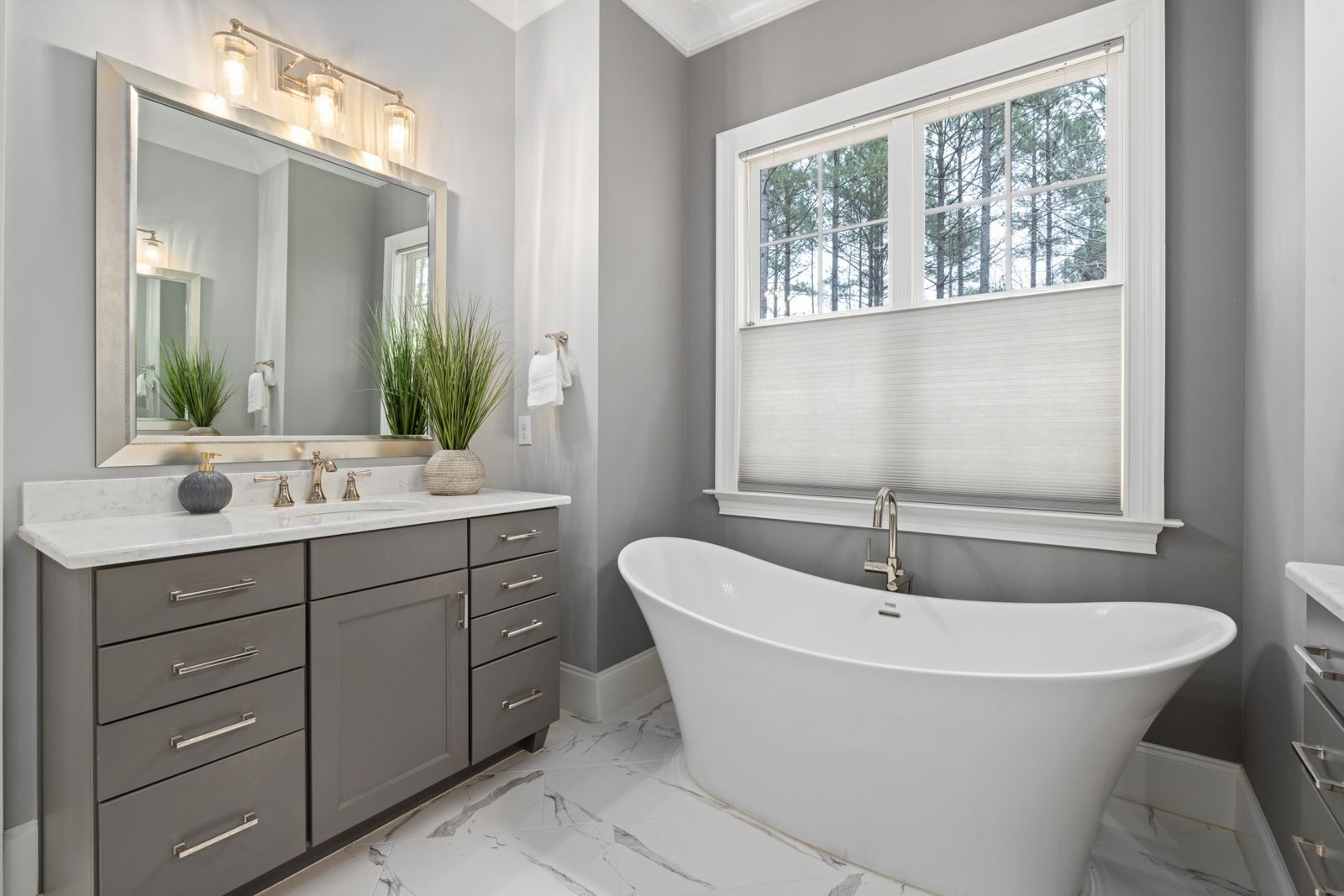
There’s a reason the 36 inch bathroom vanity is the single most searched vanity size in the United States right now. It hits a sweet spot that designers have known about for years. Large enough to feel luxurious, compact enough to fit in most standard American bathrooms, and available in more styles, finishes, and price points than any other size on the market.
In fact, the difference between one that looks great on day one and one that’s still going strong a decade later comes down to cabinet construction, countertop material, and the specific dimensions of your bathroom — all things the big-box product pages tend to gloss over.
I’ve spent years helping homeowners navigate bathroom remodels and furniture decisions. As a result, in this guide I’m going to walk you through everything you actually need to know. The best styles available in 2026, top picks at every price point, and the questions to ask before you buy so you don’t end up with a vanity that doesn’t fit — literally or figuratively.
Why 36 Inches? Understanding the Most Popular Vanity Size
Before we get into specific recommendations, it’s worth understanding why 36 inches has become the default choice for millions of American bathrooms.
Standard bathroom vanities come in widths from 24 inches (narrow powder rooms) all the way up to 72 inches and beyond (double-sink master bath configurations). At 36 inches, however, you get a single-sink vanity with enough counter space on either side of the basin to actually use. Somewhere to set a glass, lay out your skincare routine, or rest a hair dryer without it dangling off the edge.
It also fits comfortably in a bathroom that’s 5 feet wide or larger, which describes the majority of full bathrooms in US homes built after 1950. Specifically, you need a minimum of 21 inches of clearance in front of the vanity (per International Residential Code). And ideally 15 inches from the center of the sink to any adjacent wall. As a result, a 36 inch vanity in a 60-inch-wide bathroom checks both boxes easily.
Furthermore, for master bathrooms, a 36 inch vanity works especially well as one of two separate vanity units — each person gets their own sink and storage without the compromise of a shared double vanity.
Quick Comparison: Top 36 Inch Bathroom Vanities of 2026
| Vanity | Style | Material | Sink Type | Best For | Price Range |
|---|---|---|---|---|---|
| KOHLER Jacquard 36″ | Transitional | Solid wood | Undermount ceramic | Premium quality, longevity | $900–$1,200 |
| WYNDHAM Sheffield 36″ | Modern farmhouse | Plywood cabinet | Integrated white quartz | Mid-range value | $650–$850 |
| James Martin Savannah 36″ | Traditional | Solid birch | Undermount | Classic bathrooms, durability | $800–$1,100 |
| IKEA GODMORGON/TOLKEN 36″ | Scandinavian modern | Moisture-resistant board | Drop-in | Budget-friendly, DIY-friendly | $300–$450 |
| Fresca Torino 36″ | Contemporary | Teak veneer | Integrated porcelain | Small modern bathrooms | $550–$700 |
| Signature Hardware Chambord 36″ | French country | Solid oak | Undermount stone | Statement bathrooms | $1,000–$1,400 |
| OVE Decors Tahoe 36″ | Minimalist | PVC cabinet | Cultured marble top | Humid climates, budget | $400–$550 |
Standard 36 Inch Vanity Dimensions: What to Measure Before You Buy
This is the step most people skip — and it’s also the one that causes the most returns. So before you fall in love with a style online, take these four measurements first.
A “36 inch” bathroom vanity refers to the width. But in addition to width, you need three more measurements before purchasing.
Width: 36 inches is standard, but always confirm there’s adequate clearance on both sides. Specifically, you need at least 15 inches from the centerline of the sink to any wall, toilet, or obstruction per most US building codes.
Depth: Most 36 inch vanities are 21–22 inches deep. Some slimline models, however, go as narrow as 18 inches for tighter spaces. Standard bathroom rough-in plumbing is typically set 12 inches from the wall. So make sure your vanity’s depth accommodates your existing drain location before ordering.
Height: Traditional vanity height is 32–33 inches at the countertop surface. Modern “comfort height” vanities, on the other hand, sit at 35–36 inches. Closer to kitchen counter height, which most adults find more ergonomic and noticeably easier on the lower back. If you’re taller than 5’8″ or have any mobility considerations, comfort height is specifically worth seeking out.
Door swing clearance: If your bathroom door opens into the space, measure the full arc of the door swing against the planned vanity position. A 36 inch vanity in a tight bathroom can create a door clearance problem. That’s immediately obvious in person but completely invisible on a product page.
The 5 Best Styles of 36 Inch Bathroom Vanity in 2026
1. Freestanding Modern Vanity — The Most Popular Choice Right Now
Clean lines, flat-front doors, and minimal hardware define the modern freestanding vanity that currently dominates US bathroom remodels in 2026. These vanities typically feature matte finishes — navy, sage green, charcoal, and warm white are all strongly trending — along with integrated sinks or undermount ceramic basins, and open floating shelves or simple two-door cabinet configurations.
The main appeal is versatility. A well-chosen modern freestanding vanity works equally well in a builder-grade bathroom as a quick update. It’s also the style most commonly available at accessible price points. Because the simplified hardware and door design reduces manufacturing cost without sacrificing visual impact.
What to look for: Plywood or solid wood box construction (avoid particleboard in bathroom environments — humidity accelerates swelling and delamination). Beyond that, look for soft-close hinges and drawer glides. Finally, choose a countertop that’s sealed or non-porous. White quartz is both the most durable choice and the easiest to keep clean.
Best rooms for this style: Guest bathrooms, primary bathrooms in homes built after 2000, and open-concept bathroom-bedroom suites.
2. Floating (Wall-Mounted) Vanity — The Space-Maximizing Option
A floating 36 inch vanity is mounted directly to the wall studs with no legs touching the floor. The visual effect is immediately significant — the open floor space beneath the vanity makes any bathroom feel larger, and the uninterrupted floor line makes cleaning dramatically easier as a result.
From a practical standpoint, floating vanities also allow you to set the installation height to exactly where you want it. A real advantage in households where two people of significantly different heights share a bathroom daily.
That said, the trade-off is installation complexity. Floating vanities require wall blocking — that is, added structural support between studs — to bear the combined weight of the cabinet, countertop, and sink. This requirement adds to installation cost if you’re not comfortable with the DIY process. You’ll also need to verify that your plumbing rough-in location aligns with the vanity’s drain position before purchasing.
What to look for: Mounting hardware rated for at least 150 lbs. Additionally, look for solid plywood or moisture-resistant MDF construction. Because floating vanities are exposed on all sides, inferior materials show their age much faster than freestanding models do. Most quality floating vanities in the 36 inch size range will specify the required blocking dimensions clearly in the installation instructions.
Best rooms for this style: Smaller bathrooms where floor space is at a premium, modern primary bathrooms, and ADA-accessible bathrooms where under-vanity clearance is required.
3. Farmhouse / Shaker Style Vanity — The Timeless Classic
Shaker-style bathroom vanities — characterized by their recessed panel doors and simple, clean framing — have been the most consistently popular vanity style in American homes for over a decade. Moreover, 2026 shows no sign of that changing. The core appeal is simply that they work. They bridge the gap between traditional and contemporary without committing fully to either. It makes them compatible with almost any existing bathroom tile, fixture, or hardware choice.
Modern farmhouse updates to the classic Shaker include apron-front sinks (the bathroom version of the farmhouse kitchen sink), open lower shelving, and natural wood tones alongside the familiar white. For 2026 specifically, warm tones are particularly strong — natural oak, walnut-stained finishes, and aged brass hardware are steadily replacing the cooler grays and chrome that dominated the previous decade.
What to look for: Dovetail drawer joints are a clear sign of quality construction, so look for them in the product specs. Equally important, prioritize solid wood door frames — the recessed panel is the visual centerpiece of this style, and solid wood holds its shape and finish far better than MDF in consistently humid bathroom conditions. For hardware, brushed gold, matte black, or brushed nickel finishes are all appropriate and straightforward to coordinate with existing fixtures.
Best rooms for this style: Nearly universal — this style works in historic homes, new construction, farmhouses, and suburban bathrooms alike. It’s particularly strong in primary bathrooms where the design goal is a warm, welcoming aesthetic rather than a high-contrast contemporary look.
4. Single-Sink Vanity with Tower Storage — Maximizing Small Bathrooms
Here’s a practical configuration that’s become increasingly popular in smaller American homes. A 36 inch single-sink vanity base paired with a matching linen tower or side cabinet. Together, the combination gives you the full countertop footprint of a single vanity while also delivering considerably more vertical storage than the base unit alone can provide.
This is an especially smart solution for bathroom remodels where there’s simply no room for a double vanity. Yet the storage needs of the household clearly require more than a single 36 inch base can offer. Conveniently, many manufacturers now sell coordinated sets — a 36 inch vanity base plus a 12–18 inch tower unit. That share the same finish, hardware, and countertop material. So the overall look is intentional and cohesive rather than pieced together from separate purchases.
What to look for: First, confirm the tower unit and vanity base use exactly the same door and drawer hardware — mismatched pulls in a small bathroom are visually distracting and difficult to overlook. Additionally, check that the tower is freestanding (much easier to position) rather than requiring permanent wall mounting. Finally, adjustable shelves inside the tower add useful flexibility for storing items of different heights.
Best rooms for this style: Smaller primary bathrooms under 60 square feet, hall bathrooms shared by multiple family members, and bathrooms where linen closet access is otherwise limited.
5. Double-Sink Configuration Using Two 36-Inch Vanities — The Design-Forward Choice
Rather than installing a single 72-inch double vanity, many designers in 2026 are instead specifying two separate 36-inch vanities positioned side by side — or on opposite walls in larger bathrooms. The result is a noticeably more custom, intentional look: two distinct furniture pieces rather than one long cabinet run.
This approach also gives you a level of flexibility that a single double vanity simply doesn’t offer. For instance, you can run the two units in the same finish for a cohesive and unified look. Furthermore, you can replace or update one unit independently in the future without needing to touch the other.
What to look for: If placing two 36 inch vanities side by side, first confirm you have at least 6 inches of wall space between them — or a filler panel — to accommodate plumbing runs and create proper visual separation. Beyond that, note that the countertops don’t need to be continuous. In fact, two separate counters with a deliberate gap between them often looks more custom and purposeful than a shared running top.
Best rooms for this style: Large primary bathrooms of 80 square feet and up, luxury renovations, and shared bathrooms where two people regularly use the space at the same time.
Top Picks: Best 36 Inch Bathroom Vanities in 2026
Best Overall: WYNDHAM Sheffield 36″ Single Sink Vanity
The Sheffield from Wyndham Collection consistently earns top marks from contractors and homeowners alike — and for good reason. It’s one of the few vanities at its price point ($650–$850) that uses plywood cabinet construction throughout — not particleboard or MDF. And then pairs it with a pre-assembled integrated white quartz countertop and undermount ceramic sink.
The Shaker-style door profile works with nearly any bathroom aesthetic. In addition, it’s available in nine finishes including espresso, gray oak, white gloss, and midnight blue. Soft-close doors and drawers are standard throughout, and the vanity ships pre-assembled. It is worth noting specifically because assembly-required vanities at this price are a common source of alignment frustration and door-gap complaints.
It’s available at major US retailers including Build.com, Home Depot, and directly from Wyndham, with delivery typically running 7–14 business days.
Best for: Homeowners doing a primary or guest bathroom renovation who want quality construction without a luxury price tag.
Best Budget Pick: IKEA GODMORGON/TOLKEN 36″ Combination
IKEA’s bathroom vanity system is one of the most underrated options in the US market. The GODMORGON/TOLKEN combination at the 36-inch equivalent size — note that IKEA uses metric sizing, so the closest combination is 39 inches, which is worth confirming before purchase — delivers genuine value: moisture-resistant cabinet boxes, soft-close everything, and a modular system that lets you swap sinks, countertops, and hardware to customize the overall look.
That said, the cabinet construction uses IKEA’s moisture-resistant particleboard, which performs adequately in bathrooms with good ventilation. But is not as durable as plywood in consistently humid environments. As a result, for a guest bathroom or a rental property, it’s an excellent value. However, for a daily-use primary bathroom in a humid climate, it’s worth spending a little more.
At $300–$450 fully configured, it represents genuine value. Moreover, IKEA’s widespread US store presence — plus straightforward online ordering — makes returns and exchanges simple if something doesn’t fit.
Best for: Budget renovations, rental properties, first-time homeowners, or any bathroom where a cost-effective and practical solution is the priority.
Best Premium Pick: KOHLER Jacquard 36″ Vanity
If budget isn’t your primary constraint and you want a vanity that will outlast multiple bathroom renovations without showing its age, KOHLER’s Jacquard line is the clear benchmark. The cabinet uses solid wood construction with dovetail-jointed drawers, the countertop is KOHLER’s own high-durability composite material, and the fit-and-finish tolerance is noticeably tighter than anything available at mid-range price points.
At $900–$1,200, it represents a significant investment. But it’s the kind of piece that a house inspector immediately notices and that a real estate agent can legitimately mention in a listing. Furthermore, KOHLER’s warranty coverage ranks among the most comprehensive in the entire vanity industry.
Best for Small Bathrooms: Fresca Torino 36″ Wall-Mounted Vanity
If your bathroom is on the smaller side and you need to reclaim as much visual and physical floor space as possible, the Fresca Torino floating vanity at 36 inches is one of the cleanest executions of the wall-mount concept at an accessible price point ($550–$700). The teak veneer finish is warm and contemporary, the integrated porcelain basin keeps the full counter line uninterrupted, and the brushed chrome hardware coordinates easily with virtually any existing fixture finish.
Installation does require wall blocking — however, Fresca includes detailed instructions and specifies precisely what structural support is needed. This is not a beginner DIY installation in most cases. But a plumber or experienced handyman familiar with floating vanities can typically complete the full install in two to three hours.
Best for: Smaller bathrooms under 50 square feet, modern aesthetic renovations, ADA accessible setups, and bathrooms where floor cleaning ease is a daily priority.
Best for Traditional Bathrooms: James Martin Savannah 36″
For bathrooms with period details — crown molding, wainscoting, or classic tile work — the James Martin Savannah series brings appropriate architectural gravitas. It’s built from solid birch with furniture-grade construction, features a traditional raised-panel door profile, and is available in finishes including antique white, burnished walnut, and driftwood grey that complement rather than compete with classic bathroom aesthetics.
At $800–$1,100, it sits in the upper mid-range. But it justifies the price with solid wood construction that’s typically only found at premium price points in the vanity market. Additionally, the hardware is included and the undermount basin comes pre-attached to the countertop, which meaningfully reduces installation complexity.
Best for: Traditional, transitional, or historic home bathrooms where a modern floating vanity would look visually out of place.
What to Look For When Buying a 36 Inch Bathroom Vanity
Cabinet Construction: The Detail That Determines Longevity
This is the single most important quality indicator — and also the one most often buried deep in product specs where shoppers don’t think to look.
Solid wood is the gold standard. Solid wood cabinets resist humidity, hold screws and hardware firmly over years of daily use, and can be refinished if the surface finish eventually deteriorates. Most solid wood vanities use solid wood on door frames and face frames, with plywood box construction behind them. That combination is entirely appropriate and standard in quality cabinetry.
Plywood is an excellent choice for bathroom use. Specifically, plywood is dimensionally stable in humidity and holds its shape far better than particleboard over time. Its cross-laminated construction means it won’t delaminate or swell at the edges even in a frequently steamy bathroom. When reading product specs, look for the phrase “furniture-grade plywood” as a positive signal.
MDF (Medium Density Fiberboard) is acceptable for door faces and panels in areas where it won’t be exposed to direct water contact. MDF takes paint exceptionally well and stays smooth — as a result, you’ll commonly find it on painted vanity doors in many mid-range products. However, avoid MDF for cabinet box construction in bathrooms specifically, because it absorbs moisture at the edges and swells visibly over time.
Particleboard is a budget option that’s fine for dry locations but problematic in bathrooms without excellent ventilation. It’s common in big-box and budget vanities. If particleboard construction is used on the cabinet box, at minimum make sure it’s fully covered in a moisture-resistant laminate rather than left as bare particleboard. The same material trade-offs apply to the plinth or toe-kick panel at the base of the cabinet — our kitchen cupboard plinth guide covers this in more depth.
Countertop Material: Beauty vs. Practicality
Quartz is the best all-around bathroom countertop material for most American households. Because it’s non-porous, it won’t harbor bacteria or stain from makeup and toothpaste. It’s also extremely durable and available in dozens of colors and patterns.
Marble is beautiful and genuinely luxurious. However, it requires considerably more maintenance than most people expect going in. Because marble is naturally porous, it will stain from toothpaste, hairspray, and acidic products if not sealed and maintained on a regular schedule. As a result, it’s best reserved for design-forward primary bathrooms where the owner is genuinely committed to the upkeep.
Ceramic and Porcelain are extremely durable and very easy to clean. These materials are often found as the countertop in budget to mid-range vanities. One thing to note: the visible joint between a drop-in ceramic sink and a separate counter surface can collect soap scum over time — an undermount configuration avoids this problem entirely.
Cultured Marble is a composite material cast from marble dust and resin. It’s more affordable than natural marble, non-porous like quartz, and available in a wide range of colors. It is, however, prone to scratching and cannot be refinished easily if damaged. Nevertheless, at its price point, it represents solid overall value for budget-conscious renovations.
Sink Configuration: Undermount, Integrated, or Drop-In?
Undermount sink is the most popular choice in mid-range and premium vanities. The basin mounts below the countertop surface, creating a clean visual line and making counter wipe-down easy — because debris goes directly into the sink rather than catching on an exposed rim. That said, it does require a countertop material strong enough to support the cutout. Quartz and natural stone work well; thin cultured marble, however, can crack under the stress.
Integrated sink takes the concept one step further: the basin and countertop are a single continuous piece. As a result, it’s the easiest configuration to clean and produces the cleanest aesthetic overall. There’s also no joint to caulk or eventually re-caulk, which is a long-term maintenance advantage. This configuration is common in contemporary and minimalist designs.
Drop-in (self-rimming) sink places the basin in a countertop cutout with the rim sitting visibly on top of the counter. On the positive side, it’s the easiest configuration to install and replace when needed. On the other hand, the rim creates a joint line that collects grime and requires more frequent cleaning. This configuration is common in budget vanities and period-style bathrooms where visual authenticity matters more than easy maintenance.
36 Inch Vanity Installation: What US Homeowners Should Know
The good news is that most 36 inch freestanding vanities can be installed as a successful DIY project by a competent homeowner who’s comfortable with basic plumbing. The general process involves disconnecting existing supply lines and the drain, removing the old vanity, setting the new vanity in position and confirming it’s level, reconnecting supply lines, installing the drain assembly, caulking the countertop-to-wall junction, and finally installing all hardware.
However, certain steps most commonly require a licensed plumber or contractor in the US:
- Moving or extending existing supply line rough-in locations
- Installing a floating or wall-mounted vanity that requires wall blocking
- Any work that triggers a permit requirement (which varies by municipality — always check with your local building department first)
For a detailed walkthrough of bathroom vanity installation standards, the National Kitchen & Bath Association’s planning guidelines provide comprehensive, code-compliant spacing requirements for vanities, fixtures, and clearances that apply across all US states.
If tile is part of your renovation too, our travertine flooring guide covers a popular bathroom floor pairing. And if you’re leaning toward a Shaker-style vanity, our white shaker cabinets guide covers the same door style for your kitchen if you want a cohesive look throughout the home.
36 Inch Bathroom Vanity: Frequently Asked Questions
What is the standard size for a bathroom vanity in the US?
The most common bathroom vanity sizes in the US are 30, 36, 48, and 60 inches wide. Among these, the 36 inch single-sink vanity is the most popular size for full bathrooms — large enough for comfortable daily use, yet compact enough to fit in most standard US bathrooms without consuming excessive floor space. Double vanities, by contrast, typically run 60 or 72 inches wide.
Will a 36 inch vanity fit in my bathroom?
In most cases, yes — provided your bathroom is at least 5 feet wide with proper plumbing placement. Specifically, building codes require a minimum of 15 inches from the sink centerline to any side wall or obstruction, and 21 inches of clear floor space in front of the vanity.
What is comfort height vs. standard height for a bathroom vanity?
Standard bathroom vanity height is 32–33 inches from floor to countertop surface. Comfort height — also called ADA-compliant height — sits at 35–36 inches, which is closer to kitchen counter height. In practice, most adults taller than 5’6″ find comfort height more ergonomic and noticeably easier on the lower back during daily use. If you’re doing a new installation rather than a direct replacement, comfort height is almost always worth the small additional cost.
How much does a quality 36 inch bathroom vanity cost in 2026?
Generally, expect to pay $300–$500 for a budget-friendly option such as IKEA or OVE Decors, $600–$900 for a solid mid-range vanity from brands like Wyndham, Fresca, or James Martin’s entry-level line, and $900–$1,400+ for premium options from KOHLER, Signature Hardware, or James Martin’s top-tier products. In addition to the vanity itself, installation typically adds $200–$600 in labor for a standard freestanding swap — and more for floating vanities that require wall blocking.
What countertop material is best for a 36 inch bathroom vanity?
For most US homeowners, quartz is the best all-around choice. It’s non-porous, stain-resistant, and extremely durable — it requires no sealing and handles everything a bathroom countertop encounters daily without staining. Natural marble, while beautiful, requires regular sealing and careful ongoing maintenance. Cultured marble is a practical budget-friendly alternative that’s also non-porous and straightforward to clean.
Can I replace a 36 inch bathroom vanity myself?
Yes, in most cases — provided you’re replacing an existing vanity with a new one of the same width and the plumbing rough-in locations don’t need to move. The process involves disconnecting supply lines and the drain, removing the old unit, setting and leveling the new one, and reconnecting plumbing. However, floating vanities and any project requiring moving supply lines are generally better handled by a licensed plumber. Additionally, always check local permit requirements before starting any bathroom renovation work.
What’s the difference between a freestanding and a floating 36 inch vanity?
A freestanding vanity rests on legs or a full-height cabinet box that contacts the floor. Floating vanities create more visual space, make floor cleaning significantly easier, and allow precise height customization. However, they require additional structural support (wall blocking) during installation and are considerably more complex to install than freestanding models.
Are 36 inch vanities available with double sinks?
A true 36 inch double-sink vanity is very rare — and not particularly practical, because two basins side by side in 36 inches leaves almost no usable counter space between them. For double sinks, the appropriate vanity range is 48–72 inches wide. That said, many designers today use two separate 36 inch single-sink vanities in a large master bathroom, which gives each person their own full workspace while also creating a more custom, furniture-like look.
Final Thoughts: How to Choose the Right 36 Inch Vanity for Your Bathroom
A bathroom vanity is one of the most-used pieces of furniture in your home, and in most bathrooms it’s also the dominant visual element. Getting it right matters — not just aesthetically, but practically — because a poorly built vanity in a humid bathroom can become a significant problem within just a few years.
To make the decision straightforward, here’s the simple framework I’d suggest for any 36 inch vanity purchase in 2026.
First, measure your space precisely — width, depth, height clearance, and door swing. Second, set your construction standard: plywood or solid wood cabinet box construction is the baseline for any vanity you expect to last. Third, choose your countertop material based on your actual maintenance habits, not your aspirational ones — for most people, quartz is the right answer. Fourth and finally, consider installation complexity before you purchase — a floating vanity is beautiful, but factor in the additional labor cost if you’re not doing it yourself.
Do those four things, and the style choice almost takes care of itself. Whether you ultimately land on a crisp modern floating unit, a warm Shaker farmhouse design, or a traditional raised-panel vanity with a marble top — any of them will serve you beautifully when the underlying construction is sound and the fit to your space is right.
Your bathroom deserves it. And at 36 inches, you’ve already picked the right size.
[…] If you’re also updating the vanity in the bathroom during a broader renovation, our 36-inch bathroom vanity guide covers similar base-cabinet sizing […]
[…] (or vice versa) can cause problems. If you’re specifically sizing a bathroom vanity, our 36-inch bathroom vanity guide covers those dimensions in more […]