

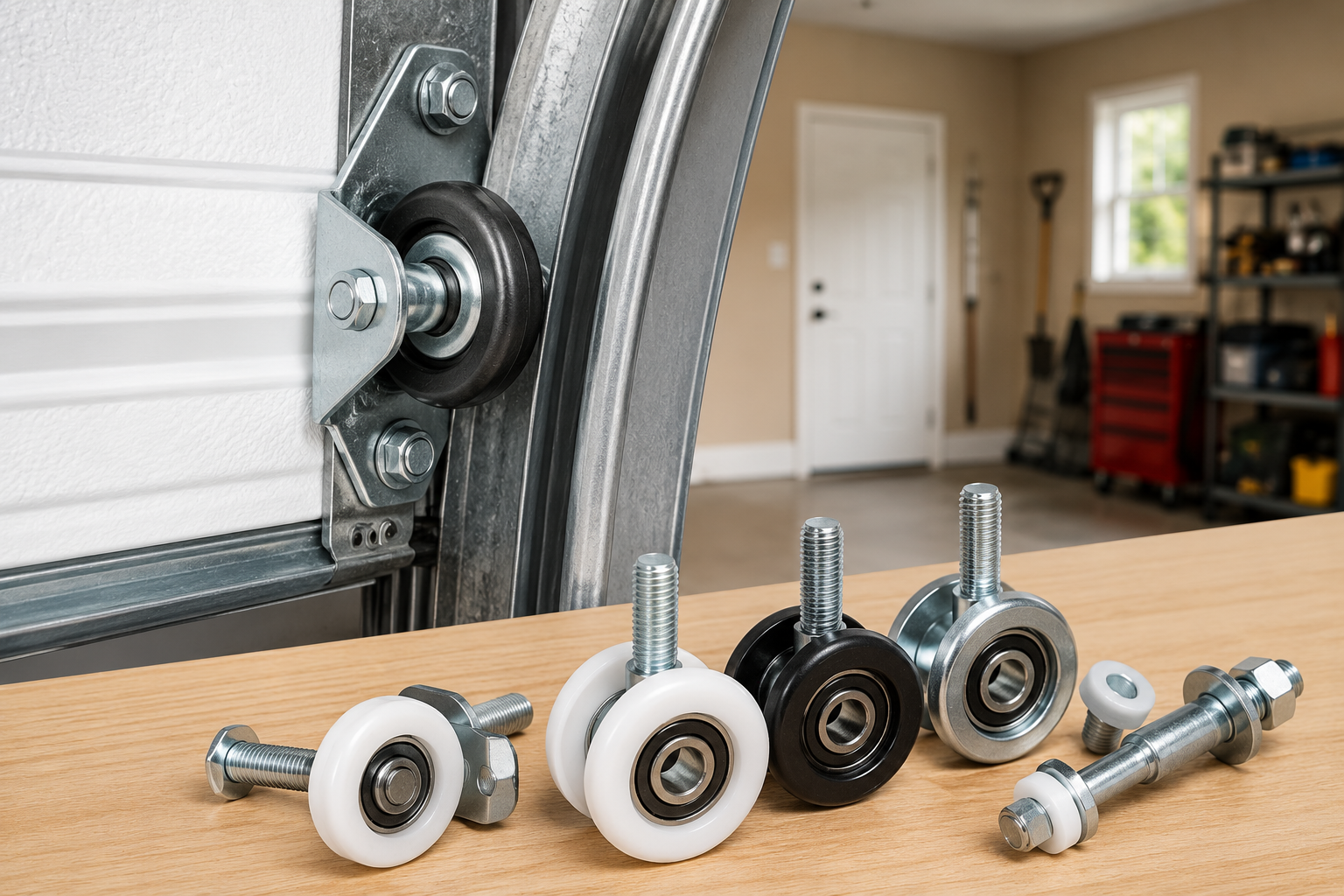
If your garage door has started sounding like a freight train every morning, the rollers are almost always the culprit. These small but mighty components are the unsung heroes of your garage system — quietly (or not so quietly) doing their job thousands of times a year. When they start to fail, everything from noise and jerky movement to premature wear on your opener becomes a real problem.
The good news? Replacing garage door rollers is one of the most cost-effective home improvement projects you can do in 2026. A quality 10-pack kit typically runs between $15 and $45, and the difference it makes is nothing short of remarkable.
In this guide, I’ve broken down the best garage door rollers available this year — covering nylon vs. steel options, heavy-duty kits for commercial-grade doors, and everything you need to know before buying. Whether you’re a homeowner in humid Florida, freezing Minnesota, or anywhere in between, there’s a right roller for your situation.
What Are Garage Door Rollers (and Why Do They Matter)?
Garage door rollers are the small wheel-and-stem assemblies that sit inside the vertical and horizontal tracks on either side of your garage door. Every time the door opens or closes, these rollers bear the full weight of the door panel and guide its movement through the track.
Most residential doors use between 10 and 12 rollers total. Over time — especially without regular lubrication or in harsh climates — the bearings inside the roller wheels wear down, causing friction, noise, and eventually complete failure.
Here’s what most homeowners don’t realize: worn rollers don’t just make noise. They put extra strain on your garage door opener motor, which can shorten its lifespan significantly. Fixing a $30 roller problem early can prevent a $300+ opener replacement down the road.
Signs You Need to Replace Your Garage Door Rollers
Before spending money on new rollers, it helps to confirm that’s actually the problem. Here are the most reliable warning signs to look for:
Grinding or squeaking sounds. This is the most common indicator. If new lubrication doesn’t fix it after a day or two, the bearings are likely shot.
Jerky or hesitant movement. Your door should glide smoothly. If it stutters, stops mid-track, or shakes during operation, the rollers may be warped, cracked, or seized.
Visible damage. Get a flashlight and look closely at each roller. Cracked nylon wheels, bent stems, chipped surfaces, or broken bearing seals are all signs of replacement time.
Rust on the shaft. Steel rollers in humid climates — think the Gulf Coast, Pacific Northwest, or anywhere near the ocean — are especially prone to corrosion. Once a roller shaft rusts, it won’t spin freely and needs to go.
Uneven door movement. If one side of the door rides lower than the other or the door appears to lean during operation, one or more rollers may have failed asymmetrically.
As a general rule of thumb: plastic rollers last 2–4 years, steel rollers without bearings typically give you 5–7 years, and quality nylon rollers with sealed bearings can run 12–20 years with minimal maintenance.
Nylon vs. Steel Garage Door Rollers: Which Is Right for You?
This is the first question every buyer should answer before shopping. Both materials have a place, but they serve different needs.
Nylon Rollers
Nylon has become the go-to choice for most residential applications, and for good reason. They operate significantly quieter than steel, don’t require lubrication, resist rust naturally, and modern versions with sealed 6200ZZ or 6200-2RS bearings are genuinely long-lasting. The tradeoff is that they cost slightly more upfront and, at the extreme heavy end, don’t match the raw load capacity of commercial-grade steel.
Best for: Attached garages near living spaces, humid coastal climates, homeowners who want low-maintenance solutions.
Steel Rollers
Steel rollers with ball bearings offer exceptional durability for heavy doors — particularly solid wood or extra-thick insulated steel panels. They’re the standard choice for commercial and industrial doors. The downsides are real though: they’re louder, they need lubrication every 6–12 months, and they’ll rust if neglected in wet climates.
Best for: Heavy wooden doors, commercial garage doors, situations where door weight exceeds what standard nylon rollers are rated for.
Composite Rollers
A hybrid option gaining traction in 2026, composite rollers blend nylon materials with reinforced cores. They offer a middle ground between the quiet operation of nylon and the strength of steel. Worth considering if you have a mid-weight door in an extreme climate.
Understanding Bearing Types: 6200ZZ vs. 6200-2RS
If you’ve shopped for rollers even briefly, you’ve seen these bearing codes. Here’s what they actually mean:
6200ZZ (or 6200Z): A single or double metal-shielded bearing. Excellent for general use. The shields keep out debris but aren’t fully waterproof. Great for most residential applications in moderate climates.
6200-2RS: Double rubber-sealed bearings. These provide a tighter seal against moisture and fine dust, making them the better choice for garages in humid regions, coastal areas, or anywhere with temperature extremes. The “2RS” designation means rubber seals on both sides — genuinely better long-term protection.
For most American homeowners in 2026, the 6200-2RS is worth the marginal price premium, especially if you live somewhere like Florida, Louisiana, Washington State, or along the Great Lakes.
The 6 Best Garage Door Rollers in 2026
After reviewing dozens of options based on bearing quality, cycle ratings, stem material, and real-world user feedback, here are the top picks across different categories.
1. DURA-LIFT Ultra-Life MAX — Best Overall
Type: Nylon | Bearing: 6200ZZ Sealed | Stem: 4″ or 7″ | Pack: 10
DURA-LIFT has built one of the strongest reputations in garage door hardware, and the Ultra-Life MAX earns that reputation. The 6200ZZ sealed bearing nylon rollers deliver noticeably quieter operation than the budget competition, and the brand backs them with a genuine lifetime guarantee — something very few competitors offer.
The 4-inch stem version fits the vast majority of standard 2-inch track residential doors across the U.S. If your door is larger or uses high-lift hardware, the 7-inch stem version is also available. Widely available at Home Depot locations nationwide, which makes in-person pickup easy.
Who it’s for: Most homeowners who want a premium, set-it-and-forget-it solution.
2. XiKe 10-Pack Nylon Rollers — Best for Quiet Operation
Type: Nylon | Bearing: 6200-2RS Double Sealed | Stem: 4″ | Pack: 10 or 12
XiKe’s blue nylon rollers have quietly become a favorite among homeowners who prioritize acoustic performance above all else. The 6200-2RS double rubber-sealed bearings are the key differentiator here — they maintain smoother, quieter rotation over time compared to single-shield bearings, and handle dust and light moisture more effectively.
Real-world users consistently report that XiKe rollers transform loud, clunky doors into near-silent operators. They’re especially popular in homes where the garage is attached and bedrooms are directly above or adjacent. The 3-year return policy also provides solid peace of mind.
Who it’s for: Homeowners with attached garages who can’t stand door noise — especially those with home offices or bedrooms near the garage.
3. PGN Garage Door Rollers — Best Sealed Bearing Value
Type: Nylon | Bearing: 6200-2RS Double Sealed | Stem: 4″ or 7″ | Pack: 10
PGN focuses entirely on bearings as a company, and that expertise shows up in their garage door roller line. The 6200-2RS sealed bearings in the PGN rollers offer excellent protection against contaminants, and the nylon wheels are rated for long-term heavy use. Available in both 4-inch and 7-inch stem versions.
The white nylon finish may not be as distinctive as XiKe’s blue wheels, but the mechanical performance is top-tier. These are a particularly smart pick in high-humidity states like Florida, Georgia, and the Carolinas where bearing corrosion accelerates.
Who it’s for: Buyers who want the best sealed bearing specification at a fair price point, especially in humid Southern or coastal states.
4. Mindoub 10-Pack Steel Rollers (9″ Long Stem) — Best Heavy-Duty Option
Type: Steel | Bearing: 10-Ball Precision | Stem: 9″ | Pack: 10
For heavy commercial garage doors, oversized residential panels, or installations that require a longer stem, Mindoub’s commercial-grade steel rollers are the standout pick. The 10-ball precision bearings significantly reduce vibration and lateral wobble compared to standard 7-ball options, and the long 9-inch stem makes these compatible with high-lift and commercial track configurations.
These are noticeably heavier and more robust than any nylon option. They’re not the quiet choice — expect some operational noise — but for raw load capacity and structural integrity, they’re hard to beat.
Who it’s for: Commercial garage doors, oversized residential doors, or any application requiring a 9-inch stem.
5. Terpheety Nylon Rollers — Best for Cold Climates
Type: Nylon | Bearing: 6200ZZ Dual Sealed | Stem: 4″ | Pack: 10
If you’re in the northern U.S. — Minnesota, Wisconsin, Michigan, upstate New York, or anywhere temperatures routinely drop below zero — Terpheety’s rollers are worth your attention. Field testing has shown these operating smoothly in extreme cold where other rollers either slow down or seize up entirely.
The dual-sealed 6200ZZ bearings and the specific nylon compound used in the wheel hold up to thermal expansion and contraction better than many competitors. They’re slightly louder than XiKe’s 2RS models under normal conditions, but in freezing temperatures, they simply perform more reliably.
Who it’s for: Homeowners in cold-climate states dealing with harsh winters and unheated garages.
6. Arlenix 10-Pack Nylon Rollers — Best Budget Kit
Type: Nylon | Bearing: 6200ZZ Dual Sealed | Stem: 4″ | Pack: 10
Not everyone needs a premium set. If you’re replacing rollers on a rental property, a rarely-used garage, or just need a serviceable upgrade from worn-out plastic rollers, the Arlenix pack delivers solid performance at the lowest price point on this list.
The 6200ZZ dual sealed bearings provide meaningful protection and the nylon wheels are a genuine step up from metal rollers in noise reduction. They snap into standard residential tracks easily with no special tools. They’re not the quietest or most durable on the list, but they’re the best value for budget-conscious buyers.
Who it’s for: Rental properties, budget replacements, or anyone upgrading from plastic or unsealed steel rollers.
How to Choose the Right Roller for Your Door
Check Your Stem Length First
The stem is the metal shaft that fits through your garage door hinge. Most standard residential doors in the U.S. use a 4-inch stem. However, some configurations require 7-inch or even 9-inch stems. Before ordering, physically measure your existing rollers or check your door’s documentation. Installing a roller with the wrong stem length is a common and easily avoidable mistake.
Match the Wheel Size to Your Track
Most residential garage doors use 2-inch diameter roller wheels designed for a 2-inch wide track. Larger commercial doors may use 3-inch rollers. Check your existing rollers or your door manufacturer’s spec sheet to confirm.
Consider Your Climate
Homeowners in the Sun Belt dealing with humidity (think Houston, Miami, Atlanta) should prioritize 6200-2RS sealed bearings over standard ZZ shields. In cold northern climates, look for rollers specifically tested in low-temperature conditions. In temperate zones with moderate weather, virtually any quality nylon roller will serve you well.
Think About Usage Frequency
A door that opens and closes 4+ times a day — common in households where multiple family members work different schedules — will wear rollers faster than one used twice daily. Higher-use households should invest in premium sealed-bearing rollers with higher cycle ratings rather than budget options that’ll need replacement in 2–3 years.
DIY Installation: What You Need to Know
Replacing garage door rollers is a project most homeowners with basic mechanical comfort can handle in an afternoon. You’ll need: a flat-head screwdriver, a pair of locking pliers (Vice-Grips), and ideally a helper if you’re working alone.
The critical safety note: never attempt to replace rollers on the bottom bracket (the lowest roller on either side of the door). These brackets are connected directly to the spring tension cables and are under extreme force. Bottom bracket roller replacement is a job for a licensed garage door technician. Disturbing these incorrectly can cause serious injury.
For all other rollers (the middle and top rollers), the process involves:
- Disconnecting the automatic opener and pulling the manual release cord
- Clamping the door in place with locking pliers on the track below the roller you’re replacing
- Removing the hinge bolt, sliding out the old roller, inserting the new one, and reinstalling the hinge
- Moving the clamp up and repeating for each roller
For a detailed visual walkthrough, This Old House has an excellent step-by-step guide that covers the process in detail.
Maintenance Tips to Extend Roller Life
The best roller in the world won’t last if you ignore it. Here’s how to get maximum life from your investment:
Lubricate metal rollers twice a year. Use a lithium-based garage door lubricant (not WD-40, which attracts dust). Apply to the roller stem and bearing area, not the track itself. Spring and fall are good reminders.
Keep the tracks clean. Wipe down your door tracks every few months with a damp cloth. Grit and debris build up inside the track and accelerate roller wear from the outside in.
Nylon rollers? Skip the lubricant on the wheel. Quality sealed nylon rollers don’t need lubrication on the wheel itself. Over-lubricating nylon can actually attract debris that grinds into the bearing over time. A light wipe on the stem is sufficient.
Inspect visually once a year. A 5-minute annual check with a flashlight will catch problems early — before a cracked roller becomes a door that won’t close at 11pm on a weeknight.
Address alignment issues promptly. If your door is rubbing against the track or shows uneven movement, get it realigned sooner rather than later. Misaligned tracks grind rollers down unevenly and prematurely.
Frequently Asked Questions
How many rollers does a standard garage door have? Most single-car garage doors use 10 rollers (4 on each vertical track, plus 2 on the horizontal overhead section). Double-car doors typically use 12. Always replace the full set rather than individual rollers — mixing worn and new rollers causes uneven movement.
Can I replace garage door rollers myself? Yes, for most rollers. The exception is the bottom bracket rollers, which should only be handled by a professional due to spring tension risk.
How much does professional roller replacement cost in the U.S.? Expect to pay $85–$200 for a professional full roller replacement, depending on your region and the contractor. In major metro areas like New York, Los Angeles, Chicago, or Dallas, expect pricing toward the higher end. The parts themselves are inexpensive — you’re paying for labor and expertise.
Do I need to replace all rollers at once? It’s strongly recommended. Even if only one or two rollers have visibly failed, the others are likely at a similar stage of wear. Replacing all of them at once ensures uniform movement and saves you from a repeat repair call in 6 months.
Are nylon rollers universal? Not exactly. Most are compatible with standard residential 2-inch tracks, but always verify the stem length and wheel diameter against your existing hardware before ordering.
Final Thoughts
Garage door rollers are one of those components that most homeowners never think about — until they suddenly can’t stop thinking about them. The good news is that in 2026, the quality of available replacement kits has never been better. Whether you choose the DURA-LIFT Ultra-Life MAX for its lifetime guarantee, the XiKe for whisper-quiet performance, or PGN for its sealed bearing expertise, any of these options will be a dramatic improvement over worn stock rollers.
The key is matching the right roller to your specific situation: your climate, your door weight, and how frequently you use the garage. Do that, and you’re looking at 12–20 years of smooth, quiet operation and a garage door opener that won’t be asked to work twice as hard to do its job.
If you found this guide helpful, you might also want to read our article on the best garage door lubricants to keep your entire system running smoothly year-round.