

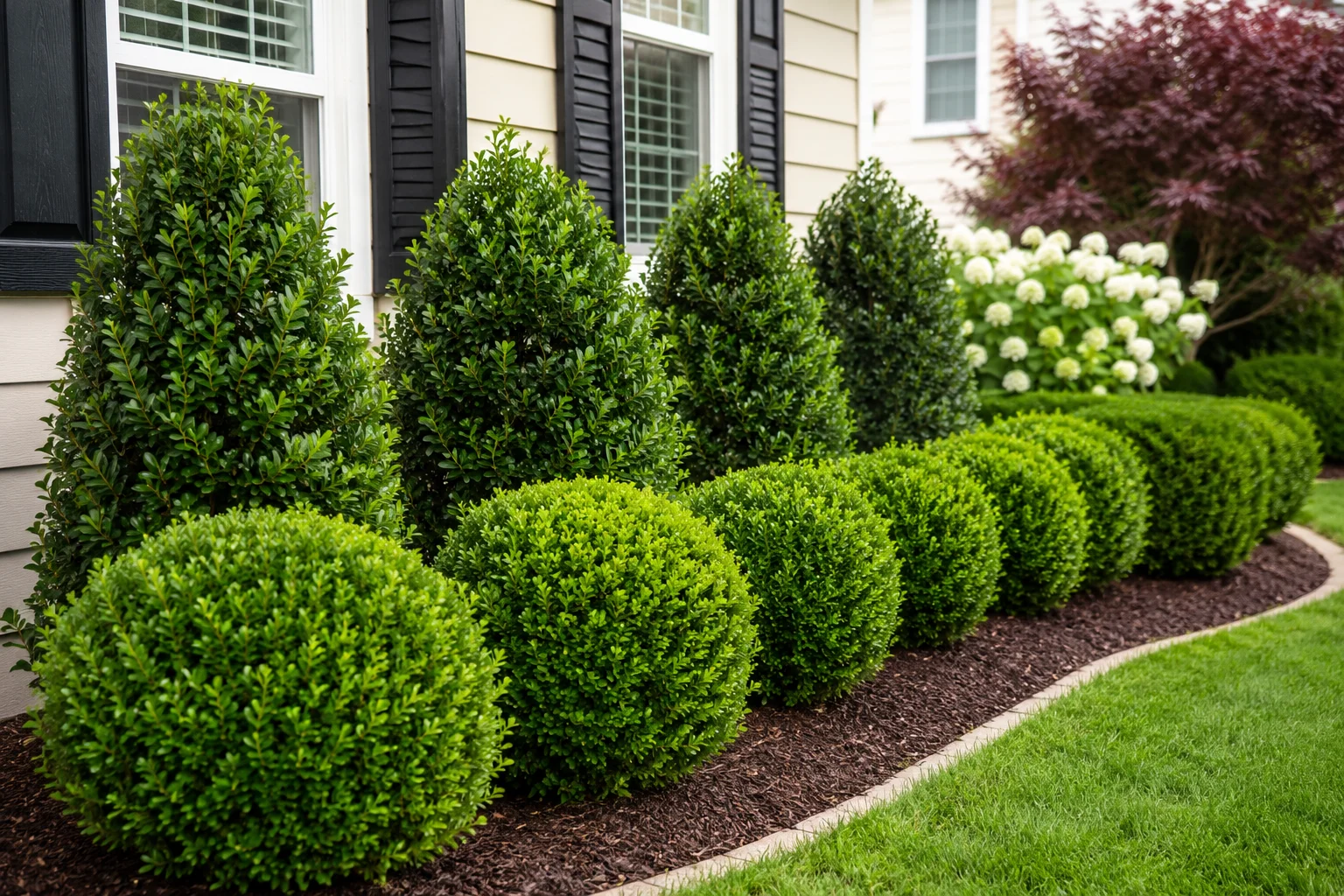
Drive through almost any American neighborhood, and you’ll notice something. The homes with the best curb appeal almost always have one thing in common: a well-chosen foundation hedge. It’s the green backbone that softens hard corners, hides utility boxes, and frames the whole front of the house.
That said, foundation hedges are also one of the easiest landscaping choices to get wrong. I’ve walked plenty of yards where a homeowner planted something beautiful, only to watch it swallow the windows five years later. Or worse, they picked a plant rated for a warmer zone, and it died back the first hard winter. So, this guide breaks down the best foundation hedges by USDA zone and mature height, along with the planting details that actually matter.
How to Choose the Right Foundation Hedge
Before picking a plant, work through a few basics. Getting these right up front saves years of frustration later.
Know your USDA hardiness zone. This is the single most important factor, since it determines whether a plant survives your winter at all. The USDA updated its hardiness zone map in 2023, and many areas shifted about half a zone warmer. Because of that, some older plant tags and nursery recommendations are now slightly out of date. Always check your current zone before buying.
Think about mature size, not nursery size. A gallon-pot shrub looks tiny at the garden center. However, most foundation hedge plants need three to five years to reach full size, and an oversized hedge is one of the most common landscaping regrets homeowners run into.
Match sun exposure to the plant’s needs. Full sun means six or more hours of direct light. Partial shade is roughly half that. Full shade means little to no direct sun. Planting a sun-loving shrub in a shady foundation bed usually leads to leggy, sparse growth.
Plant far enough from the house. Leave at least two feet between the foundation wall and the hedge, and more for larger species. Crowding a hedge against siding traps moisture, and that invites pests and rot.
Decide between evergreen and deciduous. Evergreens hold their structure through winter, so they’re the default choice in most regions. Deciduous flowering hedges, though, add seasonal color and often grow faster.
Low Foundation Hedges (Under 3 Feet)
Low hedges work well under windows and along walkways, since they won’t block sightlines or natural light.
- Green Velvet Boxwood (Zones 5–9, 2–3 ft.) — The classic low hedge choice. It’s dense, rounded, and holds its shape with minimal pruning.
- Dwarf Globe Arborvitae (Zones 3–7, 1–3 ft.) — A tidy evergreen that needs little to no shearing, and it tolerates both sandy and clay soils.
- Sprinter Boxwood (Zones 5–8, 2–4 ft.) — A tighter, more compact alternative to Green Velvet, ideal for a crisp, formal line.
- Inkberry Holly (Zones 4–9, 3–4 ft.) — A native, boxwood-lookalike that’s more resistant to boxwood blight, which has become a growing concern in several eastern states.
- Autumn Bonfire Encore Azalea (Zones 6–10, 3 ft.) — A flowering option for warmer zones, reblooming red flowers spring through fall.
Medium Foundation Hedges (3 to 6 Feet)
Medium hedges are the workhorses of most foundation beds. They fill the middle layer and provide year-round structure.
- Otto Luyken Cherry Laurel (Zones 6–9, up to 10 ft. if untrimmed, easily kept at 4–5 ft.) — Tough, reliable, and tolerant of both sun and shade.
- Weigela ‘Wine & Roses’ (Zones 4–8, 4–5 ft.) — Dark burgundy foliage with rose-pink spring flowers, a strong pick if you want color along with structure.
- Manhattan Euonymus (Zones 5–9, 4–6 ft.) — Evergreen in warmer climates, semi-evergreen in colder ones, and it shears into a tight, formal hedge.
- Little Henry Sweetspire (Zones 5–9, 3–4 ft.) — A native shrub with fragrant white blooms and excellent wet-soil tolerance.
- Bobo Panicle Hydrangea (Zones 3–8, 2.5–3 ft.) — A true dwarf hydrangea that won’t overwhelm a walkway the way larger cultivars often do.
Tall Foundation Hedges (6 Feet and Up)
Tall hedges are best for corners, privacy screening, or homes with high foundation walls that need more visual weight.
- Emerald Green Arborvitae (Zones 3–7, 10–15 ft. tall, only 3–4 ft. wide) — The default choice for narrow property lines across the colder half of the country.
- Green Giant Arborvitae (Zones 5–9, up to 40+ ft. if left untrimmed, but easily maintained at 8–15 ft.) — One of the fastest-growing privacy hedges available, often adding 3 feet a year.
- American Holly (Zones 7–11, 15–30 ft., prunable to a tighter hedge height) — Dense, glossy, and a strong wildlife plant, since its berries attract songbirds.
- Skip Laurel (Zones 6–9, 8–10 ft.) — A shade-tolerant broadleaf evergreen, useful for taller hedges on the shadier side of a house.
- Yaupon Holly (Zones 7–9, 12–20 ft., shears well to shorter heights) — Native to the Southeast and remarkably drought-tolerant once established.
Regional Picks Across the U.S.
Foundation hedge choices shift a lot by region, since climate, humidity, and soil all play a role.
Northeast and Upper Midwest (Zones 3–5): Arborvitae varieties dominate here, along with boxwood in the milder pockets of Zone 5. Winter wind exposure matters a lot in this region, so a hedge rated for your exact zone, not just the regional average, makes a real difference.
Mid-Atlantic and Transition Zone (Zones 6–7): This band has the widest plant palette in the country. Boxwood, holly, cherry laurel, and euonymus all perform well here, which is part of why it’s such a popular testing ground for new cultivars.
Southeast and Gulf Coast (Zones 8–10): Heat and humidity tolerance matter more than cold hardiness. Yaupon holly, azaleas, and Southern-bred boxwood alternatives like Ligustrum japonicum thrive in this climate.
Southwest (Zones 7–9, arid pockets): Drought tolerance becomes the priority. Look for xeric-friendly options like littleleaf mountain mahogany or drought-adapted junipers rather than moisture-loving hedges.
Pacific Northwest (Zones 7–9, marine climate): Cool, wet summers favor broadleaf evergreens like laurel and holly, which thrive in the region’s consistent moisture without the summer heat stress seen elsewhere.
If you’re also planning the lawn around your new hedge, our St. Augustine grass sod guide covers turf options that pair well with a shaded foundation bed in warmer zones.
Planting and Spacing Tips
Space plants based on mature width, not current size. As a rule of thumb, divide the plant’s mature width in half, then space plants that distance apart for a hedge that fills in evenly without excessive overlap.
Plant in fall or early spring when possible. Cooler temperatures reduce transplant stress and give roots time to establish before summer heat arrives.
Mulch generously, but keep it away from the stem. A 2–3 inch mulch layer conserves moisture and suppresses weeds, but piling it against the trunk invites rot.
Prune at the right time. Flowering hedges should be pruned right after their bloom period ends, so you don’t cut off next year’s flower buds. Evergreen formal hedges, on the other hand, are best sheared in late spring and again in late summer.
Check your zone before you buy, every time. The USDA Plant Hardiness Zone Map is the authoritative source, and it’s worth bookmarking, since it lets you search by ZIP code for an accurate reading.
Common Mistakes to Avoid
- Choosing invasive species. Some older hedge favorites, like Japanese barberry and burning bush, are now considered invasive in many states. A local nursery or extension office can point you toward better native alternatives.
- Overcrowding the foundation. A hedge planted too close to the house looks great for two years, then becomes a maintenance headache once it matures.
- Ignoring drainage. A hedge that’s perfectly zone-appropriate can still die in heavy clay soil that stays waterlogged through winter.
- Skipping the first-year watering schedule. Newly planted hedges need consistent watering for at least the first growing season, even drought-tolerant species, while their root systems establish.
Frequently Asked Questions
What is the best low-maintenance foundation hedge? Boxwood, especially compact cultivars like Green Velvet, remains one of the most reliable low-maintenance choices, since it holds its shape naturally and needs minimal shearing. For a boxwood blight-resistant alternative, inkberry holly is a strong substitute.
How far should a foundation hedge be planted from the house? Leave at least two feet between the foundation wall and the hedge. Larger species may need three feet or more to allow for airflow and to prevent moisture damage to siding.
What is the fastest-growing hedge for privacy? Green Giant arborvitae is among the fastest, often adding 3 feet of growth per year until it reaches its mature height. Laurel and privet also grow quickly in the right zones.
Can I plant a hedge that spans two different height zones in my yard? Yes, many homeowners layer heights intentionally, planting taller hedges at the corners of the house and lower hedges under windows. Just be sure every plant you choose is still rated for your specific USDA zone.
Do foundation hedges need full sun? It depends on the species. Boxwood, arborvitae, and holly tolerate partial shade well, while flowering hedges like azaleas and weigela need more direct sun to bloom fully.
How do I know my USDA hardiness zone? You can look it up by ZIP code on the USDA’s official Plant Hardiness Zone Map. Since the map was updated in 2023, it’s worth checking again even if you already knew your zone before.
What’s the difference between a formal and informal hedge? Formal hedges are sheared into clean, geometric lines and need regular trimming to maintain that shape. Informal hedges are left to grow more naturally, which usually means less maintenance but a softer, looser look.
Are evergreen or flowering hedges better for a foundation planting? Evergreens provide consistent, year-round structure, which is why most professional foundation designs use them as the backbone. Flowering deciduous hedges add seasonal color and are often layered in alongside evergreens rather than used alone.