

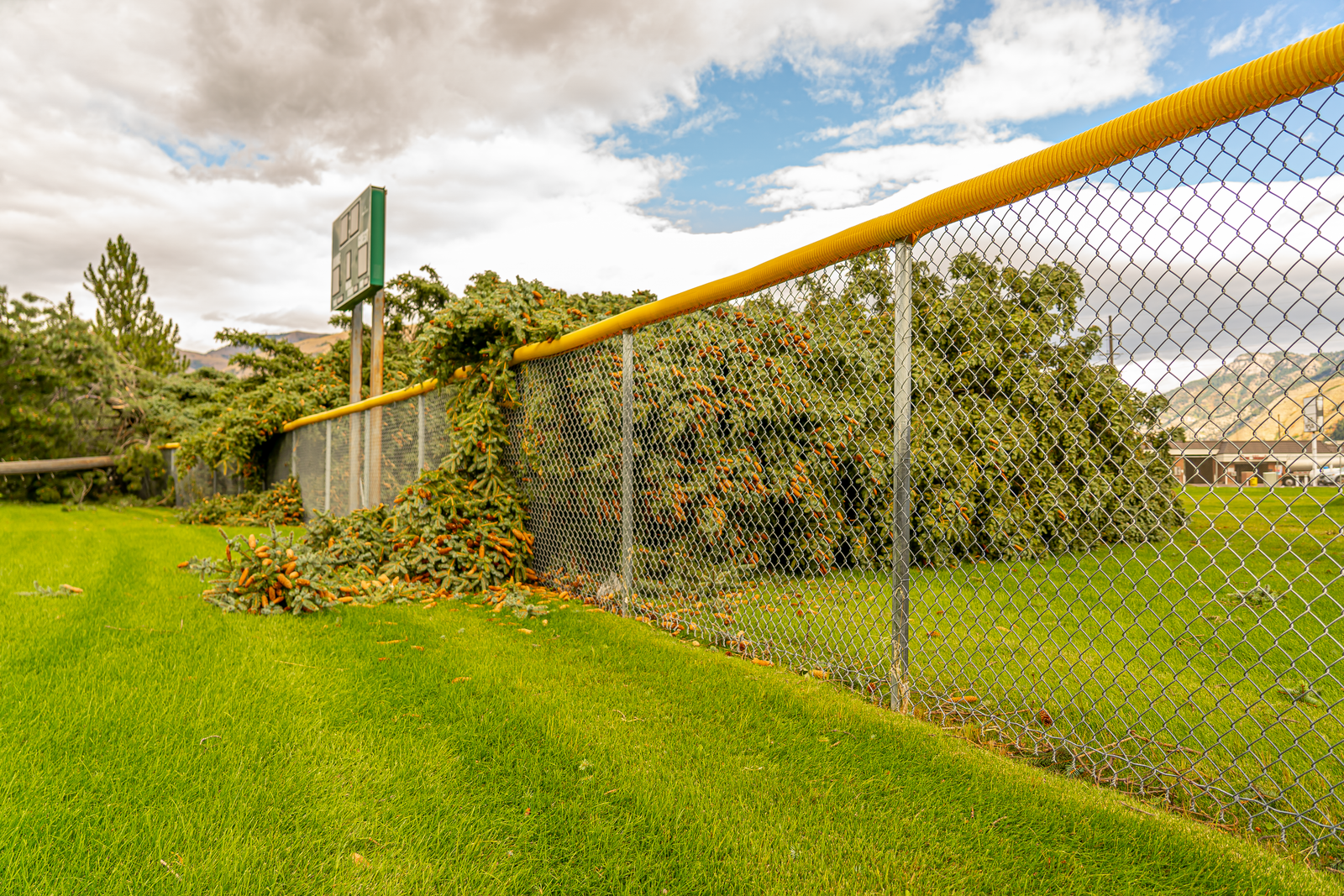
Have you gotten three fence quotes that were all over the map? If so, you’re not imagining things. Chain link pricing swings more than almost any other fence type. That’s because it depends on wire gauge, coating, post spacing, and — more than most people expect — your state. In this guide, we’ll break down what a galvanized chain link fence actually costs in 2026. We’ll also cover how long it really lasts. Finally, we’ll walk through the installation details that separate a fence that stands straight for 20 years from one that sags by year three.
What Makes a Fence “Galvanized,” and Why It Matters
Galvanized chain link is steel wire mesh coated in zinc. Specifically, the zinc resists rust. Manufacturers generally use two common methods:
- Hot-dip galvanized: Workers dip the finished mesh in molten zinc after weaving it. As a result, this method gives thicker, more durable coverage. That’s why it’s the standard for most residential fencing.
- Galvanized-before-weaving (GBW): Manufacturers coat the wire in zinc before weaving it into mesh. Because of this, it costs less. However, it also leaves cut edges and joints slightly more exposed to rust over time.
Before you sign a contract, ask your contractor which method they use. It’s a small question. Still, it affects how your fence ages, especially in humid or coastal climates.
Galvanized Chain Link Fence Cost in 2026
Below is the honest range, based on current 2026 material pricing and contractor labor rates across the U.S.
- Professional installation: roughly $10 to $40 per linear foot. Generally, most standard residential jobs (4- to 6-foot height, 11.5-gauge, galvanized) land between $13 and $28 per foot.
- DIY materials only: about $3 to $15 per linear foot, depending on height and gauge.
- Typical 150-foot backyard fence: overall, expect somewhere between $2,000 and $6,000 installed. In most cases, homeowners land closer to $3,000–$4,500 for a standard 6-foot galvanized fence with one walk gate.
What actually drives the price
- Height: In general, a 4-foot front-yard fence costs less per foot than a 6- or 8-foot backyard fence. That’s because taller fences need heavier posts and more fabric.
- Wire gauge: Most homes use 11- or 11.5-gauge wire. On the other hand, commercial-grade 9-gauge costs more. In exchange, it also holds up better under stress or heavy use.
- Coating: Bare galvanized is the budget option. By contrast, vinyl or powder-coated finishes add a few dollars per foot. In return, you get better looks and a bit more corrosion resistance.
- Terrain: Sloped, rocky, or heavily rooted ground adds real labor cost. Specifically, expect 15–25% more than a flat, easy dig.
- Gates: A standard swing gate runs $100–$450. Meanwhile, automated rolling gates can run into the thousands.
- Region: This is the factor people underestimate most. For instance, labor-heavy markets like California, New Jersey, and the Northeast can run 40–60% higher per foot than the Southeast or parts of the Midwest. Ultimately, the gap comes down to local labor rates, not materials.
Practical tip: First, get at least three local quotes. Also, make sure each one specifies height, gauge, coating, post spacing, and whether it includes old fence removal. In the same zip code, prices can vary by 30% or more. Usually, most of that gap comes from spec differences, not markup.
How Long Does a Galvanized Chain Link Fence Last?
Generally, a well-installed galvanized chain link fence lasts 15 to 25 years. In dry climates with solid post footings, it can last even longer. That said, a few factors shorten or extend that window:
- Climate: For example, coastal and high-humidity areas, like the Gulf Coast, Southeast, and Pacific Northwest, wear down zinc coating faster from salt air and moisture. By contrast, arid climates, like the Southwest and Mountain West, tend to get the most life out of galvanized steel.
- Soil and footing quality: Similarly, posts set in concrete below your local frost line last far longer than posts driven straight into the ground.
- Maintenance: Once or twice a year, rinse off salt, fertilizer residue, and grass clippings. In addition, touch up scratches with a rust-inhibiting primer. Together, both habits slow corrosion in a meaningful way.
- Coating type: Overall, vinyl-coated chain link outlasts bare galvanized by several years. That’s because the PVC layer shields the zinc from direct weather exposure.
Do you need a fence mainly for a utility area, dog run, or side yard where looks aren’t the priority? If so, bare galvanized remains the most cost-effective choice on the market. On the other hand, is it a highly visible backyard fence in a humid region? In that case, the small upcharge for vinyl-coated often pays for itself.
Installation Tips That Actually Matter
Overall, chain link is one of the more DIY-friendly fence types. However, most sagging, leaning, or rattling fences trace back to a handful of avoidable mistakes.
- Call your local utility locate service before digging. In the U.S., dial 811 a few business days ahead of any digging project. Afterward, utility companies will mark buried lines for free. You can find your state’s requirements through the national Call 811 program. Notably, skipping this step is the single most common — and most expensive — mistake DIYers make.
- Check your local permit and HOA rules first. For instance, many municipalities cap residential fence height at 4 feet in front yards and 6 feet in backyards. Additionally, some HOAs restrict chain link entirely or require it to be vinyl-coated. Therefore, confirm the rules before you order materials.
- Set terminal posts first. After all, corner, end, and gate posts carry the tension load of the entire fence. Consequently, they need larger holes and more concrete than line posts. So, get these plumb and solid before anything else goes in.
- Dig below the frost line. In colder regions specifically, posts set above the frost line can heave out of the ground after a few freeze-thaw cycles. Therefore, check your local building code for the minimum depth in your area.
- Keep line post spacing at 8–10 feet. Some DIYers stretch spacing further to save on posts. However, don’t. Instead, that shortcut leads to sagging fabric and a fence that flexes in the wind.
- Tension the fabric properly. Use a proper fence puller or come-along instead of relying on muscle alone. Ideally, the mesh should tighten under tension but still give about a quarter inch when you squeeze the diamonds by hand. Otherwise, over-tightening bows the posts inward, while under-tightening leaves a saggy fence.
- Tie it down at the right intervals. Specifically, secure fabric to the top rail every 24 inches and to line posts every 12 inches. Although skipping ties is an easy corner to cut, it shows up fast as rattling and sagging.
Typically, most contractors install 80–150 feet of fence per day. So, a standard 150-foot residential job usually wraps in one to two days. Does your project involve a steep slope, security requirements, or a warranty you’ll actually want to use? If so, professional installation is usually worth the premium over DIY.
Galvanized vs. Vinyl-Coated: Which One Fits Your Project?
| Feature | Galvanized | Vinyl-Coated |
|---|---|---|
| Cost | Lowest upfront cost | Moderate upfront premium |
| Appearance | Silver, industrial look | Black or green, more polished |
| Lifespan | 15–25 years | 20–35 years |
| Best for | Utility areas, tight budgets, temporary needs | Visible yards, humid climates, curb appeal |
In short, if budget and function are your top priority, galvanized wins. On the other hand, if the fence will sit in view of the street, or you live in a humid climate, the vinyl-coated upgrade tends to save you money over the fence’s full lifespan.
Regional Notes for U.S. Homeowners
Depending on where you live, keep a few things in mind:
- Southeast and Gulf Coast: Here, higher humidity and salt exposure wear down galvanized coatings faster. As a result, vinyl-coated is worth the extra cost.
- Northeast and Midwest: In these regions, frost heave is the main enemy. So, set your posts below the local frost line, which can run 36–48 inches deep in colder zones.
- Southwest: Generally, the dry climate treats galvanized steel well. That said, expect harder, rockier digging, which can add to labor costs.
- West Coast: Here, labor rates run high. Consequently, your choice of contractor affects your total bill more than your choice of galvanized versus vinyl.
Still deciding between chain link and another material? If so, our wood vs. vinyl fence cost comparison guide walks through lifecycle costs and climate suitability side by side. Overall, it’s worth a look before you commit.
Frequently Asked Questions
How much does a galvanized chain link fence cost per foot in 2026? Generally, professional installation runs $10 to $40 per linear foot. Most standard residential jobs, specifically, fall between $13 and $28 per foot, depending on height, gauge, and region.
How long does a galvanized chain link fence last? Typically, galvanized chain link fences last 15 to 25 years with proper installation and occasional maintenance. Dry climates and concrete post footings, in particular, extend that lifespan, while coastal or humid areas tend to shorten it.
Is galvanized or vinyl-coated chain link better? Overall, galvanized costs less and works well for utility areas. Vinyl-coated, on the other hand, costs a bit more, but it typically lasts longer and looks better in visible, humid, or coastal settings.
Can I install a galvanized chain link fence myself? Yes, in fact, for straight, level fence lines, it’s one of the more DIY-friendly fence types. That said, if you have sloped terrain, security requirements, or want warranty coverage, hire a professional instead.
Do I need a permit to install a chain link fence? Often, yes. For example, many U.S. municipalities require a permit and enforce height limits, commonly 4 feet in front yards and 6 feet in backyards. So, check with your local building department and HOA before you order materials.
How deep should chain link fence posts be set? Generally, terminal posts sit 24–36 inches deep. In colder climates specifically, depth should go below your local frost line to prevent heaving. Always, therefore, check your local building code for exact requirements.
Does chain link fencing rust? Eventually, yes — bare galvanized chain link can rust once the zinc coating wears down, especially in humid or coastal areas. However, vinyl-coated chain link adds a protective layer that slows this process significantly.
How much does it cost to remove an old chain link fence? Typically, removal adds $3 to $5 per linear foot on top of new installation costs. Ultimately, the final price depends on how the old fence was set and whether you need to break out old concrete footings.
Have questions about your specific fence project? Drop them in the comments — we read and respond to every one.