

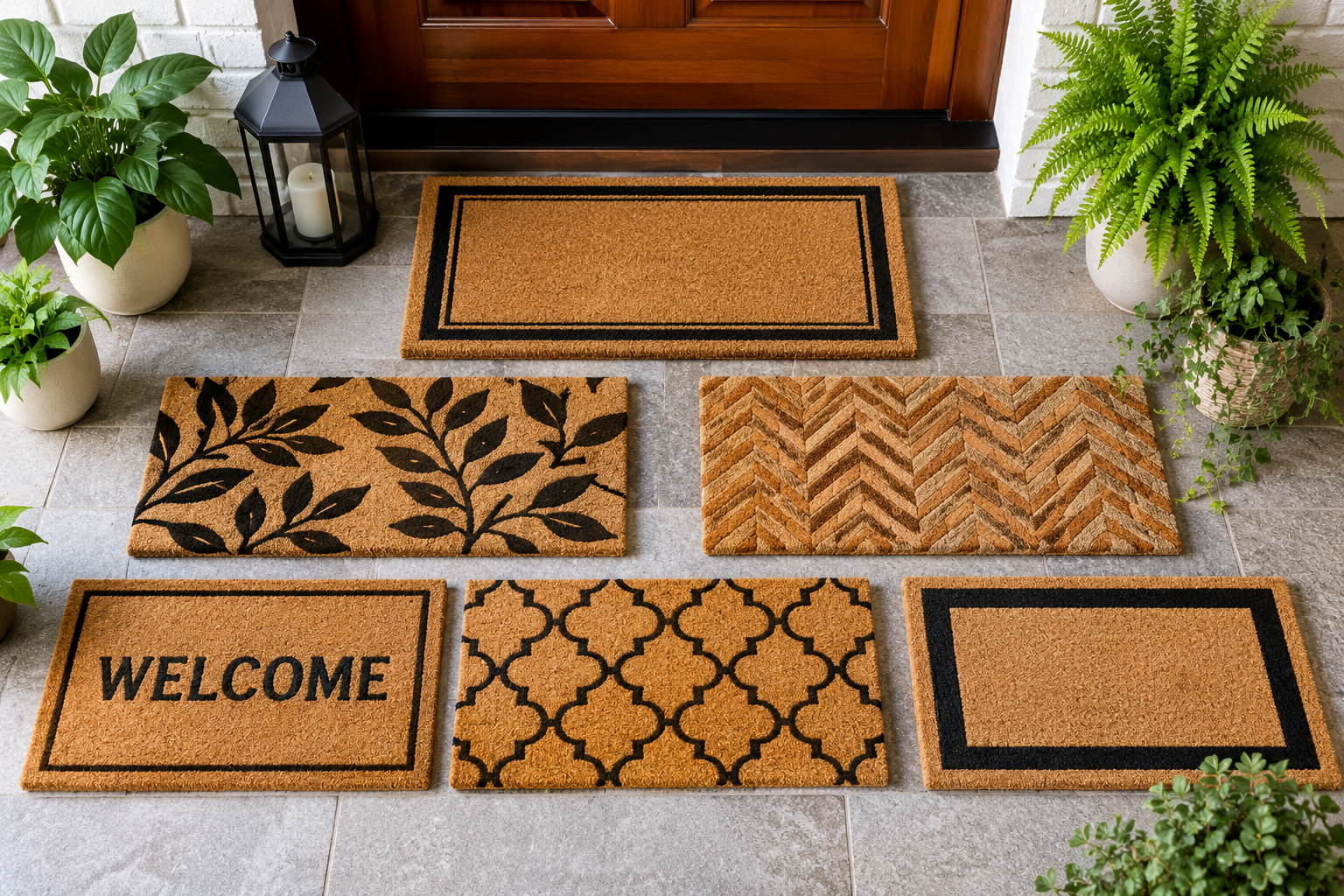
Your front door says a lot before anyone steps inside. Most people spend hours picking the right paint color or light fixture. Yet the doormat — the very first thing every visitor steps on — often gets chosen in under two minutes. That’s a mistake worth correcting.
In 2026, coir door mats are one of the most trusted entryway solutions across American homes. They show up everywhere. Cozy farmhouses in rural Texas. Modern apartments in Chicago. Sun-drenched porches in Southern California. But not all coir mats are created equal. Choosing the wrong one can mean a soggy, shedding mess within a few months.
So, whether you’re upgrading your entryway for the first time or replacing that worn-out mat from 2021, this guide covers everything you need to know — including the top picks available right now.
What Exactly Is a Coir Door Mat?
Before diving into recommendations, it helps to understand what you’re actually buying. Coir (pronounced “koy-er”) is a natural fiber from the outer husk of coconuts. Specifically, it comes from the fibrous layer between the hard inner shell and the outer coat. Coconut husks are a byproduct of coconut processing. As a result, coir production is inherently sustainable — it uses material that would otherwise end up in landfills.
The resulting fiber is coarse, stiff, and incredibly strong. It excels at one thing in particular: scraping dirt, mud, and debris off shoe soles before they touch your floors inside. In fact, compared to rubber, synthetic, or fabric mats, coir remains one of the most effective dirt-scraping materials at any price point.
Furthermore, coir is naturally resistant to mold and mildew. This is thanks to the lignin present in its fibers. It also contains naturally occurring coconut oil. That oil helps repel insects and inhibit bacterial growth — a genuinely useful property for any mat sitting outdoors year-round.
Why Coir Mats Are Still the Smart Choice in 2026
Given all the synthetic alternatives now available, you might wonder whether coir still holds its own. The short answer is yes — and for several compelling reasons.
First and foremost, dirt removal is where coir genuinely dominates. The coarse, bristly texture creates a natural scraping surface. Synthetic mats simply can’t replicate it as effectively. Every time someone wipes their feet, thousands of stiff bristles dislodge mud, grit, and debris from shoe soles. Moreover, coir also absorbs high quantities of moisture. It stores trapped particles deep within the mat’s structure until you shake or clean it out.
Second, coir is one of the most eco-friendly flooring materials available. Unlike polypropylene or rubber mats, it doesn’t rely on petroleum-based production. Instead, it’s completely biodegradable and comes from a renewable agricultural byproduct. As sustainability continues to influence purchasing decisions across the US in 2026, this matters more than ever to homeowners.
Third, the natural aesthetic of coir is timeless. The warm, earthy brown tones complement virtually every architectural style. That includes traditional Colonial homes in New England and contemporary craftsman bungalows on the West Coast. Additionally, coir mats now come in dozens of printed designs, personalized text options, and bordered styles. So you don’t have to sacrifice style for function.
What to Look for When Buying a Coir Door Mat
Not every coir mat will serve you equally well. Before purchasing, it’s worth understanding the features that separate a quality mat from a disappointment.
Backing material matters enormously. A coir mat without backing will shift and slide every time someone steps on it. That’s both annoying and a safety hazard. Look for mats with heavy-duty PVC, vinyl, or natural rubber backing. Rubber-backed coir mats offer the best of both worlds: natural scraping power on top and non-slip grip underneath.
Pile height affects performance. A thicker pile (0.5″ to 0.75″) provides more surface contact for scraping. It also holds more dirt before needing a clean-out. Thinner mats, on the other hand, sit lower to the ground. They work better under doors with minimal clearance.
Size should match your entryway. As a general rule, your mat should be wide enough for a person to wipe both feet at once. For standard single doors, a 17″x30″ or 18″x30″ mat works well. For double doors or wide porches — common in Southern US homes — consider stepping up to 24″x36″ or even 30″x48″.
Anti-shedding treatment is worth seeking out. All coir mats shed some fibers, especially in the first few weeks. However, some brands now apply anti-shedding treatments during manufacturing. This significantly reduces the loose fiber you’ll find on your porch.
Design and placement should match your climate. If you live in a rainy region like the Pacific Northwest or Gulf Coast, choose a mat with robust rubber backing. Place it under a covered porch where possible. In drier climates like Arizona or Nevada, even a basic coir mat without backing tends to hold up very well outdoors.
Top 5 Best Coir Door Mats in 2026
After researching hundreds of user reviews and bestseller data from major US retailers, here are the top coir door mats worth buying this year.
1. PLUS Haven Coco Coir Door Mat — Best Overall
Size: 17.5″x30″ | Price: ~$18–$22 | Rating: 4.6/5 (3,900+ reviews)
If you want one mat that gets nearly everything right, the PLUS Haven Coco Coir is the one to beat in 2026. It consistently ranks as the top-rated coir doormat across major platforms. Nearly 4,000 verified customer reviews back it up, and the rating holds firm even under scrutiny.
The mat is made from densely packed natural coco coir fibers. These are woven over a heavy-duty backing, so the mat stays firmly in place under repeated foot traffic. The surface pile is thick enough to trap substantial dirt and moisture. Yet it remains low-profile enough to slide comfortably under most door frames. Furthermore, buyers across the US consistently praise how well it holds its shape after months of outdoor use.
Best for: Most households. This is the reliable everyday pick that works in nearly any entryway and any US climate.
Standout feature: Consistently high dirt-trapping performance with a durable backing that doesn’t peel or crack over time.
2. Barnyard Designs Natural Coco Coir Doormat — Best for Farmhouse & Classic Styles
Size: 17″x30″ to 36″x72″ | Price: ~$16–$45 | Rating: 4.5/5
Barnyard Designs has built a loyal following among US homeowners. Their fans want a coir mat that also works as a charming decorative piece. The Natural Coco Coir Doormat line comes in multiple sizes. That includes an impressive 36″x72″ option — perfect for wide double-door entryways. Designs are clean and classic: simple “Welcome” text and bordered styles.
In addition to looking great, these mats feature heavy-duty PVC backing. That holds them securely in place. The coir fiber itself is tightly woven. As a result, the mat resists shedding better than many cheaper alternatives. Moreover, the brand backs its products with a satisfaction guarantee. That adds confidence for first-time buyers.
Best for: Homeowners with traditional, farmhouse, or cottage-style exteriors — particularly in the Midwest and Southern US.
Standout feature: Wide range of sizes, including extra-large options that are hard to find elsewhere at this price.
3. A1HC Natural Coir & Rubber Door Mat — Best for Heavy-Duty Use
Size: 23″x38″ to 30″x48″ | Price: ~$35–$65 | Rating: 4.4/5
If your household sees truly heavy foot traffic, the A1HC Natural Coir & Rubber Door Mat is the one to consider. Think kids, dogs, frequent guests, or a home-based business with regular visitors. Unlike most coir mats that use a thin PVC layer, A1HC uses natural rubber for the backing. That provides substantially better grip and longevity.
Furthermore, A1HC applies an anti-shedding treatment to their coir fiber. This is a notable advantage over untreated competitors. The result is a mat that sheds far less in the first weeks of use. It keeps your porch cleaner right from day one. The larger size options also make this a strong choice for wide entryways or covered front porches common in suburban American homes.
Best for: High-traffic households, families with pets, and anyone in wetter US climates like the Pacific Northwest, the Great Lakes region, or coastal Florida.
Standout feature: Natural rubber backing combined with anti-shedding treated coir — a combination that meaningfully extends the mat’s life.
4. THEODORE MAGNUS Natural Coir Doormat — Best Mid-Range Pick
Size: 17″x30″ | Price: ~$25–$30 | Rating: 4.5/5
THEODORE MAGNUS has quietly earned a strong reputation among budget-conscious shoppers. These are buyers who don’t want to compromise on quality. Their coir doormat hits a sweet spot between price and performance. The mat features a tightly woven coir surface with a non-slip rubber backing. The borderline design gives it a polished, structured appearance. That works well with contemporary home exteriors.
In addition, buyers consistently note that this mat lies flat right out of the box. That’s a common frustration with cheaper coir mats that arrive rolled and take days to settle. That small detail makes a meaningful difference in the first impression of your entryway.
Best for: Apartment dwellers, condo owners, and those in urban markets like New York, Los Angeles, and Chicago where entryway aesthetics matter to guests and neighbors alike.
Standout feature: Clean, contemporary bordered design that looks noticeably more expensive than its price tag suggests.
5. Kempf Natural Coco Coir Doormat — Best Large Format Option
Size: 22″x36″ | Price: ~$30–$40 | Rating: 4.5/5 (800+ reviews)
For buyers who want a generously sized mat without going into commercial territory, the Kempf Natural Coco Coir at 22″x36″ fills an important gap. It’s wide enough for two people to wipe their feet at the same time. That makes it especially practical for family homes, covered porches, and side or garage entrances with constant use.
Moreover, the Kempf mat uses 100% pure coconut coir. That means the scraping action is notably more aggressive than blended or treated alternatives. It’s a real advantage in muddy conditions. The natural, unprinted surface has a clean, minimalist look. It works equally well in modern and traditional home settings.
Best for: Larger homes, ranches, and properties in rural or semi-rural US areas where boots arrive caked with actual mud.
Standout feature: Larger footprint and pure coir construction for maximum scraping power in demanding conditions.
Quick Comparison Table
| Mat | Best For | Size | Price | Rating |
|---|---|---|---|---|
| PLUS Haven Coco Coir | Overall best pick | 17.5″x30″ | ~$18–$22 | 4.6/5 |
| Barnyard Designs Coco Coir | Farmhouse / classic style | 17″x30″ – 36″x72″ | ~$16–$45 | 4.5/5 |
| A1HC Natural Coir & Rubber | Heavy-duty / wet climates | 23″x38″ – 30″x48″ | ~$35–$65 | 4.4/5 |
| THEODORE MAGNUS Coir | Mid-range / contemporary | 17″x30″ | ~$25–$30 | 4.5/5 |
| Kempf Natural Coco Coir | Large format / high mud | 22″x36″ | ~$30–$40 | 4.5/5 |
Coir vs. Other Doormat Materials: How Does It Compare?
Even with the best coir mat in place, you might still wonder whether rubber or synthetic would serve you better. Here’s a straightforward breakdown to help you decide.
Coir vs. Rubber: Rubber mats are more waterproof and easier to hose down. However, they lack coir’s natural scraping ability. They also don’t offer the same aesthetic warmth. For most US households, a rubber-backed coir mat gives you the best of both — scraping power above, non-slip grip below.
Coir vs. Polypropylene/Synthetic: Synthetic mats resist moisture better. They’re also generally easier to machine wash. On the other hand, they don’t scrape shoes as effectively. They also tend to look more utilitarian. If heavy rain is your primary concern, a synthetic mat may be more practical. For dirt and mud removal, though, coir wins consistently.
Coir vs. Microfiber: Microfiber mats absorb moisture beautifully and feel soft underfoot. That makes them excellent for indoor entryways. However, they offer essentially no scraping action. They also deteriorate quickly outdoors. Because of this, microfiber mats work best as a secondary indoor mat placed behind a coir mat at the exterior door.
The ideal setup for many American homes — especially in the Midwest, Southeast, and Pacific Northwest — is a layered system. Place a coir mat outside to scrape, and a microfiber or synthetic mat just inside to absorb remaining moisture.
How to Clean and Care for Your Coir Door Mat
One of the most common reasons coir mats get replaced too soon is poor maintenance. It’s rarely actual wear-out. With the right routine, a quality coir mat can last anywhere from two to five years — even in high-traffic conditions.
Weekly maintenance is straightforward. Simply pick up the mat and shake it vigorously outside. Do this away from your porch or driveway to avoid kicking dirt back onto your surfaces. Then beat it lightly against a fence or railing to dislodge embedded debris. This single weekly habit dramatically extends the mat’s life and keeps it performing at full capacity.
Monthly deep cleaning is also important, especially during rainy or muddy seasons. Use a stiff-bristled brush and a small amount of mild soap mixed with water. Scrub the surface thoroughly. Rinse lightly with a hose. Then — and this is critical — allow the mat to dry completely in direct sunlight before placing it back at your door. Coir can develop mold if left damp for extended periods. So thorough drying is non-negotiable.
A few things to avoid: Don’t soak a coir mat in standing water. Don’t run it through a washing machine. And don’t leave it in direct, unrelenting sunlight for months without rotation. UV exposure can break down the fibers over time. It can also cause fading in printed designs.
For expert-backed advice on caring for natural fiber doormats, the American Cleaning Institute’s fiber care guidelines offer trustworthy, research-based information worth bookmarking.
Where to Buy Coir Door Mats in the USA
The good news is that coir door mats are widely accessible across the United States. You can find them online and in physical stores. Here’s a quick look at where to shop depending on your priorities:
- Amazon offers the widest selection and fastest delivery. Most top-rated coir mats arrive within two days via Prime. It’s the best option for comparing multiple products and reading verified buyer reviews.
- Home Depot and Lowe’s carry a solid range of coir mats in-store. This is particularly useful if you want to feel the texture and weight before purchasing. Both retailers also offer free delivery on eligible orders.
- Wayfair has an extensive coir doormat collection. It includes many decorative and personalized options that are harder to find in physical stores.
- Target and Walmart carry affordable entry-level coir mats. These are ideal for renters, first-time buyers, or anyone on a tight budget.
- Specialty home décor stores in cities like New York, Austin, Denver, and Seattle often carry higher-end or handwoven coir options for buyers who want something more distinctive.
As of mid-2026, the sweet spot for a quality coir mat in the US is the $20–$50 range. In fact, data from Amazon’s brand analytics shows that approximately 65% of coir doormat purchases fall in that window. That’s a clear signal that buyers have found the quality-to-value balance at that level.
Pro Tips Before You Buy
Before placing your order, keep these practical points in mind:
Measure your doorway clearance first. A mat that’s too thick will catch on the bottom of your door every time it opens. That’s every bit as frustrating as it sounds. Most standard exterior doors need at least 0.5″–0.75″ of clearance below them. Check yours before choosing a pile height.
Expect some initial shedding. Even the best coir mats shed a noticeable amount of loose fiber in the first two to four weeks. This is completely normal. It settles down significantly after that initial break-in period. Don’t return the mat prematurely over this.
Use a covered porch when possible. Coir handles moderate moisture very well. However, prolonged exposure to heavy rain — such as during hurricane season in Florida or monsoon periods in the Southwest — can degrade the fibers faster. Placing your mat under a covered overhang makes a meaningful difference in longevity.
Consider a secondary indoor mat. Pair your outdoor coir mat with a moisture-absorbing mat just inside the door. This creates a two-step entry system. It keeps your floors noticeably cleaner, especially during wet fall and winter months across much of the US.
If you’re also upgrading your entryway furniture this year, check out our home entryway décor guide for 2026 for coordinated styling ideas at every budget.
Pros and Cons of Coir Door Mats
Pros:
- Outstanding natural dirt and mud scraping ability
- Eco-friendly, biodegradable, and sustainably sourced
- Natural aesthetic that complements virtually any home style
- Naturally resistant to mold, mildew, bacteria, and insects
- Wide range of sizes, designs, and price points available
- Durable enough to withstand years of daily foot traffic when maintained well
Cons:
- Sheds fibers, particularly in the first few weeks of use
- Not ideal for prolonged exposure to standing water or heavy rain
- Cannot be machine washed — requires shaking and air drying
- Thick pile can be problematic for wheelchair or pram access
- Printed designs may fade over time in intense, direct sunlight
The Verdict: Is a Coir Door Mat Worth It in 2026?
Absolutely — and it’s not a close call.
For most American homeowners and renters, a quality coir door mat is one of the highest-value home additions you can make for under $50. It works harder than any synthetic alternative at scraping dirt from shoes. It looks better on a front porch than rubber or polypropylene. And it does all of this while being one of the most environmentally responsible material choices available.
The key is choosing the right mat for your situation. For most households, the PLUS Haven Coco Coir is the safest starting point. If you need something larger or more heavy-duty, step up to the A1HC Natural Coir & Rubber or the Barnyard Designs lineup. And if style is your priority alongside performance, the THEODORE MAGNUS borderline design consistently delivers.
No matter which you choose, a well-selected coir door mat will make your entryway look more intentional. It will keep your floors significantly cleaner. And it will last for years with minimal upkeep. That’s a genuinely hard combination to beat.
Frequently Asked Questions (FAQ)
Q: What is a coir door mat made of? A coir door mat is made from natural fibers extracted from the outer husk of coconut shells. These fibers are coarse, stiff, and extremely strong. That makes them ideal for scraping dirt and debris from shoe soles. Coconut husks are a byproduct of the coconut harvesting industry. So coir is considered a sustainable and biodegradable material. Additionally, natural coir contains lignin and coconut oil. These give it natural resistance to mold, mildew, bacteria, and insects.
Q: How long does a coir door mat last? With proper care, a quality coir door mat typically lasts between two and five years. However, longevity depends significantly on placement and climate. Mats in covered entryways — away from direct downpours — tend to last considerably longer than those fully exposed to the elements. Regular shaking and drying after wet weather also extends the mat’s useful life substantially.
Q: Do coir door mats shed? Is that normal? Yes, coir mats do shed natural fibers. This is entirely normal — especially during the first two to four weeks of use. Shedding typically decreases significantly after the initial break-in period as loose fibers work their way out. Some brands, like A1HC, apply anti-shedding treatments during manufacturing to reduce this. If shedding bothers you, look specifically for mats that mention anti-shedding treatment in their product listing.
Q: Can I leave a coir door mat outside in the rain? Coir mats handle moderate moisture and occasional rain without problems. However, prolonged exposure to standing water or consistent heavy rain can cause the fibers to degrade. It can also cause mold or loosening from the backing over time. To maximize longevity, place your coir mat under a covered porch or overhang whenever possible. Also, allow it to dry fully after it gets wet.
Q: How do I clean a coir door mat? For weekly maintenance, shake the mat vigorously outdoors to dislodge trapped dirt and debris. For a deeper clean, use a stiff-bristled brush with a mild soap and water solution. Scrub the surface, then rinse lightly with a hose. The most important step is to allow the mat to dry completely in sunlight before placing it back at your door. Avoid soaking the mat in water. And never put it in a washing machine, as this will damage both the coir fibers and the backing.
Q: What size coir door mat should I buy? For a standard single-door entry, an 18″x30″ or 17″x30″ mat is the most common and practical size. For wider doorways or double doors — common in suburban American homes across the South and Midwest — consider a 24″x36″ or 30″x48″ mat. As a general rule, choose a mat wide enough to wipe both feet at the same time. Also measure the clearance beneath your door to ensure the pile height won’t cause the door to drag.
Q: Are coir door mats safe for pets and children? Yes. Natural coir mats are non-toxic. They’re free from the synthetic chemicals found in some petroleum-based rubber or polypropylene mats. They are generally considered safe for homes with children and pets. That said, the coarse fiber surface can be rough on bare feet or paws. So they’re best kept at exterior entryways rather than indoor areas where children or pets walk barefoot.
Q: What’s the difference between coir and coconut fiber door mats? They are the same thing. “Coir” and “coconut fiber” both refer to the natural fiber extracted from the husk of coconuts. Similarly, you may also see these mats listed as “coco coir” or “natural fiber” doormats. All of these terms describe the same material. The variation simply comes from different manufacturers and retailers using different naming conventions for the same product.