

Published September 6, 2026
Tankless toilets show up more often in home renovation searches than a few years ago. There’s real confusion about what the term actually means, though. This guide breaks down the two very different products currently marketed as “tankless,” what each one costs, and whether your home’s plumbing can even support one.
What Is a Tankless Toilet?
A tankless toilet skips the bulky water reservoir sitting on the back of a standard toilet. Instead, it connects directly to your building’s water supply line. It uses pressure, not stored water, to power the flush. That’s the core difference from a traditional toilet, where a tank fills between uses and releases all at once through gravity.
Here’s where it gets confusing. Two very different products both get called “tankless” today.
Commercial flushometer toilets are the original tankless design. You’ve seen these in public restrooms, airports, and office buildings for decades. They connect to a wide supply line and use a valve called a flushometer. That valve delivers a fast, forceful flush the instant you press the handle.
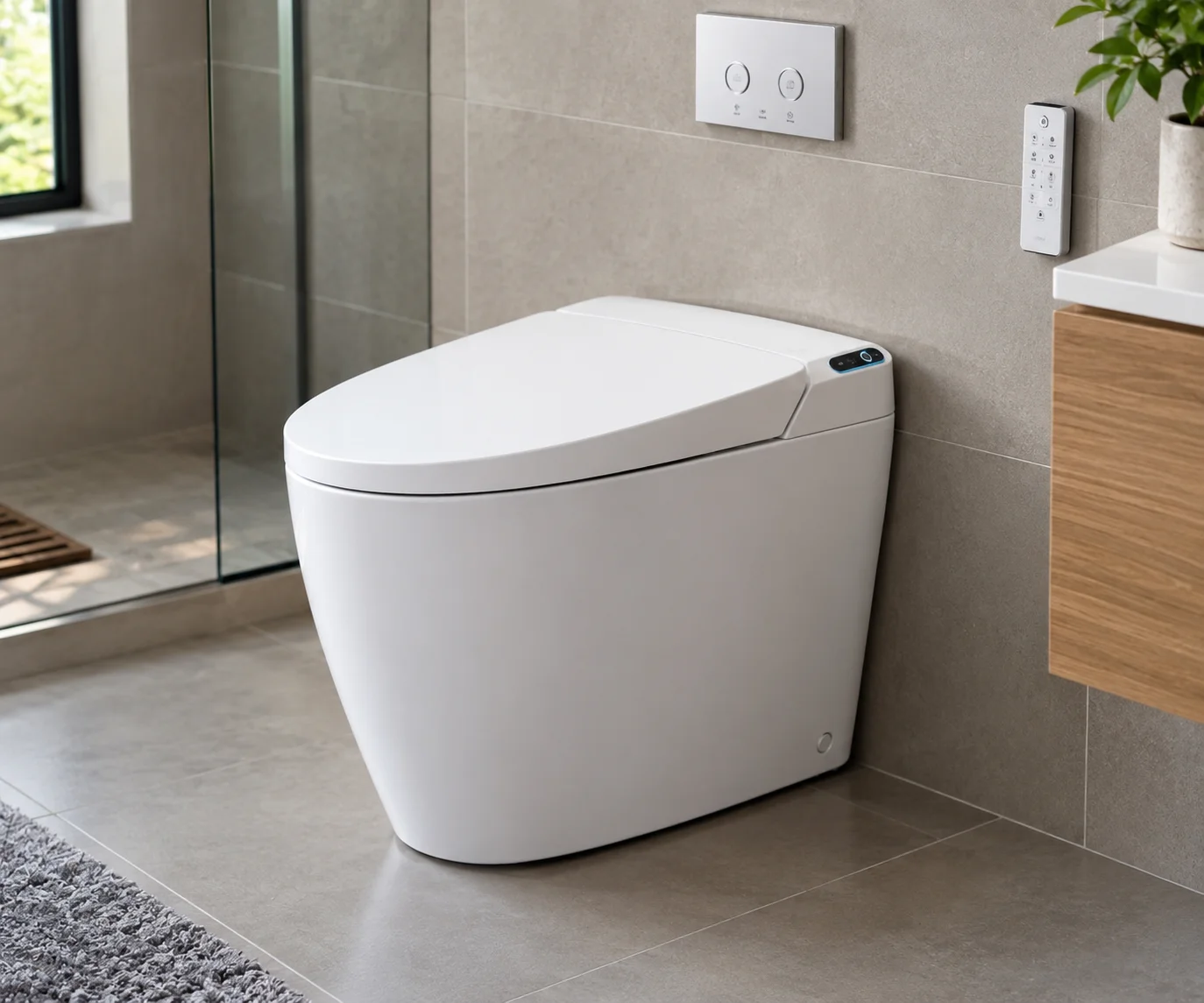
Residential smart tankless toilets are a newer category, and the name is a bit of a stretch. Many of these actually contain a small concealed reservoir or pump inside the unit itself. They look tankless from the outside, since there’s no visible tank behind the bowl. But they’re not always running on pure supply-line pressure the way commercial units do. Shopping for one of these for a home bathroom? Read the specs carefully. “Tankless” branding doesn’t always mean what it means in a commercial context.
How Does a Tankless Toilet Flush Without a Tank?
In a standard toilet, the tank holds roughly a gallon or more of water. When you flush, that water drops fast enough to fill the siphon tube at the bottom of the bowl. That pulls waste through and out to the drain line. Most household water lines can’t deliver water fast enough on their own to do this. That’s exactly why the tank exists in the first place.
A true tankless toilet solves this differently. It connects straight to a pressurized supply line through a flushometer valve. When you activate the flush, the valve opens and lets pressurized water rush directly into the bowl. That force clears the bowl without needing stored volume first. Flushometers typically need at least 20 PSI of water pressure to work properly. They also use a wider supply line, usually 1 inch, compared to the standard 1/2-inch line that feeds a typical residential toilet.
There’s no tank refilling between uses. As a result, a tankless toilet flushes again almost immediately after each use. That’s one reason commercial buildings favor them for high-traffic restrooms.
Pros of Tankless Toilets
Faster refill and repeat flushing. Without a tank that needs to slowly refill, tankless toilets are ready to flush again almost immediately. This matters most in high-traffic settings, but it’s also convenient in busy households.
Space savings. Removing the tank frees up several inches of depth in the bathroom. That helps in smaller powder rooms or tight layouts.
Cleaner, more consistent flush. The direct-pressure flush tends to clear the bowl more thoroughly in a single flush. This can reduce double-flushing and, in commercial settings, reduce clogs from incomplete flushes.
Fewer tank-related repairs. Tank toilets are notorious for flapper valves, fill valves, and float mechanisms wearing out over time. Tankless designs remove several of those failure points entirely.
Cons of Tankless Toilets
Water pressure requirements. This is the big one. Does your home’s water pressure sit below what the flushometer needs, usually around 20 PSI minimum? The toilet simply won’t flush properly. Homes on well water, or older homes with narrow supply lines, often can’t meet this requirement without plumbing upgrades.
Louder flush. The direct-pressure system is noticeably louder than a gravity tank flush. This is worth considering if the bathroom shares a wall with a bedroom or home office.
Professional installation is usually required. Most manufacturers recommend a licensed plumber for installation. The supply line diameter and pressure requirements differ from standard residential plumbing. This isn’t typically a weekend DIY swap.
No backup during water pressure loss. There’s no stored water in these systems. A pressure drop or supply interruption means the toilet won’t flush at all. A standard tank toilet, on the other hand, still has its stored gallon available even during a brief pressure dip.
Higher upfront cost. Between the specialized valve, the bowl, and professional installation, tankless systems typically cost more than a standard toilet setup.
How Much Does a Tankless Toilet Cost?
Pricing varies significantly depending on which type you’re buying. A commercial flushometer system costs differently than a residential smart tankless unit.
For commercial-style flushometer toilets, budget separately for the bowl and the valve. TOTO wall-mounted and floor-mount tankless bowls typically run $375 to over $1,000, depending on the model. Flushometer valves themselves range from around $135 for basic manual units to $500–$860 for touchless, sensor-operated versions with high-efficiency features. Add professional installation on top of that, since supply line modifications are often needed.
For residential smart tankless toilets, all-in-one units with built-in bidet functions, heated seats, and other features typically start around $500 to $600 for entry-level models. Premium smart toilets run well beyond $1,000 once you add features like warm air drying and night lighting.
Is a Tankless Toilet Right for Your Home?
Check your home’s actual water pressure before you commit. A simple pressure gauge, available at most hardware stores for under $15, screws onto an outdoor spigot and gives you a PSI reading in seconds. Are you below the manufacturer’s minimum, usually in the 20 PSI range for true flushometer systems? You’ll need a pressure-boosting solution, or you’ll need to reconsider the purchase.
It’s also worth checking local plumbing code before installing a commercial-style flushometer system in a residential setting. Supply line sizing and venting requirements can differ from standard residential fixtures. A licensed plumber can confirm whether your existing plumbing infrastructure supports the switch. The EPA’s WaterSense program offers general guidance on water-efficient fixtures, and it’s worth reviewing if efficiency is a driving factor in your decision (EPA WaterSense toilets guidance).
If you’re weighing a full bathroom fixture upgrade, our Bathroom Fixtures Buying Guide covers how toilets, faucets, and showerheads work together on water efficiency and cost.
Frequently Asked Questions
Do tankless toilets use less water than regular toilets? Not necessarily. Many tankless flushometer models use a similar amount of water per flush as standard toilets. The difference is that water arrives at higher pressure rather than in higher volume. Some newer high-efficiency models do reduce water use, so check the GPF rating on any specific model.
Can I install a tankless toilet in a regular house? It depends on your water pressure and supply line size. True flushometer tankless toilets need around 20 PSI minimum and a wider supply line than most homes have installed. A licensed plumber can test your pressure and confirm whether your plumbing supports it.
Why are tankless toilets louder than regular toilets? The flush relies on direct water pressure rather than gravity from a tank. That creates a more forceful, audible flush. It’s a known trade-off of the design, not a sign of a malfunction.
What happens if the water pressure drops with a tankless toilet? There’s no stored water in these systems. A pressure drop or supply interruption means the toilet won’t flush effectively, or at all. This is one of the main drawbacks compared to tank toilets, which retain a reserve of water even during brief pressure issues.
Are tankless toilets more expensive to install than regular toilets? Generally yes. Between the specialized flushometer valve, potential supply line upgrades, and professional installation labor, tankless systems typically cost more upfront than a standard tank toilet installation.
Is a “smart tankless toilet” the same as a commercial flushometer toilet? Not always. Many residential smart toilets marketed as tankless actually use a small internal reservoir or pump, rather than running purely on supply-line pressure like true commercial flushometer systems. Check the product specs before assuming it works the same way.
Do tankless toilets clog less than regular toilets? They tend to, thanks to the forceful, direct-pressure flush that clears the bowl more thoroughly in one pass. This is part of why high-traffic commercial restrooms favor flushometer systems, since it reduces double-flushing and incomplete flushes.