

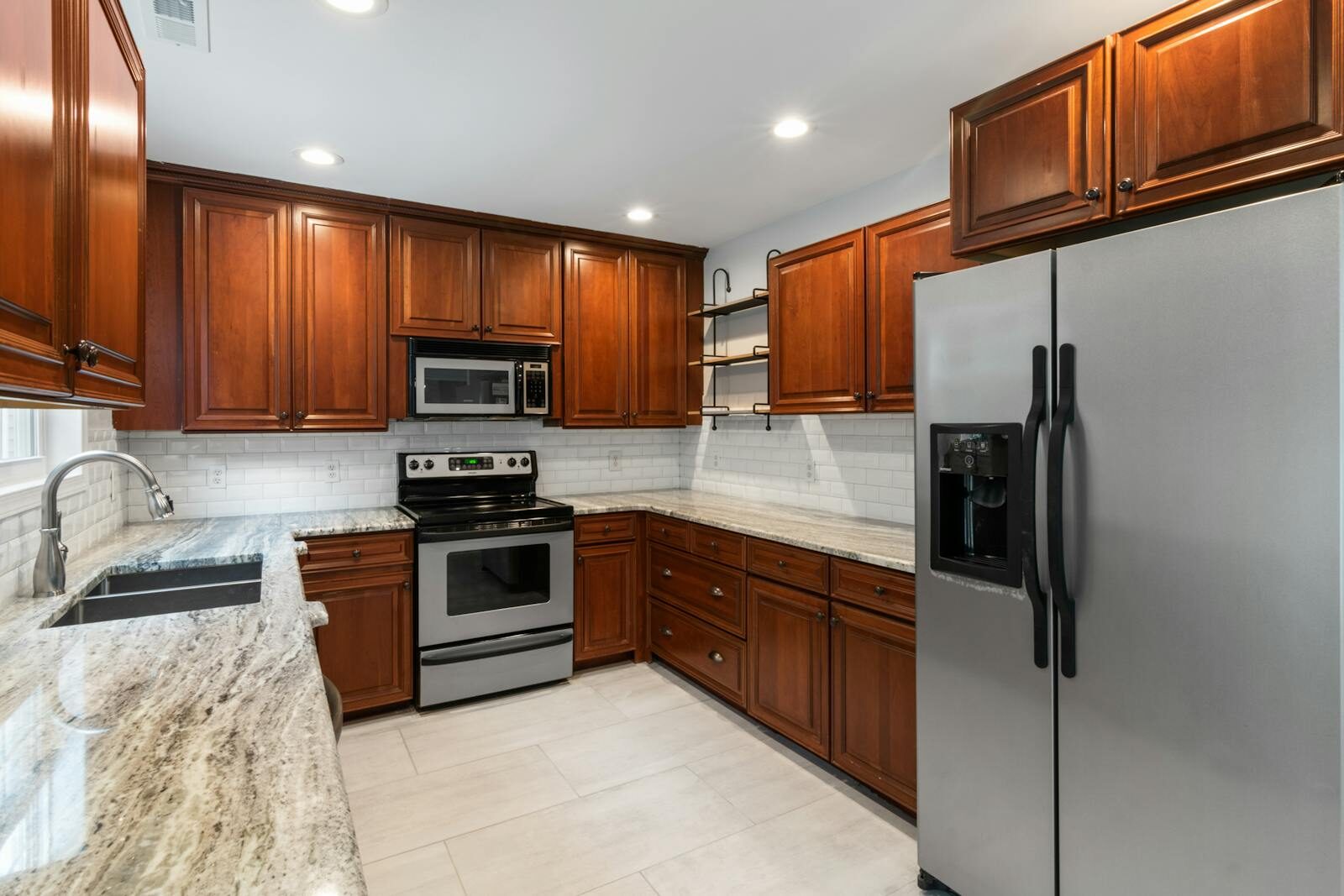
Best Red Oak Cabinets for Stylish and Durable Kitchens
Walk into almost any American home built between the 1970s and early 2000s and there’s a good chance the kitchen cabinets are red oak. For decades, it was the dominant wood in residential cabinetry — and not without reason. Red oak is strong, widely available, and produces a warm, characterful grain that gives a kitchen a real sense of substance.
Then came the white kitchen era. Painted cabinets and bright shaker fronts dominated the 2010s, and red oak fell so far out of fashion that homeowners began ripping out perfectly sound cabinetry just because it felt dated.
In 2026, that story has shifted. Natural wood kitchens are back — and red oak is leading the revival. Not the heavily lacquered, orange-stained oak of 1995, but something reimagined: wire-brushed, white-washed, paired with matte black hardware and concrete countertops, or simply oiled to let the grain speak for itself.
Whether you’re building a new kitchen in suburban Chicago, IL, renovating a mid-century home in Phoenix, AZ, or refreshing a dated kitchen in Charlotte, NC, this guide covers everything you need — from finishes and door styles to hardware, design ideas, and real 2026 cost figures.
Why Red Oak? Understanding the Wood Before You Commit
Strength and Hardness
Red oak registers 1,290 on the Janka hardness scale. That puts it well ahead of cherry (995), walnut (1,010), and pine (870). For cabinet boxes and door frames that endure daily use across years of opening and closing, that hardness matters. Red oak cabinets simply hold up.
Open Grain — a Feature, Not a Flaw
Red oak has an open, pronounced grain — a network of pores and rays that create strong visual texture. In 1990s kitchens, this grain was often buried under thick coats of orange-tinted polyurethane that yellowed badly over time.
With modern finishing techniques — wire brushing, white-washing, natural oil finishes — that same grain becomes one of the wood’s greatest design assets. It catches light, creates depth, and gives oak a handcrafted quality that no painted MDF can replicate.
Stain Receptivity
Few woods accept stain as evenly and predictably as red oak. Its consistent cellular structure means color absorbs uniformly, making it one of the most forgiving woods for achieving a specific tone. From warm honey and natural blond to rich espresso and gray-washed finishes, red oak handles them all reliably.
Sustainability and Availability
Red oak is the most abundant hardwood in the eastern United States — growing from Maine to Florida and west to the Great Plains. For homeowners prioritizing sustainability, choosing domestically grown red oak over imported exotic hardwoods is a straightforward environmental win.
The Best Finishes for Red Oak Cabinets in 2026
The finish on your red oak cabinets is the most impactful decision you’ll make about them. It determines color, sheen, texture, and whether the result reads as timeless or dated.
Natural and Lightly Oiled
A lightly oiled or hard-wax oiled finish enhances the wood’s natural color without dramatically changing it. The result is a warm, golden-blond tone with fully visible grain and a matte, organic surface that feels tactile and alive.
This finish works beautifully in Scandinavian-influenced kitchens and warm minimalist interiors. It’s especially popular in Portland, OR, Denver, CO, and Austin, TX, where natural materials and understated luxury are design priorities.
Best pairing: White or light gray quartz countertops, integrated appliances, bar-pull hardware in brushed brass or warm gold.
Honey and Warm Amber Stain
A warm, medium honey stain — significantly lighter and less orange than the classic 1990s version — brings out the richness of red oak’s undertones while keeping the tone inviting. It bridges traditional warmth and contemporary restraint without forcing a choice between the two.
This finish also photographs well in listing photos — an important consideration for homeowners thinking about resale value.
Best pairing: Creamy white upper cabinets in a two-tone kitchen, butcher block or quartzite countertops, oil-rubbed bronze or brushed nickel hardware.
White-Washed and Gray-Washed Finishes
White-washing and gray-washing involve applying a diluted pigment and wiping it back partially, leaving color in the grain pores while letting the wood tone show through. The result is lighter and softer — contemporary and fresh without losing the natural character of the wood.
Gray-washed red oak has become a genuine design favorite in 2026 kitchen renovations. It neutralizes the warm reddish tones that can feel heavy in certain light while keeping the tactile, crafted quality of real wood intact.
Best pairing: Matte black fixtures and hardware, concrete or dark stone countertops, stainless steel appliances.
Wire-Brushed Textures
Wire brushing removes the soft wood between grain lines, leaving a subtly three-dimensional, textured surface. Combined with a natural oil or white-wash finish, wire-brushed red oak has an almost reclaimed-wood quality — rugged warmth that feels both handcrafted and completely current.
This finish is particularly popular in farmhouse kitchens and high-end renovations where texture and authenticity matter more than uniformity.
Best pairing: Apron-front farmhouse sinks, unlacquered brass hardware, honed marble or leathered granite countertops.
Painted Oak — a Different Path
Painting red oak cabinets is possible, but the open grain requires significant preparation — grain filler, multiple coats of primer — to achieve a smooth result. Done properly, the finish can be excellent. Done hastily, the grain telegraphs through the paint and looks uneven.
If painting is your goal, budget for professional-grade preparation. The difference in the final result is dramatic.
Best Cabinet Door Styles for Red Oak
Shaker Style
The shaker door — a flat recessed panel framed by a simple stile and rail — is the most versatile cabinet door in residential design. Red oak’s grain gives it a warmth and depth that painted shaker simply can’t match.
In 2026, natural or lightly stained oak shaker cabinets dominate new-construction homes across the Southeast, Southwest, and Mountain West — a clear reflection of the broader shift toward warm, natural material palettes in American kitchens.
Raised Panel
Raised panel doors have a formal, substantial quality that suits traditional and craftsman-style homes. In red oak, they carry real architectural weight.
They remain a popular choice in established neighborhoods and period homes across the Northeast and Mid-Atlantic — Connecticut, New Jersey, Virginia, Maryland — where traditional design is genuinely valued.
Flat Slab (Full Overlay)
A flat slab door — a single, uninterrupted panel of wood — showcases red oak’s grain in the most dramatic way. In a wire-brushed or naturally oiled finish, it’s genuinely striking.
This style works best in contemporary, open-plan kitchens in urban settings — New York City lofts, Chicago condos, Los Angeles modern homes — where the kitchen is a visible design feature of the living space.
Beadboard Panel
The beadboard panel door brings a cottage or farmhouse character to red oak cabinetry. In a white-washed or light honey finish, it creates a relaxed, lived-in aesthetic.
It works beautifully in coastal homes in Florida, the Carolinas, and New England, as well as throughout the Pacific Northwest where relaxed, naturalistic design is a lifestyle choice.
Hardware That Works Beautifully With Red Oak Cabinets
Hardware is the jewelry of a kitchen. Here are the pairings that complement red oak most effectively in 2026.
Matte Black: The sharpest, most contemporary contrast for red oak. Black pulls and knobs against natural or lightly stained oak create a modern organic look that’s one of the defining kitchen aesthetics of this year.
Brushed Brass and Warm Gold: The warmth of brushed brass echoes red oak’s undertones and creates a rich, layered look without competing with the wood. A natural choice for transitional kitchens.
Oil-Rubbed Bronze: Darker and more traditional, it pairs beautifully with honey-stained and raised-panel cabinets. Suits craftsman and transitional kitchen styles particularly well.
Brushed Nickel: For two-tone kitchens pairing natural oak lowers with white uppers, brushed nickel offers a clean neutral bridge that works with both materials without favoring either.
Unlacquered Brass: Left without a protective coating, this hardware develops a natural patina over time. Paired with wire-brushed oak, it creates a look that genuinely improves with age.
Best Design Styles for Red Oak Cabinets
Modern Organic / Warm Minimalist
Natural red oak in a light oil or honey finish, paired with clean lines, integrated appliances, and natural stone countertops. The goal is warmth without clutter, texture without noise.
This style is especially strong in California, Colorado, Oregon, and Washington — markets where natural materials inform how homes are designed at every level.
Traditional American
Raised panel doors, crown molding, furniture-style feet on the island, and warm amber stain. These kitchens have real architectural gravitas and age beautifully. They feel most at home in colonial, Georgian, and Victorian-era homes throughout the Northeast and Mid-Atlantic.
Modern Farmhouse
Shaker doors, an apron-front sink, open shelving, and a mix of painted and natural wood surfaces. Red oak in a natural or wire-brushed finish is one of its most authentic expressions.
In states like Tennessee, Kentucky, Missouri, and the Carolinas, where farmhouse architecture has deep cultural roots, this kitchen style resonates well beyond design trends.
Industrial Modern
Matte black hardware, concrete countertops, stainless appliances, and flat-slab red oak in a gray-washed finish. This is the kitchen style of urban lofts and converted warehouse spaces in cities like Brooklyn, NY, Nashville, TN, Kansas City, MO, and Pittsburgh, PA.
Red Oak vs. Other Wood Species
It helps to understand how red oak stacks up before committing.
Red Oak vs. White Oak: White oak has a tighter, cooler-toned grain and has become the fashionable choice in high-end kitchen design. It’s also more expensive and less available. Red oak offers similar warmth at a more accessible price point — and with the right finish, the difference is minimal.
Red Oak vs. Maple: Maple has a finer, more uniform grain and takes paint more smoothly than oak without grain filling. For stained natural wood kitchens, red oak’s richer grain character is generally more visually interesting.
Red Oak vs. Cherry: Cherry darkens dramatically as it patinates — beautiful, but unpredictable. Red oak’s color is far more stable over time, which appeals to homeowners who want consistency.
What Do Red Oak Cabinets Cost in 2026?
Cabinet pricing varies by region, supplier, and construction method. Here’s a general guide for the U.S. market:
Stock red oak cabinets (big-box store, standard sizes): $80–$250 per linear foot installed.
Semi-custom red oak cabinets (size flexibility and finish options): $150–$400 per linear foot installed.
Custom red oak cabinets (local cabinet maker, fully bespoke): $400–$1,000+ per linear foot installed.
For a typical 10×10 kitchen, a semi-custom red oak cabinet package runs roughly $3,000–$8,000 before installation. In high-cost markets like San Francisco, CA, Boston, MA, and New York, NY, custom cabinetry will run significantly higher.
According to the National Kitchen and Bath Association (NKBA), cabinetry and hardware typically represent 29–35% of a total kitchen renovation budget — the single largest line item in most remodels. Choosing red oak over premium alternatives like walnut or white oak can free up meaningful budget for countertops, appliances, and lighting. Explore kitchen design trends and cost benchmarks from the NKBA at nkba.org.
How to Care for Red Oak Kitchen Cabinets
A well-made set of red oak cabinets, properly maintained, will outlast most other elements in your kitchen.
Daily: Wipe cabinet faces with a soft, slightly damp microfiber cloth. Dry immediately — standing moisture is the enemy of any wood cabinet.
Weekly: Use a pH-neutral wood cleaner or diluted dish soap solution applied gently, followed by thorough drying. Avoid sprays containing silicone, ammonia, or bleach.
Annually: Oil-finished cabinets benefit from a light application of furniture-grade oil or hard-wax oil to replenish moisture and maintain the surface. Polyurethane-finished cabinets may need a light buff and recoat every few years in high-traffic areas.
Avoid: Steam, prolonged humidity near the sink and dishwasher, abrasive cleaners, and direct oven heat. These are the primary causes of premature wear in kitchen cabinetry regardless of wood species.
Actionable Tips for Choosing and Installing Red Oak Cabinets
- Request a wood sample in your actual kitchen before finalizing a finish — the same stain reads completely differently under your specific light conditions versus in a showroom.
- Specify grain direction when ordering custom cabinets — vertical grain gives a cleaner, more contemporary look while cathedral grain reads as more traditional.
- Use grain filler for a smooth painted finish — skipping this step on oak is one of the most common finishing mistakes in kitchen renovation.
- Choose soft-close hardware for all doors and drawers — the investment is modest and protects cabinet joints from the cumulative stress of daily use.
- Ventilate the kitchen properly — ensure your range hood is adequately sized and vented to the exterior, not recirculating. Steam and heat are the primary enemies of wood cabinetry.
- Consider refinishing before replacing — a professional refinish of solid red oak cabinets can transform their appearance for 20–40% of the cost of full replacement.
Related: How to Plan a Kitchen Renovation That Adds Real Value to Your Home
Final Thoughts
Red oak cabinets have earned their place in American kitchens not through trend cycles, but through decades of genuine performance — and a grain character that no engineered material has ever convincingly replicated.
The kitchens doing the most interesting work with red oak in 2026 aren’t trying to disguise the wood. They’re leaning into it — celebrating the grain, the warmth, the texture, and the honest materiality of one of North America’s most beautiful hardwoods.
Paired with the right finish, hardware, and complementary materials, a red oak kitchen doesn’t look like a relic of the past. It looks like exactly what it is: a thoughtfully designed space built to last.