

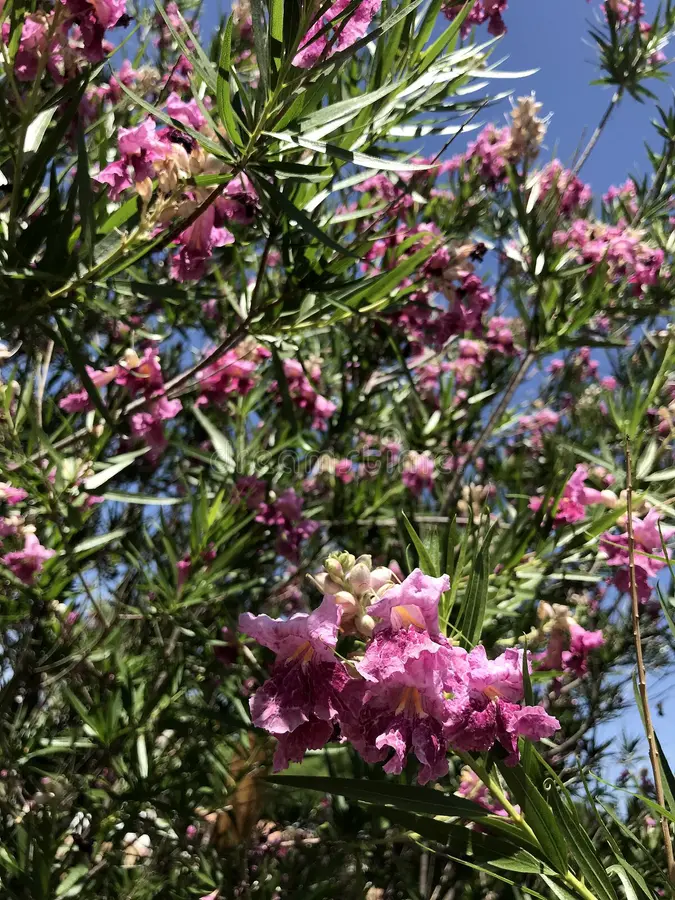
Every few years, a particular tree starts showing up in more yards, more nursery lots, and more landscaping conversations — and right now, the Chitalpa is having its moment. If you’ve spotted a tree with soft, trumpet-shaped flowers blooming well into summer and wondered what it was, there’s a good chance that was a Chitalpa. And if a neighbor, a nursery worker, or a landscaping blog has suggested you plant one, you’re probably asking the same question a lot of homeowners are: is this tree actually as good as it looks?
The honest answer is — it depends on where you live, what you’re planting it for, and how much ongoing care you’re willing to give. This guide breaks down everything you need to know before you dig that first hole, including the real drawbacks that enthusiastic nursery tags sometimes leave out.
What Is a Chitalpa Tree?
Before we get into the pros and cons, it’s worth understanding what you’re actually dealing with. The Chitalpa (× Chitalpa tashkentensis) is not a naturally occurring species. It’s a hybrid, developed in the 1960s at the Uzbek Academy of Sciences in Tashkent — which explains the species name — by crossing two North American native trees:
- Chilopsis linearis (Desert Willow) — a drought-tolerant, heat-loving native of the American Southwest
- Catalpa bignonioides (Southern Catalpa) — a fast-growing, flowering tree native to the southeastern United States
The goal was to combine the Desert Willow’s drought tolerance and extended bloom period with the Catalpa’s faster growth rate and larger stature. By most measures, the hybridization worked. The Chitalpa took off in the American nursery trade in the 1990s and has been a popular ornamental choice in USDA Hardiness Zones 6 through 9 ever since.
Two named cultivars dominate the market today:
- ‘Pink Dawn’ — the more widely available variety, with soft pink to lavender flowers and a slightly more upright form
- ‘Morning Cloud’ — white to cream-colored flowers, slightly more compact in mature size
Both share the same basic care requirements and growth habits, though ‘Morning Cloud’ tends to be a touch more restrained in its spread.
Chitalpa Tree at a Glance
| Feature | Details |
|---|---|
| Mature Height | 20–30 feet |
| Mature Spread | 20–30 feet |
| Growth Rate | Fast (2–3 feet per year) |
| USDA Hardiness Zones | 6–9 |
| Bloom Period | Late spring through early fall |
| Flower Color | Pink, lavender, or white depending on cultivar |
| Sun Requirements | Full sun (6+ hours daily) |
| Water Needs | Low to moderate once established |
| Soil Tolerance | Wide range; prefers well-drained |
| Lifespan | Moderate (20–40 years) |
| Toxicity | Mildly toxic to pets and livestock |
The Pros of Planting a Chitalpa Tree
1. It Blooms Longer Than Almost Anything Else in Your Yard
This is the Chitalpa’s single biggest selling point, and it’s legitimate. Most flowering ornamental trees — crabapples, redbuds, dogwoods — put on a spectacular show for two to four weeks in spring and then spend the rest of the season as a plain green backdrop. The Chitalpa blooms from late May or early June all the way through September in most regions, and sometimes into October in warmer climates.
That’s roughly four to five months of color, which is genuinely unusual for a tree of this size. If you’re trying to add sustained visual interest to a yard that goes green and quiet by July, this is one of the most effective tools available to you.
2. Exceptional Drought Tolerance Once Established
Thanks to its Desert Willow parentage, the Chitalpa handles dry conditions better than most flowering trees. Once it’s been in the ground for two to three growing seasons and developed a deep root system, it can thrive on rainfall alone in many parts of the American West and Southwest — including large swaths of California, Arizona, New Mexico, Nevada, and Texas.
For homeowners dealing with water restrictions, rising water costs, or simply the reality of living in a region where summer rain is unreliable, this drought resilience is a meaningful practical advantage. The Chitalpa was practically built for the climate conditions that more and more American yards are experiencing.
3. Fast Growth Rate Provides Shade Relatively Quickly
Slow-growing trees are often the more permanent, more ecologically valuable choice — but sometimes you want shade before your kids graduate high school. The Chitalpa grows at roughly two to three feet per year under good conditions, which puts it in the “fast” category by any standard. A tree planted at five feet tall in spring 2026 could realistically be providing genuine canopy coverage by 2029 or 2030.
For new construction homes with bare, sun-baked yards, or for any landscape that needs structure within a few years rather than a few decades, this growth rate is a real practical benefit.
4. Heat Tolerance Makes It Ideal for Hot American Climates
While many ornamental trees struggle in prolonged heat — fading blooms, sunburned foliage, general stress — the Chitalpa handles summer heat with ease. It was literally bred from two of the most heat-tolerant flowering species native to North America. In the American South, the Mountain West, the Central Valley of California, and the transition zones of the Southwest, it performs consistently well when other flowering trees would be struggling.
This heat resilience also makes it a smart choice in urban settings, where pavement, buildings, and limited soil volume create what’s called the “heat island” effect — raising temperatures several degrees above surrounding areas.
5. Low Maintenance After Establishment
Once established, the Chitalpa is not a demanding tree. It doesn’t require regular fertilization, it’s not highly susceptible to common pests or diseases in most regions, and it doesn’t need significant pruning to maintain a reasonably attractive shape. For homeowners who want attractive landscaping without a heavy ongoing time investment, that’s an appealing package.
6. Pollinator Friendly
The tubular, trumpet-shaped flowers are well suited to hummingbirds and long-tongued bees, making the Chitalpa a useful addition to pollinator-friendly landscapes. In regions where habitat for native pollinators is increasingly under pressure, adding plants that provide extended nectar resources through the summer months has real ecological value.
The Cons of Planting a Chitalpa Tree
Here’s where the nursery tag gets a little quiet. The Chitalpa has real drawbacks, and they’re worth understanding before you commit.
1. It Is a Sterile Hybrid — No Seeds, No Seedlings
The Chitalpa does not produce viable seeds. As a sterile hybrid, it can’t reproduce, which means it won’t spread or naturalize in your yard or neighboring properties. For some gardeners, this is a non-issue or even a plus. But it also means the tree contributes essentially nothing to the seed-based food chain that supports birds and wildlife. Native trees produce seeds, nuts, and berries that dozens of species depend on. The Chitalpa doesn’t participate in that ecological web in any meaningful way.
If supporting local wildlife and biodiversity is a priority for your landscape — and increasingly, ecologists and native plant advocates argue it should be — the Chitalpa’s sterility is a genuine limitation.
2. Not Reliably Hardy in Cold Winters
The Chitalpa’s USDA Zone 6 rating means it can theoretically survive winters in the mid-Atlantic, the lower Midwest, and parts of the Pacific Northwest. But “survive” and “thrive” are different things. In Zone 6 — particularly colder parts of Zone 6 — late spring freezes can damage new growth, and harsh winters can cause significant dieback on branches. In Zone 5 and colder, it’s generally not a viable option.
Homeowners in Chicago, Minneapolis, Cleveland, or similar climates should not expect the Chitalpa to perform as advertised. It’s fundamentally a warm-climate tree, and planting it outside its comfort zone results in a stressed, short-lived specimen that never quite lives up to what the photos promised.
3. Relatively Short Lifespan Compared to Native Alternatives
A mature oak tree can live for hundreds of years. A well-sited Sugar Maple can anchor a yard for a century or more. The Chitalpa, being a hybrid, does not share that kind of longevity. Most references put the Chitalpa’s realistic lifespan at 20 to 40 years under good conditions, and closer to 15 to 25 years in suboptimal sites or climates.
For a tree you’re planting as a long-term landscape investment, that’s a meaningful limitation. You may find yourself replacing it within your own lifetime — which is not something you’d say about most native tree choices.
4. Susceptibility to Powdery Mildew in Humid Climates
The Chitalpa inherited its Desert Willow parent’s dislike of high humidity. In the humid Southeast — Georgia, Louisiana, the Carolinas, parts of Tennessee — powdery mildew can be a persistent problem, coating leaves with a grayish-white film that’s both unsightly and stressful to the tree. It won’t necessarily kill the tree, but it will diminish its appearance during the very season it’s supposed to be showing off.
If you live east of the Mississippi, particularly in a region with hot, humid summers, powdery mildew is a real management challenge with this tree. Fungicide treatments help but add to ongoing maintenance costs and effort.
5. Weak Wood Structure
Mature Chitalpa trees can develop structural weaknesses in their branching, particularly when allowed to grow with multiple co-dominant leaders (essentially, when two or more main trunks compete for dominance). This can result in branch failure during wind events or ice storms — a meaningful concern for trees planted near homes, vehicles, or play areas.
Proper pruning when the tree is young — selecting a single dominant leader and removing competing branches — significantly reduces this risk, but it requires knowing what you’re doing. Many homeowners who plant Chitalpas and leave them to their own devices end up with structurally compromised trees within ten to fifteen years.
6. Mildly Toxic to Pets and Livestock
All parts of the Chitalpa — flowers, leaves, bark — contain compounds that are mildly toxic to dogs, cats, horses, and livestock. Ingestion typically causes gastrointestinal distress rather than serious poisoning, but if you have pets that browse or chew on garden plants, or horses with access to the tree, this is a risk worth factoring in. For households with curious dogs who spend significant time in the yard, it may be reason enough to choose a different species.
Who Should Plant a Chitalpa Tree?
Based on everything above, the Chitalpa makes the most sense for:
- Homeowners in USDA Zones 7–9 — particularly in the American Southwest, Mountain West, California, and parts of the South with drier summers
- Yards with full sun and well-drained soil — avoid low spots or compacted clay
- Landscapes that need fast-growing shade or structure — where waiting 20 years for a native tree isn’t practical
- Water-conscious gardeners — especially where irrigation is restricted or expensive
- Pollinator gardens — where extended bloom time through summer adds genuine ecological value
It is probably not the right choice for:
- Gardeners in Zone 6 or colder — the risk of cold damage makes it a poor investment
- Humid southeastern climates — powdery mildew will likely be an ongoing battle
- Households with grazing pets or livestock — mild toxicity is a genuine concern
- Landscapes where long-term tree canopy is the goal — native alternatives will outlast the Chitalpa significantly
- Native plant or wildlife-focused gardens — a sterile hybrid that supports little wildlife isn’t aligned with those goals
How to Plant and Care for a Chitalpa Tree
If you’ve weighed the pros and cons and decided the Chitalpa is right for your yard, here’s how to give it the best possible start.
Choosing the Right Spot
Full sun is non-negotiable — at least six hours of direct sun daily, and eight or more is better. The Chitalpa does not bloom well in partial shade and will become leggy and structurally weak if starved of sunlight. Choose a location with good drainage; standing water after rain is a warning sign that the site isn’t appropriate.
Planting
Plant in spring after your last frost date, or in early fall at least eight weeks before your first frost. Dig a hole two to three times wider than the root ball but no deeper than the root ball is tall. Backfill with native soil — Chitalpas don’t generally benefit from heavy soil amendments, and overly rich soil can actually produce excess leafy growth at the expense of blooms. Water deeply immediately after planting.
Watering
For the first two growing seasons, water deeply and regularly — roughly once or twice per week during dry spells, aiming to keep the root zone moist but not soggy. Once established, reduce watering significantly. In true desert climates, monthly deep watering during the growing season is typically sufficient for a mature tree.
Pruning
This is the most important maintenance task for long-term tree health. In the first three to five years, focus on establishing a single dominant central leader and removing any competing trunks. Prune in late winter before new growth begins. Remove crossing or rubbing branches, and any growth that forms tight V-shaped crotches — these are structural weak points that will fail eventually. Once the tree has a solid structure established, minimal annual pruning is needed.
Fertilizing
In most residential soils, no fertilization is needed. If growth seems sluggish and soil tests reveal specific deficiencies, a balanced slow-release fertilizer in early spring can help — but avoid high-nitrogen fertilizers, which push leafy growth at the expense of flowers.
Managing Powdery Mildew
In humid climates, preventive fungicide applications in late spring can reduce the severity of powdery mildew outbreaks. Neem oil and potassium bicarbonate-based products offer lower-toxicity options. Ensuring good air circulation around the tree through consistent pruning also helps.
Native Alternatives Worth Considering
If you’ve read through the cons and aren’t completely sold, here are some native alternatives that provide some of the same benefits with better ecological value and, in many cases, greater longevity:
- Desert Willow (Chilopsis linearis) — One of the Chitalpa’s parent species and a superb native choice for dry western climates. Slightly smaller, equally beautiful in bloom, and a legitimate wildlife plant. For a deeper look at native tree selection by region, the Arbor Day Foundation’s tree selection tool is an excellent free resource.
- Southern Catalpa (Catalpa bignonioides) — The other parent species. Better suited to the Southeast and Midwest. Longer-lived, larger, and more ecologically valuable.
- American Fringe Tree (Chionanthus virginicus) — Underused and underrated, with stunning early summer bloom and strong wildlife value.
- Sweetbay Magnolia (Magnolia virginiana) — Extended bloom period, tolerates wet soils, excellent for humid southeastern yards.
If you’re already familiar with using native trees in your landscape design, our Complete Guide to Drought-Tolerant Landscaping covers regional planting strategies across different American climate zones.
Final Verdict: Is the Chitalpa Tree Worth Planting?
For the right yard, in the right climate, with the right expectations — yes, the Chitalpa is genuinely worth planting. Its combination of extended bloom time, drought tolerance, and fast growth fills a real gap in the ornamental tree market, particularly for homeowners in the American West and Southwest who struggle to find flowering trees that perform reliably through hot, dry summers.
But it’s not a tree for every yard, every climate, or every gardener. Plant it in the wrong zone and it’ll struggle. Ignore its pruning needs and it’ll become structurally dangerous. Expect it to anchor a landscape for generations and you’ll be disappointed.
Go in clear-eyed — appreciate what it does exceptionally well, plan for what it doesn’t, and give it the sun and drainage it needs — and the Chitalpa can be one of the most rewarding additions you’ll make to your yard.