

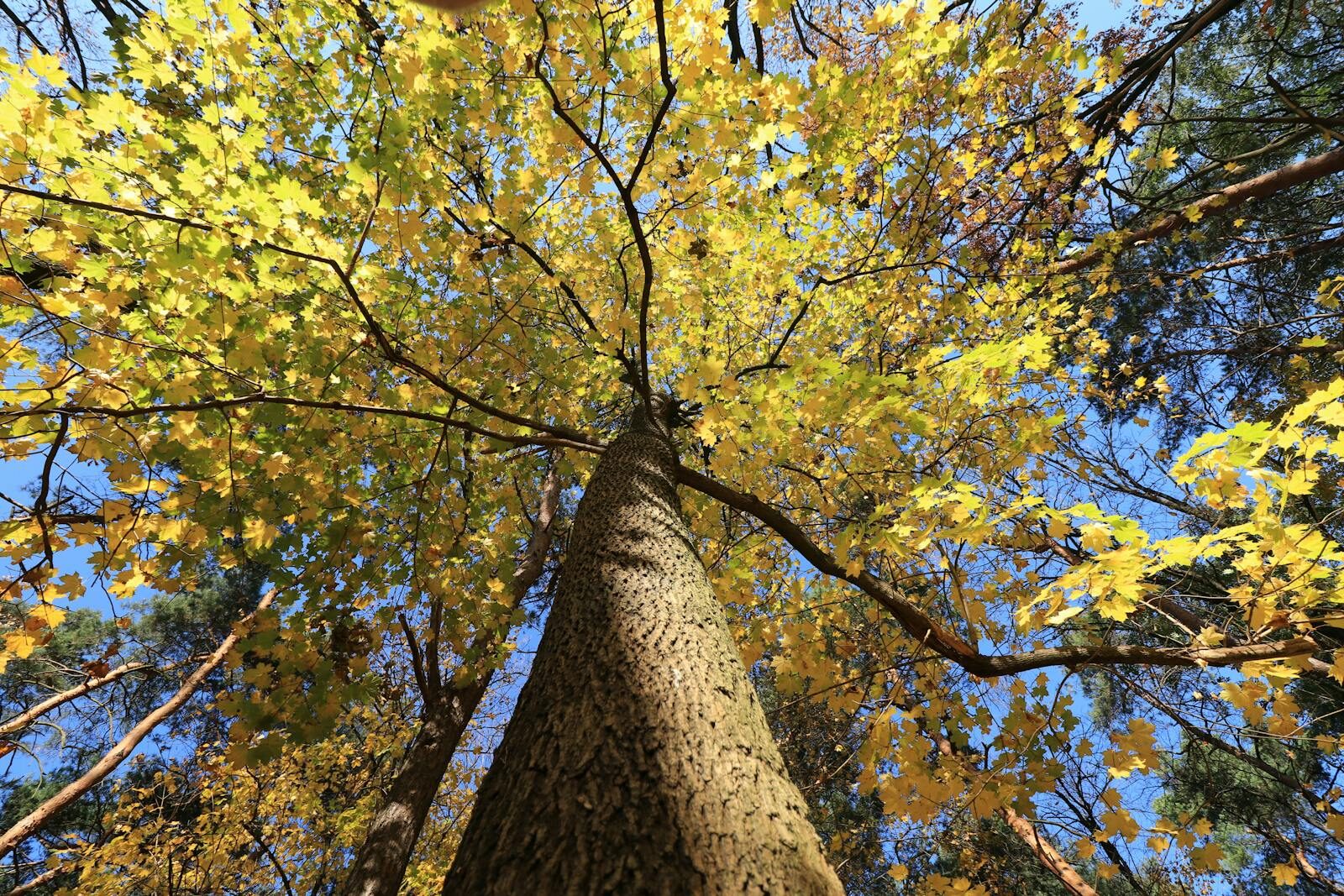
If you’ve ever driven through a New England neighborhood in October or admired a sprawling Japanese garden in the Pacific Northwest, there’s a good chance a multi-trunk maple was the tree stealing the show. These naturally sculptural trees bring something to a landscape that single-trunk specimens simply can’t — layered branching, organic movement, and year-round visual interest that ranges from spring’s soft new growth to fall’s blazing canopy.
Multi-trunk maple trees (also called multi-stem or clump maples) are exactly what they sound like: a single maple plant that grows with two or more main trunks rising from the same root base. They can occur naturally, or a nursery can train them that way during early growth. Either way, the result is a tree that looks like it belongs — in a woodland edge, a suburban front yard, or a refined garden setting.
Whether you’re a homeowner in the Midwest looking for a focal point tree, a landscaper in the Southeast specifying street-friendly specimens, or a Pacific Northwest gardener trying to fill a shady corner, this guide covers everything you need to know about multi-trunk maples in 2026.
What Exactly Is a Multi-Trunk Maple Tree?
A multi-trunk maple is a maple that has been grown — or has naturally developed — with multiple main stems emerging at or near ground level. Unlike a standard shade tree with a single dominant leader, multi-trunk maples spread their structure across two to five (sometimes more) trunks, creating a fuller, more organic silhouette.
This growth habit can happen in two ways. First, some maples naturally send up multiple sprouts from a single root crown, particularly after damage, fire, or in the wild where competition for light encourages spreading. Second — and most commonly in the nursery trade — growers plant multiple seedlings or rooted cuttings together in one pot and train them as a unified clump. By the time the tree reaches the garden center, it looks and functions as one tree.
The look is unmistakably natural. Multi-trunk maples tend to have exposed, often beautifully textured bark at their bases, gracefully arching branch structure, and a canopy that feels layered rather than rounded. For landscape designers across the US, they’ve become a go-to choice for transitional spaces between lawn and garden, along driveways, and as anchor specimens in mixed borders.
Key Benefits of Multi-Trunk Maple Trees
1. Exceptional Year-Round Ornamental Value
Few trees deliver four distinct seasons of interest the way multi-stem maples do. In spring, emerging leaves — often tinged red or bronze — unfurl alongside small but charming flower clusters. Summer brings a dense, cooling canopy. Fall is where most maples earn their reputation, with foliage that can turn brilliant shades of orange, scarlet, yellow, or burgundy depending on variety. And in winter, the exposed multi-trunk structure becomes a sculptural focal point, especially striking after a light snow.
For homeowners in USDA hardiness zones 4 through 9 (which covers most of the continental United States), this four-season performance makes multi-trunk maples one of the most landscape-efficient trees you can plant.
2. A More Natural, Layered Look
Single-trunk trees, particularly in formal or suburban settings, can look a bit stiff — like they were placed rather than grown. Multi-trunk maples have an inherent naturalism that suits modern landscape aesthetics far better, especially the cottage garden, naturalistic, and New American Garden styles that have dominated US landscaping trends since the early 2020s.
Their layered branching also does something structurally valuable: it creates visual depth. When you look at a multi-stem maple, your eye moves through the layers of the canopy rather than just landing on a flat edge. That depth is especially useful in smaller yards where you need a tree to work hard aesthetically.
3. More Forgiving in Wind
With the load of the canopy distributed across multiple trunks rather than one, multi-trunk maples tend to be somewhat more resilient in windy conditions than their single-leader counterparts — particularly the smaller varieties. This doesn’t mean they’re storm-proof, but the structural redundancy of multiple stems reduces the catastrophic failure risk that comes with a single dominant trunk in mature specimens.
4. Faster Canopy Fill
Because there are multiple trunks from the start, multi-trunk maples tend to fill their mature canopy width sooner than a single-trunk tree would. If you’re trying to establish screening, shade, or a landscape focal point in a shorter timeframe, starting with a multi-stem specimen gives you a head start.
5. Attractive at Multiple Scales
Multi-trunk maples come in sizes ranging from dwarf specimens under 6 feet to medium trees reaching 25 to 35 feet. That range makes them genuinely versatile — small clump forms work beautifully in containers or tight urban gardens, while larger varieties serve as full canopy trees in suburban yards and commercial landscapes.
6. Excellent Property Value Impact
Mature trees are consistently ranked among the top factors that increase residential property value in the US real estate market. A well-placed, well-maintained multi-trunk maple — especially a Japanese maple variety in the front yard — can be a meaningful selling point. In competitive markets like the Pacific Northwest, Mid-Atlantic, and Upper Midwest, distinctive specimen trees command real attention from buyers.
Best Multi-Trunk Maple Tree Varieties for US Landscapes
Not all maples naturally lend themselves to the multi-trunk form. Here are the varieties that perform best — and how they differ by region.
Japanese Maple (Acer palmatum) — The Gold Standard
Japanese maples are the variety most associated with multi-trunk form, and for good reason. They grow slowly, develop beautiful branching structure, and have been cultivated in clump form for generations. Most Japanese maples sold in US nurseries today are multi-stem specimens by default.
Best cultivars for multi-trunk form:
‘Bloodgood’ — Perhaps the most widely planted Japanese maple in America. Deep burgundy-red foliage holds its color through summer heat better than most, eventually turning brilliant crimson in fall. Grows 15 to 20 feet tall and wide in a graceful, vase-shaped clump. Performs well from USDA zones 5 to 8, making it ideal for much of the Mid-Atlantic, Midwest, Southeast, and Pacific Coast.
‘Sango Kaku’ (Coral Bark Maple) — A standout four-season performer. The stems are bright coral-red, and the winter interest is spectacular. Lime-green spring foliage transitions to soft gold in fall. Best suited to zones 5 to 8, and particularly beloved in Pacific Northwest gardens.
‘Crimson Queen’ — A weeping, laceleaf Japanese maple with deeply dissected red-purple foliage. Stays relatively compact (8 to 10 feet), making it a superb choice for smaller yards, courtyard gardens, or as a container specimen in warmer zones.
‘Osakazuki’ — Widely regarded as producing some of the most intense fall color of any maple. Leaves turn an almost neon scarlet-orange that’s genuinely startling. Grows in a rounded, multi-stem form to about 15 feet.
Regional Note: In the Southeast (Carolinas, Georgia, northern Florida), choose heat-tolerant Japanese maple cultivars and provide afternoon shade. In the Upper Midwest (Minnesota, Wisconsin), look for zone 4-rated varieties or provide winter mulching.
Paperbark Maple (Acer griseum) — The Winter Showstopper
If Japanese maples are the stars of fall color, paperbark maple is the undisputed champion of winter interest. Its cinnamon-colored, peeling bark is one of the most striking features of any deciduous tree, and it’s shown off beautifully in a multi-trunk clump where multiple trunks display the bark simultaneously.
Paperbark maple grows slowly — about 12 to 25 feet over many years — and is hardy from zones 4 to 8. It’s particularly well-suited to the Midwest and Mid-Atlantic, where its slow growth and structural elegance work well in more formal suburban settings. Nursery availability has improved significantly in recent years, so multi-stem specimens are becoming easier to source.
Amur Maple (Acer tataricum subsp. ginnala) — Cold Hardy Performer
For gardeners in USDA zones 3 to 8 — think the northern Plains, Upper Midwest, and New England — Amur maple is one of the best multi-trunk options available. It’s incredibly cold hardy, produces beautiful red fall color, and tends to naturally grow in a multi-stem shrubby form that’s easy to train into a small clump tree.
Amur maple typically reaches 15 to 20 feet and is used extensively as a screen, hedge, or specimen in colder climates where Japanese maples struggle. ‘Flame’ is the most popular cultivar, known for reliable scarlet fall color.
Important note: In some parts of the Upper Midwest and Northeast, Amur maple has naturalized aggressively and is considered invasive. Check with your local cooperative extension service before planting in Minnesota, Wisconsin, or neighboring states.
Trident Maple (Acer buergerianum) — Urban Tough Guy
Trident maple is an underrated gem, particularly for urban landscapes and areas with heat, drought, and compacted soils. It handles street-side conditions far better than Japanese maple, and when grown in multi-trunk form, it develops a characterful, gnarled structure reminiscent of a bonsai specimen at full scale.
Hardy from zones 5 to 9, it’s an excellent choice for the Southeast, Mid-Atlantic, and warmer parts of the Midwest. Mature height is typically 20 to 35 feet. Fall color ranges from orange to red-purple, and the exfoliating bark on older specimens adds winter interest.
Vine Maple (Acer circinatum) — Pacific Northwest Native
For gardeners in the Pacific Northwest, vine maple is a native multi-trunk species that deserves far more attention than it gets. It grows naturally in the understory of Pacific Coast forests, producing a sprawling, multi-stem form that can be trained into an elegant small tree reaching 15 to 25 feet.
Fall color ranges from yellow to orange-red, and the graceful arching trunks are particularly beautiful. It’s one of the most deer-resistant maples available — no small thing in suburban Pacific Northwest neighborhoods. Hardy in zones 6 to 9.
Three-Flower Maple (Acer triflorum) — Underdog Worth Growing
Three-flower maple doesn’t get the attention it deserves. It has the same exfoliating, papery bark as paperbark maple, outstanding fall color (orange to scarlet), and a naturally neat multi-trunk form. Hardy from zones 4 to 7, it’s particularly well-suited to the Midwest and New England. Availability is improving as more specialty nurseries propagate it, and it’s worth seeking out for a truly distinctive specimen.
How to Choose the Right Multi-Trunk Maple for Your Yard
Before you fall in love with a specific variety at the nursery, run through these practical questions:
What’s your USDA hardiness zone? Japanese maples are zone 5 to 8. Amur maples can push zone 3. Trident maples handle zone 9. Get the zone right before anything else.
How much space do you have? A mature ‘Bloodgood’ Japanese maple can spread 20 feet wide. A ‘Crimson Queen’ weeping form might only need 10. Measure your space and choose accordingly.
What’s the light situation? Most maples prefer full sun to part shade. Japanese maples actually benefit from afternoon shade in hotter climates (zones 7 and warmer). Vine maple is comfortable in deep shade.
What’s your soil like? Maples generally prefer moist, well-drained, slightly acidic soil. Trident maple is the most tolerant of urban soils. Paperbark and three-flower maple prefer good drainage.
What problem are you trying to solve? Privacy screen? Amur or vine maple. Fall color statement? ‘Osakazuki’ or ‘Flame.’ Winter structure? Paperbark or coral bark. Urban street tree? Trident maple.
Multi-Trunk Maple Tree Care Guide
Once you’ve selected your variety and planted it correctly, multi-trunk maples are relatively low-maintenance trees. Here’s what they need.
Planting
Plant in spring or fall — avoid midsummer heat. Dig a hole two to three times wider than the root ball and the same depth. Multi-trunk maples should never be planted deeper than they were growing in the container; burying the root flare invites disease and structural problems.
Amend clay soils with compost to improve drainage. In sandy soils, organic matter helps retain moisture. Backfill with native soil rather than heavily amended mix in the planting hole — roots need to extend beyond the hole to anchor the tree properly.
Stake loosely only if necessary due to wind exposure, and remove stakes within one year. Multi-trunk forms are generally more self-supporting than single-trunk trees, so staking is often unnecessary.
Watering
Newly planted multi-trunk maples need consistent moisture for the first two to three years as they establish. Water deeply (12 to 18 inches) once or twice per week during dry periods rather than shallow, frequent watering. A 3 to 4-inch layer of organic mulch (shredded hardwood, pine bark) applied in a ring 3 feet out from the base — but not touching the trunks — conserves moisture and moderates soil temperature.
Once established, most varieties are moderately drought tolerant, though Japanese maples appreciate supplemental watering during extended dry spells, particularly in zones 7 and warmer.
Fertilizing
Multi-trunk maples are not heavy feeders. An application of balanced, slow-release fertilizer (10-10-10 or similar) in early spring before new growth emerges is generally all that’s needed. Avoid high-nitrogen fertilizers that push excessive soft growth, which is more susceptible to disease and late frost damage.
Japanese maples especially can be damaged by overfertilization. If your soil is reasonably fertile, a top dressing of compost in early spring may be sufficient.
Pruning
This is where multi-trunk maples require the most thought. The goal is to maintain and enhance the natural form rather than fighting it. Here are the core principles:
Prune during dormancy. Late winter (February to March in most of the US) is the best time for structural pruning, before sap begins flowing. Avoid heavy pruning in late spring when maples are actively growing and susceptible to “bleeding” from sap flow.
Remove crossing and rubbing branches. Where stems contact each other, they create wounds that invite disease. Identify and remove the less desirable of any two crossing limbs while the tree is young.
Maintain trunk separation. On a clump maple, you want the main trunks to radiate outward from the base rather than crowding together. As the tree grows, occasionally remove lower branches that are growing inward to keep airflow and light moving through the structure.
Avoid lion-tailing. This is the practice of stripping interior branches to leave foliage only at the tips — it’s both structurally dangerous and aesthetically poor on maples. Keep interior branching.
Size matters. On Japanese maples, hand pruners or bypass loppers are sufficient for most work. On larger maples (trident, Amur, paperbark), a pruning saw may be needed for structural cuts. Always make cuts just outside the branch collar at a slight angle to encourage healing.
For a detailed walkthrough of structural pruning techniques, visit our guide on how to prune ornamental trees for long-term health which covers multi-stem forms specifically.
Pest and Disease Management
Multi-trunk maples are generally healthy trees, but a few issues are worth watching for.
Verticillium wilt is the most serious disease threat for maples in the US. It’s a soil-borne fungal disease that causes sudden wilting and dieback, often in one part of the canopy first. There’s no cure; the best prevention is good soil drainage and avoiding wounding roots. Multi-trunk forms have some advantage here — if one trunk is affected, the others may survive.
Aphids are common on Japanese maples, particularly in spring. They’re rarely serious — a strong stream of water or a spray of insecticidal soap handles most infestations without reaching for harsh chemicals.
Scale insects can affect bark on stressed trees. Look for small, waxy bumps on stems. Horticultural oil applied in late winter before bud break is an effective, low-impact treatment.
Tar spot is a fungal leaf disease common in the Midwest and Northeast that produces dark spots on maple foliage. It’s primarily cosmetic and rarely affects tree health. Raking and disposing of fallen leaves (rather than composting) reduces spore load for the following year.
According to the USDA Forest Service, maintaining good soil health and avoiding mechanical damage to roots and trunks is the single most effective strategy for preventing disease in urban and suburban maples.
Winter Care
For Japanese maples in zones 5 and 6, a 4-inch layer of mulch over the root zone before the ground freezes provides meaningful cold protection. Young Japanese maples in their first few winters may benefit from burlap wrapping in exposed northern sites.
Amur, paperbark, and trident maples require little to no special winter care within their hardiness zones.
Common Mistakes to Avoid
Planting too deep. The most common mistake with any tree — bury the root flare and you’re inviting crown rot and slow decline. Err on the side of planting slightly high rather than deep.
Planting too close to structures. Multi-trunk maples spread as much as they grow tall. A tree labeled as 15 feet tall may be 15 to 20 feet wide. Give it full room to mature.
Overwatering established trees. Once established, maples need less water than most homeowners think. Waterlogged soil is a primary driver of root rot and verticillium wilt. Ensure drainage is adequate before planting.
Pruning at the wrong time. Heavy pruning in late spring triggers excessive sap loss (bleeding) and stresses the tree unnecessarily. Stick to late winter for major structural work.
Using string trimmers near the base. Repeated nicking of the lower trunks with a string trimmer creates open wounds that invite disease and wood-boring insects. Keep a clear mulch ring around all trunk bases.
Choosing the wrong variety for the climate. A Japanese maple planted in zone 4 without protection is a gamble. A tropical-appearing cultivar planted in zone 7b full sun is going to struggle. Respect hardiness zones and light requirements.
Where to Buy Multi-Trunk Maple Trees in the USA
National garden centers including Home Depot and Lowe’s carry Japanese maple clump forms during the spring season, typically in 3 to 15-gallon containers. For less common varieties like paperbark, three-flower, or vine maple, specialty nurseries and mail-order sources are your best option.
Regional specialty nurseries — Broken Arrow Nursery in Connecticut, Cistus Nursery in Oregon, Camellia Forest Nursery in North Carolina — carry wide selections of unusual maples and ship throughout the continental US. Spring is the best time to order, as availability is highest and establishment success is greatest.
When selecting a tree in person, look for these quality indicators: well-spaced trunks that radiate from the base rather than crowding together, no circling roots visible at the soil surface or container edge, healthy foliage with no signs of scorch or disease, and a root ball proportional to the canopy size.
Quick Reference: Multi-Trunk Maple Comparison Chart
| Variety | Mature Height | Hardiness Zones | Best Feature | Best US Region |
|---|---|---|---|---|
| Japanese Maple ‘Bloodgood’ | 15–20 ft | 5–8 | Year-round color | Most of US |
| Coral Bark ‘Sango Kaku’ | 20–25 ft | 5–8 | Winter stem color | Pacific NW, Mid-Atlantic |
| Paperbark Maple | 20–30 ft | 4–8 | Peeling bark | Midwest, Mid-Atlantic |
| Amur Maple ‘Flame’ | 15–20 ft | 3–8 | Cold hardiness | Upper Midwest, NE |
| Trident Maple | 20–35 ft | 5–9 | Urban tolerance | Southeast, Mid-Atlantic |
| Vine Maple | 15–25 ft | 6–9 | Native, shade-tolerant | Pacific NW |
| Three-Flower Maple | 20–30 ft | 4–7 | Bark + fall color | Midwest, New England |
Final Thoughts
Multi-trunk maple trees are among the most rewarding landscape investments you can make. They bring genuine four-season beauty, a naturally elegant structure that single-trunk trees can’t replicate, and enough variety — in size, cold hardiness, and regional adaptation — to suit almost any US landscape situation.
The key is matching the variety to your specific zone, site conditions, and aesthetic goals. A ‘Bloodgood’ Japanese maple in a Mid-Atlantic front yard is a completely different experience than a vine maple in a Pacific Northwest woodland garden, but both are extraordinary in their own right.
Plant them well, give them a few seasons to establish, and resist the urge to over-prune or over-fertilize. Multi-trunk maples reward patience. And in a world of fast-growing, high-maintenance landscape options, a tree that gets more beautiful every year without demanding constant attention is worth every bit of the investment.