

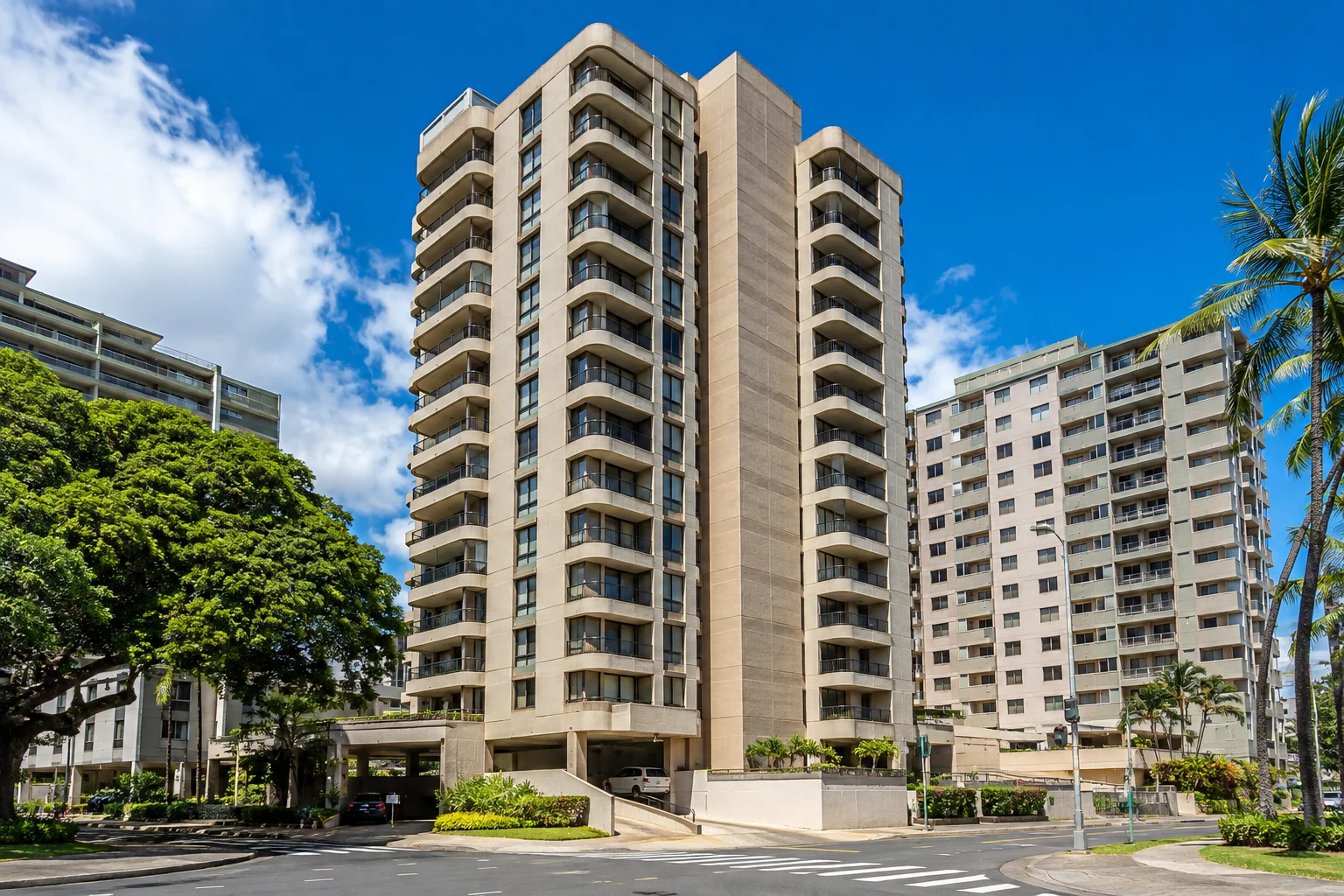
Tucked into the heart of Honolulu’s Ala Moana-Kakaako district, Coty Towers has quietly housed generations of island residents since the late 1960s. It’s not flashy. It doesn’t chase trends. Instead, it offers something increasingly rare in this part of Oahu: an affordable, well-located condo building where owners actually stay put for years.
If you’re researching 731 Amana St as a potential home purchase, you need more than a listing photo and a price tag. This guide breaks down the building’s history, unit layouts, current pricing trends, and exactly what makes this pocket of Honolulu worth a closer look.
About Coty Towers
Coty Towers, sometimes listed as Coty Tower in MLS records, went up in 1968. The building rises 16 stories and holds just 61 units total, with only four units per floor. That low density gives it a quieter, more private feel than many newer high-rises in the area, where hallways can stretch past a dozen doors on a single level.
Because the building is over five decades old, its design leans functional rather than flashy. Straightforward architecture, solid construction, and an emphasis on views over ornamentation define the structure. That said, its longevity speaks for itself. Few buildings survive more than fifty years of Honolulu’s shifting real estate landscape while still holding steady owner interest, and Coty Towers has done exactly that.
Security stands out as a recurring theme across listings and resident feedback. The building uses FOB entry access, and an on-site resident manager keeps daily operations running smoothly. For buyers moving from the mainland, or anyone simply looking for peace of mind, that combination matters more than it might initially seem.
Unit Sizes, Layouts, and Views
Most units at Coty Towers run around 858 square feet, typically configured as two bedrooms and two bathrooms. That layout hits a practical sweet spot for small families, professional couples, or investors targeting long-term rental tenants.
Views vary significantly by floor and unit orientation. Higher floors, particularly corner units, often catch partial ocean views alongside city and treetop scenery. Lower and mid-level units tend to face more urban or mountain views instead. If ocean views matter to you specifically, it’s worth requesting floor plans and photos for the exact unit rather than assuming based on building height alone.
Parking varies by unit as well. Some listings include one assigned stall, while larger or more recently renovated units sometimes come with two. Given Honolulu’s tight parking market, this detail alone can meaningfully affect a unit’s resale value down the line.
Current Pricing at Coty Towers
Recent sales and active listings give a clear sense of where this building sits in Honolulu’s condo market.
- Recent sold units: Two-bedroom, two-bath units with roughly 858 square feet have sold in the $405,000 to $535,000 range over the past few years, depending on renovation level, floor, and view.
- Recent active listings: A 2026 listing on the third floor came to market at $425,000, positioned as a value opportunity for buyers willing to update the unit themselves. A renovated 15th-floor corner unit, by contrast, listed closer to $535,000, reflecting both its higher floor and updated finishes.
- Price per square foot: Based on recent sales, pricing generally lands somewhere between $470 and $625 per square foot, which remains competitive for the Ala Moana-Kakaako submarket.
Renovation status clearly drives a meaningful chunk of that price spread. Units with updated flooring, modern appliances, and refreshed plumbing or lighting fixtures consistently command a premium over original, unrenovated units, even within the same floor plan.
Why Ala Moana-Kakaako Is Such a Strong Location
Location remains the single biggest reason buyers keep circling back to this building. Coty Towers sits within walking distance of Ala Moana Center, one of the largest and most popular shopping destinations in the entire state. Beyond retail, the surrounding blocks pack in grocery stores, Target, Walmart, and Don Quijote, so daily errands rarely require a long drive.
Beach access adds another layer of appeal. Ala Moana Beach Park sits just a short distance away, giving residents that classic island lifestyle without needing a car to enjoy it. Meanwhile, downtown Honolulu is only about two miles out, keeping commutes manageable for anyone working in the city’s business core.
Education access rounds out the picture nicely. The University of Hawaii at Manoa sits roughly 2.5 miles away, about a seven-minute drive, and Hawaii Pacific University and Chaminade University of Honolulu also sit within easy reach. That proximity makes the building appealing not just to long-term owners, but to investors targeting student or faculty rental demand as well.
Healthcare access matters too, particularly for buyers planning to age in place. Three hospitals sit within 1.5 miles of the building, with Shriners Hospital for Children just 0.8 miles away, roughly a fifteen-minute walk.
Is Coty Towers a Good Investment?
Whether this building fits your goals really depends on what you’re optimizing for. If you want brand-new finishes, resort-style amenities, and a rooftop pool, Coty Towers likely won’t check every box, since many units still reflect their original 1968 construction unless previously renovated.
However, if you’re prioritizing location, price point, and low-density privacy over flash, this building holds real appeal. Its position in Ala Moana-Kakaako places it near some of Oahu’s best shopping, dining, and beach access, all while staying meaningfully more affordable than newer high-rises just a few blocks away. For buyers comfortable investing in updates themselves, units listed below $450,000 can offer solid long-term upside as the surrounding neighborhood continues its ongoing transformation into one of Honolulu’s most active urban corridors.
Rental demand also works in the building’s favor. Because of its walkable location and manageable unit sizes, Coty Towers regularly attracts renters, which matters if you’re considering this as an income property rather than a primary residence.
What to Know Before You Buy
A few practical details are worth confirming before making an offer on any unit in this building.
Ask about renovation history. Since the building dates to 1968, plumbing, electrical systems, and finishes vary widely from unit to unit depending on when, or if, a previous owner updated them.
Review the HOA financials closely. Older buildings sometimes carry higher maintenance fees or upcoming special assessments tied to structural upkeep, so requesting recent HOA meeting minutes and reserve fund reports gives you a clearer financial picture.
Confirm parking assignment. Because stalls vary by unit, get written confirmation of exactly which parking stall, or stalls, transfer with your specific unit.
Ask about floor-specific views. Photos in listings don’t always reflect current conditions, especially if nearby construction has changed sightlines since the photos were taken.
If you’re comparing Coty Towers against other Kakaako condo buildings before deciding, our guide to buying a condo in Honolulu’s Kakaako district walks through several nearby buildings worth cross-checking on price, amenities, and building age.
For current market-wide pricing trends across Honolulu, Redfin’s Honolulu housing market data offers a useful, regularly updated benchmark to compare against any specific listing you’re considering at Coty Towers.
Frequently Asked Questions
When was Coty Towers built? Coty Towers was completed in 1968. It’s a 16-story building with 61 total units, at four units per floor.
How big are the units at Coty Towers? Most units run approximately 858 square feet, typically arranged as two bedrooms and two bathrooms.
What is the average price of a condo at Coty Towers? Recent sales and listings have ranged from roughly $405,000 to $535,000, depending on floor, view, and renovation status. Price per square foot generally falls between $470 and $625.
Does Coty Towers have secure building access? Yes. The building uses FOB entry access and employs an on-site resident manager, which adds a meaningful layer of security compared to many buildings without on-site staff.
Is Coty Towers close to Ala Moana Center? Yes, the building sits within easy walking distance of Ala Moana Center, along with nearby Target, Walmart, and Don Quijote, making everyday errands very convenient.
Does Coty Towers include parking? Most units include at least one assigned parking stall, though this varies by unit, so confirming the specific parking arrangement before purchase is important.
Is Coty Towers a good rental investment property? It can be, thanks to its walkable location and manageable unit sizes. Proximity to the University of Hawaii at Manoa and other nearby universities also supports steady rental demand.
What neighborhood is Coty Towers located in? The building sits in Honolulu’s Ala Moana-Kakaako district, sometimes labeled “Holiday Mart” in older MLS records, an area known for shopping, dining, and easy beach access.
Final Thoughts
Coty Towers won’t appeal to buyers chasing brand-new finishes or resort-style amenities, and that’s fine, because that’s simply not what this building is selling. What it does offer is a low-density, secure, and genuinely well-located condo option in one of Honolulu’s most walkable, amenity-rich neighborhoods. For buyers prioritizing location and value over polish, this 1968 building continues to hold its own more than five decades after it first opened its doors. If you’re seriously considering a unit here, take the time to review renovation history and HOA financials closely, since those two details will tell you far more about long-term value than the view alone.