

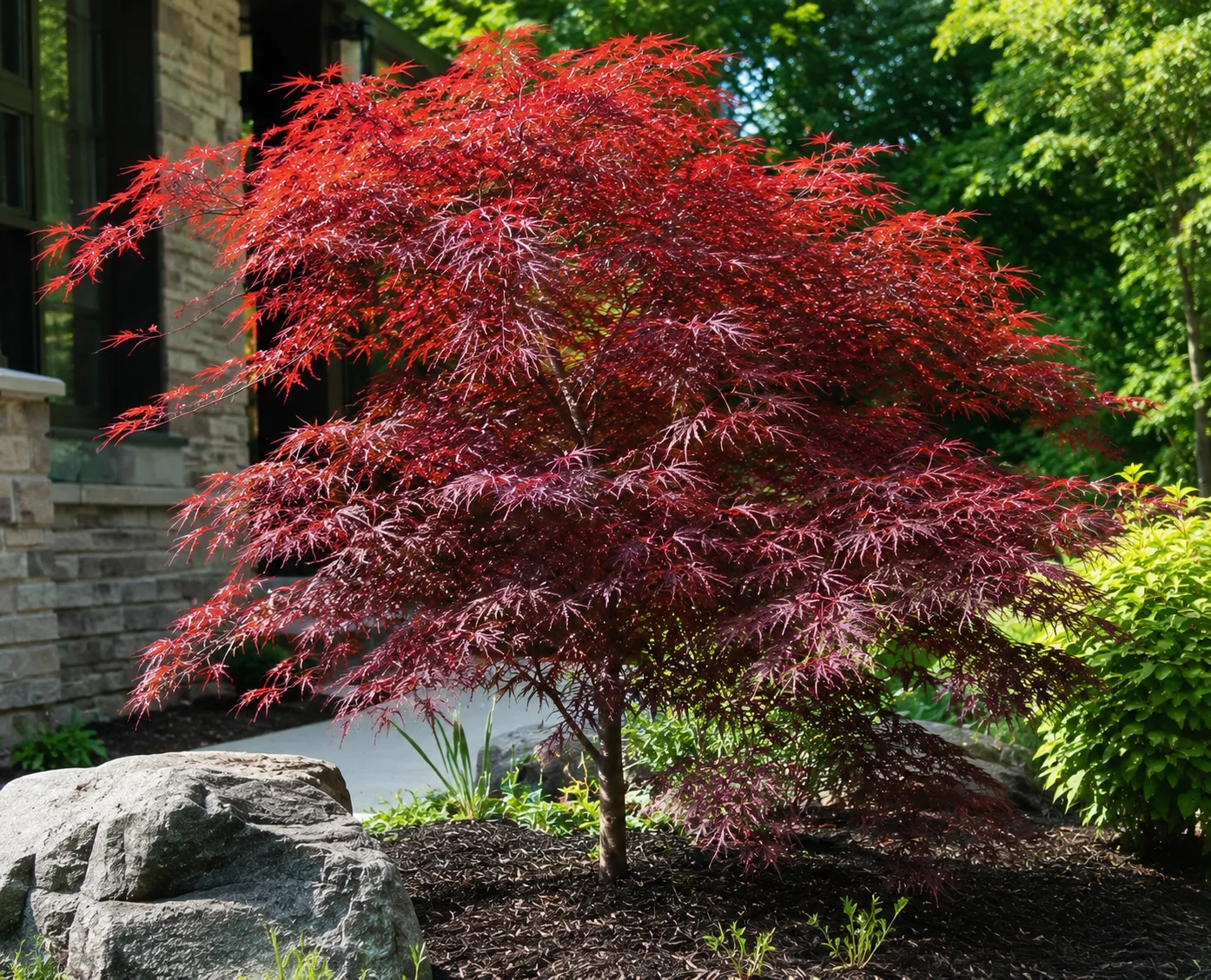
Walk into almost any well-designed front yard with a Japanese maple as the centerpiece, and there’s a good chance you’re looking at a Red Dragon. That deep burgundy, lacy foliage cascading over itself in a tidy mound draws attention in every season except winter, and even then, the branching structure holds its own visual interest.
I’ve grown this cultivar in a few different gardens over the years, and it’s become one of my favorite small trees to recommend. It rewards patience more than effort. You won’t fight it every season the way you might with faster, messier growers. You’ll mostly just watch it settle in and get better looking year after year.
This guide covers what matters most in 2026: growth rate, mature size, planting, care, pruning, and how to use this maple well in a real American landscape.
What Is a Red Dragon Japanese Maple?
Red Dragon Japanese maple (Acer palmatum var. dissectum ‘Red Dragon‘) belongs to the dissectum group of Japanese maples, often called laceleaf or threadleaf maples. Breeders in New Zealand introduced this specific cultivar in 1991, and it quickly became known for holding its deep red color better than most other red dissectum varieties.
The foliage tells most of the story here. New spring growth emerges bright scarlet. It deepens into a rich burgundy-red through summer, a trait that sets Red Dragon apart from cultivars that fade to green in the heat. Come fall, the leaves shift again into a brilliant crimson before dropping for winter.
The leaves themselves are deeply cut and feathery, almost lace-like, which is exactly what “dissectum” refers to in the botanical name. Some gardeners say the finely divided lobes resemble a dragon’s claws, which likely inspired the cultivar’s name.
Structurally, Red Dragon grows as a small, weeping tree or shrub. It typically develops a strong central leader with an open, rounded, cascading form. That mounding, umbrella-like shape makes it a natural focal point wherever you plant it.
Growth Rate: What to Expect Year by Year
Red Dragon Japanese maple grows slowly, and that’s actually part of its appeal. You won’t need to prune constantly to keep it in bounds, and it won’t outgrow a tight garden spot within a couple of seasons the way faster trees do.
Most sources classify its growth rate as slow to moderate, typically adding somewhere around 6 to 12 inches per year under good conditions. A newly planted specimen often takes several years to really fill out and show its full cascading form. Patience pays off here, since the tree’s best years come after it establishes a strong root system, usually three to five years after planting.
Growing conditions influence the pace significantly. Consistent moisture, protection from harsh wind, and rich, well-drained soil all speed things along. A stressed tree in poor soil or an exposed, windy site grows more slowly and often shows scorched leaf edges by late summer.
Mature Size: How Big Does Red Dragon Get?
Here’s where you’ll find some variation across sources, largely because container-grown specimens differ from those planted in the ground, and staking height affects how tall a tree ultimately appears.
Most references put mature height and spread somewhere between 6 and 10 feet, with some sources listing slightly larger specimens reaching up to 12 feet wide under ideal, long-term growing conditions. Container-grown plants typically stay smaller, often in the 3 to 5-foot range, since the confined root space naturally limits growth.
This compact, predictable size is a major reason gardeners choose Red Dragon for smaller yards, foundation plantings, and even large containers. You get real visual impact without a tree that eventually outgrows its spot and demands removal.
USDA Hardiness Zones and Regional Growing Notes
Red Dragon Japanese maple grows well across USDA hardiness zones 5 through 9, which covers a wide swath of the United States, from the Pacific Northwest and Mid-Atlantic down through much of the Southeast.
A few regional notes matter here:
- In northern zones (5-6), give this tree a sheltered spot away from harsh winter winds and late spring frosts, since new spring growth is tender and susceptible to cold damage.
- In hot southern regions like the Deep South and parts of Texas, afternoon shade becomes important. Direct, hot afternoon sun can scorch the delicate foliage, especially if soil moisture drops.
- In the Pacific Northwest, where Japanese maples thrive overall, Red Dragon performs especially well thanks to the region’s naturally cool, moist growing conditions.
- Across the Midwest, choose a planting site protected from strong prevailing winds, which can dry out and damage the fine, lacy foliage.
Planting Your Red Dragon Japanese Maple
Getting the planting site right matters enormously for a tree that grows this slowly. Mistakes at planting time take years to correct, if they get corrected at all.
1. Choose the right light exposure. Red Dragon tolerates more sun than most other dissectum varieties, but it still benefits from some afternoon shade in hot climates. Morning sun with afternoon shade works well across most of the country.
2. Prepare rich, well-drained, slightly acidic soil. This tree prefers organically rich soil that drains well but doesn’t dry out completely. Amend heavy clay with compost before planting to improve both drainage and fertility.
3. Pick a sheltered location. Strong winds damage the delicate, finely cut foliage and can dry the tree out faster than it can recover. Plant near a structure, fence, or larger tree that blocks harsh wind without casting deep, constant shade.
4. Dig a wide hole, not a deep one. Dig the hole about twice as wide as the root ball, but no deeper. Planting too deep stresses the root system and slows establishment.
5. Water deeply after planting, then mulch. Water thoroughly to settle the soil around the roots. Add a 2 to 3-inch layer of mulch around the base, keeping it away from the trunk itself, to retain moisture and keep roots cool.
Best planting time: early spring or fall, when temperatures stay moderate and the tree isn’t fighting summer heat or winter freeze while it establishes new roots.
Watering and Feeding
Red Dragon Japanese maple wants consistent moisture, especially during its first two to three years in the ground. Avoid letting the soil dry out completely, since drought stress shows up quickly as scorched, curling leaf edges.
Water deeply once or twice a week during the establishment period, adjusting for rainfall and soil type. Once established, the tree tolerates brief dry spells better, though consistent moisture still keeps the foliage looking its best through hot summer stretches.
Skip heavy fertilizing. This tree doesn’t need much supplemental feeding, and excess nitrogen pushes fast, weak growth that doesn’t hold up well. A light application of a balanced, slow-release fertilizer in early spring is usually plenty, and many established trees in decent soil need none at all.
Pruning: Handle With a Light Touch
Japanese maples, including Red Dragon, bleed sap heavily if you prune them at the wrong time of year. That single detail trips up more gardeners than almost anything else with this tree.
Follow these guidelines:
- Prune during dormancy. Late fall through midwinter, after the leaves drop and before new growth starts, is generally the safest window. Pruning during active spring or summer growth often causes significant sap bleeding.
- Keep pruning minimal. This tree naturally develops an attractive, well-branched form on its own. Limit pruning to removing dead, damaged, or crossing branches rather than reshaping the whole tree.
- Thin selectively for structure. If you want to reveal the trunk’s naturally sculptural, muscular form, thin some lower interior branches carefully rather than shearing the canopy’s outer edge.
- Use clean, sharp tools. Clean cuts heal faster and reduce the tree’s exposure to disease. Sanitize pruning tools between cuts, especially if working on multiple trees.
If you’re new to pruning Japanese maples, less is genuinely more here. Step back often while you work, and stop well before you think you’re done.
Common Pests and Problems
Red Dragon Japanese maple stays relatively trouble-free compared to many ornamental trees, but a few issues show up occasionally:
- Leaf scorch appears as brown, crispy edges on leaves, usually caused by too much direct hot sun, wind exposure, or inconsistent watering. Adjust the growing conditions rather than treating it as a disease.
- Aphids sometimes cluster on new growth, causing curled or sticky leaves. A strong spray of water or insecticidal soap usually handles minor infestations.
- Verticillium wilt, a soil-borne fungal disease, can cause branches to die back suddenly. It’s more serious and harder to treat, so consult a certified arborist if you suspect this issue.
- Root rot develops in poorly drained soil, especially in heavy clay that stays consistently wet. Good drainage at planting time prevents most cases.
Regular observation during watering and general yard maintenance usually catches these problems early, well before they threaten the tree’s health.
Landscaping Uses: Where Red Dragon Really Shines
This maple’s compact size and dramatic color make it genuinely versatile in landscape design:
- Focal point specimen. A single Red Dragon near an entryway, patio, or garden bed draws the eye and anchors the whole design.
- Container planting. Its naturally compact size suits large decorative pots beautifully, making it a strong choice for patios, decks, and small urban yards.
- Rock gardens. The cascading, mounded form pairs naturally with stone features and low-growing companion plants.
- Color contrast. Its deep burgundy foliage stands out dramatically against lighter green plants, gold-toned grasses, or light-colored hardscaping.
- Bonsai. Skilled growers sometimes train Red Dragon as bonsai, thanks to its naturally compact growth and striking color.
If you’re looking for other compact, low-maintenance accent plants to round out a small-space landscape, our guide to Sky Pencil Holly covers a narrow, upright evergreen that pairs well with a mounding specimen like Red Dragon, especially in tight side yards or foundation beds.
A Quick Seasonal Care Checklist
- Spring: Watch new growth for cold damage, apply light fertilizer if needed, and check soil moisture as temperatures rise.
- Summer: Water consistently during hot, dry stretches, and watch for leaf scorch on exposed sides of the tree.
- Fall: Enjoy the crimson color show, then prune once leaves fully drop and the tree enters dormancy.
- Winter: Protect young trees from harsh winds, and hold off on any pruning until deep dormancy sets in.
Frequently Asked Questions
How fast does a Red Dragon Japanese maple grow? It grows slowly to moderately, typically adding about 6 to 12 inches per year under good conditions. Most trees need three to five years after planting to really fill out and show their mature cascading form.
How big does Red Dragon Japanese maple get at maturity? Most mature specimens reach 6 to 10 feet tall and wide, though some sources list larger specimens up to 12 feet wide under ideal, long-term conditions. Container-grown trees typically stay smaller, often 3 to 5 feet.
Does Red Dragon Japanese maple need full sun or shade? It tolerates more sun than most other laceleaf maples, but it still benefits from afternoon shade in hot climates. Morning sun with afternoon shade generally works best across most of the United States.
When should I prune my Red Dragon Japanese maple? Prune during dormancy, ideally late fall through midwinter after the leaves drop. Pruning during active spring or summer growth often causes heavy sap bleeding, which stresses the tree.
Why are the leaves on my Red Dragon Japanese maple turning brown? Brown, crispy leaf edges usually indicate leaf scorch from too much direct sun, wind exposure, or inconsistent watering. Adjusting the growing conditions typically resolves the issue, since it’s rarely a sign of disease.
Can I grow a Red Dragon Japanese maple in a container? Yes, and many gardeners do exactly that. Its naturally compact size suits container growing well, though container specimens usually stay smaller than those planted directly in the ground.
What USDA zones work best for Red Dragon Japanese maple? It grows well in USDA hardiness zones 5 through 9, covering a wide range of the United States from the Pacific Northwest and Mid-Atlantic down through much of the Southeast.
Does Red Dragon Japanese maple keep its red color all summer? Yes, better than most other red dissectum varieties. Where many red-leafed maples fade toward green in summer heat, Red Dragon holds its deep burgundy-red color through the season in both sun and shade.
Final Thoughts
Red Dragon Japanese maple rewards the gardener who values quality over speed. It won’t sprawl across your yard in a couple of seasons, and it won’t demand constant pruning to stay in shape. What it offers instead is a slow, steady build toward a genuinely stunning small tree with color that holds up through the toughest part of summer.
Get the planting site right, protect it from harsh wind and scorching afternoon sun, and prune only during dormancy. Do that, and you’ll have a compact, colorful centerpiece that keeps earning compliments for decades.
For detailed botanical information and additional growing guidance, the Missouri Botanical Garden Plant Finder offers a thorough profile of Acer palmatum var. dissectum, including soil preferences, growth habits, and regional performance notes.
[…] Japanese maple varieties for your yard? Our Japanese Maple Varieties Guide breaks down ‘Sango-kaku’ against Bloodgood, Crimson Queen, and other popular cultivars […]