

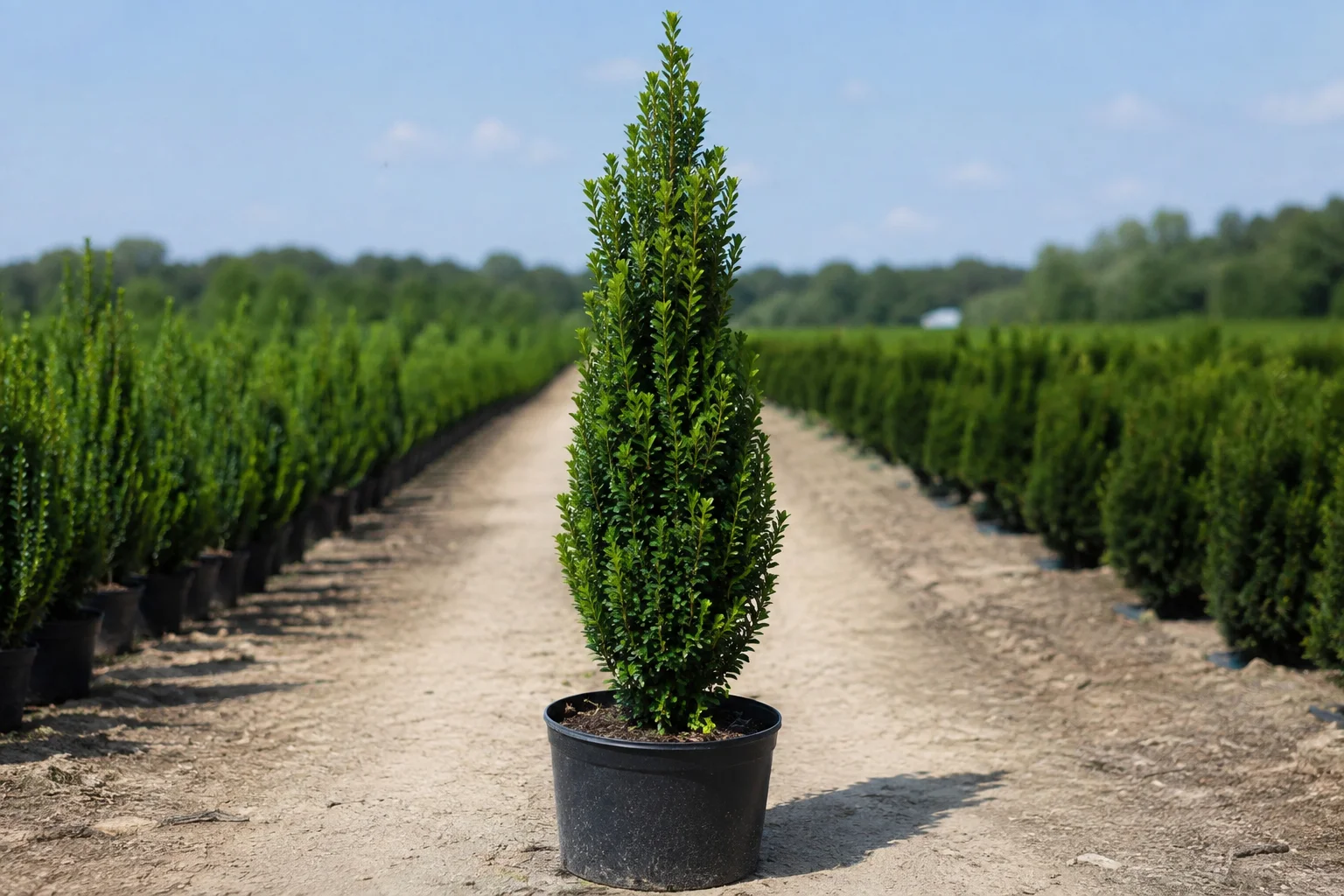
If you’ve been searching for a plant that adds height without taking up much space, you’ve probably come across Sky Pencil Holly. It’s become a favorite among gardeners across the country. And for good reason. This narrow, columnar evergreen fits into spaces most other shrubs simply can’t handle, making it a go-to choice for tight side yards, foundation plantings, and modern landscape designs.
In this guide, we’ll cover everything you need to know. We’ll walk through planting steps, care requirements, and common problems to watch for. Whether you’re adding your first Sky Pencil Holly or troubleshooting one that’s struggling, this should give you a clear, practical path forward.
What Is Sky Pencil Holly?
Sky Pencil Holly, scientifically known as Ilex crenata ‘Sky Pencil,‘ is a variety of Japanese holly. Unlike traditional hollies, it doesn’t spread wide. Instead, it grows straight up, reaching heights of 6 to 10 feet while staying just 1 to 3 feet wide. That slim profile is exactly what makes it so popular in modern landscaping.
The foliage stays glossy and deep green year-round, since this is an evergreen shrub. Small greenish-white flowers appear in spring. If a male pollinator grows nearby, female plants can produce small black berries in fall, adding a bit of seasonal interest and attracting birds to the garden.
One detail gardeners appreciate: unlike many holly varieties, Sky Pencil Holly has no thorns or sharp leaf edges. This makes it far more comfortable to plant near walkways, patios, or anywhere people brush past regularly.
Where Sky Pencil Holly Grows Best
This shrub adapts well across a wide swath of the country. It thrives in USDA hardiness zones 5 through 9, which covers most of the continental United States, from parts of the Pacific Northwest down through the Southeast and across much of the Midwest.
Light requirements are fairly flexible too. Sky Pencil Holly tolerates full sun, but it genuinely appreciates some afternoon shade, especially in hotter climates. Too much direct, intense sun can cause leaf burn, particularly in Southern states like Texas, Georgia, and Florida, where summer afternoons get brutal. Gardeners in these regions often have better luck planting it where it gets morning sun and afternoon shade.
In cooler regions, like the Upper Midwest or New England, full sun generally works fine, and the shrub can handle winter temperatures down to about -10 degrees Fahrenheit. That said, harsh winter winds can still stress the plant, so a somewhat sheltered spot is worth considering if you’re in a particularly exposed or windy location.
Soil Requirements and Site Preparation
Getting the soil right matters more than most gardeners expect. Sky Pencil Holly needs well-drained, slightly acidic soil, ideally in the pH range of 5.5 to 6.5. Alkaline soil can cause chlorosis, which shows up as yellowing leaves and stunted growth. If you’re not sure about your soil’s pH, a simple test kit from a garden center can save you a lot of guesswork later.
Drainage is just as important as pH. This plant has very little tolerance for soggy roots, and poor drainage is one of the most common reasons Sky Pencil Holly fails to thrive. If your yard tends to hold water after rain, consider amending the planting area or choosing a raised bed instead.
How to Plant Sky Pencil Holly
Planting correctly from the start sets the stage for years of healthy growth. Here’s a general walkthrough:
1. Dig the right hole. Make it roughly twice as wide as the root ball, but no deeper. Planting too deep is a common mistake that can smother roots and slow establishment.
2. Inspect and loosen the roots. Gently remove the plant from its container. If you notice roots circling tightly around the root ball, a condition often called being root-bound, use clean pruners to make a few shallow vertical slices around the perimeter. Then, tease the roots outward slightly. Avoid shaving off the outer root layer entirely, since this removes tissue the plant needs for water absorption.
3. Position the plant correctly. Set the root ball so its top sits slightly above the surrounding soil grade, roughly a quarter inch or so. This helps prevent water from pooling around the base of the stem.
4. Backfill thoughtfully. Mix native soil with a modest amount of organic matter, like compost or well-rotted manure, to improve aeration without overloading the soil with nutrients too quickly.
5. Water thoroughly. Give the newly planted shrub a deep watering right away to settle the soil around the roots and eliminate air pockets.
6. Mulch generously. Apply 2 to 4 inches of organic mulch around the base, keeping it away from direct contact with the stem. This helps retain moisture and protects roots through winter.
Patience matters during this stage. It’s common to see no visible growth for four to six weeks after planting, even when the plant is developing healthy roots below ground. Resist the urge to over-water or dig around the base to check on progress.
Watering Sky Pencil Holly
During the first growing season, consistent moisture is essential. Water deeply about twice a week while the plant establishes its root system, adjusting based on rainfall and soil dryness. A simple way to check is to feel the soil about an inch below the surface. If it’s dry at that depth, it’s time to water again.
Once established, usually after the first full year, Sky Pencil Holly becomes considerably more drought-tolerant. At that point, watering only during extended dry spells is typically sufficient. Overwatering established plants is actually a bigger risk than underwatering, since this shrub has very low tolerance for consistently soggy roots.
Fertilizing and Ongoing Care
Sky Pencil Holly doesn’t demand heavy feeding. In spring, applying a broadleaf evergreen fertilizer, or a balanced granular fertilizer, helps support healthy growth. A common recommendation is roughly one pound of fertilizer per inch of trunk diameter, spread evenly over the root zone and watered in afterward.
Beyond fertilizing, ongoing maintenance stays fairly minimal. Refresh mulch as needed to maintain that 2 to 4 inch layer, and keep an eye on soil moisture during particularly dry stretches. This is genuinely one of the lower-maintenance evergreen options once it’s established.
Pruning Tips
Because of its naturally narrow, upright form, Sky Pencil Holly requires very little pruning to maintain its shape. Light shaping in late winter or early spring, before new growth begins, is usually all that’s needed to keep the silhouette clean.
One important caution: this shrub has minimal capacity to recover from severe shearing. Cutting back too aggressively can leave bare, woody sections that take a long time to fill back in, if they recover at all. When in doubt, prune conservatively and adjust gradually over multiple seasons rather than making dramatic cuts all at once.
Common Problems and How to Avoid Them
Most issues with Sky Pencil Holly trace back to a handful of predictable causes. Overwatering and poor drainage top the list, often leading to root rot and yellowing foliage. If you notice consistent yellowing despite proper watering, it’s worth testing your soil pH, since alkaline conditions can also cause similar symptoms.
Winter damage is another common concern, particularly in exposed locations. Harsh winds combined with cold temperatures can dry out foliage, leading to browning. Wrapping vulnerable plants in burlap or frost cloth during particularly harsh winters can help, especially for younger, recently established shrubs.
De-icing salts pose a real risk too, particularly for plants located near sidewalks, driveways, or roads treated during winter storms. This shrub has very little resistance to salt exposure, so it’s worth choosing planting locations away from areas where salt runoff is likely, or providing a physical barrier during winter months.
Pests and diseases are relatively rare with this variety compared to other landscape shrubs, which is part of why it’s earned a reputation as low-maintenance overall.
Landscaping Uses and Design Ideas
Sky Pencil Holly’s narrow profile makes it incredibly versatile in landscape design. It works beautifully as a vertical accent near entryways, framing a front door or walkway without overwhelming the space. Planted in a row, it creates an elegant, space-efficient privacy screen, ideal for narrow side yards where wider shrubs simply won’t fit.
It also performs well in containers, making it a popular choice for patios, balconies, and urban gardens where in-ground planting space is limited. Because it tolerates urban conditions, including compacted soil and pollution, reasonably well, it’s a practical option for city dwellers looking to add greenery to smaller outdoor spaces.
If you’re planning a broader garden refresh alongside this shrub, our seasonal garden care and maintenance tips guide covers watering schedules, mulching best practices, and pruning timing for a wide range of landscape plants.
Is Sky Pencil Holly Right for Your Garden?
This shrub tends to appeal most to gardeners dealing with limited horizontal space who still want height and year-round greenery. If you’re working with a narrow side yard, a small urban lot, or simply want a clean, architectural look near your home’s entrance, Sky Pencil Holly delivers reliably.
That said, it’s not the fastest-growing option available. If you’re hoping for quick, dramatic screening within a single season, a faster-growing shrub might suit your timeline better. Sky Pencil Holly rewards patience, developing slowly but steadily into a long-lasting landscape feature.
For additional guidance on regional planting zones and soil testing resources, the U.S. Department of Agriculture’s Plant Hardiness Zone Map offers a reliable, government-backed tool for confirming which zone you’re gardening in before making your final planting decisions.
Final Thoughts
Sky Pencil Holly earns its popularity through a rare combination of striking form and genuine low-maintenance care once established. Its narrow, columnar shape solves a specific landscaping problem that few other evergreens can match, while its tolerance for urban conditions and minimal pest issues make it a dependable long-term addition to most gardens.
Success really comes down to getting the fundamentals right from the start: well-drained slightly acidic soil, consistent moisture during establishment, and protection from harsh winter conditions. Get those pieces in place, and this elegant shrub should reward you with years of reliable structure and year-round greenery.
Frequently Asked Questions
How tall does Sky Pencil Holly grow? Sky Pencil Holly typically reaches 6 to 10 feet in height while staying narrow, usually just 1 to 3 feet wide, making it ideal for tight spaces.
What growing zones is Sky Pencil Holly suited for? This shrub thrives in USDA hardiness zones 5 through 9, covering most of the continental United States, including regions with cold winters and hot summers.
How often should I water Sky Pencil Holly? During the first growing season, water deeply about twice a week to support root establishment. Once established, watering only during extended dry spells is typically sufficient.
Why are the leaves on my Sky Pencil Holly turning yellow? Yellowing leaves often indicate alkaline soil or overwatering. Testing your soil pH and checking drainage can help identify and correct the underlying cause.
Does Sky Pencil Holly need full sun? It tolerates full sun but generally prefers some afternoon shade, especially in hotter climates, where intense sun can cause leaf burn.
How much pruning does Sky Pencil Holly need? Very little. Light shaping in late winter or early spring is usually enough, since this shrub has minimal capacity to recover from severe or aggressive pruning.
Is Sky Pencil Holly a fast-growing shrub? No, it’s a slow grower. It may show little visible growth for the first several weeks after planting, even when developing healthy roots below ground.
Can Sky Pencil Holly be grown in containers? Yes. Its narrow growth habit makes it well-suited for container gardening on patios, balconies, and other small outdoor spaces where in-ground planting isn’t an option.