

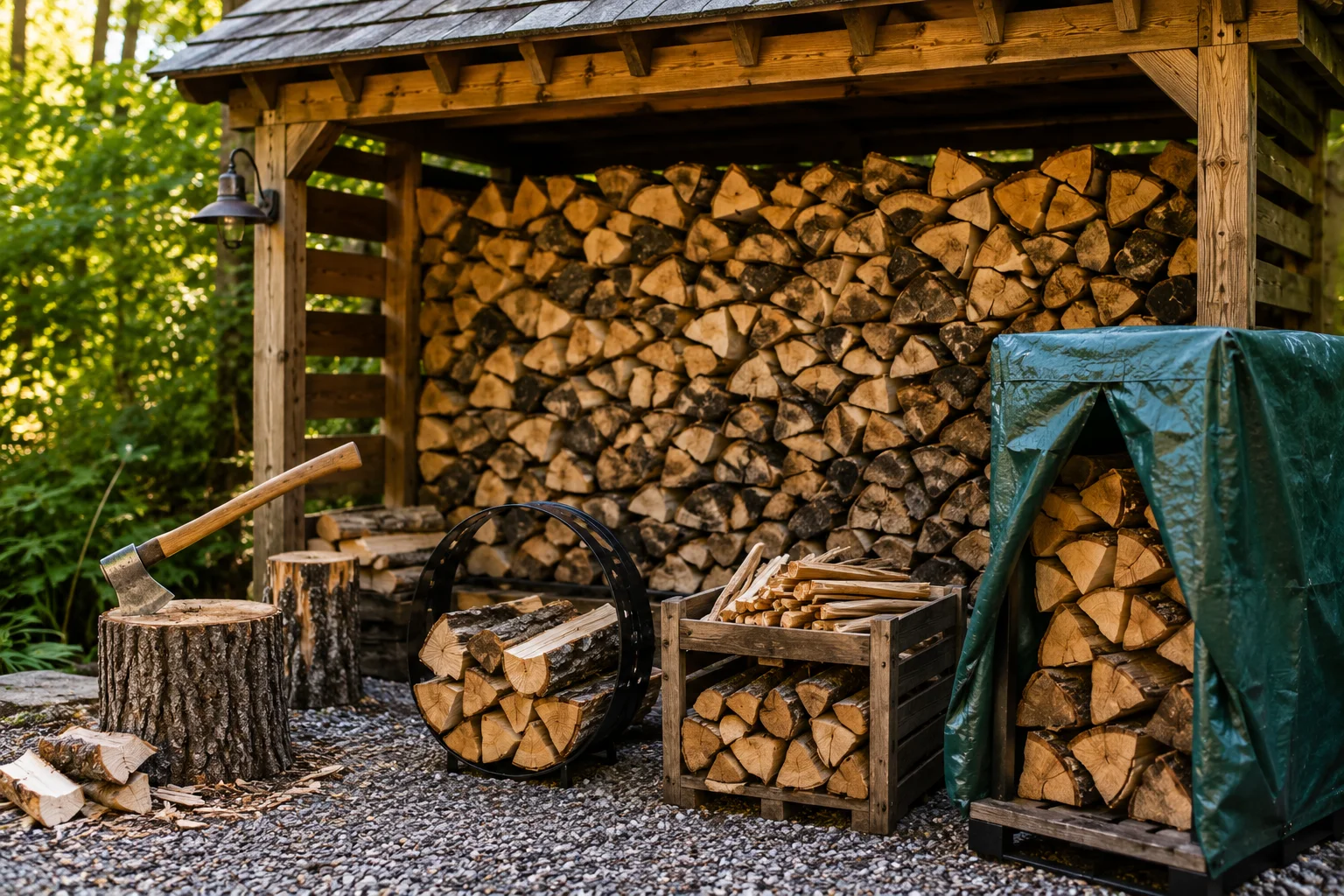
Not all firewood is created equal. Toss a handful of wet pine into your fireplace, and you’ll get smoke, sputtering, and barely any warmth. Burn properly seasoned oak instead, and you’ll get a hot, steady fire that lasts for hours. The difference isn’t luck. It comes down to understanding wood types, moisture content, and how you store your supply.
I learned this the hard way during my first winter heating primarily with a wood stove. I bought a cord of “seasoned” firewood from a roadside seller, assuming that label meant something official. It didn’t. The wood hissed, smoked constantly, and left a thick layer of creosote in my chimney by January. Since then, I’ve learned to check moisture content myself, plan seasoning time months in advance, and store wood properly so it actually performs the way it should.
This guide breaks down the best firewood types for different needs, how seasoning actually works, and practical storage tips that apply across U.S. climates in 2026.
Why Firewood Type Actually Matters
Every species of wood burns differently. That difference comes down to density and moisture content, and it directly affects heat output, burn time, and how much smoke or creosote your fire produces.
Heat output is measured in BTUs, or British Thermal Units, per cord. A standard cord measures 4 feet by 4 feet by 8 feet, or 128 cubic feet total. Denser hardwoods pack significantly more fuel mass into that same volume compared to lighter softwoods. That’s why a cord of oak can weigh well over 3,000 pounds when properly seasoned, while a cord of pine weighs considerably less.
Higher density generally means more heat and longer burn times. It also usually means longer seasoning periods, since dense wood holds moisture longer than lighter species.
Best Firewood Types by Heat Output
High-Heat Hardwoods
These species produce the most heat per cord and burn the longest. They’re ideal for overnight burns and primary home heating.
Oak is often called the gold standard of firewood. It offers excellent heat output, long burn times, and produces strong, lasting coals. White oak and red oak are both widely available across much of the eastern and central United States.
Hickory burns intensely hot and produces excellent coals for maintaining fires overnight. It’s a favorite among wood stove users throughout the Midwest and South.
Black locust delivers some of the highest heat output of any commonly available firewood. It also seasons faster than many other dense hardwoods, which makes it a practical choice despite its density.
Osage orange tops most BTU charts, producing more heat per cord than almost any other North American species. It’s less commonly sold commercially, but it’s prized by those who can source it locally, particularly in the Midwest.
Moderate-Heat Hardwoods
Maple, ash, and cherry all fall into a solid middle range. They provide good heat output, season somewhat faster than oak or hickory, and split relatively easily. Ash, in particular, is known for splitting cleanly and burning well even when slightly under-seasoned.
Softwoods
Pine, cedar, and fir burn faster and produce noticeably less heat per cord than hardwoods. That said, they’re not bad firewood. They season quickly, light easily, and work great as kindling or for quick, shoulder-season fires when you don’t need hours of sustained heat.
Just be cautious with wet softwood specifically. Its higher resin content can contribute to creosote buildup if it isn’t fully seasoned before burning.
Regional Firewood Choices Across the U.S.
Availability varies quite a bit depending on where you live, so it helps to think regionally.
In the Northeast and Midwest, oak, sugar maple, hickory, and black locust are widely available and well-suited to cold winters. Many homeowners in these regions mix species, using dense hardwood for overnight burns and lighter wood for quick daytime fires.
In the South, live oak and pecan are popular choices, offering strong heat output and good regional availability. Southern humidity also means seasoning takes a bit longer than in drier climates, so planning ahead matters more here.
In the Pacific Northwest, Douglas fir is a common and effective choice, even though it’s technically a softwood. It offers better heat output than most softwoods and is widely available throughout the region.
In the Southwest, mesquite and juniper are popular, partly for their heat output and partly for the pleasant aroma they produce while burning. Dry desert climates also mean faster natural seasoning in this region compared to more humid areas.
Understanding Firewood Seasoning
Seasoning simply means drying freshly cut wood until its moisture content drops low enough to burn efficiently. Freshly cut, or “green,” wood can contain 50 percent or more water by weight. That excess moisture absorbs heat energy during combustion, which reduces usable heat and increases smoke output significantly.
For efficient, clean burning, firewood should reach a moisture content below 20 percent. Most hardwoods need at least 12 months of proper seasoning to reach that point. Denser species, like oak and hickory, often benefit from 18 to 24 months instead.
You can check moisture content with an inexpensive moisture meter, available at most hardware stores. Simply split a piece of wood and test the freshly exposed interior surface for the most accurate reading.
A few visual cues can also help you judge seasoning progress. Properly seasoned wood generally looks grayish and slightly cracked at the ends. It also feels noticeably lighter than green wood, and two pieces knocked together typically produce a sharp, hollow sound rather than a dull thud.
How to Season Firewood Properly
Start by splitting your wood soon after cutting it. Smaller, split pieces dry considerably faster than whole rounds, since more surface area is exposed to air.
Stack your wood off the ground, ideally on pallets or a raised rack. This simple step improves airflow underneath the stack and prevents ground moisture from soaking back into the wood. Leave adequate spacing between rows as well, since good airflow throughout the stack speeds up the drying process considerably.
Position your stack in a sunny, breezy location whenever possible. Full sun exposure combined with consistent wind dramatically shortens seasoning time compared to shaded, still areas.
Cover only the top of your stack, not the sides. This might feel counterintuitive, but fully wrapping a woodpile traps moisture inside and actually slows down the seasoning process. A simple tarp or metal roofing panel over the top works well, while the sides stay open to airflow.
Firewood Storage Tips for Every Season
Good storage habits protect the work you’ve already put into seasoning your wood.
Keep your woodpile at least a few inches off the ground using pallets, a firewood rack, or even pressure-treated lumber rails. This prevents ground moisture from creeping upward and helps discourage pests like termites or carpenter ants from settling in.
Position your storage area away from your home’s exterior walls when possible. Firewood piled directly against a house can invite pests indoors and trap moisture against your siding.
Only bring in enough wood for a few days at a time, rather than storing large amounts inside your home. This reduces the chance of bringing in insects, and it also lowers the risk of mold developing in warm indoor conditions.
During humid summer months, especially in the South and along the Gulf Coast, check your woodpile periodically for mold or excess moisture. Adjusting stack spacing or adding extra airflow can help if you notice dampness returning.
In snowy climates, a simple roof or overhang above your woodpile prevents snow accumulation from soaking back into your wood supply throughout winter.
Buying Firewood: What to Know in 2026
If you’re buying rather than cutting your own, pricing varies significantly by region and wood type. As of 2026, a cord of seasoned hardwood typically runs anywhere from $250 to $450 in most parts of the country, with premium species like hickory or oak on the higher end. Kiln-dried firewood, which undergoes controlled drying to reach very low moisture levels quickly, often costs more, but it burns more efficiently right away without a long waiting period.
Be cautious of sellers who label wood “seasoned” without offering any real verification. That term isn’t regulated, and plenty of wood sold as ready-to-burn is still well above the ideal moisture threshold. Whenever possible, ask how long the wood has been split and stacked, or bring your own moisture meter to check before buying.
According to the University of Kentucky’s Department of Forestry, heat output and drying time vary substantially by species, which is worth keeping in mind whether you’re buying firewood or planning your own seasoning timeline.
Firewood Safety Basics
Burning unseasoned or improperly stored wood does more than reduce heat output. It significantly increases creosote buildup inside your chimney, which raises the risk of dangerous chimney fires over time.
Schedule a chimney inspection annually, ideally before your primary heating season begins. This is especially important if you burn wood regularly throughout winter. Combined with properly seasoned wood, regular inspections dramatically reduce fire risk in most households.
If you’re planning a broader outdoor living setup, our outdoor fire pit and patio design guide covers safe placement, ventilation, and material choices for backyard fire features beyond just indoor wood-burning appliances.
Final Thoughts
Good firewood starts long before you ever light a match. Choosing the right species for your needs, seasoning it properly, and storing it with adequate airflow all work together to give you a cleaner, hotter, more efficient fire. Skip any one of those steps, and you’ll end up with the smoky, underwhelming fires that make people give up on wood heat altogether.
Plan ahead whenever you can. Firewood you split and stack this spring will reward you next winter, not this one. That kind of patience is really the entire secret behind consistently great fires.
If you’re just getting started, resist the urge to buy a single large load all at once. Instead, try a smaller batch first, test the moisture level yourself, and see how it performs in your specific stove or fireplace. Every setup burns a little differently, and a season or two of hands-on experience will teach you more than any chart or guide ever could.
Frequently Asked Questions
How long does firewood need to season before burning? Most hardwoods need at least 12 months of proper seasoning to reach a safe moisture content below 20 percent. Denser species like oak and hickory often need 18 to 24 months for the best results.
What is the best all-around firewood for home heating? Oak is widely considered the best all-around choice. It offers strong heat output, long burn times, and reliable availability across much of the United States.
Can you burn firewood that isn’t fully seasoned? You can, but it burns poorly and produces more smoke and creosote. Unseasoned wood also releases less usable heat, since much of the energy goes toward evaporating trapped moisture instead of warming your space.
How can I tell if firewood is properly seasoned? Seasoned wood typically looks grayish with cracked ends, feels noticeably lighter than green wood, and produces a sharp, hollow sound when two pieces are knocked together. A moisture meter offers the most accurate reading.
Is it better to buy kiln-dried or naturally seasoned firewood? Kiln-dried firewood reaches very low moisture levels quickly and is ready to burn almost immediately. Naturally seasoned firewood costs less but requires proper drying time before it performs at its best.
How should I store firewood to keep it dry? Stack wood off the ground on pallets or a rack, cover only the top of the pile, and leave the sides open for airflow. Position the stack in a sunny, breezy spot whenever possible to speed up drying and prevent moisture buildup.
Is pine bad firewood? Pine isn’t bad firewood, but it burns faster and produces less heat than hardwoods. It works well for kindling and quick fires, though it should always be fully seasoned before use to minimize creosote buildup.
How much does a cord of firewood cost in 2026? Pricing varies by region and species, but seasoned hardwood typically costs between $250 and $450 per cord in most parts of the U.S. Kiln-dried and premium species like oak or hickory generally fall toward the higher end of that range.