

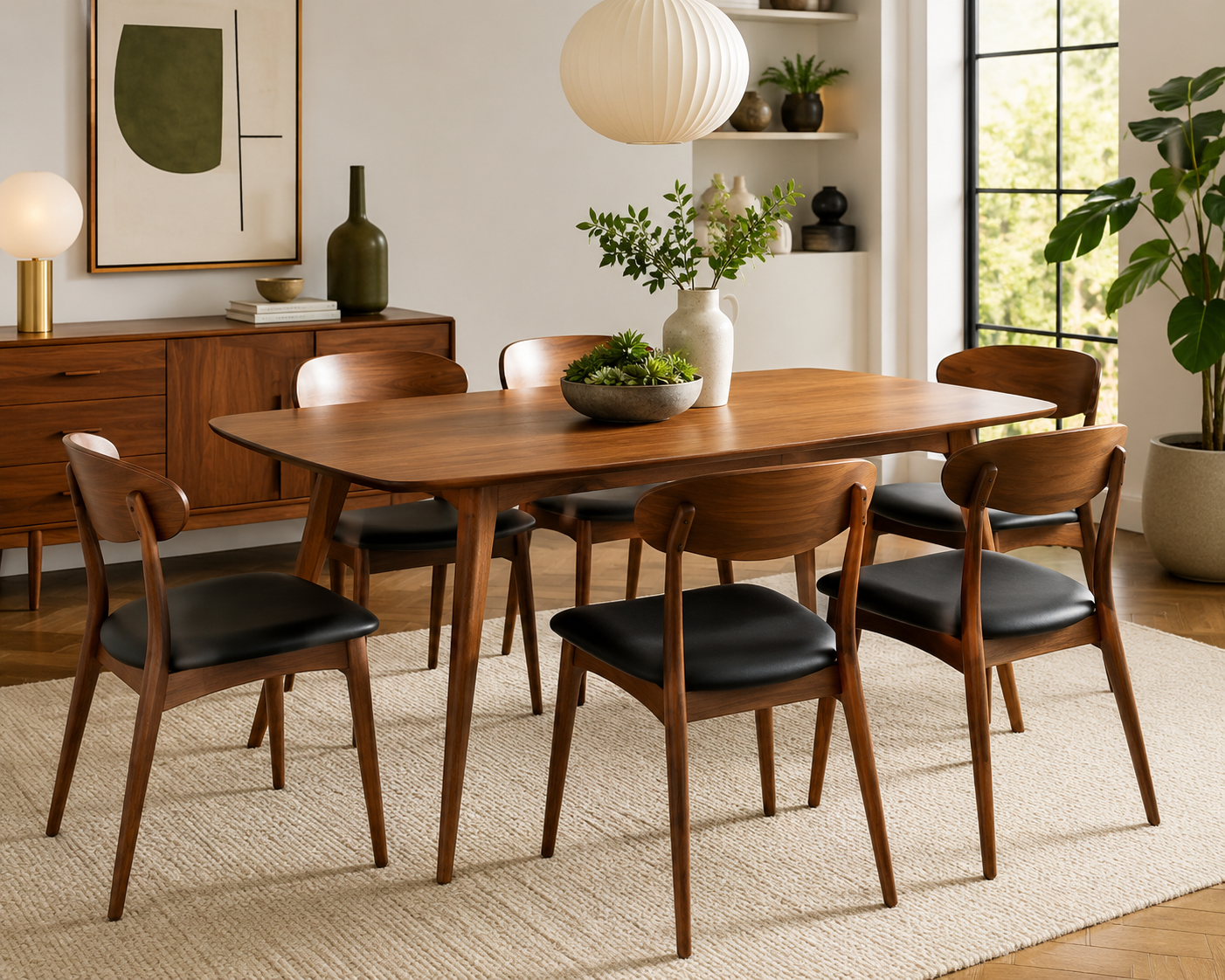
A dining table is not just furniture. It is where your household gathers, lingers, and actually lives. That is probably why Mid-Century Modern dining tables have never really gone out of style. There is something honest about the design. No ornate carvings. No fussy joinery. Just clean lines and beautiful natural materials.
This guide walks you through everything worth knowing before buying one in 2026. You will learn what defines the style, which materials hold up best, how to size a table for your space, and how to keep it looking great for decades.
What Makes a Table “Mid-Century Modern”?
Mid-Century Modern, often shortened to MCM, is a design movement that started in the 1940s and ran through the 1960s. The style favors clean lines, tapered legs, natural wood, and a clear focus on function over decoration. Nothing about it feels rushed or overdesigned.
A true MCM dining table usually features solid wood construction, simple geometric shapes, and visible craftsmanship. You will rarely see heavy ornamentation or bulky bases. Instead, the design leans on the beauty of the material itself. That restraint is exactly why the style has aged so well.
Why MCM Dining Tables Are Still Popular in 2026
Furniture trends this year are shifting toward slower, more intentional buying. People want quality over quantity now. They want materials that age gracefully instead of trends that fade within a year. MCM tables check every one of those boxes, which explains why demand has grown rather than faded.
In fact, 2026 dining trends are pulling directly from mid-century and even 1970s influences, reimagined for modern homes. Walnut and teak remain especially popular, often paired with satin finishes that soften light and highlight natural wood grain. Meanwhile, upholstery on matching chairs is leaning toward textured, earthy tones that complement the clean lines of a tapered table base.
This staying power is not just nostalgia. MCM tables genuinely work in a wide range of home styles, from minimalist apartments to more eclectic, layered interiors. Few furniture styles offer that kind of flexibility.
Choosing the Right Material
Material choice affects both the look and the long-term durability of your table. Here is how the most common options compare.
Walnut offers a rich, dark tone that suits more dramatic or sophisticated interiors. It is a favorite among MCM purists and tends to be the priciest option, but it ages beautifully over time.
Solid oak brings a lighter, more textural look. It works especially well in warmer, more relaxed homes, and it holds up well against daily wear.
Teak remains a classic MCM material, prized for its natural water resistance and warm golden tone. That said, teak can be sensitive to humidity swings, so homes in very dry or very humid climates should ask about proper sealing before buying.
Mixed materials are also trending in 2026. Wood tops paired with metal bases offer a slightly more industrial edge while keeping the tapered, minimalist silhouette that defines the MCM look.
Round, Rectangular, or Extendable: Choosing the Right Shape
Shape matters just as much as material, especially once you start thinking about your actual room layout.
Round tables tend to work best in smaller or open-plan spaces, since they allow for easier movement around the table and a more casual, conversational seating arrangement. Rectangular tables suit larger families and more formal dining spaces, since they typically offer more seating per square foot. Extendable tables offer the best of both worlds, letting you keep a smaller footprint daily while expanding for holidays or guests.
Before falling in love with a specific table, always measure your dining space first. If you have not done this yet, our step-by-step guide on how to measure a room for furniture walks through exactly how to do it, including doorway clearance and walking space around the table.
Sizing Your MCM Dining Table Correctly
As a general rule, allow at least 24 inches of table width per seated person. For walking space, leave a minimum of 36 inches between the table edge and the nearest wall, so people can comfortably push back a chair and stand.
If you are working with a smaller apartment or open-concept layout, a round table between 42 and 48 inches in diameter usually seats four comfortably — see our round table and chairs guide for specific picks. For larger households, rectangular tables between 60 and 84 inches tend to work best, especially when paired with bench seating on one side to save floor space.
Pairing Chairs and Decor With an MCM Table
One of the best parts of MCM design is how easily it mixes with other styles. Tapered wood chairs are the most traditional pairing, but woven cane or rattan seating has also made a strong comeback in 2026, adding texture without visual bulk.
For upholstery, earthy tones and textured weaves complement the natural wood grain nicely. If you want a bolder look, consider mixing materials the way many 2026 dining rooms do, pairing a wood table with metal-framed chairs or a glass-topped surface for a slightly more contemporary edge.
Lighting also plays a bigger role than most people expect. A simple pendant light with a warm, low-hanging profile tends to complement the low, grounded look of MCM furniture far better than a tall, ornate chandelier.
Buying Vintage vs. New
Both routes have real advantages, so the right choice depends on your priorities.
Vintage MCM tables offer authentic craftsmanship and genuine history, and many pieces from the original era were built to last generations. However, they can require refinishing, and finding a piece in good condition takes patience and a bit of luck.
New MCM-inspired tables, on the other hand, offer more consistency, easier warranty support, and a wider range of sizes to match modern rooms. Many furniture brands now specialize specifically in MCM-style reproductions built from solid walnut or oak, giving buyers the aesthetic without the hunting.
Whichever route you choose, prioritize solid wood construction over veneer if long-term durability matters to you, since solid wood can be sanded and refinished for decades, while veneer generally cannot. Once your table’s settled, our dining room cabinets guide covers matching storage pieces to complete the room.
Sustainability Considerations
Sustainability has become a real factor in furniture shopping, not just a marketing buzzword. Many retailers now share sourcing details more openly, since buyers increasingly ask about it before purchasing.
When shopping for a new MCM table, look for wood that carries certification from the Forest Stewardship Council (FSC), an internationally recognized nonprofit that sets standards for responsible forest management. This certification offers a reliable way to confirm that the wood in your table was sourced responsibly, rather than relying on vague marketing language alone.
Caring for Your MCM Dining Table
Proper care keeps a wood dining table looking sharp for decades. Use coasters and placemats to avoid heat and moisture rings, especially with oil-finished wood, which is more porous than lacquered finishes. Wipe up spills quickly, and avoid harsh cleaning chemicals that can strip natural finishes over time.
Reapply oil or wax finishes every six to twelve months, depending on use, to keep the wood hydrated and protected. If you notice scratches or dullness over time, a light sanding and refinishing can restore most solid wood tables to near-original condition, something veneer tables generally cannot offer.
Actionable Tips Before You Buy
- Measure your dining space, including walkway clearance, before shopping for a table.
- Choose walnut for a richer, more dramatic look, or oak for a lighter, more relaxed feel.
- Ask about FSC certification if sustainable sourcing matters to you.
- Prioritize solid wood over veneer if you want a table that can be refinished later.
- Consider an extendable table if you regularly host guests but want a smaller everyday footprint.
- Pair your table with woven or tapered wood chairs to stay true to the MCM aesthetic.
- Reapply oil or wax finishes regularly to protect the wood over time.
Regional Notes for U.S. Buyers
Climate genuinely affects how wood furniture performs over time. In humid regions like Florida and the Gulf Coast, wood can expand and contract more than usual, so properly sealed finishes matter even more. In drier climates like Arizona and parts of Colorado, wood can dry out faster, making regular oiling especially important to prevent cracking.
MCM style also tends to resonate strongly in cities with a rich mid-century architectural history, such as Palm Springs, California, and parts of the Pacific Northwest, where the look pairs naturally with the surrounding home design.
Frequently Asked Questions
What defines a Mid-Century Modern dining table?
An MCM table typically features clean lines, tapered legs, and solid natural wood construction, with a strong focus on function over decorative detail. The style originated between the 1940s and 1960s.
Is walnut or oak better for a dining table?
Walnut offers a richer, darker tone suited to dramatic interiors, while oak brings a lighter, more textural look that fits warmer, relaxed spaces. Both are considered gold-standard materials for MCM furniture.
How big should my dining table be?
Allow at least 24 inches of table width per seated person, and leave a minimum of 36 inches between the table edge and the nearest wall for comfortable movement.
Are vintage MCM tables worth buying over new ones?
Vintage pieces offer authentic history and craftsmanship but may need refinishing. New MCM-inspired tables offer more consistency and warranty support, so the right choice depends on your priorities.
Is teak a good material for a dining table?
Yes, teak is a classic MCM choice known for its warmth and natural water resistance. However, it can be sensitive to humidity, so proper sealing matters in very dry or very humid climates.
What chairs pair well with an MCM dining table?
Tapered wood chairs are the traditional pairing, though woven cane and rattan seating have become popular again in 2026 for adding texture without visual bulk. Our best black dining chairs guide covers a bolder option if you want more contrast against the wood.
How do I keep a wood dining table looking new?
Use coasters and placemats, wipe up spills quickly, and reapply oil or wax finishes every six to twelve months to protect the wood and maintain its finish.
Does climate affect wood dining table durability?
Yes. Humid climates can cause wood to expand and contract more, while dry climates can cause cracking if the wood is not properly oiled and maintained.
Final Thoughts
Mid-Century Modern dining tables have earned their staying power honestly. The style prioritizes real materials, clean design, and genuine craftsmanship over passing trends. Whether you choose a vintage find or a new solid-wood piece, measuring your space, picking the right wood, and caring for the finish properly will keep your table looking great for years to come. In a design world that changes constantly, that kind of timelessness is worth investing in.
[…] move-in or event date. For more guidance on furnishing the rest of your dining space, see our mid-century modern dining table buying guide and our roundup of the best table tops for dining […]