

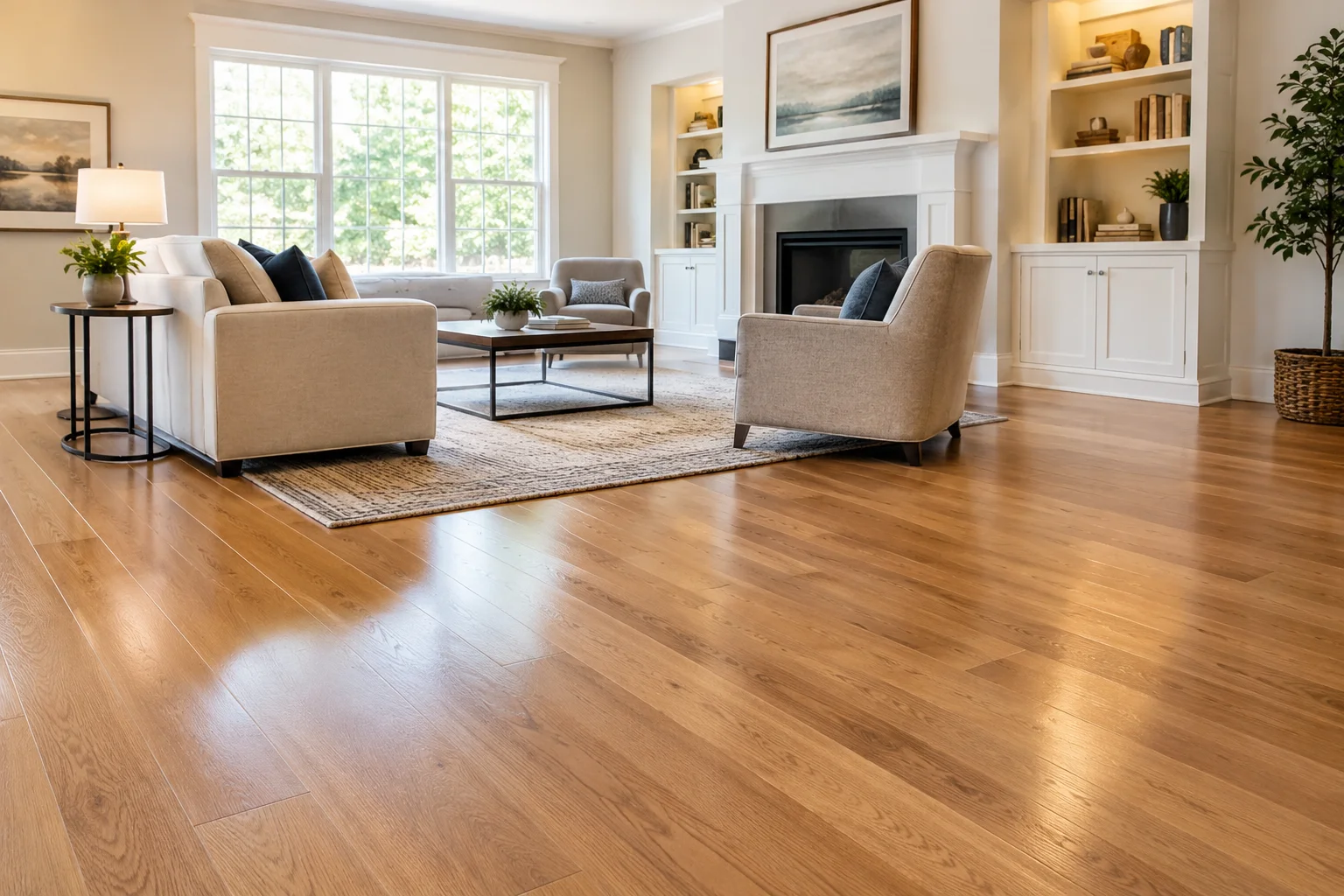
If you’re deciding between prefinished and unfinished hardwood, here’s the short answer. Prefinished hardwood arrives from the factory already sanded, stained, and sealed with a durable finish. Manufacturers usually use aluminum-oxide-infused polyurethane and cure it under UV light. You can walk on it the day it’s installed.
Unfinished (site-finished) hardwood works differently. Workers sand and coat it after installation. This takes longer and creates more dust and odor in your home. But it gives you a perfectly seamless, gap-free surface.
Prefinished hardwood typically costs $6 to $14 per square foot installed, according to multiple 2026 flooring cost guides. Material runs slightly higher than unfinished wood, but labor costs come in lower since there’s no on-site sanding or finishing involved. For a 1,000-square-foot room, most prefinished installations land somewhere between $6,000 and $14,000 total. The final price depends on wood species, grade, and your region.
Here’s what actually matters when you’re choosing between the two. And here’s what to watch for once you’ve decided prefinished is the right call.
What Makes Prefinished Hardwood Different
Prefinished hardwood flooring arrives at your home already sanded, stained (if applicable), and sealed. Manufacturers apply multiple layers of finish — commonly a polyurethane coating infused with aluminum oxide — and cure each layer under UV light in a controlled factory environment. This controlled process produces a harder, more consistent finish than most contractors can achieve on-site with a hand-applied coat.
The practical difference shows up in three places.
Installation timeline. You don’t need to wait for sanding or curing after the boards go down. You can move furniture back in and walk on the floor almost immediately. Site-finished floors usually need a day or more for the final coat to cure before normal foot traffic resumes.
Dust and odor. Sanding unfinished hardwood on-site generates a lot of fine dust, even with dust-containment systems. The finish itself often has a noticeable smell for a day or two while it cures. Prefinished flooring skips both disruptions entirely.
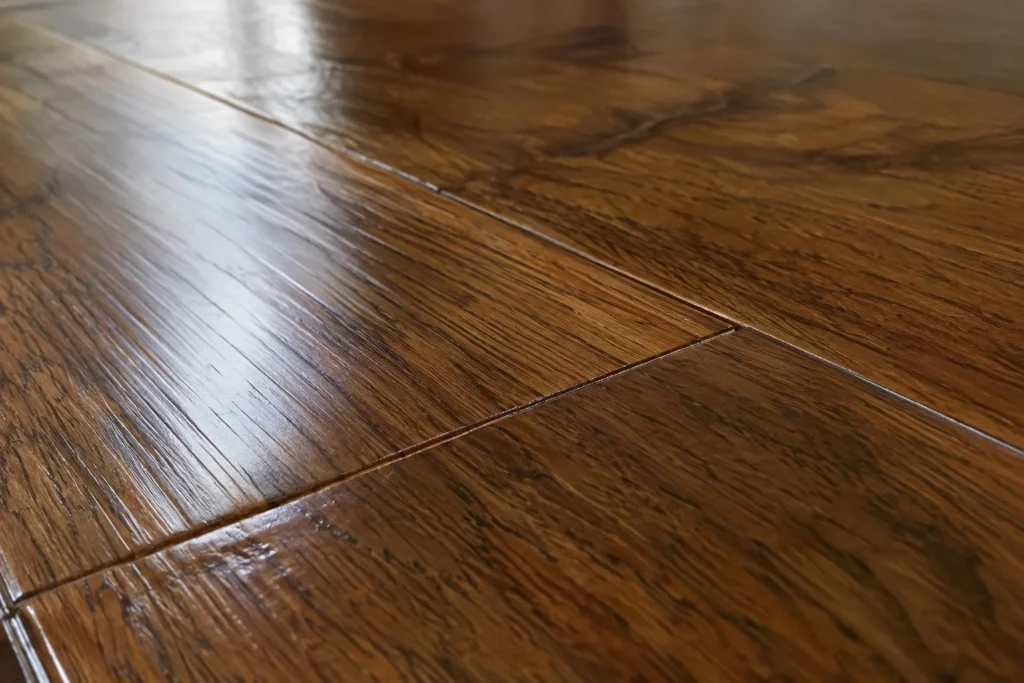
The seams. This is the trade-off most buying guides gloss over. Workers sand and coat site-finished floors as one continuous surface, so the finish flows across every board seam with no interruption. Prefinished boards each get finish applied to their edges individually before installation. So you’ll typically see a very slight bevel or micro-groove at each seam. It’s not a durability issue, but it does change the floor’s overall look. Some homeowners like the definition it gives each plank. Others prefer the seamless look of site-finished flooring.
Types of Prefinished Hardwood
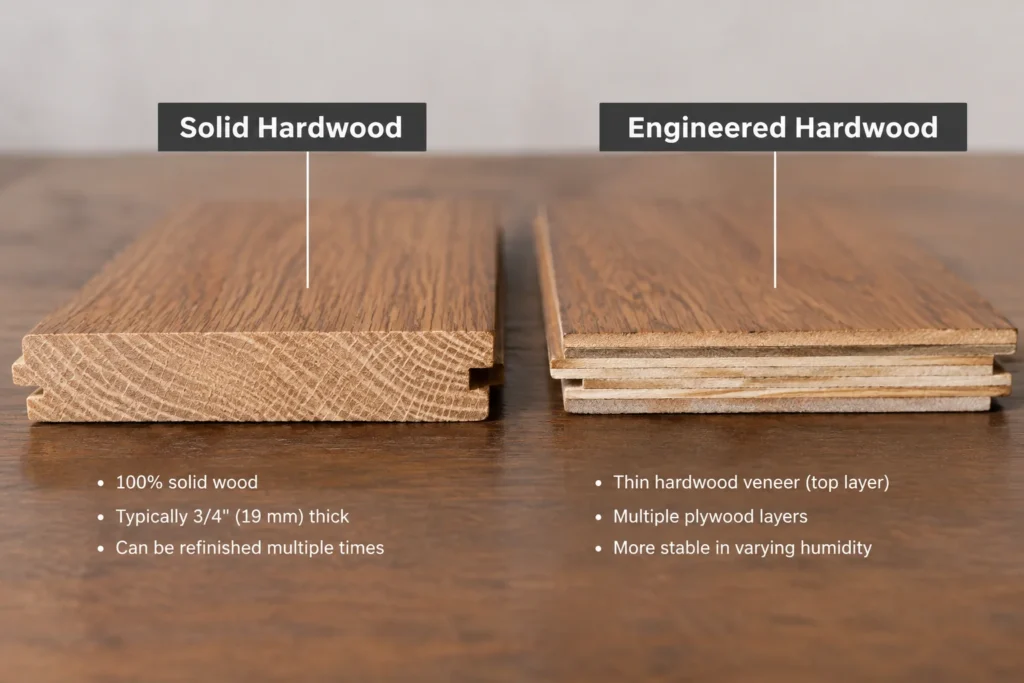
Solid prefinished hardwood. This is a single piece of solid wood from top to bottom, finished at the factory before it reaches you. It’s the traditional choice, and you can refinish it multiple times over its life — often 3 to 5 times, according to industry lifespan estimates. There’s enough wood thickness above the tongue-and-groove to sand down repeatedly. Solid hardwood is more sensitive to humidity swings than engineered options, so it suits climate-controlled spaces above grade better than basements.
Engineered prefinished hardwood. This type has a real hardwood veneer layer bonded over several layers of plywood or high-density core material. Manufacturers finish it at the factory the same way as solid prefinished boards. Engineered hardwood handles humidity and temperature swings better than solid wood. That makes it a more practical choice for basements, homes in humid climates, or installations over concrete slabs. The trade-off is a shorter refinishing life — usually 1 to 3 sandings over its lifetime — since the wood veneer layer is thinner than a solid board.
Wood species and finish tone. Prefinished hardwood comes in the same species options as unfinished wood — red oak, white oak, maple, hickory, walnut, and others. But you choose a specific stain and sheen level at time of purchase rather than customizing it after installation. Oak remains the most common choice in the U.S. market due to consistent availability and durability. Hickory and white oak have both grown in popularity recently for their more textured, rustic look.
Benefits of Prefinished Hardwood
- Faster move-in timeline. You won’t wait days for finish to cure before you can use the room again.
- Consistent, factory-cured finish. UV-cured aluminum oxide finishes tend to resist scratches and wear better than most on-site hand-applied coatings. That matters in high-traffic homes with kids or pets.
- Less mess during installation. No sanding dust settles into HVAC systems, furniture, or adjacent rooms.
- Easier to compare before buying. You see the exact finished color and sheen in the store or sample, rather than trusting how a stain will look once applied on-site.
- Often comes with a manufacturer finish warranty. Many prefinished lines carry warranties on the factory finish itself — sometimes 25 years or more — separate from any warranty the installer offers on workmanship.
Drawbacks and Limitations
- Visible seams between boards. As mentioned above, the beveled or micro-grooved edges stand out more than a fully sanded, seamless site-finished floor.
- Less flexibility on custom stain colors. You select from the manufacturer’s available finishes rather than mixing a custom stain to match existing trim or cabinetry exactly.
- Harder to achieve a perfectly flat, monolithic look in older homes with uneven subfloors. Site-finishing can sometimes smooth out minor unevenness visually since sanding happens after the boards go down. With prefinished boards, subfloor prep matters more upfront.
- Repairs can be more visible. If a board gets damaged years down the road, matching the exact factory finish and sheen on a replacement board is harder than blending a fresh site-applied coat.
Site-Finished vs. Prefinished: Which Costs Less?
The honest answer is: it depends on what you’re optimizing for. Prefinished material typically costs $1 to $3 more per square foot than unfinished wood. But it saves roughly $2 to $5 per square foot in labor since there’s no sanding or finishing step after installation. In most cases, those numbers roughly offset each other. That’s why total installed costs for both options often land in a similar range — generally $6 to $16 per square foot depending on species, grade, and region.
Prefinished flooring tends to win on speed. Fewer days of labor and no waiting period for finish curing can matter more than the per-square-foot material price. This is especially true if you’re trying to get a room back in use quickly, or if you’re paying for temporary housing or storage during a renovation.
Installation Methods
Installers can put down prefinished hardwood using the same three basic methods as unfinished wood. Which one applies depends on whether you’re using solid or engineered boards.
- Nail-down: The traditional method for solid hardwood over a wood subfloor. Labor-only costs typically run $3.50 to $6.50 per square foot.
- Glue-down: Common for engineered hardwood over concrete slabs, where boards adhere directly to the subfloor.
- Floating: Boards click together and “float” over an underlayment without being nailed or glued to the subfloor. This works for some engineered products, and it’s generally the fastest installation method.
Your installer’s recommendation should factor in your subfloor type (wood vs. concrete), whether you’re installing above or below grade, and the specific product’s manufacturer instructions. Installing engineered hardwood with the wrong method can void the product warranty.
Common Mistakes to Avoid
Skipping acclimation. Even prefinished wood needs time in the room where it’ll go — typically several days — to adjust to the home’s humidity and temperature before installation. Skipping this step is one of the most common causes of gapping or buckling months after installation.
Choosing solid prefinished for a basement or humid climate. Solid hardwood expands and contracts more with moisture than engineered wood. If you’re flooring a below-grade space or live somewhere with high seasonal humidity swings, engineered prefinished hardwood is almost always the more practical choice.
Ignoring the wear layer thickness on engineered boards. Not all engineered hardwood performs the same. The veneer wear layer can range from very thin (limiting future refinishing to once, if at all) to thick enough for 2 to 3 sandings over the product’s life. If long-term refinishing matters to you, ask specifically about wear layer thickness before buying — not just overall board thickness.
Assuming all “prefinished” means aluminum oxide. Most reputable manufacturers use aluminum-oxide-infused polyurethane for durability, but not universally. If scratch resistance is a priority — especially with dogs or heavy foot traffic — confirm the specific finish type rather than assuming.
Not budgeting for transition pieces and moldings. Quarter-round, T-molding at doorways, and stair nosing all need to match your prefinished floor’s exact color and finish. Buyers often underbudget for these since suppliers quote them separately from the main flooring material.
Maintenance
Prefinished hardwood generally needs less day-to-day maintenance than site-finished floors. That’s mainly because the factory-cured aluminum oxide finish resists scuffing and light scratching better than many hand-applied coatings. That said, basic hardwood care rules still apply:
- Sweep or vacuum regularly to remove grit that can scratch the finish over time
- Use a damp (not wet) mop with a cleaner designed for polyurethane-finished wood. Avoid steam mops and excess water, which can damage the finish and eventually the wood itself
- Use furniture pads under chair and table legs
- Manage indoor humidity where possible, ideally in the 30–50% range, to minimize seasonal expansion and contraction
Is Prefinished Hardwood Right for Your Project?
Prefinished hardwood makes the most sense if you want a faster installation timeline, less mess, and a consistent factory finish. You should also feel comfortable choosing a finish tone from the manufacturer’s existing options rather than custom-mixing a stain on-site. It’s also generally the better choice for engineered products going into basements or moisture-prone areas.
Site-finished hardwood still makes more sense in a few cases. Choose it if you want a perfectly seamless surface with zero visible board-edge lines, need to precisely match an existing floor’s stain color, or you’re refinishing hardwood that’s already installed rather than starting from new material.
If you’re planning flooring upgrades as part of preparing a home for sale or settling into a new one, think through which rooms actually benefit from hardwood versus where a more moisture-tolerant material makes more sense. See our guide on Travertine Flooring: Pros, Cons, and Cost Guide
Frequently Asked Questions
Is prefinished hardwood more expensive than unfinished hardwood? The material itself typically costs $1 to $3 more per square foot. But labor costs are usually lower since there’s no on-site sanding or finishing. Total installed costs often end up similar between the two.
How long does prefinished hardwood last? Solid prefinished hardwood can last 50 to 100 years or more with proper care and periodic refinishing. Engineered prefinished hardwood typically lasts 20 to 50 years, depending on wear layer thickness and how many times you can refinish it.
Can you refinish prefinished hardwood floors? Yes, if it’s solid prefinished hardwood. You can generally sand and refinish it multiple times over its life, just like unfinished solid wood. Engineered prefinished hardwood has a thinner wear layer, so you can usually refinish it only once or twice, if at all, depending on the specific product.
Does prefinished hardwood scratch easily? Most prefinished hardwood uses an aluminum-oxide-infused finish that resists scratching better than many site-applied finishes. But no hardwood finish is scratch-proof. Felt pads on furniture and regular grit removal go a long way toward preserving the surface.
Is prefinished hardwood good for pets? It holds up reasonably well thanks to the harder factory-cured finish. But no hardwood flooring fully resists scratching from claws. Harder wood species like white oak or hickory, combined with an aluminum oxide finish, tend to perform best in homes with active pets.
What’s the difference between prefinished solid and prefinished engineered hardwood? Solid prefinished hardwood is one solid piece of wood. It’s better for refinishing longevity but more sensitive to humidity. Engineered prefinished hardwood has a real wood veneer over a plywood-style core. It handles moisture and temperature swings better but offers fewer future refinishing options.
Can prefinished hardwood be installed over concrete? You can generally install engineered prefinished hardwood over concrete slabs using glue-down or floating methods. Solid prefinished hardwood typically requires a wood subfloor, so installers don’t recommend it for direct installation over concrete.
Sources & References
- National Wood Flooring Association (NWFA) — installation standards and species guidance
- Industry cost data referenced from multiple 2026 flooring cost guides (Angi, HomeBuddy, D&G Flooring)