

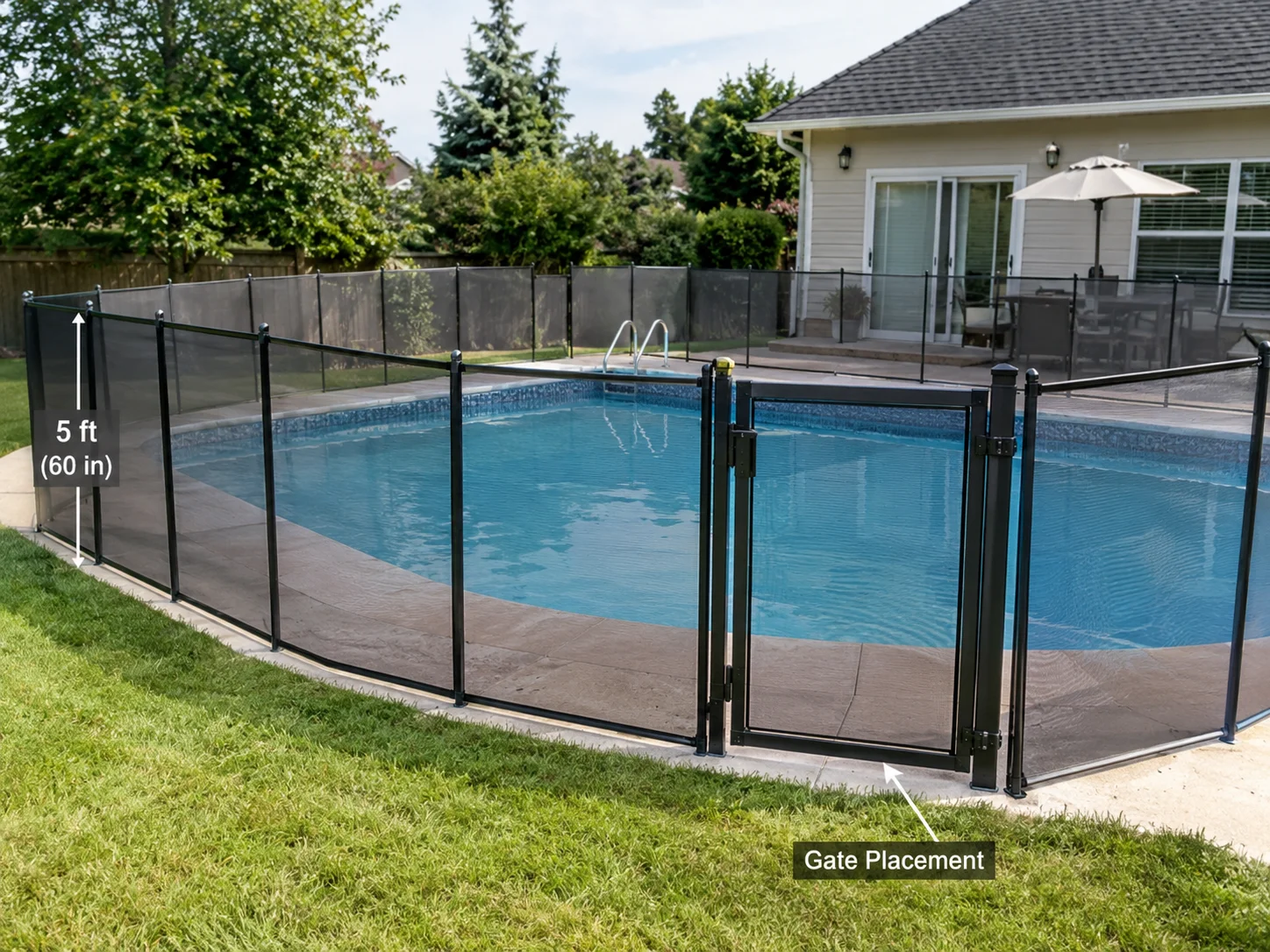
If you’re shopping for a mesh pool fence, here’s the short version. Look for a fence tested to ASTM F2286, the removable mesh pool fencing standard. It should stand at least 4 feet tall, though some states require 5 feet, so check your local code first. Strong 2026 options include Life Saver Pool Fence and Guardian Pool Fence Systems for professional installation. WaterWarden and Sentry Safety Pool Fence offer DIY kits that still carry real certification. Expect to pay roughly $65–$170 per 12-foot section for DIY fencing. A professionally installed system around a full pool perimeter can run into the thousands. Below is what actually separates a genuinely safe fence from one that just looks like one, plus the top picks and buying mistakes to avoid.
Quick Answer: Why Mesh Pool Fences Matter
A mesh pool fence is a removable safety barrier. It’s made of tightly woven, tear-resistant fabric strung between poles anchored around a pool’s perimeter. Its job is simple but serious: it creates a physical barrier that a small child can’t climb, push through, or slip under. That cuts off unsupervised access to the water.
This isn’t a minor safety nicety. According to the Consumer Product Safety Commission, an average of 390 pool or spa-related drownings involving children younger than 15 occurred annually between 2007 and 2009. Nearly 75% of those fatalities involved children under age five. Beyond fatalities, the CPSC also recorded an average of 5,200 pool or spa-related emergency room visits per year for submersion injuries among children under 15, between 2009 and 2011. A compliant pool fence is one of the most effective layers of protection against those numbers. Still, it should never be the only layer — locked doors, alarms, and constant supervision still matter.
What Makes a Pool Fence Actually Safe (Not Just Marketed as Safe)
This is where a lot of buyers get misled. Plenty of fences on the market look like safety products without actually meeting the testing standard that matters.
The benchmark to look for is ASTM F2286, the Standard Design and Performance Specification for Removable Mesh Fencing for Swimming Pools, Hot Tubs, and Spas. This standard sets requirements for mesh strength, pole spacing, gate self-closing and self-latching mechanisms, and minimum height. The goal is to reduce injury and death risk for children five and under.
A few specifics are worth knowing:
Height matters more than you’d think. ASTM sets a 4-foot minimum height for compliant fencing. However, plenty of local jurisdictions require 5 feet instead. When your city or state code sets a stricter requirement than ASTM, follow the stricter one. That’s simply the safer standard, and it’s usually also what’s legally required for your permit or inspection to pass.
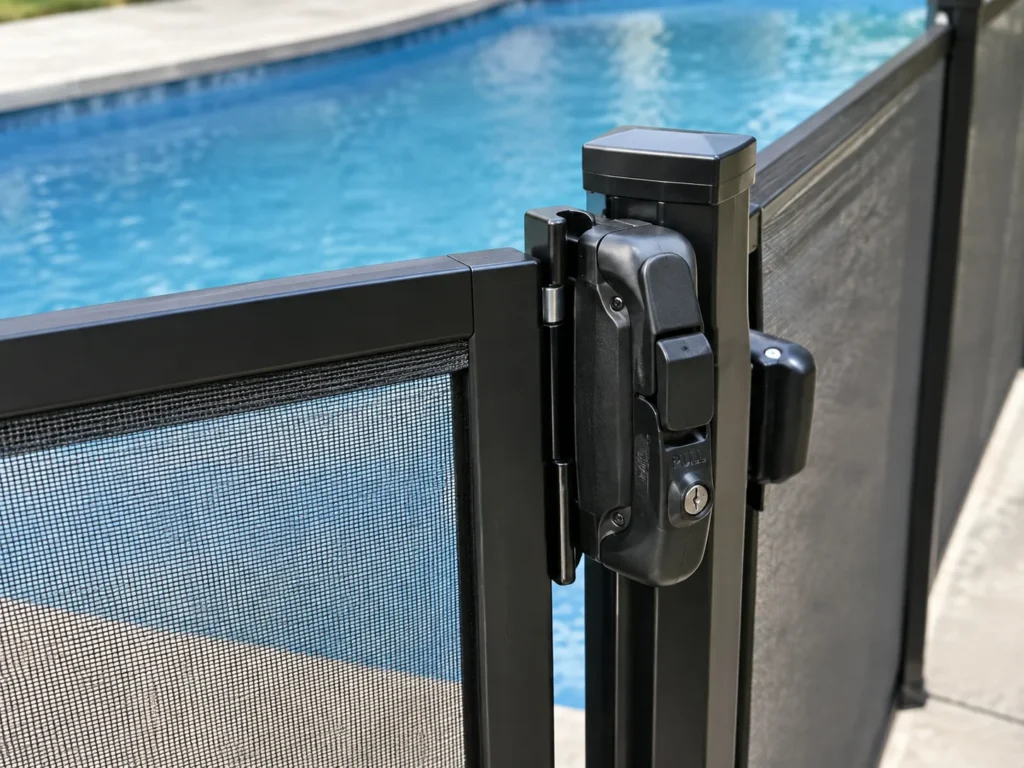
Self-closing, self-latching gates aren’t optional extras. A gate a child can leave open defeats the entire purpose of the fence. Look specifically for a self-closing, self-latching mechanism. Position it high enough that a small child can’t reach it.
“UL Certified to ASTM F2286” is a real credential, not marketing fluff. When a manufacturer states this specifically, it means an independent lab actually tested the product against the standard. The company didn’t just claim compliance on its own. This distinction matters more than most buyers realize, since self-certification claims are common in this category and don’t carry the same weight.
Top Mesh Pool Fence Picks for 2026
Best Overall (Professional Install): Life Saver Pool Fence
Life Saver is one of the most established names in the category. It’s built specifically for the U.S. market, with a strong emphasis on tensile mesh strength and long-term durability. Typically, it’s sold and installed through a dealer network rather than as a DIY kit. It also comes with an extended warranty that reflects the company’s confidence in its construction. This is the pick if you want a fully professional installation and don’t mind paying more for it.
Best for Climb Resistance: Guardian Pool Fence Systems
Guardian markets its patented gate as the only climb-resistant pool gate on the market. It also offers a “no holes” installation option for pool decks where drilling isn’t practical or allowed. Maybe your biggest concern is an older, more determined child figuring out how to scale or unlatch a standard gate. If so, Guardian’s gate design is worth a specific look.
Best Balance of Visibility and Style: Pool Barrier
Pool Barrier’s patented Quick-Close gate system pairs with a genuinely see-through mesh. That matters if you want to maintain a clear sightline to the pool from your house or patio, rather than a fence that visually blocks the water. Its modular design also adapts well to irregular pool shapes.
Best DIY Kit with Real Certification: WaterWarden
WaterWarden sells UL-certified ASTM F2286-compliant sections directly to homeowners for self-installation. Sections typically run 12 feet long and include a drilling template, hardware, and a spring-loaded latch system. At roughly $65–$85 per section depending on length and finish, it’s one of the more affordable ways to get genuinely certified fencing without hiring a professional installer.
Best Budget DIY Option: Sentry Safety Pool Fence
Sentry positions itself as a cost-effective alternative to premium brands. It still offers rustproof poles, UV-protected mesh, and a lifetime warranty on hardware. Home Depot lists sections in the $125–$140 range for 4-foot by 12-foot panels. That makes it a reasonable entry point if budget is your primary constraint.
Best for Maximum Perimeter Coverage: VEVOR
For larger or irregularly shaped pools, VEVOR sells extended-length sections, including runs up to 96 feet. Prices range from roughly $310 to $400 depending on length. It’s a practical option if you’re fencing a large freeform pool and want fewer connection points between sections. That said, confirm ASTM certification specifically before buying, since not all VEVOR listings state this clearly.
Comparison Table
| Brand | Install Type | Notable Feature | Approx. Price |
|---|---|---|---|
| Life Saver Pool Fence | Professional | Extended warranty, high tensile mesh | Custom quote |
| Guardian Pool Fence | Professional / No-holes option | Climb-resistant gate | Custom quote |
| Pool Barrier | Professional / DIY | High-visibility mesh, modular design | Custom quote |
| WaterWarden | DIY | UL-certified to ASTM F2286 | ~$65–$85/section |
| Sentry Safety Pool Fence | DIY | Budget-friendly, lifetime hardware warranty | ~$125–$140/section |
| VEVOR | DIY | Long-run sections for large pools | ~$310–$400 |
DIY vs. Professional Installation
This decision comes down to your pool’s shape, your comfort with drilling into a deck, and your budget.
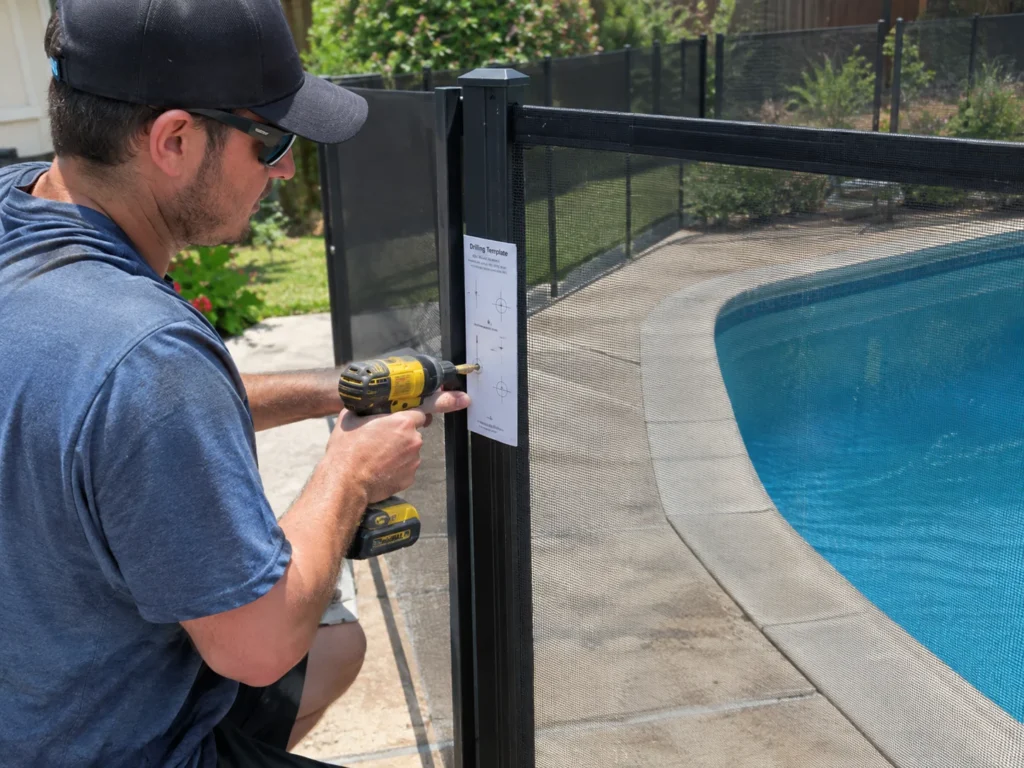
DIY kits work well for standard rectangular or simple pool shapes. They’re best with a deck surface that accepts anchor holes cleanly, typically concrete or pavers. Most kits include a drilling template, so the spacing comes out consistent even for a first-time installer. The tradeoff is your own labor. There’s also some risk of a slightly less polished result if the deck surface is uneven or oddly shaped.
Professional installation makes more sense in a few situations. These include irregular or freeform pools, decks made of natural stone or other materials that are harder to drill cleanly, or local codes that require inspection and sign-off from a licensed installer. It costs more. But you’re paying for a fit that’s correctly customized to your specific pool geometry, plus the reassurance of professional accountability if something fails.
Sometimes your pool deck can’t be drilled at all. Certain pavers, natural stone, or HOA-restricted decks fall into this category. In these cases, look specifically for a “no-holes” or freestanding fence system with weighted bases, which several brands including Guardian now offer.
Common Mistakes When Buying a Pool Fence
Assuming any mesh fence meets safety standards. Plenty of budget fencing on general retail sites doesn’t clearly state ASTM F2286 certification. If a listing doesn’t mention it explicitly, don’t assume it’s implied. Check the manufacturer’s own product page or documentation instead.
Skipping the local code check. ASTM sets a baseline, but your city, county, HOA, or insurance carrier may require something stricter, particularly around fence height or gate specifications. Check with your local building department before purchasing. Do this ideally before you even choose a brand, since some jurisdictions require a permit and inspection for pool barriers.
Underestimating gate placement. A fence is only as safe as its gate. Position the latch mechanism high enough, and far enough from any nearby furniture, planters, or ledges, that a child can’t climb up to reach it.
Ignoring mesh density and tensile strength. Not all mesh is created equal. Cheaper fencing sometimes uses a looser weave or thinner material that degrades faster under UV exposure and pool chemicals. Reputable brands publish tensile strength ratings. If a listing doesn’t mention this at all, treat that as a gap worth noting.
Treating a fence as the only layer of protection. Pool safety organizations consistently recommend layered protection. That means a compliant fence, self-closing doors and door alarms, constant adult supervision, and swim lessons for children, rather than relying on any single barrier alone.
U.S. State and Local Considerations
Pool fence requirements vary significantly by state and even by municipality. That’s different from most home safety products. States like California, Florida, and Arizona have high year-round pool usage. They tend to have some of the more detailed residential pool barrier codes. Often these specify minimum height, gate mechanism requirements, and sometimes mandatory permits for new pool construction that include a barrier plan. Other states leave most of these decisions to local building departments or HOAs. That can mean requirements differ from one town to the next, even within the same state.
Before buying, it’s worth a quick call to your local building or permits department. This matters especially if you’re installing a fence around a newly built pool, rather than retrofitting an existing one. In many areas, a new pool won’t pass final inspection without a code-compliant barrier already in place.
If you’re planning a broader home renovation alongside your fence installation, PlazmaHomes’ guide on tankless toilets covers another project where local codes and safety considerations shape the decision.
For the full regulatory and safety standard details, the Consumer Product Safety Commission’s Pool Safely campaign is the most authoritative resource for current U.S. drowning prevention guidance and layered-protection recommendations.
Frequently Asked Questions
What is the ASTM F2286 standard, and why does it matter?
It’s the recognized U.S. testing standard for removable mesh pool fencing. It covers mesh strength, height, pole spacing, and gate mechanisms. A fence explicitly certified to this standard has been independently tested, not just self-described as safe by the manufacturer.
How tall does a pool fence need to be?
ASTM sets a 4-foot minimum, but many states and municipalities require 5 feet. Always check your local building code, since it can override the ASTM baseline.
Can I install a mesh pool fence myself?
Yes, for standard rectangular pools with a drillable deck surface like concrete or pavers. Most DIY kits include a drilling template and hardware. Irregular pool shapes or non-drillable decks generally call for professional installation or a no-holes freestanding system.
How much does a mesh pool fence cost?
DIY sections typically run $65 to $170 per 12-foot length, depending on the brand and finish. Full professional installation around an average residential pool can run into the thousands, depending on perimeter length and pool shape.
Do I need a permit to install a pool fence?
It depends on your location. Many jurisdictions require a permit for pool fencing, especially for new pool construction. Retrofitting an existing pool with a barrier sometimes doesn’t require one. Check with your local building department to be sure.
Is a mesh fence better than a glass or aluminum pool fence?
Mesh fences are generally more affordable and easier to remove or reposition. That matters if you want an unobstructed view of the pool during supervised swim time. Glass and aluminum fences tend to be more permanent and often more expensive. Some homeowners prefer them for aesthetic reasons, but they’re less convenient to take down.
Do pool fences fully prevent drowning?
No single barrier eliminates risk entirely. A code-compliant fence is one important layer. Safety organizations recommend combining it with door alarms, constant supervision, and swim instruction, rather than relying on the fence alone.
How do I know if a fence brand is legitimate versus just marketed as safe?
Look for explicit statements of independent certification, such as “UL Certified to ASTM F2286,” rather than vague claims like “meets safety standards.” If a listing doesn’t specify the certifying body or the standard number, treat that as a red flag worth investigating further before buying.
Sources & References
- Consumer Product Safety Commission – Pool Safely Campaign
- ANSI/ASTM International – ASTM F2286 Standard