

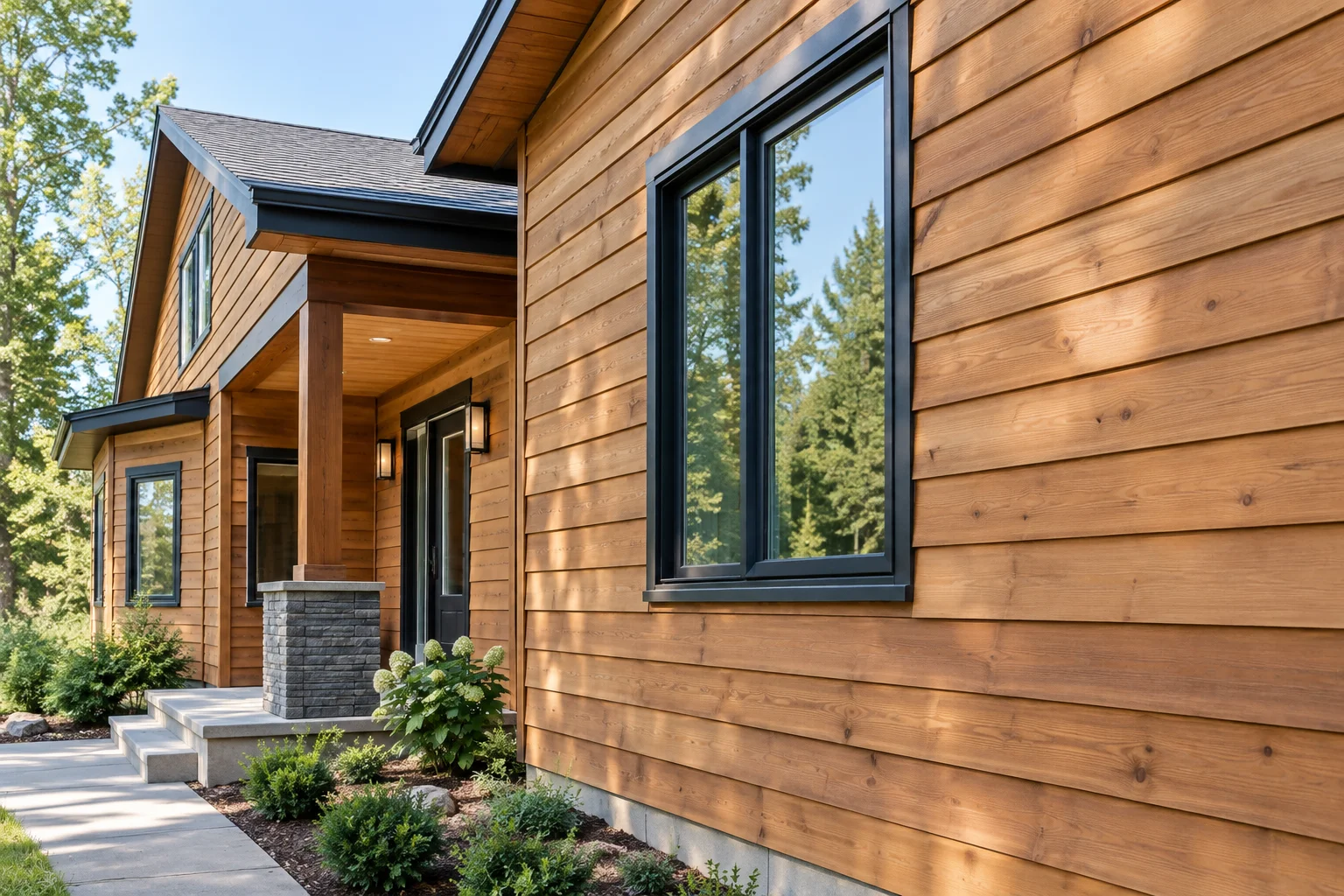
Wood siding remains one of the few exterior materials that still looks better in person than in photos. It also remains one of the most misunderstood. Most buyers hear “wood siding” and picture a rustic cabin or an endless painting chore. In reality, the outcome depends heavily on the species, the climate, and how well the installer handles moisture details.
This guide breaks down the main wood siding types available in the U.S. market. It covers what they actually cost installed, plus the honest trade-offs. That includes where wood siding makes sense, and where it doesn’t.
Quick Answer: Is Wood Siding Worth It?
Wood siding costs more upfront than vinyl or fiber cement. It also requires more upkeep. In exchange, it delivers a natural look, better repairability, and genuine curb appeal that manufactured products still struggle to match. Based on current cost guides, most wood siding installations run roughly $6 to $16 per square foot installed. Premium species like clear-grade cedar or redwood sit at the higher end, while budget options like pine or engineered wood siding run lower.
For a typical 1,500-square-foot home, that translates to a project cost between $12,000 and $27,000. Smaller homes, simpler profiles, and lower-grade lumber can bring that number down significantly.
Whether wood siding is “worth it” depends less on the price tag itself. It depends more on your climate, your tolerance for maintenance, and how long you plan to stay in the home. We’ll cover all three below.
Types of Wood Siding
Cedar
Cedar is the most popular wood siding choice in the U.S., and for good reason. It contains natural oils that resist rot and insects better than most other softwoods. It also takes stain beautifully and holds up well in humid and coastal climates. Western red cedar, grown mainly in the Pacific Northwest, is the most common variety.
Cedar siding typically runs $6 to $16 per square foot installed, with clear, knot-free grades sitting at the higher end. Even so, cedar isn’t maintenance-free. Its natural rot resistance fades over time, so it still needs staining or sealing every few years to keep that resistance active.
Redwood
Redwood shares many of cedar’s advantages: natural insect and rot resistance, a rich color, and good dimensional stability. It’s grown almost exclusively in California and parts of Oregon. That limited range affects both price and availability outside the West Coast.
Expect to pay $6 to $18 per square foot installed for redwood, making it one of the pricier options on this list. Because of limited supply, redwood often costs more the farther you are from where it’s harvested. A homeowner in New England will typically pay more for the same board than someone in Sacramento.
Cypress
Cypress, especially old-growth cypress, resists warping and splitting naturally. It has a long track record in the Southeast, where humidity and pests are a bigger concern than in drier climates. Modern cypress doesn’t have quite the same rot resistance as old-growth stock, since most available cypress today comes from younger trees. Even so, it still performs well when properly finished.
Cypress siding runs $4 to $16 per square foot installed, depending on board quality and thickness.
Pine
Pine is the budget entry point into real wood siding. It’s easy to work with, takes paint well, and costs noticeably less than cedar or redwood. The trade-off is durability: pine lacks natural rot and insect resistance. It depends entirely on the quality of the finish and ongoing maintenance to hold up over time.
Pine siding costs $2.50 to $11 per square foot installed. If you go this route, don’t skip back-priming. Sealing the back side and cut edges of each board before installation matters, because unsealed pine is where premature rot tends to start.
Douglas Fir
Fir splits the difference between pine’s affordability and cedar’s durability. It’s a dense, strong softwood with an even grain that finishes cleanly. It costs less than cedar while still holding paint or stain reasonably well. Like pine, though, it needs consistent maintenance since it lacks significant natural rot resistance.
Fir siding typically costs $4 to $12 per square foot installed.
Engineered Wood Siding
Engineered wood siding — brands like LP SmartSide are the best-known example — is made from compressed wood strands, wax, and resins rather than solid lumber. It’s built to mimic the look of natural wood. At the same time, it resists warping, swelling, and insect damage far better than solid wood does. Many products come backed by 15- to 30-year warranties, longer than most manufacturers guarantee on solid wood siding.
Engineered wood siding runs $4 to $13 per square foot installed. If the main appeal of wood siding for you is the look rather than the material itself, this category deserves serious consideration. It closes most of the maintenance gap with vinyl, while still resembling real wood far more closely.
T1-11 Plywood Siding
T1-11 is a grooved plywood panel. It’s the most budget-friendly wood siding option by a wide margin, at $3 to $8 per square foot installed. It installs quickly since it comes in large sheets rather than individual boards. That’s why it shows up so often on sheds, garages, and outbuildings. Some homeowners do use it on houses, particularly on secondary structures or budget-conscious builds. However, it’s more prone to moisture damage than solid wood species, and it generally has a shorter lifespan if it isn’t sealed and maintained diligently.
Siding Profiles and Styles
Beyond wood species, the profile — how the boards are cut and installed — affects both the look and the cost:
- Lap siding (clapboard/bevel): Horizontal overlapping boards, the most traditional and widely recognized style, common throughout New England and the South
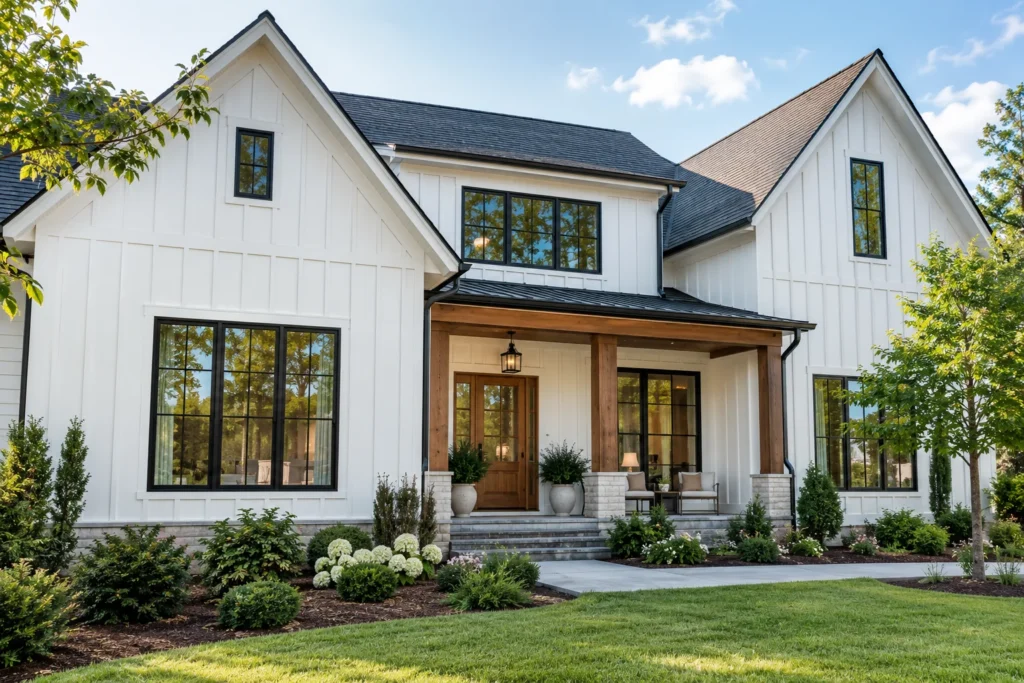
- Board and batten: Vertical wide boards with narrow strips covering the seams, popular on farmhouse-style homes and increasingly common in new construction
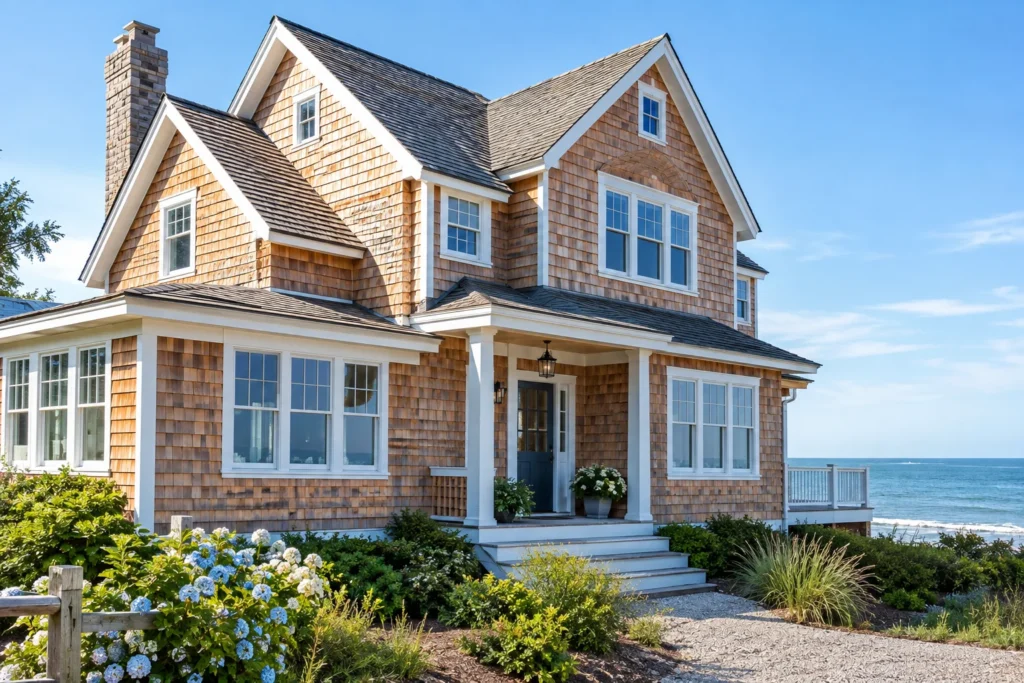
- Shingles and shakes: Individual overlapping pieces, often cedar, giving a textured look common on Cape Cod-style and coastal homes
- Shiplap: Boards with interlocking edges that create a tight, flat seam, popular for a modern-farmhouse look
- Tongue and groove: Similar to shiplap but with a more finished, seamless appearance, often used on porch ceilings as well as siding
The profile you choose affects labor cost as much as the wood species does. Shingle installation, for example, takes considerably more labor time than lap siding. That’s simply because of how many individual pieces go up. It’s part of why two houses of the same size and wood species can still land at very different total costs.
Pros and Cons of Wood Siding
Pros
- Genuine curb appeal. Wood siding has a depth and texture that vinyl and most fiber cement products still can’t fully replicate. It also tends to age with more character rather than simply looking worn.
- Repairability. If a section gets damaged, you can typically replace individual boards rather than an entire panel section. That’s not always true with vinyl.
- Better for older or historic homes. In many historic districts, local preservation guidelines actually require wood siding or close replicas. It’s not always optional.
- Good insulation properties. Wood has a naturally higher R-value than vinyl or metal siding. That can offer a modest efficiency benefit, though wall insulation matters far more overall.
- Environmentally renewable, assuming the lumber comes from a sustainably managed source. Look for FSC (Forest Stewardship Council) certification if that matters to you.
Cons
- Ongoing maintenance. Even rot-resistant species like cedar and redwood need re-staining or resealing every 3 to 7 years. Painted wood siding typically needs repainting every 5 to 10 years, depending on climate exposure.
- Vulnerability to moisture and pests. Wood siding installed without proper flashing, back-priming, and ground clearance is far more likely to develop rot. It’s also more likely to attract termites and carpenter ants than fiber cement or vinyl.
- Higher upfront cost than vinyl. Vinyl siding typically runs $4.50 to $8.20 per square foot installed, meaningfully less than most solid wood options.
- Fire risk considerations. In wildfire-prone areas of California and the broader West, some local building codes now restrict or require fire-treated wood siding. It’s worth checking local rules before committing to a species and finish.
- Insurance implications. In wildfire zones especially, some insurers factor exterior material into underwriting. Untreated wood siding can occasionally affect premiums or eligibility.
Wood Siding vs. Vinyl vs. Fiber Cement
| Factor | Wood | Vinyl | Fiber Cement |
|---|---|---|---|
| Installed cost per sq ft | $4–$18 | $4.50–$8.20 | $6–$13 |
| Lifespan | 20–40+ years with maintenance | 20–40 years | 30–50 years |
| Maintenance | High (staining/painting every 3–10 years) | Low (occasional washing) | Moderate (repainting every 10–15 years) |
| Fire resistance | Low unless treated | Melts/warps in high heat | High |
| Repairability | High (board by board) | Moderate | Moderate to difficult |
| Climate sensitivity | High in humid/wet regions | Low | Low |
Fiber cement, sold under brands like James Hardie, has taken a lot of market share from wood over the past two decades. It splits the difference: it looks reasonably close to wood, resists fire and pests far better, and needs less frequent repainting. Homeowners who want the wood look with less long-term maintenance often land on fiber cement or engineered wood siding. It’s a middle ground, rather than a strict choice between “real wood” and vinyl.
U.S. Regional Considerations
Climate plays a bigger role in wood siding performance than most buyers expect going in.
Pacific Northwest and coastal regions: High humidity and consistent moisture are a fact of life here. Rot-resistant species like cedar and redwood tend to perform better than pine or fir. Homeowners should also expect to maintain the finish on a shorter cycle than in drier climates.
Southeast and Gulf Coast: Heat, humidity, and higher termite pressure make proper installation especially important. That means ventilation gaps, flashing, and ground clearance done right. Cypress has a long regional track record here for good reason.
Southwest and Mountain West: Drier conditions are generally easier on wood siding. However, UV exposure fades stain faster. Wildfire-prone areas may also have local code restrictions on untreated wood exteriors.
Northeast and Midwest: Freeze-thaw cycles stress any exterior material. Wood siding needs properly sealed end grains and joints, or water can get in and expand during winter freezes.
Common Mistakes Homeowners Make with Wood Siding
Skipping back-priming. Sealing only the visible face of a board, while leaving the back and cut edges exposed, is a common reason wood siding fails early. Moisture gets in from the unsealed side and has nowhere to escape.
Installing siding too close to the ground. Most manufacturers and building codes call for a minimum clearance, often 6 to 8 inches, between the bottom of the siding and the ground or a roof surface. This gets overlooked often enough that it’s worth confirming with your contractor directly.
Choosing the cheapest grade without understanding the trade-off. Knotty, lower grades of pine or fir cost less per board. But knots are weak points where moisture tends to penetrate first. For high-exposure walls, spending more on a clearer grade often pays for itself in fewer repairs down the line.
Delaying maintenance. Waiting until paint or stain has fully failed before recoating lets moisture reach bare wood in the meantime. That shortens the siding’s overall lifespan far more than staying on a regular maintenance schedule would.
Maintenance Checklist
- Inspect siding annually for cracking, peeling, or soft spots, ideally in spring after winter moisture exposure
- Re-stain semi-transparent or solid stains every 3 to 5 years, and repaint every 5 to 10 years, depending on exposure
- Keep gutters clean and downspouts directed away from siding to reduce splash-back moisture
- Trim back shrubs and trees so foliage isn’t holding moisture against the siding
- Address any insect activity immediately rather than waiting for the next scheduled maintenance cycle
Frequently Asked Questions
How long does wood siding last? With proper installation and regular maintenance, most wood siding lasts 20 to 40 years or more. Cedar and redwood tend toward the higher end. Pine and fir depend more heavily on how consistently the finish gets maintained.
Is wood siding more expensive than vinyl? Yes, generally. Wood siding typically costs more per square foot than vinyl, both upfront and over time once you factor in repainting or restaining.
Does wood siding need to be painted, or can it just be stained? Either works, depending on the look you want. Stain lets the wood grain show through, but it needs reapplication more often. Paint offers more color options and slightly longer maintenance intervals, though it hides the natural wood texture.
Can I install wood siding myself? It’s possible for a skilled DIYer, particularly with panel products like T1-11. That said, proper flashing, moisture barriers, and ground clearance are easy to get wrong. Most cost guides recommend hiring a professional for anything beyond a small outbuilding.
What’s the most low-maintenance type of wood siding? Engineered wood siding comes closest to low-maintenance while still resembling real wood. Factory-applied finishes and resistance to warping and insects help. Among solid wood species, cedar and redwood require less frequent attention than pine or fir.
Is wood siding a fire hazard? Untreated wood siding burns more readily than fiber cement or vinyl. That’s why some wildfire-prone areas in California and the broader West restrict its use or require fire-retardant treatment. Check local building codes before choosing wood siding in these regions.
Does wood siding increase home value? Real estate professionals generally consider well-maintained wood siding a curb appeal asset. This is especially true on styles where wood is expected, like Cape Cod or farmhouse designs. That said, poorly maintained wood siding can work against resale value, since visible rot or peeling paint reads as deferred maintenance to buyers.
Sources & References
- U.S. Forest Service, Forest Products Laboratory — Wood as a Building Material
- Forest Stewardship Council (FSC), Certification Overview
If you’re evaluating your home’s exterior as part of a larger sale or renovation plan, see this guide to GI flashing types, installation, and cost. Proper flashing protects wood siding from the moisture issues that cause the most damage.