

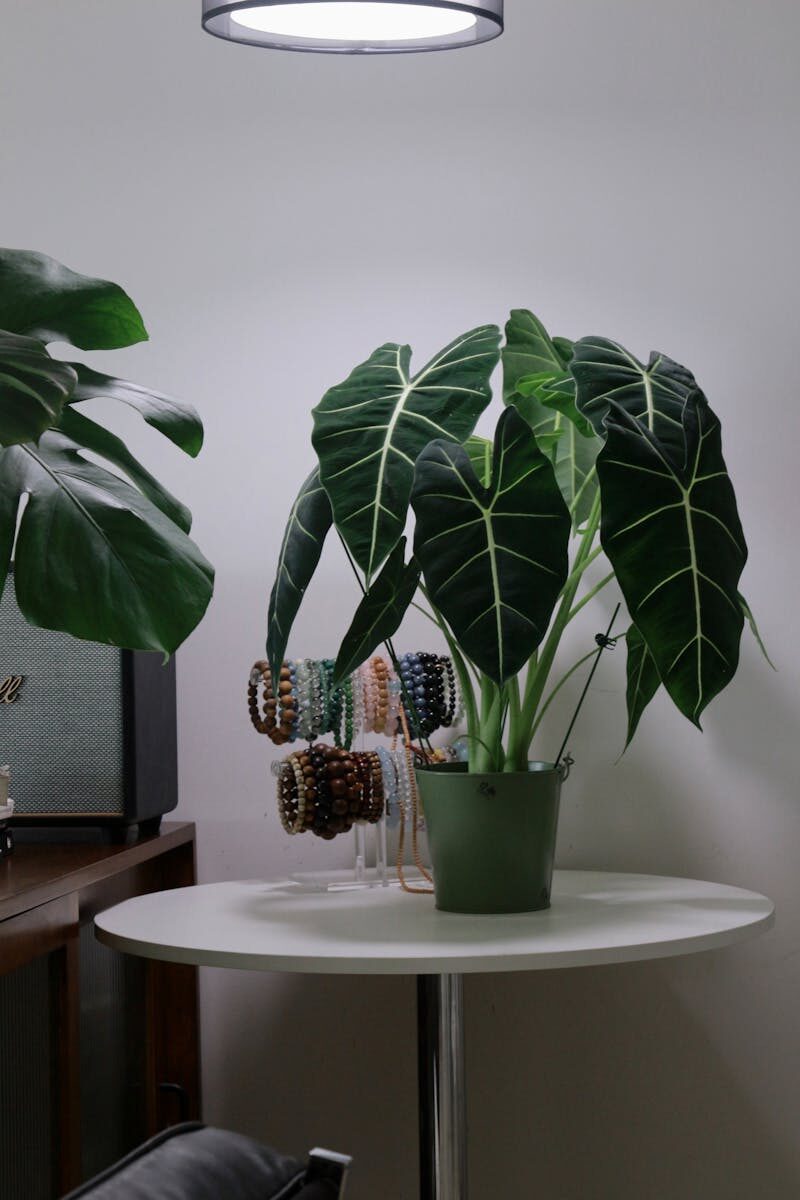
The first time most plant lovers see an Alocasia Frydek in person, they stop mid-sentence. There’s something almost unreal about those deep, dark green leaves — velvety to the eye, sharply defined white veins cutting across the surface like brushstrokes on a canvas. It’s the kind of houseplant that earns a permanent spot on the shelf and becomes the first thing guests notice when they walk into a room.
But if you’ve owned one for more than a few weeks, you already know the other side of the story: Alocasia Frydek can be a little dramatic. A missed watering here, a drafty windowsill there, and suddenly you’re staring at a yellow leaf wondering what went wrong. The good news is that once you understand what this plant actually needs — and why — it becomes far less intimidating to care for.
This guide covers everything: light, water, soil, humidity, fertilizing, propagation, dormancy, toxicity, and the most common problems you’re likely to run into. Whether you just brought one home from your local nursery or you’ve been struggling with yours for months, you’ll find clear, practical answers here.
Quick-Reference Care Summary
Before diving deep, here’s the essential snapshot:
- Scientific name: Alocasia micholitziana ‘Frydek’
- Common name: Green Velvet Alocasia
- Origin: Philippines (tropical forest floor)
- Light: Bright, indirect light — no direct sun on the leaves
- Water: When the top inch of soil is dry; keep consistently moist but never soggy
- Humidity: 60% or higher preferred; minimum 50%
- Temperature: 65°F–85°F (18°C–29°C); never below 60°F
- Soil: Well-draining, airy mix
- Fertilizer: Monthly during the growing season (spring through early fall)
- Toxicity: Toxic to humans, cats, and dogs
- Growth rate: Moderate; one to two new leaves per month in ideal conditions
What Is Alocasia Frydek?
Alocasia Frydek — formally known as Alocasia micholitziana ‘Frydek’ — is a tropical perennial native to the Philippines, where it grows on the shaded floor of warm, humid rainforests. It belongs to the Araceae family, which also includes pothos, peace lilies, and monstera, and is sometimes grouped under the broader “elephant ear” category due to its large, distinctive leaves.
What sets Frydek apart within the Alocasia genus is the combination of its deep, almost shadow-like forest green leaves and the crisp white veining that runs through each one. The leaves have a soft, matte texture that genuinely resembles velvet — hence the common name Green Velvet Alocasia. Each leaf grows on a single upright petiole connected to a hidden corm beneath the soil, giving mature plants a compact, architectural silhouette that fits beautifully in modern and minimalist interiors.
It sits in the middle of the Alocasia difficulty scale — more demanding than Alocasia Polly, but far less finicky than some of the rarer collector varieties. Master the basics of its care environment and it will reward you generously. Neglect those basics and it will let you know quickly.
Light Requirements: Bright and Indirect Is the Goal
Getting the lighting right is one of the most impactful things you can do for your Alocasia Frydek. This plant evolved in the filtered light of a tropical forest floor — dappled, bright, and consistent. That’s what you’re trying to recreate indoors.
The ideal placement is within a few feet of a bright window where the light is strong enough to cast a soft shadow but where direct sunbeams never fall directly on the leaves. An east-facing window is often the sweet spot for U.S. growers — your Frydek gets gentle morning light and bright indirect light through the rest of the day without the harsh intensity of afternoon sun.
A north-facing window offers consistent, soft light that Frydek can tolerate, though growth will be slower. South-facing windows in the Northern Hemisphere provide more intensity — great in winter, but use a sheer curtain during summer months to prevent leaf scorch. West-facing windows get strong evening sun, so keeping the plant a few feet back from the glass is wise.
What to avoid: More than one to two hours of direct sunlight per day will typically cause leaf scorching — brown, crispy edges that are genuinely unpleasant on a plant whose entire appeal is its foliage. On the flip side, too little light causes slow, leggy growth and makes the plant far more susceptible to overwatering since the soil won’t dry out at a healthy rate.
One important note specific to Frydek: unlike some other Alocasia varieties, it doesn’t respond well to frequent rotation. It tends to orient its leaves toward the light source, and moving those leaves away from the direction they’ve settled into can stress the plant and cause leaf drop. If you’re happy with its placement and all the leaves are getting adequate light, leave it alone.
Grow lights are a genuinely good option for growers in apartments or rooms with limited natural light. Full-spectrum LED grow lights placed 12–18 inches above the plant on a 12-hour timer can produce excellent results, especially during winter months when natural light is at its weakest across most of the U.S.
Watering: Consistency Matters More Than Frequency
Watering is where most Frydek owners run into trouble — and almost always in one of two directions. Too much water leads to root rot. Too little, and the plant goes dormant or drops leaves. The sweet spot is consistent, moderate moisture.
The general rule: water your Alocasia Frydek when the top inch of the potting mix feels dry to the touch. In most U.S. homes during spring and summer, that typically means watering once a week. In fall and winter — especially if the plant is in a cooler room or growth has slowed — that may stretch to every ten to fourteen days.
When you do water, water thoroughly. Pour slowly until water runs freely from the drainage holes, then let the pot drain completely before putting it back in its saucer. Never let the roots sit in standing water — that’s one of the fastest ways to invite root rot.
Signs of overwatering: yellowing leaves, a musty smell from the soil, soft or discolored stems at the base, or visible mold on the soil surface. If you notice these, let the soil dry out more than usual before the next watering and check the roots for rot.
Signs of underwatering: drooping or wilting leaves, bone-dry soil, brown crispy leaf edges. If your plant has gone fully dormant from drought stress — all leaves yellowed and dropped — don’t give up. As long as the corm and roots haven’t completely dried out, the plant can recover. Trim away dead foliage, moisten the soil gently, place it somewhere warm and bright, and wait. It can take weeks or even months to re-emerge, but it often does.
Water quality matters too. Like many aroids, Frydek can be sensitive to the fluoride and chlorine in municipal tap water. If your tap water is heavily treated, let it sit out overnight before using it, or switch to filtered water or rainwater. This is especially worth considering if you’re noticing unexplained brown leaf tips without other obvious causes.
Humidity: The Non-Negotiable Requirement
If there’s one care factor that separates growers who struggle with Frydek from those who thrive, it’s humidity. This plant comes from a rainforest. It wants moisture in the air, and it will tell you clearly when it isn’t getting enough — through brown leaf tips, crispy edges, and sluggish growth.
The target: 60% relative humidity or higher. Many U.S. homes sit around 30–50% humidity, especially in winter when heating systems dry out indoor air significantly. That gap is real and it matters.
The most effective solution is a dedicated humidifier. A small ultrasonic humidifier placed near your plant collection (not blowing directly on the leaves) can make a dramatic difference. Many plant enthusiasts in dry climates like Denver, Phoenix, or the Great Plains run humidifiers from October through March and notice a complete turnaround in their tropical plants.
Other strategies:
- Pebble tray: Fill a shallow tray with pebbles, add water to just below the top of the pebbles, and set your pot on top. As the water evaporates, it raises local humidity around the plant.
- Plant grouping: Grouping several houseplants together creates a micro-climate of slightly higher humidity as the plants transpire.
- Bathroom placement: If your bathroom gets adequate indirect light, it’s often naturally the most humid room in the house.
What doesn’t work: Misting the leaves. While it won’t hurt the plant and does help deter spider mites in the short term, misting has a negligible effect on actual ambient humidity. It evaporates too quickly to make a lasting difference.
Temperature: Warm, Stable, and Draft-Free
Alocasia Frydek is a true tropical, and it doesn’t tolerate cold. The ideal temperature range is 65°F to 85°F (18°C–29°C), which aligns well with typical U.S. indoor temperatures during most of the year.
The key threshold to remember: once temperatures drop below 60°F (15.5°C), Frydek begins to shut down. It may drop leaves and enter dormancy even if nothing else has changed in its care. This makes placement near drafty windows, air conditioning vents, or exterior doors a common mistake — especially in climates with harsh winters.
Keep the plant away from cold glass in winter, away from AC vents in summer, and away from heating vents that blow dry, hot air directly on the foliage. Stable, consistent warmth is the goal.
Soil: Drainage and Aeration Are Everything
The right soil mix for Alocasia Frydek needs to do two things simultaneously: retain enough moisture to keep the plant’s roots consistently damp, and drain fast enough that it never becomes waterlogged.
A standard houseplant potting mix straight from the bag is often too dense on its own. The most reliable approach used by experienced growers is to amend it for better drainage and aeration.
A practical DIY mix:
- 40% quality potting soil (something like Fox Farm Ocean Forest or Espoma Organic Potting Mix)
- 30% perlite (for drainage and aeration)
- 20% orchid bark or coco coir (for structure and moisture retention)
- 10% coarse sand or pumice (optional, adds extra drainage)
This kind of mix lets water flow through freely while still holding enough moisture between waterings to keep roots happy.
Pot choice: Always use a pot with drainage holes — no exceptions. Terra cotta pots work well because they’re breathable and help prevent overwatering naturally. Plastic or glazed ceramic pots retain moisture longer, which can work if you tend to underwater but requires more careful watering if you tend to overwater.
Repot your Frydek every one to two years, or when roots begin circling the inside of the pot or emerging from drainage holes. Spring is the ideal time — the plant is waking up and ready to grow into its new space. Go up only one pot size at a time; too large a container holds too much excess moisture and increases root rot risk.
Fertilizing: Feed During the Growing Season
Alocasia Frydek benefits from regular feeding during its active growing period — typically spring through early fall for most U.S. growers. A balanced, water-soluble fertilizer (such as a 20-20-20 or 10-10-10 formula) applied once a month at half the recommended strength is a reliable approach.
Alternatively, a fertilizer higher in nitrogen supports strong foliage growth, which makes sense for a plant you’re growing primarily for its leaves.
What to avoid: Fertilizing in winter when the plant is in or near dormancy. Feeding a resting plant can cause fertilizer salt buildup in the soil, which burns roots and shows up as brown leaf tips. Flush the soil with plain water every few months to prevent salt accumulation even during the growing season.
Propagation: Working with Corms and Division
Unlike many popular houseplants, Alocasia Frydek cannot be propagated from stem cuttings the way a pothos or monstera can. The practical methods for home growers are division and corm propagation.
Division is the simplest approach. When you repot your plant in spring, gently remove it from its pot and examine the root system. Mature Frydeks typically develop multiple stems growing from separate clumps. These can be carefully separated by hand or with a clean, sharp knife and potted individually into fresh, well-draining mix. Each division needs at least a few roots attached to have a good chance of establishing successfully.
Corm propagation is a bit more patient but very satisfying. While repotting, you’ll often find small, round corms tucked in among the roots. These are essentially baby plants in waiting. Gently remove them and place them in a small container with sphagnum moss or perlite, keeping the medium consistently moist but not wet. A plastic bag or humidity dome placed over the container creates the warm, humid environment corms need to sprout. Change the water or misting medium regularly to prevent mold. It can take several weeks to a few months before you see a root and then a petiole emerge — patience is essential here.
The best time for both methods is spring, when the plant is coming out of its winter rest and actively preparing to grow.
Dormancy: Don’t Panic When It Happens
One of the most alarming experiences for new Frydek owners is watching their plant suddenly drop all its leaves — sometimes seemingly overnight. Before you assume the worst, understand that this is usually dormancy, not death.
Alocasia Frydek enters dormancy naturally in winter, especially in homes where temperatures drop or light becomes limited. It can also be triggered by drought stress or root disturbance. The plant retreats energy into its corm, drops its leaves, and waits for conditions to improve.
What to do during dormancy:
- Stop or significantly reduce watering — the plant isn’t actively using water and soggy soil at this stage will cause root rot
- Keep it in a warm location with indirect light
- Do not fertilize
- Be patient — it can stay dormant for weeks or even months
When temperatures warm and light increases in spring, resume gentle watering and watch for new growth emerging from the soil. Once you see a new petiole forming, you can gradually return to your normal watering and fertilizing schedule.
If your plant entered dormancy due to neglect, cut away any fully yellowed or dead foliage, gently moisten the soil, and give it time. Alocasias are more resilient than they appear — experienced growers report reviving plants that appeared completely dead for up to a year or more.
Common Problems and How to Fix Them
Yellow Leaves
Yellowing is the most common complaint and has several possible causes. Overwatering is the most frequent culprit — check that the soil isn’t staying consistently soggy and that drainage is working properly. Underwatering can also cause yellowing, as can natural aging (the oldest, lowest leaves will yellow and drop over time as the plant grows). Low light and pest infestations are also worth ruling out.
Brown Leaf Tips or Edges
Crispy brown tips usually signal low humidity, dry soil conditions, or fluoride sensitivity from tap water. Brown edges combined with yellowing across the whole leaf often indicate too much direct sun or a temperature extreme. Try increasing humidity first — it’s the most commonly overlooked factor.
Drooping Leaves
A drooping Frydek is typically a watering issue — either too dry and needs water, or the roots are compromised from overwatering and can’t take up water effectively. Check the soil moisture and inspect the roots if drooping persists after watering.
Leggy, Stretched Growth
Long, weak petioles reaching toward the window are a light problem. Move the plant closer to a brighter light source or supplement with a grow light.
Pests: What to Watch For
Alocasia Frydek’s love of humidity can make it a target for certain houseplant pests. Regular inspection — especially on the undersides of leaves — is the best defense.
Spider mites are the most common pest for Alocasias. They thrive in dry conditions and show up as fine webbing on the leaves and tiny moving specks on the undersides. Increase humidity, wipe leaves down with a damp cloth, and treat with neem oil or insecticidal soap.
Mealybugs appear as white, fluffy clusters in the joints between leaves and petioles. Remove them manually with a cotton swab dipped in rubbing alcohol and follow up with neem oil spray.
Scale look like small, brown oval bumps attached to stems and leaves. They’re stubborn — treat with horticultural oil and repeated applications.
Fungus gnats are attracted to moist soil and are more annoying than truly harmful to the plant. Let the top layer of soil dry out more between waterings, and use sticky traps to reduce the adult population.
Thrips are small, dark, fast-moving insects that damage leaf tissue and can spread between plants. They’re among the harder pests to fully eliminate — neem oil, insecticidal soap, and in severe cases, removing affected leaves are your best tools. Isolate any affected plant immediately.
Toxicity: Important Information for Pet and Family Safety
Alocasia Frydek contains calcium oxalate crystals throughout its tissue — in the leaves, stems, and roots. If ingested, these crystals cause immediate irritation and swelling of the mouth, throat, and digestive system in both humans and animals.
Keep this plant out of reach of cats, dogs, and small children. The ASPCA lists plants in the Alocasia genus as toxic to both cats and dogs. If you suspect ingestion, contact your veterinarian or Poison Control immediately.
For in-depth guidance on creating a pet-safe plant collection, our guide on safe and toxic houseplants for pet owners is a helpful companion resource.
Styling Your Alocasia Frydek Indoors: Design Tips
Beyond its care needs, the Frydek is a genuinely stunning design element in any interior. Here are a few ways plant lovers across the U.S. are integrating it into their spaces:
Minimalist and modern interiors — The Frydek’s dark leaves and clean silhouette pair beautifully with light walls, neutral furnishings, and natural wood tones. A single large specimen in a simple white or terracotta pot creates an architectural focal point without visual noise.
Bathroom placement — If your bathroom has a skylight or a bright frosted window, it’s often ideal Frydek territory. The naturally higher humidity reduces your maintenance burden considerably.
Shelf styling — Younger, smaller Frydeks work beautifully on plant shelves alongside other tropical aroids. Their upright growth habit means they don’t crowd neighbors, and the contrast of their dark velvety leaves against brighter plants like golden pothos or neon philodendron is striking.
Home office — Multiple studies have explored how indoor plants in work environments support focus and reduce stress. The Frydek’s low visual noise and dramatic presence makes it a popular choice for home offices and creative studios.
Where to Buy Alocasia Frydek in the USA
Alocasia Frydek has become considerably more accessible over the past few years. You can find it at:
- Local independent nurseries — Often the best source for healthy, acclimatized plants that have been properly cared for before sale
- Big box garden centers (Home Depot, Lowe’s, IKEA seasonal sections) — Availability varies by season and region; spring and summer bring the best selection
- Online plant shops — Retailers like The Sill, Bloomscape, and Steve’s Leaves ship nationwide and often carry reliable stock
- Etsy and Facebook Marketplace — Local plant collectors often sell divisions and corms at reasonable prices, and buying from a fellow enthusiast often means getting a healthier, better-documented plant
Prices in 2025–2026 typically range from $15–$30 for a small nursery pot to $50–$80 or more for a large, established specimen. Variegated forms (the Alocasia Frydek Variegata) command significantly higher prices due to their rarity.
According to the National Gardening Association’s latest houseplant trend data (available at garden.org), tropical aroids including Alocasia varieties have consistently ranked among the top five most searched houseplant categories in the U.S. since 2022 — and Frydek remains one of the most coveted species within that group.
Final Thoughts: Is Alocasia Frydek Right for You?
Alocasia Frydek isn’t the plant for someone who wants a set-it-and-forget-it houseplant. It needs consistency — in watering, light, humidity, and temperature. When those conditions are right, it’s genuinely one of the most beautiful foliage plants you can grow indoors.
When they’re not, it will tell you. And that feedback loop, frustrating as it can be in the beginning, is actually how you become a better plant parent. Every yellow leaf teaches you something. Every new velvety leaf unfurling in the morning light is a reminder that you got it right.
Give your Frydek the bright, indirect light it craves, the humidity it was born in, and consistent moisture without waterlogging its roots — and you’ll have one of the most visually stunning plants in your collection for years to come.