

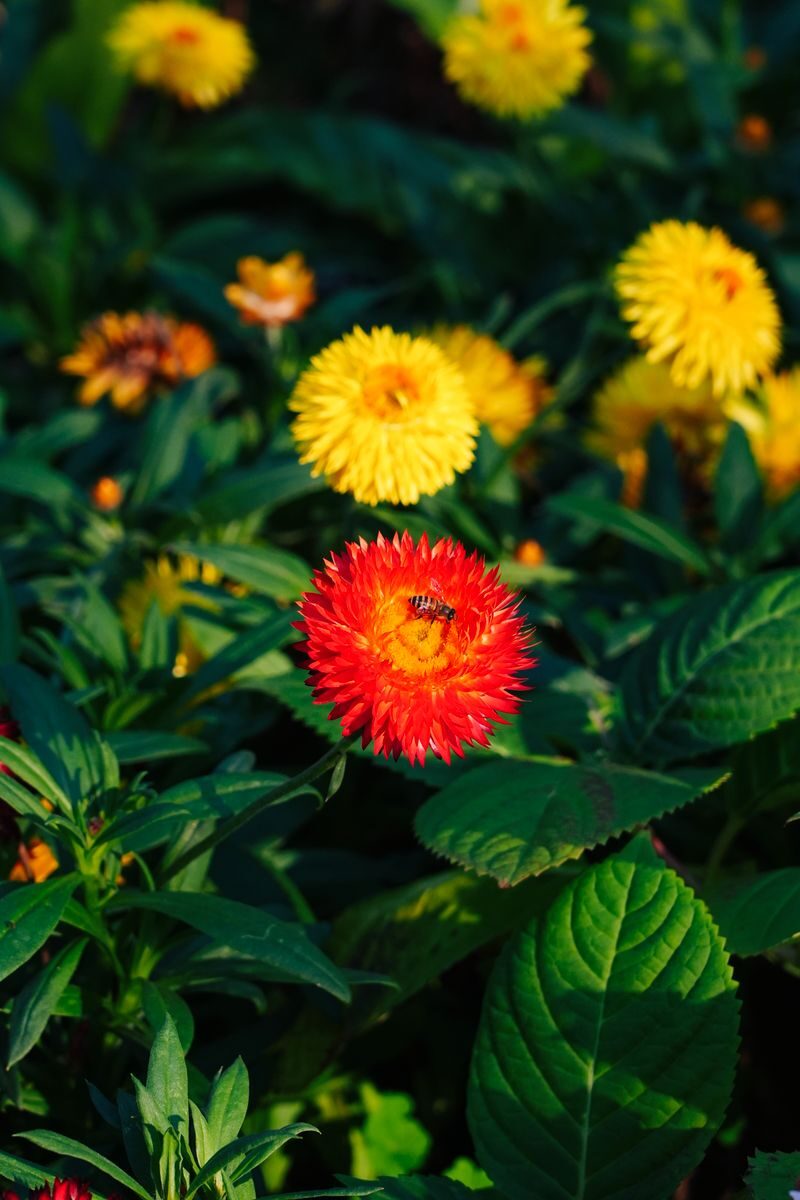
If you’ve ever walked through a summer garden and spotted flowers that looked almost too perfect — papery petals in shades of crimson, gold, pink, and white that seemed to defy wilting — you were almost certainly looking at strawflowers. These charming, sun-loving annuals have been a staple of cottage gardens and dried flower arrangements for centuries, and right now, in the middle of the 2020s dried flower renaissance, they’re having a serious moment.
Whether you’re a home gardener in the Pacific Northwest trying to extend the beauty of your garden through the gray winter months, or a florist in the Southeast sourcing locally grown everlastings, this guide covers everything you need to know about strawflowers — from seed to centerpiece.
What Are Strawflowers? A Quick Introduction
Strawflowers (Xerochrysum bracteatum, formerly Helichrysum bracteatum) are native to Australia and belong to the daisy family, Asteraceae. The name “everlasting flower” isn’t marketing fluff — the bracts (the petal-like structures surrounding the true flower center) have a papery, straw-like texture that holds its shape and color remarkably well even after the plant is cut and dried.
They grow as annuals in most of the United States, though gardeners in USDA Hardiness Zones 8–11 — think Southern California, coastal Texas, and the Gulf Coast — can sometimes overwinter them as tender perennials.
What makes strawflowers so special for home gardeners is that they deliver on multiple fronts: they’re relatively easy to grow from seed, they bloom prolifically throughout summer and into fall, they attract pollinators, and they give you months of beauty in dried arrangements long after the growing season ends.
Choosing the Right Strawflower Variety
The world of strawflowers has expanded well beyond the basic mix you might find in a generic seed packet. Knowing your varieties helps you plan for color, height, and purpose.
For cut flower gardens and drying:
- Helichrysum bracteatum ‘Tall Mixed’ — The classic choice. Plants reach 24–36 inches, producing large blooms in a full spectrum of colors. Ideal for drying and arranging.
- ‘Bright Bikinis’ series — A compact, mounding type (10–12 inches) that works beautifully in containers and front-of-border plantings. Blooms earlier than tall varieties.
- ‘Copper Red’ and ‘King Size Crimson’ — For gardeners who want standout, saturated color. The deep reds and coppers are particularly striking in autumn-themed wreaths.
- ‘White’ or ‘Silvery White’ — Underrated in dried arrangements where they act as a neutral base alongside more vivid blooms.
For edible garnishes and specialty use:
- ‘Dragon Fire’ — A newer introduction with dramatic bicolor petals in orange and red. Gaining popularity among specialty cut flower farmers in Oregon and California.
When buying seeds, look for suppliers that specialize in cut flowers or heirlooms. Companies like Johnny’s Selected Seeds and Floret Flower Farm offer curated strawflower varieties suited to small-scale and home garden production.
When and Where to Plant Strawflowers in the USA
Strawflowers love heat and sun. Getting the timing and location right is the single biggest factor in a successful crop.
Starting From Seed Indoors
In most of the continental United States, start strawflower seeds indoors 6 to 8 weeks before your last expected frost date. That means:
- USDA Zones 3–4 (Minnesota, Montana, northern New England): Start mid-February to early March; transplant after late May.
- Zones 5–6 (much of the Midwest, mid-Atlantic, Pacific Northwest): Start late February to early March; transplant after mid-May.
- Zones 7–8 (Virginia, Tennessee, Oregon coast, Pacific Southwest): Start late January to February; transplant after mid-April.
- Zones 9–11 (Southern California, coastal Florida, South Texas): Direct sow outdoors as early as February or March.
Strawflower seeds need light to germinate — press them onto the surface of a moist seed-starting mix and do not cover them. Germination takes 7–14 days at soil temperatures of 70–75°F. Bottom heat from a seedling heat mat significantly improves germination rates, especially if your indoor temperatures are variable.
Direct Sowing
Direct sowing works well in warm climates or when you’re not fussy about timing. Sow seeds on the soil surface after all frost danger has passed. Thin seedlings to 9–12 inches apart once they reach about 2 inches tall.
Site Selection
Give strawflowers what they want: full sun (at least 6 hours, ideally 8+) and well-draining soil. They’re remarkably drought-tolerant once established and will actually perform worse in overly rich, constantly moist soil — conditions that promote lush foliage at the expense of flowers.
In hot-summer climates like Arizona or inland California, some afternoon shade can prevent heat stress, but in most of the USA, the more sun the better.
Soil Preparation and Planting
Strawflowers aren’t demanding, but a little preparation goes a long way.
Soil: They prefer a slightly sandy, well-draining loam with a pH between 6.0 and 7.0. If your soil is heavy clay, amend it with compost and coarse sand before planting. Raised beds are an excellent option for gardeners with poor native soil.
Fertility: Avoid over-fertilizing with nitrogen — it pushes foliage growth and reduces blooming. A balanced, slow-release fertilizer worked into the soil at planting time is all most gardens need. If you’re growing in containers, a monthly diluted liquid fertilizer during the growing season is appropriate.
Spacing: For cut flower production, space plants 9–12 inches apart in rows 18 inches wide. For garden display, a spacing of 12–15 inches gives plants room to branch and spread attractively.
Transplanting: Harden off seedlings over 7–10 days before transplanting. Strawflowers can be slightly root-bound when transplanted without major setback, but avoid disturbing the roots excessively.
Caring for Strawflowers Through the Season
Once established, strawflowers are genuinely low-maintenance. Here’s what keeps them performing from midsummer through frost.
Watering
Water young plants regularly until established — typically 2–3 weeks after transplanting. After that, water deeply but infrequently, allowing the soil to dry out somewhat between waterings. In most of the Midwest and East Coast, natural rainfall during summer is often sufficient. In the arid Southwest, weekly deep watering during hot spells keeps plants productive.
Avoid overhead watering once plants are in bloom — water on the papery petals can cause them to stick together and discolor.
Deadheading and Harvesting
This is the most important ongoing task in your strawflower garden: pick blooms regularly. Strawflowers are cut-and-come-again plants. The more you harvest, the more the plant produces. If blooms are left to mature fully on the plant, it signals the plant to stop producing flowers.
For fresh arrangements, cut stems when the outermost ring of petals has opened but the center is still closed. For drying, cut slightly earlier — when the bloom is about halfway to three-quarters open. Blooms continue to open after cutting.
Staking
Tall varieties (24 inches and above) benefit from support, especially in areas prone to summer thunderstorms. A simple grid of garden netting installed at planting time works well on a larger scale; individual bamboo stakes work for smaller plantings.
Pest and Disease Management
Strawflowers are relatively pest-resistant. Aphids occasionally colonize new growth — a strong blast of water or diluted neem oil spray handles most infestations. Powdery mildew can appear late in the season, especially in humid climates like the Southeast. Good air circulation through proper spacing is the best prevention.
In the Pacific Northwest, slugs can damage seedlings early in the season. Iron phosphate slug bait is an organic-friendly option that’s safe around pets and wildlife.
How to Dry Strawflowers: Methods That Actually Work
Drying strawflowers is where the magic happens. Unlike many flowers that lose their color and structure when dried, strawflowers emerge from the drying process looking almost identical to fresh blooms — sometimes even more vibrant.
Method 1: Air Drying (Most Common)
This is the simplest and most reliable method for most home gardeners.
- Cut stems when blooms are partially open (as described above).
- Remove lower leaves that would otherwise rot or look messy.
- Bundle 5–8 stems together loosely with a rubber band (which contracts as stems shrink during drying).
- Hang bundles upside down in a warm, dry, well-ventilated location out of direct sunlight.
- Allow 2–4 weeks to dry completely.
Key tip: Hang upside down rather than upright. Strawflower heads are heavy and will droop on thin, drying stems if left upright.
Method 2: Wire-Stemming Before Drying
Strawflower stems become brittle and fragile after drying. Many florists and crafters insert a floral wire through the base of the bloom before drying to create a flexible, usable stem.
- Cut the stem to about 1 inch below the flower head.
- Insert a 20 or 22-gauge floral wire up through the stem and into the base of the flower head.
- Bend the wire to create a gentle hook that holds the bloom.
- Hang the wired blooms individually upside down to dry.
This technique gives you far more flexibility in arrangements, wreaths, and corsages.
Method 3: Silica Gel Drying
For perfect, museum-quality preservation that retains the most lifelike color:
- Pour a 1-inch layer of silica gel crystals into an airtight container.
- Place blooms face-up on the silica.
- Carefully pour more silica around and over each bloom until fully covered.
- Seal the container and leave undisturbed for 4–7 days.
- Gently remove blooms and brush away any remaining silica with a soft brush.
Silica gel is reusable after drying it out in a low oven (200°F for about an hour until crystals return to their original color).
Method 4: Microwave with Silica Gel
For a faster version of the above:
- Follow the same layering process as silica gel drying.
- Microwave on low (defrost setting) in 1-minute intervals, checking frequently.
- Allow to cool completely before removing flowers from silica.
- Total time: typically 2–5 minutes, depending on bloom size and microwave wattage.
This method requires practice — it’s easy to over-dry and damage petals on the first attempt.
Creative Ways to Use Dried Strawflowers
Dried strawflowers are one of the most versatile craft and décor materials available to home gardeners. Here are ways people are using them right now.
Dried Flower Arrangements
The obvious choice — and a beautiful one. Strawflowers pair wonderfully with other dried materials: bunny tail grass, dried lavender, lunaria (money plant seed pods), dried pampas grass, and statice. A mixed dried arrangement using flowers grown in your own garden makes a genuinely personal and lasting gift.
For vase arrangements, use dried foam or simply pack a vase with decorative moss or crinkle paper to hold wired stems upright.
Wreaths
Strawflowers are one of the best wreath-making flowers available. Their firm, papery petals hold up to the manipulation required for wreath-making, and they don’t shatter the way more delicate dried flowers do.
Attach wired strawflowers to a grapevine or straw base wreath using a hot glue gun or by looping wires through the wreath base. A wreath made in late summer or fall will last for 2–3 years if kept out of direct sunlight and away from humidity.
Wedding and Event Florals
The dried floral trend that swept through wedding design starting in the early 2020s is still going strong as of 2026, and strawflowers remain a key component of dried bridal bouquets, boutonnières, and table arrangements. They’re increasingly popular with eco-conscious couples who want arrangements that can be kept as lasting mementos.
Resin Art
Embedding dried strawflowers in clear epoxy resin to create jewelry, coasters, bookmarks, and wall art has become a popular craft niche. The stiff, papery structure of strawflowers makes them easier to work with in resin than more delicate dried blooms.
Paper Making
Pressed and whole strawflower heads can be embedded in handmade paper for cards, stationery, and bookmarks — a beautiful use for smaller or imperfect blooms not suitable for arrangements.
Culinary Use
Yes, strawflowers are edible, though they’re used more for garnish than flavor. The petals have a very mild, slightly bitter, grassy taste. They’re used as cake decorations, cocktail garnishes, and salad accents. If you plan to use them in food, make sure your plants were grown without pesticides.
Selling Strawflowers: A Growing Market in the USA
For gardeners interested in turning their strawflower patch into a small income stream, the timing couldn’t be better. Demand for dried florals at farmers markets, on Etsy, and through local florists has grown substantially over the past several years.
Farmers markets: Bundles of mixed or single-color dried strawflowers sell consistently in most markets, particularly in late summer and fall. Price bundles of 10–12 stems at $6–10 depending on your market and region.
Florist wholesale: Many small florists and event planners actively seek locally grown dried flowers. Reach out to florists in your area — a trial order of mixed dried bundles is often enough to start a relationship.
Online (Etsy, local Facebook groups): Wreaths and arrangements command higher prices than raw bundles. A simple mixed dried wreath can sell for $35–65 depending on size and complexity.
Growing for market requires planning: stagger your plantings every 2–3 weeks from spring through midsummer to ensure a continuous harvest rather than a single glut of blooms.
Companion Planting and Garden Design Tips
Strawflowers fit beautifully into mixed garden settings. Here are some effective pairings:
Pollinators: Strawflowers are excellent bee plants, attracting native bees and honey bees throughout the season. Pair them with other pollinator favorites like zinnias, cosmos, and borage for a productive cutting garden that also supports your local ecosystem.
Color companions: The warm palette of strawflowers — golds, oranges, reds, and pinks — pairs naturally with other summer flowers in similar hues. Rudbeckia, marigolds, and celosias make cohesive garden companions. Our Million Bells guide covers another easy, colorful container option in the same warm palette.
Height layering: Use tall strawflower varieties (24–36 inches) mid-border behind shorter companions like dwarf zinnias or sweet alyssum, which can serve as a living mulch that suppresses weeds and retains soil moisture.
For more ideas on designing a productive cutting garden that includes strawflowers alongside other everlasting flowers, take a look at resources from the Old Farmer’s Almanac on growing everlasting flowers, which covers companion planting and garden layouts in practical, region-specific detail.
Troubleshooting Common Strawflower Problems
Plants are leggy with few flowers: Almost always a sun issue. Move containers to a sunnier spot, or note the location for next year. Low fertility can also cause this — a dose of balanced fertilizer may help mid-season.
Blooms aren’t opening fully: Cool temperatures or cloudy weather can slow bloom development. This is more common in northern gardens early and late in the season. Plants typically catch up when weather warms.
Dried flowers are shattering or losing petals: You likely dried blooms that were too mature at harvest. Harvest earlier — when the first ring of petals has opened but the center is still closed — for the most durable dried product.
Stems are too short for arrangements: This is common when plants are stressed by heat or drought. Consistent watering during dry spells and generous spacing encourage longer stem development.
Color fading in dried arrangements: Some fading over time is natural and unavoidable. Keep dried arrangements away from direct sunlight and high humidity to slow the process. Yellow and orange tones tend to hold best; purples and pinks fade fastest.
A Note on Seed Saving
Strawflowers are excellent candidates for seed saving, making them an economical choice for long-term garden planning. Allow a few blooms to mature fully on the plant — you’ll see the papery head dry and brown while a fluffy seed head develops inside. Collect the heads into a paper bag, allow them to dry further indoors for a week, then shake out the tiny seeds and store in a cool, dry location in a labeled envelope or jar.
Seeds saved from hybrid varieties won’t come true to type, so for reliable seed saving, look for open-pollinated or heirloom varieties.
Final Thoughts
Strawflowers are one of those plants that consistently over-deliver. They ask for very little — some sun, reasonable drainage, and regular harvesting — and in return they give you months of color in the garden and, if you dry them well, months more of beauty indoors. In a world where many garden trends come and go quickly, the enduring appeal of everlasting flowers feels well-earned.
Whether you’re planting a single packet of seeds in a backyard raised bed or planning a half-acre cut flower operation, the principles here will give you a solid foundation. Start with a good variety, give plants full sun, harvest early and often, and hang your bundles somewhere warm and airy. The results are reliably wonderful.
If you’re building out a broader cutting garden, our Lily-Flowered Tulips guide covers a great spring-blooming companion to plant alongside your summer strawflowers.