

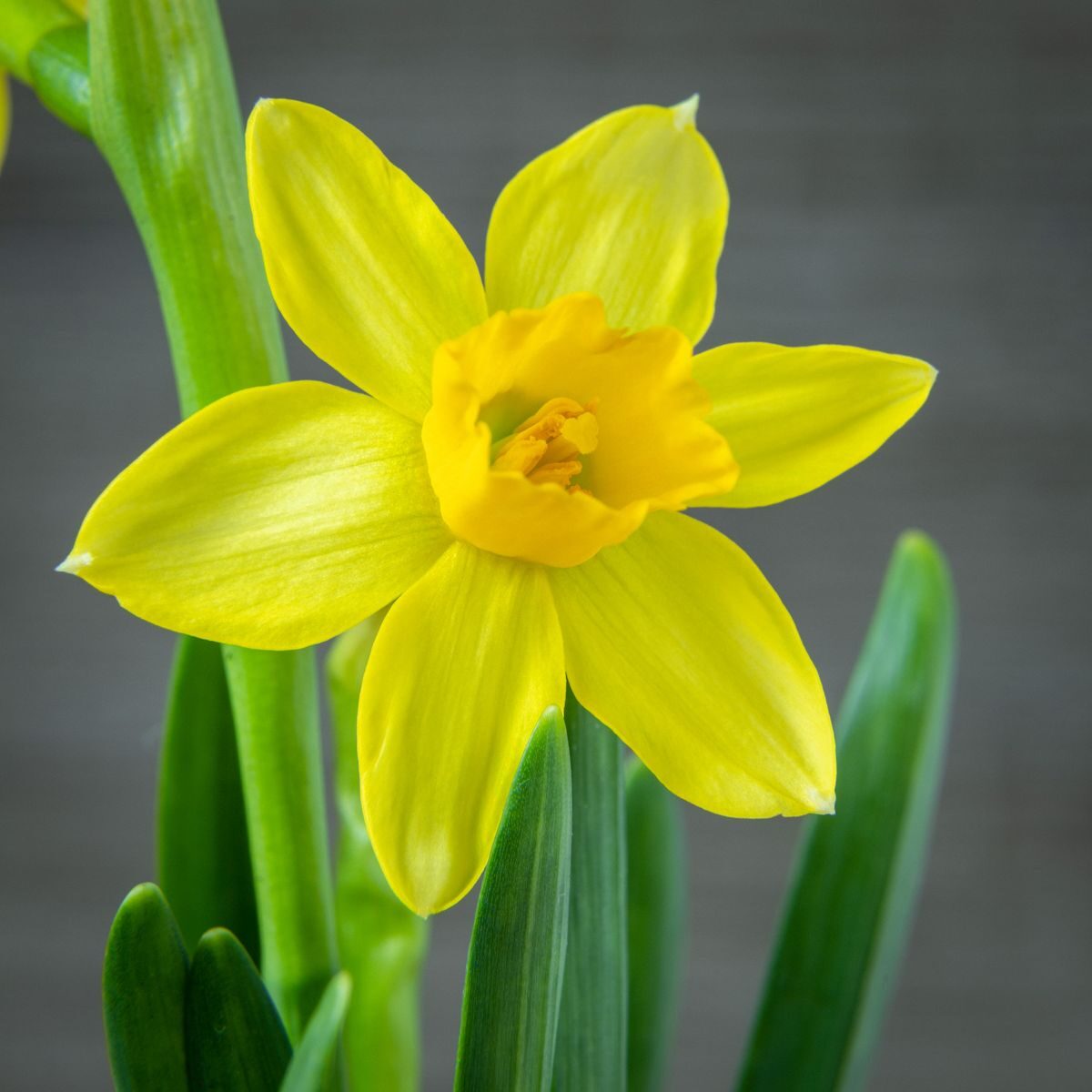
Every spring, American gardens fill with clusters of golden blooms. At the same time, a sweet, honey-like scent drifts through the air. That fragrance almost always comes from the jonquil — one of the most beloved spring flowers in the United States. However, it’s also one of the most underappreciated.
Daffodils tend to steal the spotlight. Yet the jonquil delivers something richer: a stronger fragrance, a more delicate beauty, and centuries of layered meaning. In this guide, we’ll walk through its symbolism, its mythology, and practical care tips tailored for American growers. So whether you’re planting your first bulbs or simply want to know more, you’re in the right place.
What Exactly Is a Jonquil? (And How Is It Different from a Daffodil?)
This is the most common question people ask — and it’s a fair one. Jonquils and daffodils look alike, grow in the same season, and even share the same genus. However, a few key differences set them apart clearly.
The jonquil’s scientific name is Narcissus jonquilla. Specifically, it belongs to the Narcissus genus, which contains over 40 species and more than 13,000 registered hybrids. Technically, all jonquils are daffodils — but not all daffodils are jonquils. In other words, think of the jonquil as a specific, fragrant branch of the daffodil family.
Here’s how to tell them apart at a glance:
- Leaves: Jonquils have slender, tube-shaped, rush-like leaves. Daffodils, by contrast, have flat, strap-like foliage.
- Blooms per stem: Jonquils produce two to six small flowers per stem. Daffodils, on the other hand, usually carry just one large bloom.
- Fragrance: Jonquils win here — hands down. In fact, they rank as the most fragrant of all Narcissus species. Their rich, honey-like scent resembles jasmine, while standard daffodils are barely scented.
- Size: Jonquil blooms are smaller — usually less than an inch across. Nevertheless, they more than make up for it in numbers and perfume.
The name “jonquil” comes from the Spanish word junquillo, meaning “little rush.” This refers to those distinctive reed-like leaves. Furthermore, in the American South, people have long used “jonquil” and “daffodil” interchangeably. That regional tradition continues today, even though the two plants differ botanically.
The Rich Symbolism and Meaning Behind the Jonquil Flower
Few flowers carry as much symbolic weight as the jonquil. In fact, its meanings are layered, sometimes contradictory, and always emotionally rich.
Rebirth and the Arrival of Spring
Above all else, the jonquil signals renewal. It pushes through cold soil in late winter and early spring — often while frost still covers the ground. As a result of this early persistence, it has become a natural emblem of new beginnings and optimism across cultures for centuries.
Affection, Desire, and Domestic Happiness
In the Victorian language of flowers (floriography), jonquils carried one specific message: “I desire a return of affection.” In other words, gifting jonquils once expressed deep longing and the hope for reciprocal feelings. Today, however, the meaning has softened. Consequently, jonquils now broadly represent warmth, affection, and domestic happiness. They work beautifully as romantic gifts and for family celebrations alike.
Friendship and Gratitude
The jonquil also stands for sincere friendship. Moreover, people have long associated it with warmth, gratitude, and enduring commitment. For example, if you want to thank someone who made a real difference in your life, a bouquet of jonquils says exactly that.
Hope and Optimism
Color carries important meaning here. Yellow jonquils radiate affection and optimism, lifting spirits and reminding people that brighter days are ahead. White jonquils, by contrast, suggest purity and calm serenity. So the color you choose can shape the message you send.
The Narcissus Myth
The jonquil’s mythological roots run remarkably deep. Narcissus jonquilla takes its name from the Greek youth Narcissus, who became so transfixed by his own reflection that he wasted away — and a flower bloomed in his place. Because of this myth, jonquils carry associations with self-reflection. In some cultural contexts, they also serve as a gentle caution against vanity and self-absorption.
Furthermore, an older Greek legend adds another layer of meaning. According to that story, jonquils once grew along the banks of the River Styx, where Persephone picked flowers before Hades took her to the Underworld. As a result, these blooms have also been linked for centuries to sorrow, sympathy, and comfort during grief — a meaning still honored in floral traditions today.
The March Birth Flower
In addition to all of the above, jonquils serve as the official birth flower for March — alongside daffodils — across the United States and much of the world. For anyone born in March, therefore, receiving jonquils feels especially personal. The flowers mirror the month’s spirit perfectly: bold, hopeful, and just a little unpredictable.
Jonquils in American Culture and Gardens
Jonquils hold a deep place in American horticultural history. When European settlers arrived in the colonies, they brought jonquil bulbs with them, and the plants quickly naturalized. Today, as a result of that long history, you can find them growing wild along roadsides and in old homestead gardens. They stretch from Virginia and the Carolinas all the way down through Georgia and Mississippi — a living thread connecting us to the past.
In Southern tradition specifically, jonquils represent hospitality and home. For instance, spotting a cluster of jonquils in an overgrown yard often signals that a family once lived and thrived there. The bulbs outlast the buildings by decades. That quiet persistence has, therefore, made the jonquil a true heirloom flower — one that gardeners pass down through generations as divided bulbs rather than purchased packages.
For more on spring bulb traditions in American gardens, visit the American Horticultural Society.
How to Grow Jonquils: A Complete Care Guide for American Gardeners
Jonquils reward gardeners generously. They’re low-maintenance, deer-resistant, and reliably perennial with the right conditions. So here’s everything you need to know, wherever you garden in the US.
USDA Hardiness Zones
First and foremost, jonquils thrive in USDA zones 3 through 9 — covering most of the continental United States. Gardeners in zones 4 through 8 will find them especially easy to grow with minimal effort. However, if you garden in zone 10 or warmer — such as Southern Florida or coastal Southern California — you’ll need to pre-chill your bulbs before planting. This step mimics the cold dormancy period they naturally require for spring blooming.
When to Plant
Plant jonquil bulbs in fall — specifically between late September and early November for most of the country. Fall planting lets bulbs establish strong roots before the ground freezes. After that, they naturally experience the cold dormancy period that triggers spring blooms.
Soil temperature also matters a great deal. Aim for 50°F to 60°F at planting time. If the soil is too warm, bulbs may sprout prematurely. If it’s too cold — below 40°F — root development will slow down significantly.
Zone-by-zone planting guide:
- Zones 3–4 (Minnesota, Wisconsin, upstate New York): Plant late September to early October.
- Zones 5–6 (Ohio, Pennsylvania, Missouri, Pacific Northwest): Plant in October.
- Zones 7–8 (Virginia, North Carolina, Pacific Coast): Plant late October through November.
- Zones 9–10 (Texas Gulf Coast, Southern California, Florida): Plant November through December. In addition, pre-chill bulbs in the refrigerator for 12–16 weeks before planting.
Choosing the Right Spot
Jonquils love full sun to partial shade, so give them at least six hours of direct sunlight daily. In warmer Southern climates, however, afternoon shade helps protect blooms from scorching during their brief flowering window. Also worth noting: in low-light situations, the flowers will twist to face the sun. As a result, an uneven display can develop — so choose your spot thoughtfully.
Soil and Drainage
Good drainage is non-negotiable. Jonquil bulbs rot quickly in waterlogged soil, so avoid low spots where water collects after rain. In addition, they prefer loamy, well-drained soil with a pH between 6.0 and 7.0.
For heavy clay soil or containers, amend the mix before planting. A reliable blend is 50% quality potting soil or garden loam, 30% compost, and 20% perlite or coarse sand for drainage.
Planting Depth and Spacing
Follow these steps for best results:
- First, plant bulbs 4 to 6 inches deep, measured from bulb base to soil surface.
- Next, space bulbs 4 to 6 inches apart. This supports good air circulation and allows for future natural spreading.
- Always place bulbs with the pointed end facing up.
- Finally, add bone meal to the bottom of each planting hole. It gives roots a phosphorus boost that pays off noticeably at bloom time.
Watering
Water jonquils consistently throughout their active growing season — from shoot emergence in late winter through the end of spring flowering. Keep soil moist but never soggy. Once foliage begins dying back in late spring, however, you can ease off watering. During summer dormancy, in-ground jonquils need no extra irrigation at all.
Fertilizing
In decent garden soil, jonquils are light feeders. Therefore, a top dressing of compost in early spring, as shoots emerge, usually does the job. However, skip high-nitrogen fertilizers — they push leafy growth at the expense of blooms. In poor soil, additionally, apply a balanced slow-release bulb fertilizer once in fall and once in early spring for best results.
After Blooming: The Critical Step Most Gardeners Miss
Jonquils finish flowering in March or April, depending on your zone. At that point, resist the urge to cut back the foliage. Instead, leave the leaves alone — they spend several weeks sending energy back into the bulbs and recharging the plant for next year. In fact, cutting foliage too early is the single top reason jonquils stop reblooming.
So let the leaves turn yellow and die back naturally. This process takes roughly six to eight weeks after flowering. Only then should you trim or remove them.
Division and Propagation
Over time, jonquil clumps become crowded, and as a result, fewer flowers appear each season. To fix this, every three to four years, dig up the clumps after foliage dies back. Then separate the individual bulbs — called offsets or daughter bulbs — and replant them with proper spacing. You’ll soon have a wider, more abundant display. Moreover, this division process is exactly how generations of American gardeners have shared jonquils with neighbors at no cost.
Pest and Disease Resistance
Jonquils naturally repel deer, rabbits, and rodents because all parts of the plant contain toxic alkaloids that animals find unpalatable. This gives them a clear advantage over tulips, which wildlife eagerly devour. Therefore, for gardeners dealing with deer pressure — common across the eastern United States — jonquils make a smart and reliable long-term choice.
Best Jonquil Varieties for American Gardens
These varieties perform beautifully across most US growing zones:
- ‘Baby Moon’ — A miniature with golden-yellow blooms and exceptional fragrance. It works especially well for containers and front borders.
- ‘Quail’ — A mid-season hybrid with rich golden flowers and one of the strongest scents in the family. Moreover, it’s an excellent naturalizer for open spaces.
- ‘Pipit’ — A lovely bicolor with pale lemon-yellow petals that gradually fade to creamy white. It’s also highly fragrant and elegant in arrangements.
- ‘Trevithian’ — An heirloom variety with lemon-yellow flowers and outstanding scent. It’s especially popular in Southern gardens with a traditional style.
- ‘Sun Disc’ — Compact, with flat round flowers and a honey-like fragrance. As a result of its low profile, it’s ideal for mass planting under deciduous trees.
Want rare or named varieties? In that case, skip the big-box stores. Specialty mail-order suppliers offer far more selection. Top US sources include Brent and Becky’s Bulbs in Virginia, Colorblends in Connecticut, and John Scheepers in Connecticut. Additionally, they ship at the right planting time for your specific zone.
Jonquils as Cut Flowers and in Arrangements
Jonquils make striking cut flowers. However, there’s one important thing arrangers need to know first. Freshly cut jonquil stems release a sap that shortens the vase life of nearby flowers. Therefore, to mix jonquils with other blooms, condition them separately in water for several hours first. Then add them to your arrangement. Alternatively, simply enjoy them alone — their fragrance and clustered blooms need no competition to impress.
For a classic spring arrangement, pair jonquils with early tulips, grape hyacinths, and white alyssum. This combination works beautifully in both traditional Southern settings and modern floral design alike.
Are Jonquils Toxic? What Pet and Family Owners Need to Know
Yes — and this is important to know. All parts of the jonquil plant contain toxic alkaloids called lycorine and calcium oxalate crystals. This includes the bulbs, stems, leaves, and flowers. As a result, ingestion can cause vomiting, diarrhea, abdominal pain, and heart rhythm issues in both humans and animals.
Therefore, keep bulbs away from children and pets during planting. If you have dogs or cats that spend time in the garden, plant jonquils in raised beds or fenced areas instead. Contact your veterinarian or poison control right away if you suspect ingestion.
Frequently Asked Questions About Jonquil Flowers
What is the difference between a jonquil and a daffodil? Jonquils (Narcissus jonquilla) belong to the Narcissus genus, which makes them a type of daffodil. However, they differ in several key ways. First, jonquils have slender, tube-like leaves, while daffodils have flat, strap-shaped leaves. Second, jonquils produce clusters of two to six small flowers per stem, whereas daffodils usually produce one large bloom. Finally, jonquils are far more fragrant. In the American South, people use both names interchangeably — but botanically, they refer to distinct plants.
When do jonquils bloom in the United States? Most jonquils bloom in March and April, though timing shifts by zone. For example, in zones 7 and 8 — the mid-Atlantic and South — early varieties may open as soon as late February. In contrast, in zones 3 and 4 — the northern Midwest and New England — blooms often wait until April.
What do jonquil flowers symbolize? Jonquils represent rebirth, renewal, affection, desire, gratitude, friendship, hope, and domestic happiness. In addition, they serve as the official March birth flower. In some cultures, moreover, they also carry associations with sympathy and grief — rooted in their mythological connection to the Underworld.
Are jonquils and narcissus the same thing? Narcissus is the genus — the broader botanical category that covers daffodils, jonquils, and related species. So jonquils (Narcissus jonquilla) are indeed a type of narcissus. However, narcissus itself isn’t a single specific flower. When florists say “narcissus,” they often mean paperwhites (Narcissus papyraceus), which commonly appear in winter holiday arrangements.
Can jonquils grow in pots and containers? Yes, absolutely. Jonquils thrive in containers when given the right setup. First, choose pots at least 6 to 8 inches deep with drainage holes. Then use a well-draining potting mix, place them in a sunny spot, and water moderately during the growing season. In cold climates, additionally, move container jonquils indoors or to a sheltered spot during hard freezes.
How do I get jonquils to rebloom every year? The key is to let the foliage die back naturally after blooming. Specifically, the leaves need four to eight weeks to photosynthesize and recharge the bulbs for next season. Cutting foliage early is the number one reason jonquils stop reblooming. In addition, ensure they’re planted in well-drained soil and avoid overwatering during summer dormancy.
Are jonquils safe for pets? No — jonquils are toxic to dogs, cats, and horses. The bulbs carry the highest concentration of harmful alkaloids. However, the flowers, leaves, and stems also pose a significant risk. Therefore, if your pet ingests any part of the plant, call your veterinarian or the ASPCA Animal Poison Control Center right away.
What plants grow well alongside jonquils? Jonquils pair beautifully with crocuses, grape hyacinths (Muscari), tulips, snowdrops, and scilla. Furthermore, their slender foliage complements ornamental grasses and low ground covers. Since jonquil leaves die back in early summer, consider planting hostas or daylilies nearby. As a result, those plants fill the gap and naturally conceal the yellowing foliage.
Final Thoughts
The jonquil isn’t the loudest flower in the spring garden. However, it may well be the most meaningful. It carries ancient myth, Southern tradition, and quiet resilience all in one small, fragrant bloom. Moreover, it naturalizes in American soil and outlasts the homes of the families that first planted it — a testament to its enduring spirit.
So drop a handful of bulbs in the ground this fall. Come March, you’ll understand exactly why generations of American gardeners keep returning to this golden, sweet-scented flower year after year.
Want to explore more spring bulb gardening? Read our guide on planning a four-season garden with spring bulbs for ideas on layering color from February through May.