

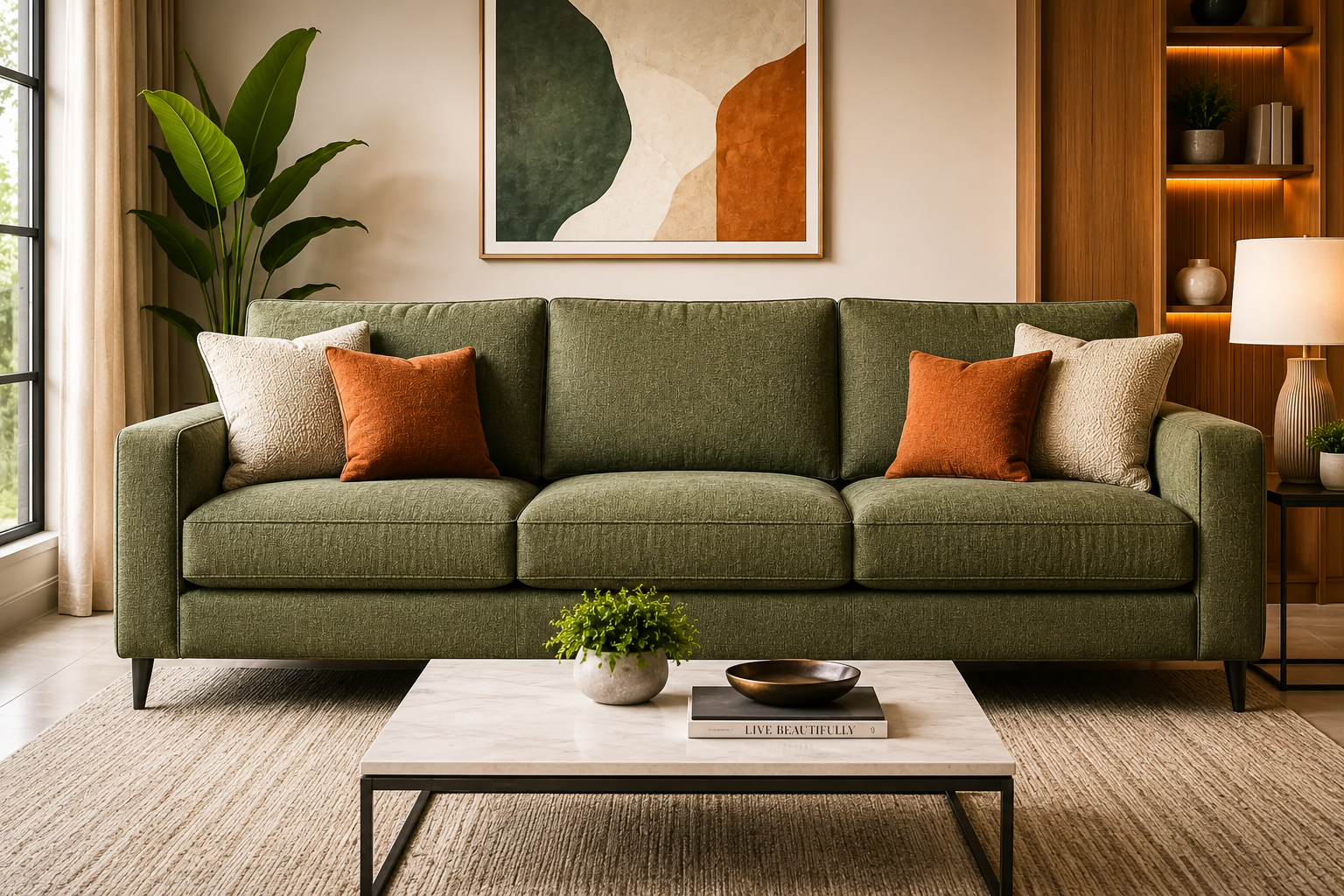
If there’s one piece of furniture that does the most work in your home, it’s the sofa. And if you live with family, host friends, or just want room to sprawl out after a long day, a triple seater sofa is almost always the right call. It’s wide enough for three adults, flexible enough for a family movie night. And still clean enough to anchor a thoughtfully designed living room without overwhelming it.
But here’s the honest truth: shopping for a three-seater sofa in 2026 is both easier and harder than it used to be. Easier because you have more brands, styles, and fabric options than ever before. Harder because the sheer volume of choices — combined with a flood of misleading product descriptions and vague comfort claims — makes it genuinely difficult to know what you’re getting until it’s sitting in your living room.
I’ve spent time researching dozens of triple seater sofas across budget tiers, fabric types, and use cases. I’ve dug into real customer feedback, tested specifications, and consulted interior designers to put together a guide that actually helps you decide — not just a list of expensive products with affiliate links attached.
Whether you’re outfitting a first apartment in Chicago, upgrading a family room in the suburbs of Dallas, or looking for something durable enough to survive two kids and a golden retriever, this guide has a recommendation for you.
What Makes a Triple Seater Sofa Worth Buying in 2026?
Before we get into specific picks, it helps to understand what separates a genuinely good three-seater sofa from a mediocre one. A few things stand out in 2026 specifically.
Frame construction matters more than price. A sofa with a kiln-dried hardwood frame — typically beech, oak, or birch — will outlast a particleboard or softwood alternative by years. If a brand doesn’t tell you what the frame is made of, that’s a red flag. The best brands are transparent about it.
Cushion fill determines long-term comfort. High-density polyurethane foam holds its shape and gives a firm, supportive seat. Down or fiber-wrapped foam feels luxurious on day one but can flatten faster. For everyday use, foam-core cushions wrapped in a layer of fiber or down hit the best balance between comfort and durability.
Seat depth changes how a sofa feels to live in. A seat depth of 20–22 inches keeps you upright — better for working, eating, or casual conversations. A 23–25 inch depth lets you sink in, better for lounging or movie marathons. Most people don’t think about this until they’ve lived with the wrong choice for six months.
Fabric affects your actual life. Performance fabrics — think microfiber, Crypton, and stain-treated weaves — have become significantly better in 2026. They handle spills, pet hair, and kids far more gracefully than traditional linen or cotton. Bouclé and velvet are trending hard this year, but they’re higher-maintenance. Know your household before you fall in love with a fabric.
2026 design trends are leaning toward organic and curved shapes, modular configurations, and deep, plush seating that prioritizes relaxation over formal structure. If you want a sofa that’ll feel current for the next few years, these are the directions worth considering.
Triple Seater Sofa Dimensions: What You Need to Know Before You Buy
This is the step most buyers skip, and it causes more returns and frustrations than anything else.
A standard triple seater sofa typically measures 84 to 90 inches wide, 35 to 38 inches deep, and 30 to 36 inches high. For US living rooms, the 84-inch mark is the most common sweet spot — wide enough for three adults, manageable enough to fit through standard doorways (usually 32–36 inches), and proportionate in rooms between 200 and 350 square feet.
Here’s a practical rule that interior designers swear by: your sofa’s length should be roughly two-thirds the length of the wall it sits against. So if your main wall is 12 feet long, an 84–90 inch sofa is ideal. If it’s 10 feet, lean toward the 78–84 inch range.
A few measurements to check before you buy anything:
- Inside seat width — this is the usable seating area, not the full sofa width. Thick arms can eat 6–10 inches off each side. Three adults at roughly 24 inches each need at least 70–72 inches of real seat width.
- Diagonal clearance for delivery — measure every doorway, hallway turn, staircase, and elevator in your home. Most sofas arrive in one piece or in two sections; knowing your clearance prevents the nightmare of a sofa that won’t make it upstairs.
- Depth versus your walkways — leave at least 36 inches of clear walking space around the sofa. Anything tighter starts to feel like an obstacle course.
Pro tip used by designers everywhere: lay out the sofa’s footprint with painter’s tape on your floor before you order. Ten minutes of taping can save you weeks of hassle.
Our Top Triple Seater Sofa Picks for 2026
1. Room & Board Metro 88″ — Best All-Around Pick
If you want one dependable sofa that performs well across every use case — everyday family seating, casual hosting, the occasional nap — the Room & Board Metro is consistently one of the strongest performers in real-world testing. The seat depth and height land in the middle of the comfort range, making it accessible for a wide range of body types. It doesn’t try to be a trendsetter, and that’s exactly what makes it work. Solid hardwood frame, good suspension, and upholstery options that span the practical to the stylish.
Best for: Families and couples who want a reliable, long-lasting sofa without overthinking the decision. Price range: $2,500–$3,200 depending on fabric.
2. Burrow Nomad 3-Seater — Best for Renters and Frequent Movers
The Nomad has earned a loyal following in American cities — particularly among renters in places like New York, San Francisco, and Seattle — because it solves the delivery problem that trips up every apartment dweller. It ships in modular boxes that fit through tight doorways and stairwells without a delivery crew. Assembly is tool-free and genuinely quick. The seat feel is balanced: not too deep, not too firm, comfortable enough for TV nights and upright enough for laptop work. The back height is the one honest limitation — taller users may want more support.
Best for: Renters, apartment dwellers, frequent movers, or anyone who’s ever had a sofa stuck in a stairwell. Price range: $1,800–$2,400.
3. IKEA KIVIK 3-Seater — Best Budget Triple Seater
Let’s be real: IKEA’s KIVIK has been a reliable budget workhorse for years, and it earns its place on this list in 2026 for a straightforward reason — it delivers on the basics at a price that most households can absorb without a financing plan. The seat depth is generous enough for lounging and napping, the removable covers make cleaning genuinely manageable (a big deal for pet owners), and the overall proportions suit a wide range of room sizes. It’s not a showpiece. But if you need a solid sofa under $1,000 that will hold up for several years of real daily use, the KIVIK is an honest choice.
Best for: Budget-conscious buyers, first apartments, guest rooms, secondary seating areas. Price range: $600–$900.
4. Castlery Hamilton 3-Seater — Best Mid-Range Everyday Sofa
The Castlery Hamilton leans slightly toward lounge-forward without going full sink-in, which is a smart balance for most households. The upholstery handles small spills better than a lot of sofas at this price point, and the overall construction holds together well under daily use without the cushions shifting or the frame flexing. It’s a clean mid-century-adjacent look that works with a range of interior styles, from transitional to modern. Available for delivery across most of the continental US.
Best for: Design-conscious buyers who want style and durability without paying premium prices. Price range: $1,500–$2,200.
5. DreamSofa Landon Modular 3-Seater — Best Customizable Option
This is the pick for buyers who know exactly what they want and refuse to compromise. The Landon lets you choose seat depth (five options, from 39 to 48 inches, or fully custom), firmness level (four options), fabric, and configuration. It’s handcrafted in the USA, and the frame, cushions, and springs are covered by a lifetime warranty — which is genuinely rare at this level. The covers are removable and machine washable. If two people with very different comfort preferences are sharing the same sofa, this is the only product that can actually satisfy both of them.
Best for: Buyers who want total control over comfort, size, and configuration. Perfect for home theaters and dedicated lounging spaces. Price range: $2,800–$4,000+ depending on configuration.
6. Joybird Chelsea — Best for Style and Design Lovers
The Chelsea is a top seller at Joybird for good reason. It has a modernized mid-century look with 70 upholstery options — some pet-friendly — and cushions made from high-density polyurethane foam free of harmful chemicals. The legs are mocha-stained solid wood, the assembly is effortless, and the brand offers a five-year protection plan that includes pet coverage. For buyers who want their sofa to make a visual statement while still performing well daily, the Chelsea is a standout.
Best for: Style-forward buyers, mid-century modern interiors, households with pets. Price range: $3,000–$3,300.
7. Magic Home Power Recliner 3-Seater — Best Triple Seater Recliner
If reclining is a priority, the Magic Home three-seater power recliner brings together features that hit the needs of a modern American household: one-touch power reclining with a zero-gravity position, fast-heating seats, built-in USB ports, and a pet-friendly fabric that resists scratches and stains. The zero-gravity position takes real pressure off the spine and lower back — something worth noting given that US adults now spend an average of over 10 hours per day seated. It’s a tech-forward pick with genuine everyday utility.
Best for: Families who love movie nights, home theater setups, or anyone who wants maximum physical comfort from their sofa. Price range: $1,400–$2,000.
8. Sabai Essential 3-Seater — Best Eco-Friendly Option
Sabai has built its reputation around sustainability, and the Essential delivers a firmer, cleaner seating experience that feels different from the sink-in sofas dominating the market right now. The low-profile design looks current and understated. The fabrics are made with environmental impact in mind. And unlike some eco-focused brands that make you choose between ethics and comfort, the Sabai holds up well for everyday use. It’s a strong pick for buyers who want to be thoughtful about where their furniture comes from.
Best for: Sustainability-conscious buyers, minimalist interiors, those who prefer a firmer sit. Price range: $1,200–$1,700.
How to Choose the Right Triple Seater Sofa for Your Home
Think about how you actually use your sofa
This sounds obvious, but most people buy a sofa based on how it looks, not how they actually live. If you work from home, eat meals on the couch, and have kids bouncing on it every evening, you need something different from a household where the sofa is primarily for evening wind-downs and weekend hosting.
For active family use: prioritize performance fabrics, multi-cushion construction (single bench cushions sag faster), and a frame that won’t flex under kids’ energy.
For lounging and home theater: go deeper in seat depth (23 inches or more), consider a recliner, and don’t underestimate the value of cup holders and USB charging.
Check the frame material explicitly
Don’t assume. Look for kiln-dried hardwood — oak, beech, and birch are the best options. Brands that are proud of their construction tell you clearly. If a product page doesn’t mention the frame material, contact the brand and ask before you buy.
Understand what your warranty covers
Good warranties cover more than just manufacturing defects. The best brands offer five to ten years on frames and mechanisms, and some — like DreamSofa — offer lifetime coverage. Read the warranty before you buy, not after something goes wrong.
Confirm delivery logistics
A surprising number of buyers don’t realize until after purchase that their sofa won’t fit through their building entrance, elevator, or staircase. Know the boxed dimensions, the number of boxes, and the diagonal clearance before you commit.
For more expert advice on measuring your space and planning your living room layout, Consumer Reports’ furniture buying guide is one of the most thorough and unbiased resources available.
Triple Seater Sofa Fabric Guide: Which Material Is Right for You?
Performance fabric / microfiber: The practical choice for most American households in 2026. Stain-resistant, easy to clean, durable under daily use. Doesn’t look cheap anymore — many performance fabrics now have texture and depth that rival traditional upholstery.
Leather and faux leather: Easy to wipe down, ages well with genuine leather, resists pet hair. The 2026 market has seen a significant improvement in high-quality faux leathers (PU leather, vegan leather) that offer the look without the price or maintenance requirements.
Bouclé: The trendiest fabric of 2025–2026. Looped, textured, and visually rich. Works beautifully in neutral rooms. More demanding to maintain — it picks up lint and pet hair noticeably. Better for lower-traffic living rooms.
Velvet: Luxurious and striking. Popular in jewel tones like emerald, dusty rose, and navy. Shows marks from pets and everyday use more readily. Best for households without kids or pets, or as a secondary sofa.
Linen / cotton blends: Casual and breathable. Works well in rooms with lots of natural light. Not as stain-resistant as performance fabrics — check care instructions carefully.
Removable, washable covers: Worth seeking out if you have kids or pets. Several brands — including IKEA, Burrow, and Sabai — build this feature in as standard. It’s one of the most practically valuable features a sofa can have.
Triple Seater Sofas and the American Living Room: Local Context
Living room sizes and layouts vary significantly across the United States. In major urban areas like New York City, Boston, and San Francisco, smaller apartments make the 78–84 inch sofa range the most practical choice. Modular and flat-pack-friendly options like the Burrow Nomad are especially popular in these markets.
In suburban settings across the Midwest, South, and Sun Belt — think Greater Dallas, suburban Atlanta, or the Phoenix metro area — larger living rooms give more flexibility, and 84–90 inch sofas (or even sectionals) are more common. Family-focused features like performance fabrics, reclining options, and multi-cushion construction rank high among buyers in these regions.
Worth noting for US buyers: upholstered sofas sold in the United States are required to carry a label confirming compliance with the Consumer Product Safety Commission’s federal flammability standard for upholstered furniture. It’s usually found under a cushion or on the frame’s underside. Its absence is a red flag, particularly when buying from newer or lesser-known brands online.
Also check our guide on how to arrange your living room for maximum comfort and flow for more on planning your space before the sofa arrives.
FAQ: Best Triple Seater Sofas of 2026
Q: What is the standard size of a triple seater sofa? A: Most triple seater sofas measure between 84 and 90 inches wide, 35–38 inches deep, and 30–36 inches high. The 84-inch (7-foot) width is the most common in American homes because it fits comfortably against most standard walls and still seats three adults. That said, always check the inside seat width — not just the overall length — to confirm actual usable seating space.
Q: How long should a good triple seater sofa last? A: With a solid hardwood frame and quality foam cushions, a well-made three-seater sofa should last 10–15 years under regular daily use. Sofas with particleboard frames or low-density foam typically start showing wear in 3–5 years. Regular cushion rotation, keeping it out of direct sunlight, and using slipcovers or protective sprays on fabric can extend the lifespan considerably.
Q: Is a 3-seater sofa better than a sectional for most homes? A: It depends on your room size and layout. A triple seater is easier to place — it works against a wall, in a narrower room, or in spaces where a sectional’s L-shape would block walkways. A sectional suits open-plan rooms and is better if you want a dedicated chaise or more lounging space. If you’re renting, moving frequently, or have a living room under 300 square feet, the three-seater is usually the more practical choice.
Q: What fabric is best for a triple seater sofa with kids and pets? A: Performance fabrics — including microfiber, Crypton, and stain-treated weaves — are the most practical option for households with kids and pets. They resist spills, clean up easily with a damp cloth, and hold their appearance well over time. Removable, machine-washable covers (offered by brands like IKEA, Burrow, and Sabai) add another layer of practicality. Avoid velvet and untreated linen if your household is busy.
Q: How much should I expect to pay for a quality triple seater sofa in 2026? A: The price range is wide, and honestly, you can find a solid sofa at almost every tier. Budget-friendly options (IKEA KIVIK, for example) run $600–$900 and are reliable for basic everyday use. Mid-range sofas from Castlery, Burrow, and similar brands fall in the $1,500–$2,400 range and offer better materials and longer durability. Premium and custom options from brands like DreamSofa, Joybird, and Room & Board run $2,800–$4,000+. For most households, the $1,500–$2,500 range hits the best balance of quality and value.
Q: What should I look for in a triple seater recliner sofa? A: For a reclining three-seater, look for smooth power mechanisms (manual levers are fine, but electric is now standard in most mid-range options), independent reclining seats so each person can adjust separately, lumbar and headrest support, and a fabric that’s easy to clean. USB charging ports are increasingly common and genuinely useful. Measure the fully reclined depth before buying — a recliner in the fully open position typically extends 12–18 inches beyond its standard footprint.
Q: How do I know if a triple seater sofa will fit through my front door? A: Measure every passage point: front door width, hallway width at its narrowest, any 90-degree turns, elevator interior (if applicable), and staircase width including the handrail. Compare these against the sofa’s boxed dimensions and ask the brand whether the sofa ships fully assembled or in sections. Many sofas ship in two or more pieces, which significantly reduces delivery challenges. When in doubt, call the delivery team and ask directly — they deal with this every day.
Q: What are the biggest triple seater sofa trends in 2026? A: The dominant themes this year are modular and reconfigurable designs, performance fabrics that look and feel luxurious without sacrificing practicality, organic curved silhouettes (sofas with rounded arms and gentle forms rather than sharp, boxy profiles), and deep plush seating that prioritizes relaxation. Bouclé, textured velvet, and earthy tones — warm terracottas, sage greens, and soft creams — are the most popular aesthetic choices heading into the second half of 2026.
Final Thoughts
A triple seater sofa is one of the most-used objects in your home. It’s where you decompress, where your family gathers, where guests feel welcome or don’t. Getting it right is worth taking the time.
The best pick for you isn’t necessarily the most expensive one — it’s the one that fits your actual room, suits the way your household actually lives, and is made well enough to stay looking and feeling good for years. Tape out the footprint before you order. Check the frame material. Read the warranty. And don’t let a beautiful photo of a sofa in a perfectly staged room convince you it’ll look the same in a 250-square-foot apartment in Austin.
If you’re still undecided, the Room & Board Metro is the safest all-around choice for most American households. The Burrow Nomad is the one to get if you’re renting or moving soon. And if budget is the main constraint, the IKEA KIVIK is a genuinely honest option that won’t let you down.
Your living room is worth it. Take your time, measure twice, and buy once.
Last updated: June 2026. Product prices and availability are subject to change. Always verify current pricing with the retailer directly.