

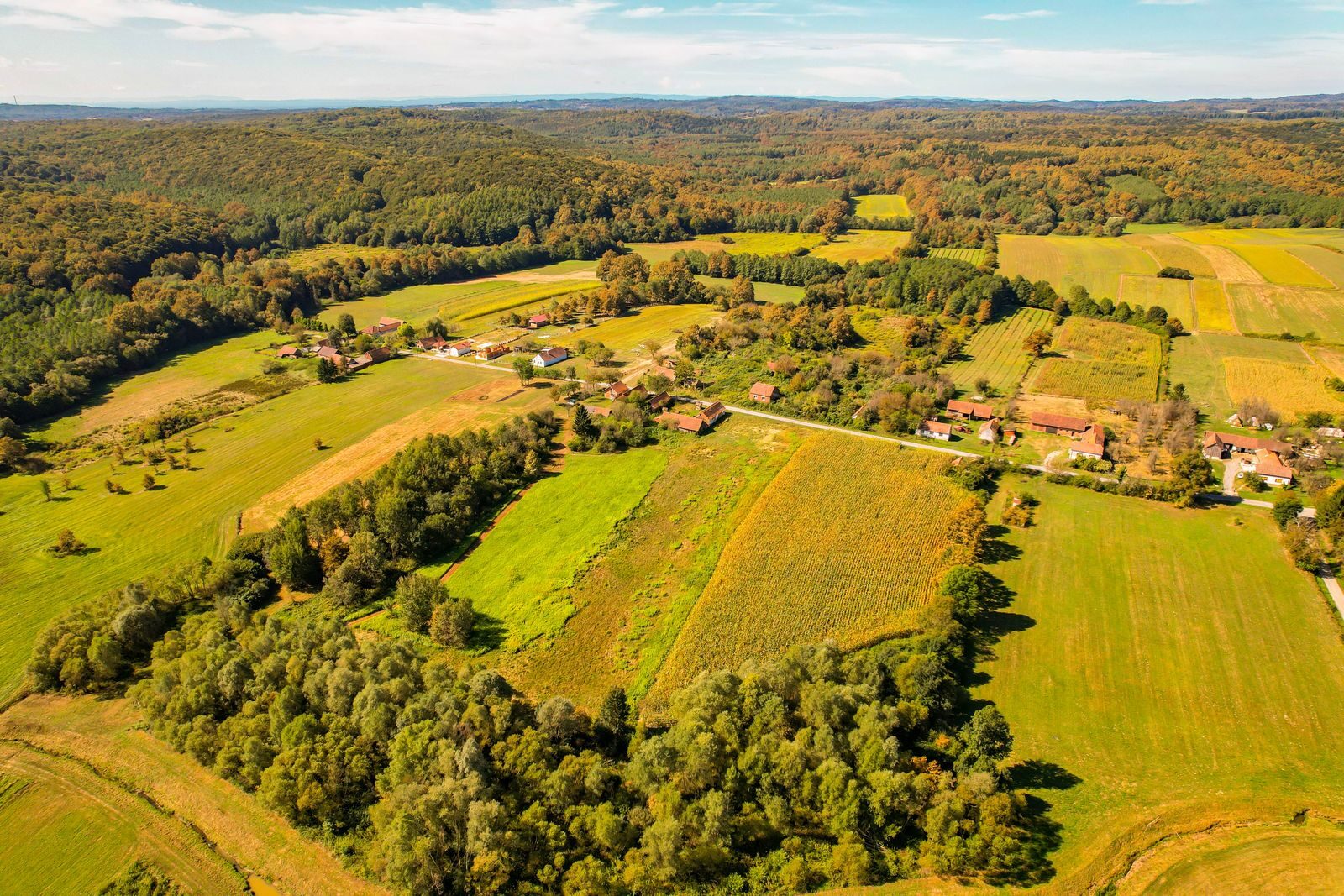
If you’ve been thinking about buying land in Georgia, 2026 is a year that rewards people who do their homework. The market has shifted from the frenzied, anything-goes appreciation of 2021–2023 into something more nuanced. And honestly, more interesting for savvy buyers. Some pockets of the state are seeing bidding wars on well-located tracts, while other rural counties still offer entry points that feel like a throwback to a more affordable era.
I’ve spent time researching Georgia’s current land landscape — talking to data from Saunders Real Estate’s Lay of the Land® Market Report (released May 2026), USDA crop value figures, and real transaction records from across the state’s 159 counties. Whether you’re looking for a mountain retreat in the Blue Ridge, farmland in the south, or a development play near Atlanta’s expanding suburbs, this guide is for you.
Why Georgia Is Still One of the Best States to Buy Land in 2026
Georgia keeps punching above its weight as a land investment destination, and there are solid, real-world reasons for that.
The state’s population and economy continue to grow. Major employers like Delta Air Lines, Coca-Cola, NCR, and a rapidly expanding film production industry have made Georgia a magnet for domestic migration. More residents means more housing demand, which ultimately flows upstream to land. For anyone thinking about land as a long-term investment, that demographic tailwind matters.
Beyond economics, the geography is genuinely hard to beat. You get the Appalachian foothills in the north, fertile river-bottom farmland in the center, pine-timber country in the west, and Atlantic coast access in the southeast. Few states offer that kind of variety at Georgia’s price points.
Georgia’s income tax rate of 5.39% is competitive regionally, and its 0.81% effective property tax rate ranks favorably at 27th nationally. For landowners holding rural acreage on agricultural or timber use, the property tax burden can be even lower through the state’s conservation-use valuation programs.
Georgia also remains one of the fastest-growing states, supported by strong economic diversification and consistent inward migration, according to U.S. Census Bureau data.
Understanding Georgia’s 2026 Land Market: What the Data Actually Says
Here’s the big picture: Georgia’s land market has split. That’s the cleanest way to describe what the most recent market data is showing.
“The days of broad-based appreciation are behind us,” said Tyler Davis, President of Saunders Real Estate. “What we’re seeing now — and what we’re already seeing play out this year — is that buyers are far more selective. Deals are getting done when there’s a clear plan for the land and long-term value behind it.”
What does that mean in practice? Land with a clear path to development, strong agricultural productivity, or recreational appeal is still trading actively — often quickly. Land that lacks those attributes is sitting longer, giving buyers more negotiating room than they’ve had in years.
Key price benchmarks to know going into your search:
Georgia’s median price per acre is $16,875, according to Land.com. The average price per acre range is $5,000 to $15,000 as of 2026, per Bhumi Calculator.
Transitional land (parcels in the path of development) tells the clearest story of a market no longer moving uniformly. Across 55 verified transactions totaling more than $243 million, pricing ranged from $6,132 to $266,568 per acre, with a statewide average of $35,199 per acre. Metro-adjacent markets averaged $43,836 per acre, while rural corridors averaged $21,216 per acre.
For farmland specifically, Georgia’s cultivated farmland market showed signs of cooling after several years of growth, with an average price of $5,486 per acre across 101 verified transactions covering 39,525 acres.
On the timber side, things moved in the opposite direction: timberland values increased 10.8% year over year to an average of $3,142 per acre, supported by investor confidence, recreational demand, and long-term positioning.
Top Regions for Land for Sale in Georgia
North Georgia: Mountains, Views, and Strong Demand
North Georgia — encompassing the Blue Ridge, Ellijay, Dahlonega, Blairsville, and Helen corridors — remains one of the most competitive regions in the state. Atlanta buyers wanting mountain retreats, short-term rental properties, and weekend homesteads have driven strong demand here for several years now.
Ellijay sees strong competition for well-sited tracts due to cabin and second-home demand, river access, and mountain views. Blairsville offers larger wooded parcels for buyers seeking privacy and long-term hold potential. The Helen area benefits from tourism-driven demand that can make the right parcel attractive for short-term rental strategies.
Small parcels of wooded land in north Georgia start around $10,000 to $15,000 per acre, though prime spots near trails or water can cost significantly more. Prices have risen over the past few years as more buyers from Atlanta move north. But reasonable deals are still available beyond the most popular towns.
Who this region is best for: Buyers seeking recreational property, Airbnb-style investment land, or a future second home. Also appealing for timber investors who want forested acreage with long-term appreciation potential.
Metro Atlanta and Suburban Corridors: High Price, High Potential
If your goal is maximum appreciation tied to Georgia’s economic engine, land in and around Atlanta’s expanding suburbs is where that potential lives. The tradeoff is price.
In core suburban counties around Atlanta’s metro, land has been listed at tens of thousands of dollars per acre on average. Cherokee County, north of Atlanta, has an average land price around $113,000 per acre, according to recent market data.
In parts of west Georgia, land near I-85 with subdivision potential was reaching $12,000–$15,000 per acre — much higher than purely rural land in the same county.
The pattern to watch is the exurban fringe — counties like Bartow, Paulding, Heard, and Jasper — where population is heading next. These areas offer a middle ground between Atlanta’s premium pricing and true rural affordability.
Who this region is best for: Developers, builders, and investors with a 5–10 year hold strategy who want to ride Atlanta’s continued outward expansion.
Central Georgia: Macon, Warner Robins, and the Middle Ground
Central Georgia is consistently underappreciated, and that’s actually one of its strengths as a buyer.
Agricultural land here can sometimes be found for as little as $3,000 to $5,000 per acre. If you want maximum acreage for your budget, central Georgia is worth exploring seriously.
Warner Robins, home to Robins Air Force Base (one of the largest employers in the state), adds an economic stability layer that many rural areas lack. Land near this corridor tends to hold value well and attracts both residential and light commercial development interest.
Who this region is best for: Buyers on a budget who want working farmland, hunting property, or a large residential lot to build on without Atlanta-area price tags.
South Georgia: Agricultural Heartland and Timber Country
South Georgia is the state’s agricultural core — peanuts, cotton, timber, and cattle country. If wide-open space, low prices, and farming potential are your priorities, this is your region.
Prices in south Georgia are often the lowest in the state. Large tracts can be found for around $2,000 to $4,000 per acre in some counties. The region is less developed and less populated, which suits buyers who want true privacy and room to breathe.
Ranchland demand in Georgia remained consistent, supported by the strength of the state’s cattle industry. Verified transactions included 8,248 acres totaling $47.3 million, with an average price of $5,730 per acre — attracting both local and out-of-state buyers looking to diversify their land holdings.
Who this region is best for: Farmers, timber investors, hunters, and anyone seeking large acreage at the state’s most affordable per-acre prices.
The Georgia Coast: Savannah, St. Simons, and Coastal Lots
Coastal Georgia is a different market entirely — one driven by lifestyle demand, tourism, and limited buildable supply near the water.
In communities like Osprey Cove near St. Marys, some of the last remaining buildable lots combine privacy, prestige, and access to coastal amenities, gated security, golf, and life minutes from the Georgia coast.
Expect to pay a significant premium for coastal adjacency. However, buyers willing to look slightly inland from the coast — in counties like Brantley, Ware, and Charlton — can find recreational and timberland at rural prices with relatively easy access to Georgia’s growing coastal communities.
Who this region is best for: Vacation home buyers, retirement-focused buyers, and investors targeting rental income in one of the Southeast’s most desirable coastal markets.
Georgia Land Prices by Type: A Realistic Breakdown
To help you calibrate expectations before you start searching listings, here’s a current snapshot of what different land types are actually trading for across the state:
Raw rural land (south and central Georgia): $2,000–$6,000 per acre Wooded/recreational land (north Georgia): $8,000–$20,000 per acre Working farmland (statewide average): approximately $5,486 per acre Timberland: approximately $3,142 per acre (up 10.8% year-over-year) Transitional/development land (rural corridors): $21,216 per acre average Metro-adjacent transitional land: $43,836 per acre average Land near Atlanta suburbs: $50,000 to well over $200,000 per acre
Keep in mind that large-acreage listings skew the numbers significantly. Georgia land listings commonly average 85–86 acres and are priced around $1,350,466 to $1,358,848, according to Land.com. That means many advertised properties target bigger budgets — though affordable tracts exist if you search strategically.
How to Find the Best Land Deals in Georgia Right Now
1. Look Beyond the Popular Search Platforms
Sites like LandWatch, Lands of America, Land And Farm, Zillow, and Redfin are good starting points. But the best deals often aren’t there — at least not first. Drive rural roads, talk to local feed stores and farm supply co-ops, and check county courthouse records for recent sales. For Sale by Owner signs in rural Georgia still lead to off-market opportunities.
2. Focus on Rural Counties with Thinner Competition
The lowest prices typically appear in rural counties well outside major metros, where buyer competition is thinner and large tracts are more common. Counties like Brooks, Irwin, Telfair, and Bacon consistently offer some of the state’s most affordable per-acre pricing.
3. Compare to Real Benchmarks, Not Just Listing Prices
Asking prices can be optimistic. Closed sales reveal what buyers actually pay. A 170-acre farm in Brooks County sold at auction for $782,000, or $4,600 per acre — well below many listing averages for that region. Always pull recent closed comps before making an offer.
4. Pre-Qualify Before You Start Shopping Seriously
A pre-qualification helps you understand what you can afford and speeds up the buying process. Most realtors request a pre-qualification letter when a buyer submits an offer. Once pre-qualified, lenders have already pulled your credit and done preliminary work, so when you’re ready to move, the process accelerates significantly.
5. Verify Zoning, Access, and Utilities Early
This cannot be overstated. A parcel priced below market often carries a reason — whether that’s floodplain issues, lack of legal road frontage, deed restrictions, or zoning that doesn’t match your intended use. Confirm all of these before falling in love with a listing.
Financing Land in Georgia: What You Need to Know
Land loans in Georgia work differently from standard home mortgages, and many first-time land buyers are surprised by the differences.
Land loans are very different from mortgages, and this is not something you’ll be able to do with a big bank, according to Georgia-based lenders. Banks typically finance land on balloon notes — fixing your interest rate for a period of 60 months, then repricing based on the Federal Reserve’s Prime rate. Most loans don’t exceed a 20-year term.
In 2026, Georgia buyers should expect interest rates that sit roughly 1 to 3 percentage points above conventional 30-year mortgage rates. Closing costs generally fall between 2% and 5% of the loan amount.
For agricultural and rural land specifically, Farm Credit lenders (like AgGeorgia Farm Credit or Southwest Georgia Farm Credit) are often the best option. AgGeorgia Farm Credit offers up to 20-year fixed rates on land, up to 80% financing, local service, no intangible taxes on long-term financing, and a patronage refund program.
For buyers planning to build a home on their land, FHA One-Time Close construction loans require a minimum 3.5% down payment with flexible credit guidelines, and are available for first-time and repeat buyers. VA One-Time Close loans offer $0 down payment for eligible veterans and active-duty service members, with no monthly mortgage insurance. These programs allow you to finance your land purchase and construction together in a single closing — a significant cost saver.
General financing checklist for Georgia land buyers:
- Plan for 15%–25% down payment for raw land loans
- Expect shorter loan terms (10–20 years) compared to a 30-year home mortgage
- Get pre-qualified before submitting offers — sellers take pre-qualified buyers more seriously
- Explore Farm Credit lenders for agricultural, timber, and rural recreational parcels
- Consider FHA/VA One-Time Close if you plan to build immediately after purchase
For more on financing options and current land loan programs, AgGeorgia Farm Credit’s land loan page is one of the most reliable resources available to Georgia buyers.
Due Diligence Checklist Before You Buy
Even in a market that’s more buyer-friendly than it was two years ago, skipping due diligence on land can be an expensive mistake. Run through this list before any offer becomes binding:
Zoning and permitted uses — Confirm with the county what you can legally do: build a home, farm, subdivide, hunt, install a mobile home, operate a short-term rental.
Legal road access — Does the property have deeded access to a public road? If not, is there a recorded easement? Landlocked parcels can be nearly impossible to finance and difficult to sell.
Utility availability — How far is the nearest water, electric, and sewer line? Running utilities across a large rural parcel can add tens of thousands of dollars to your cost basis.
Soil suitability — If you’re planning to build and will need a septic system, a perc test (soil percolation test) is essential. Not every parcel in Georgia’s clay-heavy soils will pass.
Floodplain and wetlands — Review FEMA flood maps and request a wetlands delineation if there’s any question. These issues can dramatically reduce buildable acreage.
Survey — Always get a current survey. Old surveys may not reflect current boundaries, easements, or encroachments.
Title search — Confirm clear title with no outstanding liens, unpaid taxes, or competing claims before you close.
Common Mistakes Georgia Land Buyers Make (and How to Avoid Them)
Assuming all land is buildable. Zoning, soil conditions, floodplain status, and access all determine whether you can build. Never assume — verify with the county planning and zoning office.
Skipping the walk. Listing photos and satellite images don’t show you creek crossings, steep grades, dense undergrowth, or neighbor encroachments. Walk every parcel before making an offer.
Underestimating holding costs. Property taxes, liability insurance, fence maintenance, and any required land management (bush-hogging, timber stand improvement) add up. Factor these into your total cost of ownership.
Overvaluing location based on current conditions. A parcel near a proposed highway interchange or new subdivision is worth more — but only if that development actually happens. Verify timelines and don’t pay future-value prices for speculative catalysts.
Not using a land-specialist agent. General residential agents often don’t know how to evaluate rural land, negotiate timber rights, or read a soil survey. Work with someone who specializes in land transactions in your target county.
Is Now a Good Time to Buy Land in Georgia?
It depends on what you’re buying and where — but for many buyer types, the honest answer is yes.
Most experts anticipate Georgia land values will remain firm or see modest growth in 2026. While the rapid price hikes of the early 2020s have calmed, the overall outlook is positive, driven by Georgia’s growing economy and population.
The market’s current split actually creates opportunity. Buyers who are clear on their intended use, move quickly on well-priced listings, and bring financing pre-approval are in a strong position. You’re competing against more selective buyers than you were in 2022, which means properly priced land moves — but overpriced land sits.
If you’re a long-term investor, agricultural operator, or someone who wants to secure land before Georgia’s suburban expansion reaches the next ring of counties, the window is open. It won’t stay open forever.
Internal Resource
If you’re weighing different regions and land types, our guide on How to Evaluate Land Before You Buy in the Southeast walks through the due diligence process in detail, including how to read a soil survey, understand timber appraisals, and work with county zoning offices.
Frequently Asked Questions About Land for Sale in Georgia
1. How much does land cost per acre in Georgia in 2026?
It varies significantly by location and land type. Rural agricultural and timber land in south and central Georgia can be found for $2,000–$6,000 per acre. Recreational wooded land in north Georgia generally runs $8,000–$20,000 per acre. Land in metro Atlanta’s suburban corridors can reach $50,000 to well over $200,000 per acre. The statewide median is approximately $16,875 per acre according to current Land.com marketplace data.
2. Where is the cheapest land for sale in Georgia?
The most affordable per-acre land is typically found in rural south Georgia counties — areas like Brooks, Irwin, Telfair, Wilcox, and Bacon — where large agricultural and timber tracts are common and buyer competition is thinner. Central Georgia counties around Macon also offer strong value for buyers seeking farmland or hunting property. Expect prices in these areas to range from $2,000 to $5,000 per acre for raw rural land.
3. Is buying land in Georgia a good investment in 2026?
For most buyer types, yes — with the right approach. Georgia’s growing population, strong employment base, and diverse geography support long-term land values. The key is buying land with a clear purpose (farming, building, timber production, recreational use, or development) rather than speculative parcels without a defined value-add path. Land with road access, favorable zoning, and proximity to growth corridors tends to hold and appreciate value best.
4. Can I get a loan to buy land in Georgia?
Yes, but land loans work differently from home mortgages. Most lenders require a 15%–25% down payment, offer shorter terms (typically 10–20 years), and charge interest rates 1–3 percentage points higher than conventional home loans. Farm Credit lenders like AgGeorgia Farm Credit and Southwest Georgia Farm Credit specialize in rural land financing and often offer the best terms for agricultural, timber, and recreational parcels. Community banks with local rural lending experience are another good option.
5. What should I check before buying land in Georgia?
Before making an offer, verify zoning and permitted uses with the county, confirm legal road access to a public road, research floodplain and wetlands designations, evaluate utility availability and connection costs, conduct a soil perc test if you plan to build with a septic system, order a current boundary survey, and run a title search. Skipping any of these can turn an attractive listing into a costly problem.
6. Do I need a real estate agent to buy land in Georgia?
You’re not legally required to use one, but working with an agent who specializes in land — not just residential homes — is strongly recommended for rural and agricultural parcels. Land specialists understand zoning regulations, timber rights, easement issues, soil surveys, and how to accurately comp rural acreage. They can save you significantly more than their commission in negotiations and due diligence.
7. What are the best counties to buy land in Georgia for investment?
It depends on your investment strategy. For development potential, Cherokee, Paulding, and Barrow counties (north of Atlanta) continue to see growth and for agricultural investment, Colquitt, Thomas, and Tift counties in south Georgia have strong production histories. For timber and recreational land, counties across the Piedmont and south Georgia pine belt — including Dodge, Telfair, and Laurens — offer solid long-term value.
8. How long does it take to close on land in Georgia?
Most land purchases take 30–60 days to close, depending on whether you’re paying cash or financing, and how long the due diligence and survey process takes. Cash transactions can sometimes close in two weeks. Financed purchases — especially those involving Farm Credit or construction loans — may take 45–60 days or longer if appraisal and environmental review are required.