

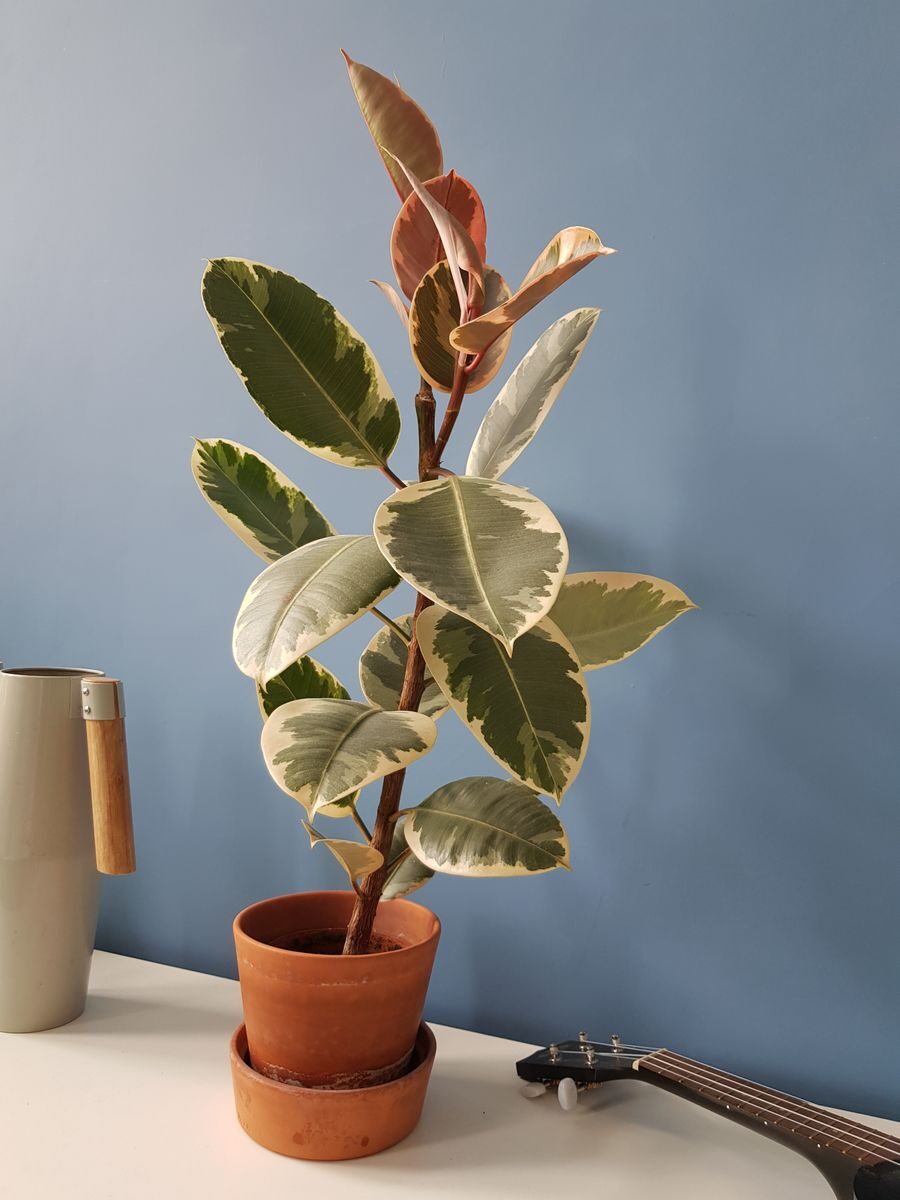
Ficus Tineke might be the most striking houseplant you can buy right now. Its leaves splash cream, soft green, and pink together like watercolor, and new growth unfurls from a deep burgundy sheath that adds even more drama. It’s no surprise this variegated rubber plant has become a favorite statement piece in living rooms and offices alike.
It’s also a little more particular than its plain-green cousin. The white sections of each leaf contain less chlorophyll, which makes them more sensitive to light, water, and humidity swings. Get those basics right, though, and Ficus Tineke is genuinely easy to grow. This guide covers everything: light, watering, propagation, and the most common problems people run into — plus how to fix each one.
What Is Ficus Tineke? Quick Plant Profile
Ficus Tineke (Ficus elastica ‘Tineke’) is a variegated cultivar of the classic rubber plant, native to the tropical forests of Southeast Asia and northeast India. It belongs to the Moraceae, or mulberry, family.
- Leaves: Glossy, leathery, and variegated in cream, white, green, and sometimes soft pink
- New growth: Emerges from a striking burgundy-red sheath, called a cataphyll
- Mature size: 5–10 feet tall indoors over several years; can reach much taller outdoors in USDA Zones 10b–11
- Growth rate: Moderate — slower than solid-green rubber plants, since variegated leaves produce less chlorophyll
- Sap: Produces a milky latex sap when cut, mildly irritating to skin and toxic if ingested
Light Requirements: The Most Important Factor
Light is the single biggest driver of how well a Ficus Tineke holds its color. Give it bright, indirect light, with a little gentle morning direct sun if you can manage it. East-facing windows tend to work best. A spot a few feet back from a south- or west-facing window also works well, especially with a sheer curtain to soften the afternoon sun.
Too little light, and new leaves grow in smaller, plainer, and greener. The plant essentially reverts toward its non-variegated form to conserve energy. Too much harsh, direct sun, on the other hand, can scorch the delicate white portions of the leaves, leaving brown, crispy patches.
If your plant already has pale or faded new growth, move it closer to a light source gradually over a couple of weeks rather than all at once, so it has time to adjust.
Watering Ficus Tineke the Right Way
Ficus Tineke would rather be slightly underwatered than overwatered. Let the top 2 to 3 inches of soil dry out before watering again. That’s usually once every 7 to 14 days during the growing season, and less often in winter.
When you do water, water thoroughly until it runs through the drainage holes, then let any excess drain away completely. Never let the pot sit in a saucer of standing water.
A couple of practical tips: use room-temperature water (cold water can shock the roots), and try to water the soil directly rather than the leaves, since water droplets left sitting on the variegated portions can cause spotting.
Humidity & Temperature
Ficus Tineke prefers moderate to high humidity, somewhere in the 40–60% range, though it adapts reasonably well to typical home humidity levels. If your home runs dry, especially in winter, a humidifier or a pebble tray under the pot helps more than misting does — sitting water on the leaves for long periods can actually encourage fungal spotting.
Keep the plant in a warm, stable environment between 65–80°F (18–27°C), and never let it drop below 55°F. Ficus Tineke doesn’t like sudden temperature swings, so keep it away from cold drafts, exterior doors, and heating or air conditioning vents.
Soil & Potting
Good drainage matters more than almost anything else with this plant. Use a chunky, well-draining potting mix — a blend of standard potting soil, perlite, and either pine bark or coco coir works well. The goal is a mix that holds some moisture but never stays soggy.
Always choose a pot with drainage holes. Ficus Tineke actually prefers to be slightly potbound, so size up only when you see roots circling the bottom of the pot or emerging from the drainage holes, typically every 1 to 2 years. When you do repot, choose a new pot only one or two inches wider in diameter than the current one — going too large at once can lead to excess moisture retention and root rot.
Fertilizing
Feed your Ficus Tineke once a month during the active growing season, spring through summer, using a balanced liquid houseplant fertilizer diluted to half strength. Skip fertilizing in fall and winter, when growth naturally slows down — feeding during dormancy can burn the roots and won’t speed up growth.
Pruning & Maintenance
Light pruning encourages a fuller, bushier plant, while leaving it unpruned produces a taller, more tree-like form. To prune, use clean, sharp shears and cut just above a leaf node. Expect a bit of milky sap to ooze from the cut — that’s completely normal, just keep it off your skin and away from pets.
Because the leaves are large and collect dust easily, wipe them down every few weeks with a damp, soft cloth. This isn’t just cosmetic — clean leaves absorb more light, which directly supports the plant’s variegation.
How to Propagate Ficus Tineke
Spring and early summer are the best times to propagate, while the plant is actively growing. Here are the two most reliable methods.
Stem cutting (water or soil method):
- Choose a healthy stem with at least one or two leaf nodes, and cut just below a node using clean, sharp shears.
- Wipe away the sap, then let the cut end callus over for about 15–30 minutes.
- Place the cutting in a jar of water (changed every few days) or directly into a small pot of moist, well-draining soil.
- Keep it in bright, indirect light, and expect roots in 3 to 6 weeks. Once roots are an inch or two long, transplant water-propagated cuttings into soil.
Air layering (best for tall or leggy plants):
- Choose a spot on a mature stem, just below a node, and make a small upward-angled cut through the outer layer of bark.
- Insert a toothpick or small piece of matchstick to keep the cut open, then wrap the area in damp sphagnum moss.
- Cover the moss with plastic wrap and secure both ends with twist ties or tape, keeping the moss consistently moist.
- After several weeks, roots will form inside the moss ball. Once you see healthy roots, cut the stem just below the new root system and pot it up as an independent plant.
Air layering is especially useful if your Ficus Tineke has grown tall and bare at the bottom. It lets you create a fresh, full-looking plant from the top section while the original keeps growing.
Common Ficus Tineke Problems (and How to Fix Them)
Leaf drop. Usually caused by low light, overwatering, cold drafts, or a sudden environment change (like moving the plant or bringing it home from the store). Some lower-leaf drop is normal as the plant matures — it’s only a concern if many leaves fall at once.
Brown spots on the white or cream portions of leaves. The variegated areas lack chlorophyll and are more delicate than the green parts. Brown spotting here usually points to too much direct sun, low humidity, or water sitting on the leaves. Move the plant slightly farther from intense light and avoid wetting the foliage when you water.
Leaves turning more green and losing variegation. A classic sign of insufficient light. Gradually move the plant to a brighter spot to encourage new growth to come in with more color.
Yellowing leaves with mushy stems. This points to root rot from overwatering. Check the soil before your next watering. If the roots feel mushy or look black, repot into fresh, well-draining soil and trim away any damaged roots.
Curling or drooping leaves. Often a sign of inconsistent watering, either too much or too little, or low humidity. Stick to a consistent watering rhythm based on how dry the soil actually feels, rather than a fixed schedule.
Pests. Spider mites, mealybugs, scale, and aphids are the most common visitors, often showing up as fine webbing, sticky residue, or small bumps on the undersides of leaves. Wipe affected areas with a cloth dipped in diluted rubbing alcohol. Then treat the whole plant with insecticidal soap or neem oil, repeating weekly until the pests are gone. Our Hoya Krimson Queen guide covers the same treatment for another humidity-loving tropical.
Is Ficus Tineke Toxic to Pets?
Yes — like other Ficus elastica varieties, Tineke’s milky sap is mildly toxic and irritating if chewed or ingested by cats, dogs, or humans, and can cause skin or eye irritation on contact. Keep it out of reach of curious pets and small children, and if you suspect a pet has chewed on it, contact your veterinarian or the ASPCA Animal Poison Control Center.
Quick Care Cheat Sheet
- Light: Bright indirect light, with a little gentle morning sun
- Water: Let the top 2–3 inches of soil dry out between waterings
- Humidity: 40–60%, with a humidifier or pebble tray in dry homes
- Temperature: 65–80°F; never below 55°F
- Soil: Well-draining mix with perlite and bark or coco coir
- Fertilizer: Monthly, half-strength, spring through summer only
- Repotting: Every 1–2 years, sizing up just slightly
- Propagation: Stem cuttings or air layering, spring through summer
If you like this variegated look, our Ficus Audrey care guide covers another popular ficus with a similar light-and-humidity profile.
Frequently Asked Questions
Why is my Ficus Tineke losing its pink and white variegation?
This almost always comes down to insufficient light. Variegated leaves need more brightness than solid-green ones to maintain their color, so move the plant to a brighter spot — ideally near an east-facing window or a few feet from a south- or west-facing one.
How often should I water Ficus Tineke?
Water once the top 2 to 3 inches of soil feel dry, which usually works out to roughly every 7 to 14 days during the growing season and less often in winter. Always check the soil rather than watering on a strict schedule, since light, humidity, and pot size all affect how fast it dries out.
Why are the white parts of my Ficus Tineke’s leaves turning brown?
The cream and white sections of variegated leaves contain less chlorophyll, which makes them more prone to sun scorch, low humidity, or water sitting on the surface. Adjust light exposure and avoid wetting the leaves when watering.
How fast does Ficus Tineke grow?
It grows at a moderate pace, slower than non-variegated rubber plants, since variegated leaves photosynthesize less efficiently. With good light and consistent care, it can still reach several feet over a few years.
Can I propagate Ficus Tineke in water?
Yes. Stem cuttings root well in water, typically within 3 to 6 weeks. Once roots reach an inch or two long, transplant the cutting into well-draining potting soil.
Is Ficus Tineke easy to care for?
It’s considered moderately easy once you understand its core needs: bright indirect light, careful watering, and stable temperatures. The variegation makes it slightly fussier than an all-green rubber plant, but it’s still a great choice for an attentive beginner.
Why does my Ficus Tineke have sticky residue on its leaves?
Sticky residue, sometimes called honeydew, usually signals a pest infestation like scale or mealybugs. Inspect the undersides of leaves and stems closely, then treat with insecticidal soap or neem oil.
Should I mist my Ficus Tineke?
Occasional misting can offer short-term relief in very dry conditions, but a humidifier or pebble tray is more effective long-term and carries less risk of leaf spotting, since standing water on variegated leaves can contribute to browning.
Ficus Tineke rewards consistency more than perfection. Once you find the right light spot and settle into a watering rhythm based on the soil rather than the calendar, this plant tends to take care of the rest.
Source referenced: NC State Extension Gardener Plant Toolbox — Ficus elastica