

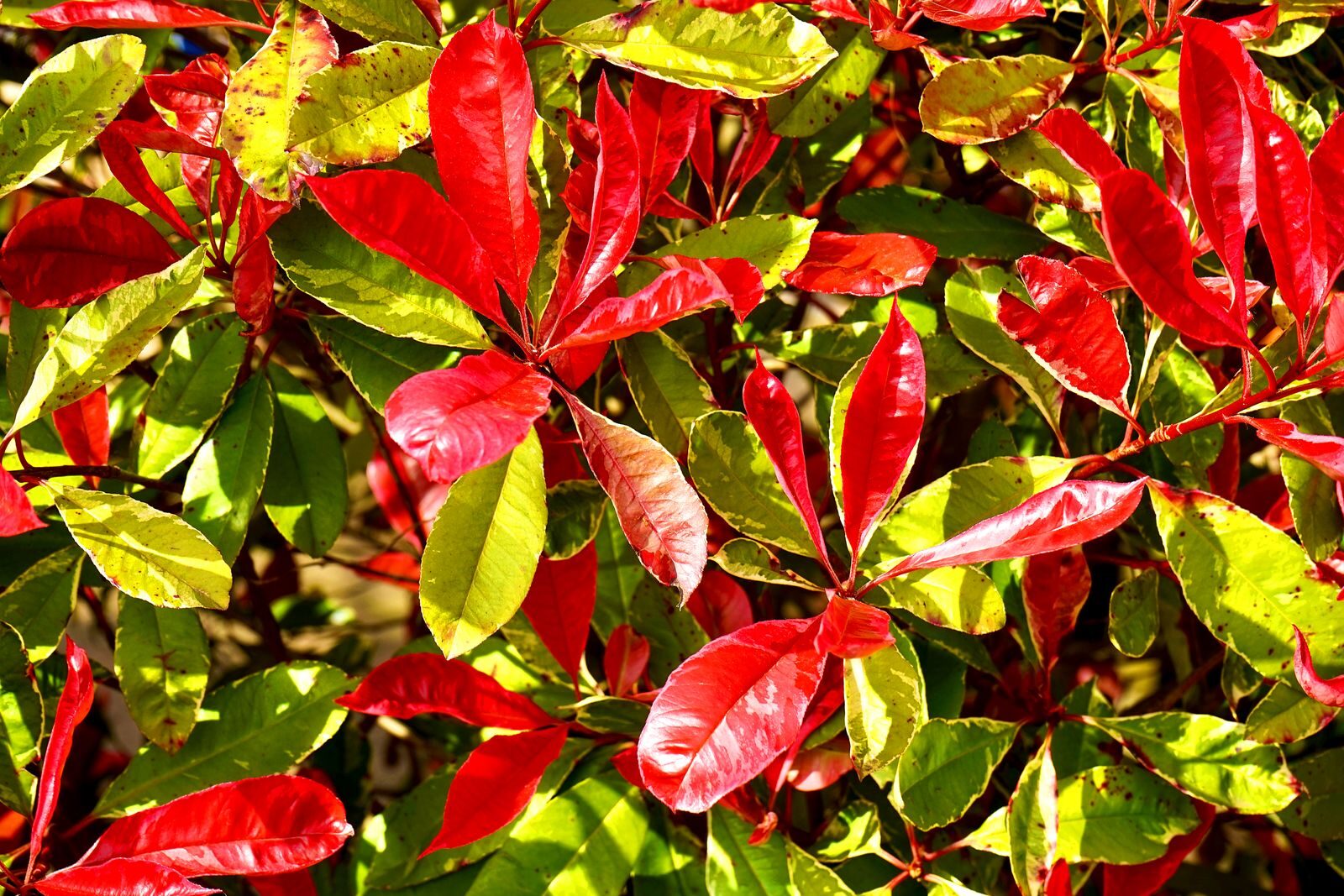
If you’ve driven through a neighborhood anywhere from Virginia down to Texas, you’ve almost certainly seen a red tip photinia hedge — that wall of glossy green leaves punctuated by bursts of fiery red new growth. For decades, this shrub was the go-to privacy screen for American homeowners, and it’s easy to see why. Few plants put on a color show quite like a freshly flushed photinia hedge in spring.
But red tip photinia has a reputation problem these days, and it’s not undeserved. This guide walks through everything you need to know to grow it successfully in 2026 — including the one disease issue that has made some gardeners (and several university extension offices) start recommending alternatives. Whether you already have a hedge or you’re deciding if this is the right shrub for your yard, you’ll find honest, practical answers here.
What Is Red Tip Photinia?
Red tip photinia (Photinia × fraseri) is a fast-growing evergreen shrub created by crossing two Asian species, Photinia glabra and Photinia serrulata. It was first developed in the 1940s at the Fraser Nursery in Birmingham, Alabama, which is where the “Fraser’s photinia” name comes from.
Here’s the quick profile:
- Mature size: 10–15 feet tall and 8–15 feet wide if left unpruned
- Growth rate: Fast — often 1 to 3 feet per year
- Foliage: Glossy, leathery, oval leaves; brilliant bronze-red when new, maturing to deep green over 3–4 weeks
- Flowers: Clusters of small white flowers in mid-to-late spring (with a noticeably unpleasant smell up close)
- Fruit: Small red berries that ripen to black in fall, attractive to birds
- Lifespan: Can live for decades when healthy, though many landscape specimens decline early due to disease
The “red tip” color flush is the whole reason people plant this shrub. It happens most dramatically after a round of pruning, which triggers a burst of tender new growth — and it’s also exactly why pruning timing matters so much, which we’ll get into below.
Where Red Tip Photinia Grows Best (USDA Zones & Regional Notes)
Red tip photinia thrives in USDA Hardiness Zones 7 through 9, which covers a wide swath of the country. The Mid-Atlantic, the entire Southeast, the Gulf Coast, Texas, and parts of the Pacific Northwest and California. Gardeners in Zone 6 can sometimes grow it successfully if it’s planted in a protected spot, such as against a south- or west-facing wall.
A few regional notes worth knowing:
- Deep South (Gulf Coast, Florida, coastal Carolinas, Houston): This is where photinia struggles most. High humidity and frequent rain create ideal conditions for the leaf spot disease covered below. Several extension services in this region now actively discourage new plantings.
- Upper South and Mid-Atlantic (Zone 7, parts of Virginia, Tennessee, North Carolina piedmont): Disease pressure is lower here because conditions are drier and cooler for more of the year, so red tips tend to perform noticeably better.
- Texas (especially North and Central Texas): Photinia has been a staple hedge plant for generations, but heavy clay soil and humid spring weather both work against it — good drainage is non-negotiable here.
- Pacific Northwest: Cooler, wetter conditions support the plant but also favor fungal leaf spot, so spacing and airflow matter just as much as in the South.
If you’re not sure which USDA zone you’re in, the USDA’s plant hardiness zone map is the standard reference most American gardeners and nurseries use to make planting decisions.
How to Plant Red Tip Photinia for a Hedge
Getting the planting right is the single biggest thing you can do to set your hedge up for a long, healthy life. And to reduce disease pressure down the road.
1. Choose a sunny, open site. Red tips need at least 6 hours of full sun daily for the best red color and densest growth. They tolerate part shade, but the foliage thins out and the red flush fades.
2. Prioritize drainage. This shrub does not tolerate “wet feet.” If you have heavy clay soil amend the planting area generously with compost, or consider planting on a slightly raised berm.
3. Space plants generously. This is the step most homeowners get wrong, and it’s a major driver of disease problems. Standard hedge spacing for red tip photinia is 4 to 6 feet apart, center to center. Crowding plants closer to get a “filled-in” hedge faster blocks airflow between branches. And poor airflow is exactly what fungal leaf spot needs to spread.
4. Dig the hole right. Make the planting hole twice as wide as the root ball but no deeper than it, so the top of the root ball sits slightly above grade. Backfill with native soil mixed with compost rather than pure potting soil, which can create a “bathtub effect” that traps water.
5. Water deeply at planting, then keep the root zone consistently moist (not soggy) for the first growing season while roots establish.
6. Mulch 2–3 inches deep, keeping mulch pulled back a few inches from the trunk to avoid rot.
Fall and early spring are both good planting windows across most of the red tip photinia’s range, giving roots time to establish before the stress of summer heat.
Red Tip Photinia Care Essentials
Once established, red tip photinia is relatively low-maintenance — with one big caveat we’ll cover in the next section. Here’s the day-to-day care rundown:
Watering: Established plants are fairly drought-tolerant, but they perform best with about an inch of water per week during dry spells. Water at the base rather than overhead — wet foliage is a major contributor to fungal disease.
Soil: Slightly acidic to neutral soil (pH 6.0–7.0) is ideal. Good drainage matters more than exact pH for most home gardeners.
Fertilizing: Feed lightly in early spring with a balanced, slow-release shrub fertilizer. Avoid heavy nitrogen applications. They push out a flush of soft, succulent new growth that’s especially vulnerable to leaf spot infection.
Mulching: A consistent layer of mulch helps regulate soil moisture and temperature, and also helps bury fallen, potentially diseased leaves so fungal spores aren’t constantly splashing back up onto healthy foliage.
Pruning Red Tip Photinia the Right Way
Pruning is where red tip photinia care diverges from a lot of other hedge shrubs, mostly because of disease timing.
- Prune in late winter, while the plant is still dormant — this is the timing most extension horticulturists now recommend. It gives new growth a chance to mature before the wet, disease-favorable conditions of spring set in.
- Avoid summer pruning. Cutting during the growing season triggers exactly the kind of tender new flush that fungal spores love to infect.
- Use clean, sharp tools, and disinfect blades with isopropyl alcohol between plants, especially if you suspect any disease is present on your hedge.
- Prune for airflow, not just shape. Thinning out a few interior branches each year — not just shearing the outer surface. Keeps air moving through the canopy and helps foliage dry out faster after rain.
- Clean up and remove all clippings and fallen leaves rather than leaving them at the base of the plant, since the leaf spot fungus overwinters in old foliage debris.
The #1 Problem: Entomosporium Leaf Spot
If there’s one thing every red tip photinia owner needs to understand, it’s this disease. Entomosporium leaf spot (caused by the fungus Entomosporium maculatum, also called Diplocarpon mespili) is, by a wide margin, the biggest threat to this plant’s health and appearance. And it’s the main reason photinia’s popularity has declined in many parts of the country.
What it looks like:
- Small, circular, bright red spots appear on new leaves first
- On heavily infected leaves, spots merge into larger maroon or purple-black blotches
- Tiny black fruiting bodies are often visible in the center of mature spots
- Severely infected leaves yellow and drop, sometimes leading to significant defoliation
Why it happens: The fungus spreads through splashing water — rain or overhead irrigation. And thrives during cool, wet weather in spring and fall. New, tender leaves are the most susceptible, which is exactly why pruning timing and fertilizer restraint matter so much.
How to manage it:
- Sanitation first. Rake up and dispose of fallen leaves regularly, and prune out visibly spotted branches during the dormant season.
- Improve airflow. Thin crowded plantings and avoid shearing into a dense, impenetrable wall of foliage.
- Water at the soil line, not overhead, and water in the morning so any leaf moisture dries quickly.
- Fungicides can help — with caveats. Products containing chlorothalonil, myclobutanil, or copper-based compounds can protect healthy new growth, but they won’t cure leaves that are already infected, and they typically need to be reapplied every 1–2 weeks throughout the spring flush to be effective. Many extension offices now consider this level of upkeep impractical for the average homeowner.
- Know when to cut your losses. A red tip photinia hedge that loses most of its leaves to this disease year after year is unlikely to recover long-term, and repeated defoliation weakens the plant’s resistance to other stresses.
According to the Clemson Cooperative Extension’s Home & Garden Information Center, red tip photinia is highly susceptible to Entomosporium leaf spot, and as a result, its use for hedging is generally not recommended in landscapes prone to the disease. That’s a strong statement coming from a major university extension service, and it’s worth taking seriously if you’re planning a new hedge in a humid region.
Other Common Problems
Leaf spot gets most of the attention, but a few other issues show up occasionally:
- Fireblight: A bacterial disease that can cause blackened, scorched-looking shoot tips, more common after wet spring weather.
- Powdery mildew: A white, powdery coating on leaves, usually a cosmetic issue rather than a serious threat.
- Scale insects and aphids: Look for sticky residue (honeydew) or sooty black mold on leaves, both signs of sap-sucking pests.
- Root rot: Almost always tied back to poor drainage or overwatering — prevention through proper planting is far easier than treatment.
Should You Still Plant Red Tip Photinia in 2026?
This is a fair question, and the honest answer is: it depends on where you live and how much maintenance you’re willing to commit to.
If you’re in a drier climate, a Zone 7 location with good air circulation, or you’re committed to strict watering and pruning discipline, red tip photinia can still be a gorgeous, fast hedge. If you’re in a humid, rainy part of the Deep South or Gulf Coast and you want a low-maintenance privacy screen, you may be happier with a disease-resistant alternative from the start.
Popular substitutes that many Southern landscapers now reach for include:
- Distylium — evergreen, disease-resistant, and increasingly popular as a direct photinia replacement
- Loropetalum — offers similar burgundy/red foliage color without the leaf spot issues
- ‘Compacta’ or ‘Carissa’ holly — dense, low-maintenance evergreen screening
- Ligustrum (privet) — fast-growing and widely adapted, though it can be invasive in some regions, so check local guidance first
- Little Gem magnolia — a taller option for a more substantial screen
If you’re weighing your options for a new hedge, it’s worth comparing a few different privacy hedge shrubs suited to your specific region and soil before committing, since the right choice really does come down to your local climate and how much upkeep you want to take on.
Quick Care Cheat Sheet
- USDA Zones: 7–9 (protected sites in Zone 6)
- Sun: Full sun (6+ hours) for best color and density
- Soil: Well-drained, slightly acidic to neutral
- Spacing for hedges: 4–6 feet apart
- Water: ~1 inch per week once established; water at soil level
- Pruning: Late winter, while dormant — never in summer
- Fertilizer: Light, balanced, slow-release feeding in early spring
- #1 problem: Entomosporium leaf spot — prevent with airflow, sanitation, and dormant-season pruning
Frequently Asked Questions
How fast does red tip photinia grow? It’s a fast grower, typically adding 1 to 3 feet of new growth per year under good conditions, and it can reach its mature height of 10–15 feet within several years if left unpruned.
Why are the leaves on my red tip photinia turning red and spotty, then falling off? This is almost always Entomosporium leaf spot, a fungal disease that’s extremely common on this species. Red or maroon spots on new leaves that merge into larger blotches and eventually cause leaf drop are the classic symptoms. Improving airflow, cleaning up fallen leaves, and pruning during the dormant season are the most effective first steps.
What is the best time of year to plant red tip photinia? Fall and early spring are both good windows in most of its growing range, giving the root system time to establish before summer heat or winter cold sets in.
How far apart should red tip photinia be planted for a hedge? Space plants 4 to 6 feet apart. Tighter spacing may fill in faster, but it restricts airflow and significantly increases the risk of fungal leaf spot.
Is red tip photinia toxic to dogs or cats? This one is genuinely a gray area. It isn’t listed on the ASPCA’s toxic plant database for dogs or cats, and the Merck Veterinary Manual notes toxicity concerns primarily in horses and other grazing animals, not dogs. That said, like many plants in the rose family, photinia leaves and seeds can contain trace cyanogenic compounds, so it’s a reasonable precaution to discourage pets from chewing on it and to contact your veterinarian or the ASPCA Animal Poison Control Center if you suspect a large ingestion.
Can I keep red tip photinia smaller than its natural size? Yes, with consistent pruning. Just remember to prune during the dormant season (late winter) rather than during the growing season, since summer pruning encourages the soft new growth that’s most vulnerable to disease.
What can I plant instead of red tip photinia? Distylium, loropetalum, compact hollies like ‘Carissa,’ and ligustrum are all commonly used alternatives that offer similar screening with less disease pressure, particularly in humid Southern climates.
Does red tip photinia need full sun? It performs best in full sun, which produces the densest growth and the most vivid red new-growth color. It will tolerate partial shade, but expect thinner foliage and a less dramatic color flush.
Have a red tip photinia hedge that’s struggling? A quick soil test and an honest look at sun exposure and airflow will tell you more than almost anything else about why it’s underperforming — and whether it’s worth nursing back to health or replacing with a tougher alternative.
Source referenced: Clemson Cooperative Extension, Home & Garden Information Center — Photinia (Red Tip) Factsheet