

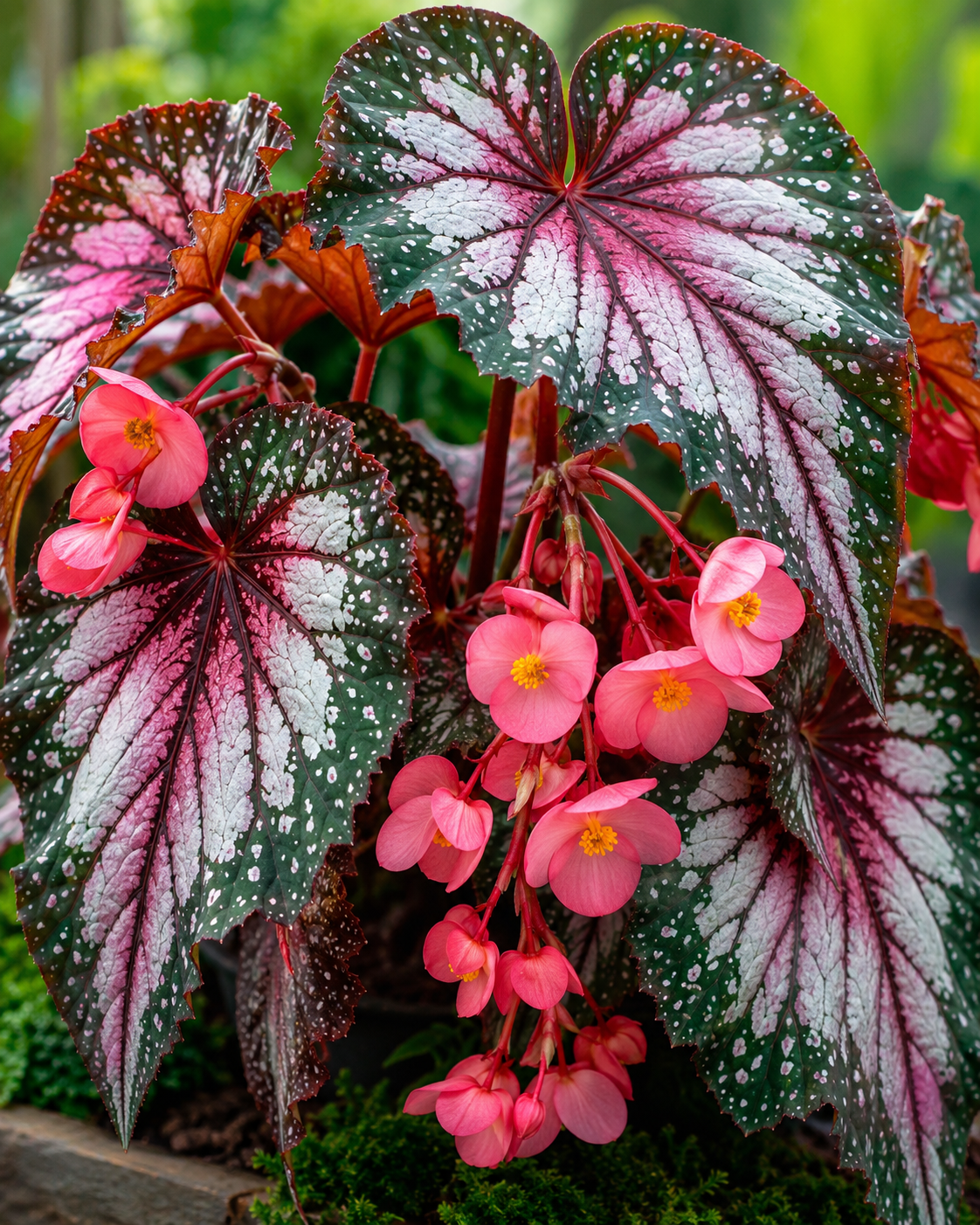
If you’ve scrolled past one too many photos of those silver-polka-dotted, wing-shaped leaves on Instagram or Pinterest this year, you’re not imagining it — the angel wing begonia is having a real moment in 2026. It’s one of those rare houseplants that looks like a piece of art but doesn’t demand a botany degree to keep alive. Once you understand its handful of preferences, this plant practically takes care of itself.
I’ve grown several angel wing begonias over the years. Lost a couple to overwatering before I figured out the rhythm, and kept others thriving for half a decade or more once I did. This guide walks through everything I wish someone had told me at the start: light, water, soil, propagation, the best varieties to look for right now, and how to troubleshoot the most common problems.
What Is an Angel Wing Begonia?
Angel wing begonia isn’t one single species. It’s a common name for a group of cane begonias, most often Begonia coccinea, Begonia aconitifolia, and their many hybrids. The name comes from the asymmetrical, pointed leaves that really do resemble folded wings, often speckled with silver dots and tinted red or maroon underneath.
The first true angel wing hybrid was created back in the 1920s by an amateur California breeder named Eva Kenworthy Gray, who crossed a Brazilian species with a Swiss-grown begonia. That original cross sparked an entire category of plants, and breeders are still introducing new cultivars today.
Quick care snapshot:
| Care Factor | What Angel Wing Begonias Need |
|---|---|
| Light | Bright, indirect light (east or west window) |
| Water | Let top 1–2 inches of soil dry between waterings |
| Soil | Loose, well-draining potting mix with perlite |
| Temperature | 65–75°F; below 50°F can be fatal |
| Humidity | 40–60% or higher |
| Fertilizer | Balanced liquid feed every 2–4 weeks in growing season |
| Mature size | 1–6 feet tall depending on variety |
| Toxicity | Toxic to cats and dogs if ingested |
| USDA outdoor zones | 10–11 (everywhere else: indoor or seasonal outdoor) |
Light Requirements: Finding the Sweet Spot
Angel wing begonias grow naturally in the dappled shade of the South American rainforest understory, which tells you most of what you need to know. They want bright light, but not direct sun beating down on the leaves.
An east-facing or west-facing window is usually ideal indoors. South-facing windows can work too, as long as the plant sits a few feet back or behind a sheer curtain. If the leaves start looking pale, faded, or the stems get stretched that’s a sign your begonia wants more light. If you notice scorched, crispy brown patches, it’s getting too much direct sun.
For growers in the Pacific Northwest or other low-light regions, a simple LED grow light run for 10–12 hours a day can make a noticeable difference in winter. Especially for keeping a plant blooming through the darker months.
Watering Without Drowning the Roots
This is where most angel wing begonias actually die — not from neglect, but from kindness. They’re genuinely more forgiving of being a little too dry than a little too wet.
A simple rule: water when the top inch or two of soil feels dry to the touch. Then water thoroughly until it drains from the bottom of the pot. Bottom watering — setting the pot in a shallow dish of water for 10–15 minutes, then letting it drain. Works especially well for these plants because it keeps water off the leaves and crown, which helps prevent fungal issues.
Yellowing leaves usually mean overwatering; drooping, limp leaves usually mean the plant is thirsty. Cut back on watering frequency in fall and winter when growth naturally slows down.
Soil and Potting Mix
Skip dense, moisture-retentive soil. Angel wing begonias want a loose, airy mix that drains quickly but still holds a bit of moisture. A standard houseplant potting mix amended with perlite works well. You can also use an African violet mix, which has a similar light, well-draining texture.
Good drainage holes in the pot aren’t optional here — they’re essential. If your container doesn’t have one, the plant is at much higher risk of root rot, no matter how careful you are with the watering can.
Temperature and Humidity: Regional Notes for U.S. Growers
Angel wing begonias are happiest between 65–75°F during the day, with nighttime temperatures no lower than 60°F. Exposure to temperatures below 50°F can kill the plant outright. So this is one to watch closely depending on where you live.
If you’re gardening in Florida, the Gulf Coast, Southern California, Hawaii, or other USDA zone 10–11 areas, you can grow angel wing begonias outdoors year-round in a partly shaded spot. Everywhere else in the U.S., they’re best treated as a seasonal patio plant. Move them outside to a shaded porch or under a tree once nighttime lows are reliably above 55°F in spring. And bring them back inside before the first fall frost.
Humidity matters more than most people expect, especially in homes with forced-air heating during a Midwest or Northeast winter, when indoor humidity can drop into the 20–30% range. Angel wing begonias prefer somewhere in the 40–60% range or higher. Grouping plants together, running a small humidifier, or setting the pot on a pebble tray with water can all help offset dry indoor air. Other humidity-loving tropicals respond to the same tricks — our Kimberly Fern care guide covers similar humidity strategies if you’re building out a broader tropical plant collection.
Avoid placing the pot near heating or AC vents — sudden blasts of hot or cold air are a common cause of unexplained yellowing or crispy leaf edges.
Feeding Your Begonia for Maximum Blooms
Angel wing begonias aren’t picky about fertilizer type, but they do appreciate consistency during the growing season (roughly spring through early fall). A balanced, general-purpose liquid houseplant fertilizer applied every two to four weeks works well. Some growers prefer a phosphorus-leaning formula in late winter and early spring specifically to encourage heavier flowering.
Time-release fertilizer pellets mixed into the soil once or twice during the growing season are a low-maintenance alternative if you’d rather not keep track of a feeding schedule. Whichever you choose, resist the urge to over-fertilize — too much feeding can cause salt buildup in the soil and burn the roots. Always follow the dilution rate on the product label, and skip feeding altogether in late fall and winter when growth slows.
Pruning and Shaping
Left alone, angel wing begonias tend to grow tall and leggy with bare lower stems. Regular pruning keeps the plant compact, bushy, and full instead.
Once a young plant reaches about 6 inches tall, pinch off the top growing shoot. This forces the plant to send out side branches instead of growing as a single cane. As the plant matures, prune any cane that’s grown too tall or too thin back to a lower node once or twice a year, ideally in late winter and again in early summer. Always use clean, sharp scissors or pruning shears to avoid spreading disease between cuts.
According to the Chicago Botanic Garden’s plant profile on angel wing begonias, these plants are actually better off being slightly potbound, since too much extra soil around the roots increases the risk of waterlogging and root rot — which is a good reason to prune the top growth rather than constantly upsizing the pot.
Repotting Schedule
Repot every one to two years, or whenever roots start circling tightly at the bottom of the pot. Spring or early summer is the best time, since the plant is actively growing and can recover quickly from the disturbance. Move up only one pot size at a time — going too big too fast is one of the more common mistakes that leads to soggy soil and rot.
How to Propagate Angel Wing Begonias
Propagation is genuinely one of the easiest and most rewarding parts of growing this plant, and it’s a great way to refresh an older specimen that’s starting to look thin or leggy after several years.
- Take the cutting. Using clean, sharp scissors, cut a 3–6 inch stem section that includes at least one or two leaf nodes.
- Remove lower leaves. Strip off any leaves near the cut end so at least one node is bare and ready to root.
- Optional rooting hormone. Dipping the cut end in rooting hormone can speed things up, though it isn’t strictly necessary.
- Choose your medium. Place the cutting in a glass of water (changed every few days) or directly into a small pot of moist, well-draining soil or vermiculite.
- Provide warmth and humidity. Keep the cutting somewhere warm with bright, indirect light. Covering a soil-rooted cutting loosely with a clear plastic bag creates a mini greenhouse effect that speeds rooting.
- Wait for roots. Water cuttings typically show roots within 2–4 weeks; soil cuttings take a bit longer to establish but tend to transition to normal care more smoothly once they do.
- Pot it up. Once roots are an inch or two long, transplant into a small pot with standard begonia potting mix and care for it as you would a mature plant.
Most growers replace their angel wing begonia (or take fresh cuttings from it) every five to six years, since older plants tend to lose vigor and get woody at the base over time.
Popular Angel Wing Begonia Varieties to Grow in 2026
Part of the fun of this plant family is the sheer variety available. A few standout cultivars worth seeking out from specialty growers and online plant shops this year:
- ‘Lucerna’ – One of the classic originals, with large olive-green, silver-spotted leaves and a plant that can reach 6–7 feet given enough room and light.
- ‘Looking Glass’ – Almost entirely silver leaves with contrasting olive-green veins; a real showstopper on a shelf or stand.
- ‘Silver Wings’ – Medium green leaves with fine silver speckling; compact and easy for beginners.
- ‘Splish Splash’ – Bold splashes of white across the foliage paired with deep pink and magenta blooms.
- Begonia maculata (‘Polka Dot Begonia’) – Technically a close cousin in the same broad category, known for dark green leaves with oversized silver polka dots and red undersides.
- Dragon Wing Begonia (B. x hybrida) – A hybrid often used in outdoor hanging baskets and patio containers across the U.S. for its nonstop red or pink blooms all summer.
If you’re shopping in person, check independent garden centers and greenhouses before big-box stores — angel wing begonias are often sold as smaller starter cuttings that are easier (and cheaper) to grow into a full specimen than buying a mature plant outright. For another statement houseplant with bold foliage, take a look at our Philodendron Brasil care guide.
Common Pests and Problems
Angel wing begonias are relatively low-maintenance, but a few issues show up often enough to watch for:
- Mealybugs and spider mites – Look for small cottony clusters or fine webbing, usually where leaves meet stems. Wipe them off with an alcohol-soaked cotton swab or treat with insecticidal soap or neem oil.
- Powdery mildew – More likely in crowded, poorly ventilated spaces or when water sits on the leaves. Improve air circulation and avoid overhead watering.
- Root rot – Caused almost entirely by overwatering or poor drainage. Yellowing leaves and a mushy, dark stem base are warning signs. Unpot, trim away any black or mushy roots, and repot in fresh, dry soil.
- Leaf drop or crispy edges – Usually a sign of low humidity, drafts, or sudden temperature swings rather than a pest problem.
Seasonal Care Calendar
Spring
Resume regular fertilizing, repot if needed, take cuttings, and move outdoor plants back outside once nights stay above 55°F.
Summer
Peak growing and blooming season. Watch humidity and watering closely during hot, dry stretches.
Fall
Slow down fertilizing as light decreases. Bring outdoor plants back inside before the first frost.
Winter
Reduce watering frequency, hold off on fertilizer, and keep the plant away from cold drafts, heating vents, and single-pane windows.
Is Angel Wing Begonia Safe for Pets?
No — angel wing begonias are considered toxic to both cats and dogs if chewed or ingested, and can cause drooling, vomiting, and mouth irritation. Keep pots up on shelves or stands out of reach of curious pets, and contact your veterinarian or the ASPCA Animal Poison Control Center if you suspect your pet has eaten part of the plant. If pet safety is a priority in your plant shopping, our Hoya Krimson Queen care guide covers another popular houseplant worth checking pet-safety notes on before you buy.
Frequently Asked Questions
How often should I water my angel wing begonia?
Water whenever the top 1–2 inches of soil feel dry, which is typically once every 7–10 days indoors, though this varies with light, humidity, and pot size. Always let excess water drain fully rather than letting the pot sit in standing water.
Why are the leaves on my angel wing begonia turning yellow?
Yellowing leaves most often point to overwatering or root rot. Less commonly, it can signal a nutrient deficiency or exposure to cold drafts. Check the soil moisture and roots first before adjusting your fertilizing routine.
Can angel wing begonias survive outdoors year-round in the U.S.?
Only in USDA hardiness zones 10–11, which covers areas like South Florida, coastal Southern California, and Hawaii. Elsewhere in the U.S., they should be grown as houseplants or moved outside only during the warm season.
How do I make my angel wing begonia bloom more?
Provide bright, indirect light, feed regularly during spring and summer with a phosphorus-leaning fertilizer, and avoid letting the plant sit in deep shade. Consistent care matters more than any single trick.
What’s the difference between an angel wing begonia and a polka dot begonia?
Polka dot begonia (Begonia maculata) is a closely related cane begonia with larger, more dramatic silver spots and waxier leaves. It needs slightly brighter light and more consistent humidity than many other angel wing varieties, and it blooms less frequently.
How big do angel wing begonias get?
Most varieties stay between 1 and 3 feet tall as houseplants, though some, like ‘Lucerna,’ can reach 6 feet or more with enough light, space, and time.
Can I propagate angel wing begonia cuttings in just water?
Yes. A stem cutting with at least one node will typically root in a glass of water within two to four weeks. Change the water every few days and pot it up once roots are an inch or two long.
Do angel wing begonias need a humidifier?
Not necessarily. Average household humidity of 40–60% is usually sufficient. A humidifier becomes helpful mainly in dry winter climates or homes with forced-air heating, where indoor humidity can drop well below that range.
Final Thoughts
Angel wing begonias reward attention without demanding much of it. Get the light, water, and humidity roughly right, prune now and then to keep the shape full, and take cuttings before an older plant starts to look tired — and you’ll likely have a thriving, blooming centerpiece for years. Whether you’re growing ‘Lucerna’ as a dramatic floor specimen or a compact ‘Silver Wings’ on a sunny windowsill, this is one houseplant trend from 2026 that’s earned its popularity.