

If you’re apartment hunting in Houston and don’t want to pay for a separate gym membership, you’re not alone. On-site fitness centers have become one of the most requested amenities in Houston’s rental market, right up there with covered parking and in-unit laundry. The good news is that they’re easy to find here — Houston’s apartment stock skews newer and more amenity-heavy than a lot of older East Coast cities, so a fitness center isn’t some rare luxury feature. The harder part is figuring out which “fitness center” is actually worth using versus which one is two treadmills and a mirror.
Quick Answer
Most mid-size and large Houston apartment complexes (roughly 100+ units) built after 2000 include some kind of on-site gym. You’ll find the best selection in neighborhoods like Midtown, The Heights, the Galleria/Uptown area, Memorial, and the Energy Corridor, where newer Class A and B properties compete hard on amenities. Rent for a one-bedroom with a fitness center typically runs from the low $1,300s to over $2,000 depending on the neighborhood, building age, and finish level, based on current market listing data. Smaller, older properties (under 50 units) are far less likely to have a real gym — if that matters to you, it’s worth filtering for building size, not just the “fitness center” checkbox, when you search.
What Counts as an “On-Site Fitness Center,” Really
This is where a lot of renters get burned. Property listings use “fitness center” loosely, and the term can mean wildly different things depending on the building.
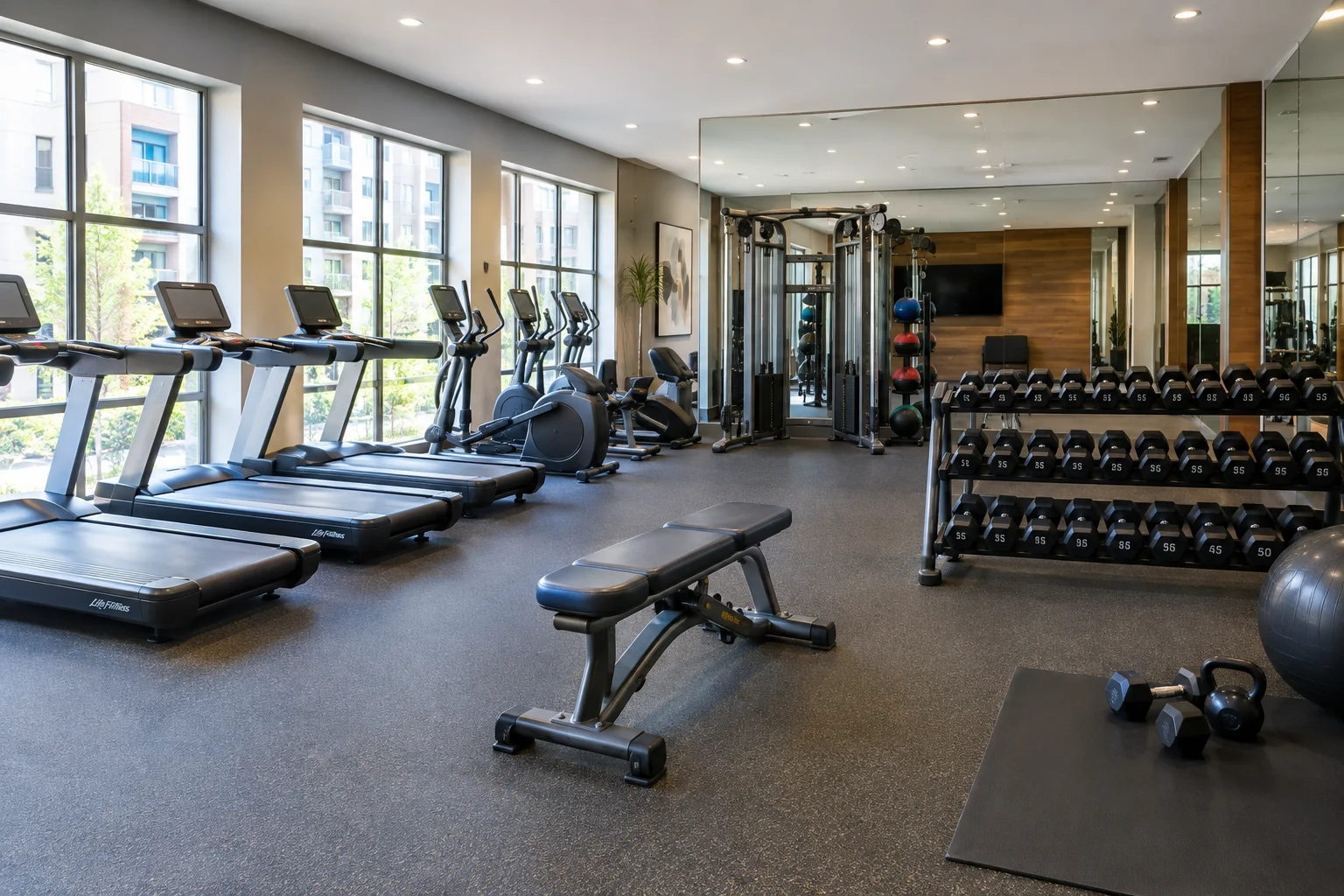
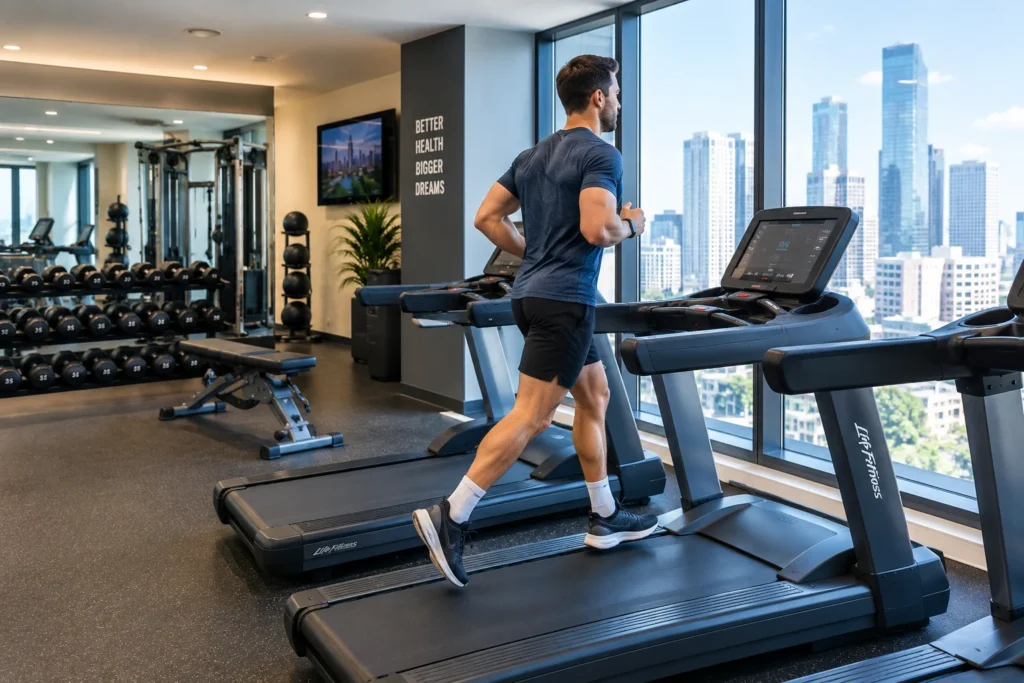
At the low end, you get a converted leasing-office room with a couple of cardio machines, a rack of dumbbells up to maybe 30 pounds, and no air conditioning worth mentioning. At the high end — think newer high-rises in Midtown or Uptown — you get a full weight room with squat racks and a cable machine, a separate cardio room, sometimes a yoga or spin studio, and occasionally a connected pool deck or sauna.
Between those extremes sits the typical suburban garden-style complex gym: a room with a handful of treadmills, an elliptical, a universal weight machine, and free weights up to about 50 pounds. That’s fine for cardio and general fitness but won’t work if you’re doing serious strength training.
Before you sign a lease based on the photos, ask to actually walk through the fitness center — not just see it on the property’s website. Stock photography for these amenities is common, and it isn’t always accurate to what’s currently installed. Also ask about hours; some buildings lock gym access overnight for security reasons, which matters if you work night shifts or prefer early-morning or late-night workouts.
Houston Neighborhoods Where Fitness Amenities Are Strongest
Midtown and Downtown. High-density, newer construction, and a renter base that skews younger professionals means these buildings compete on amenities. Expect rooftop decks paired with fitness centers, sometimes with skyline views. Rent tends to run higher here than the citywide average given the walkability and location.
The Heights. A mix of newer mid-rise developments and converted industrial buildings. Fitness centers here are often boutique-style — smaller footprint but higher-quality equipment — since the neighborhood attracts renters who also frequent the area’s independent gyms and studios.
Uptown/Galleria. Some of the most amenity-dense buildings in the city, largely because they’re competing with luxury high-rises for a similar tenant pool. Full-service fitness centers with group class space aren’t unusual here, but rents reflect the location and finish level.
Energy Corridor and Memorial. More suburban in feel, with larger complexes and correspondingly larger fitness centers, often paired with resort-style pools. This area tends to offer more square footage per dollar than the inner loop, which matters if you want a bigger gym without inner-city rent.
Sugar Land, Pearland, and Katy (outer suburbs). Newer garden-style communities here frequently include solid fitness centers as a baseline amenity, and rents are generally lower than comparable properties inside the loop. The tradeoff is a longer commute if you work downtown or in the Energy Corridor.

What Actually Affects Your Rent Here
A fitness center alone won’t swing your rent much — it’s usually bundled with a package of amenities (pool, clubhouse, covered parking, package lockers) rather than priced separately. What moves the number more is the building’s age, unit finish level, and neighborhood. Based on current listing data across the city, one-bedroom apartments in Houston generally range from around $1,300 to $1,700 depending on these factors, with two-bedrooms often landing between $1,700 and $2,200. Newer high-rises in Uptown or Midtown, or buildings with premium finishes, can run well above that range. Older or smaller complexes, especially outside the loop, can come in noticeably lower.
One thing worth knowing: some properties charge a separate monthly amenity fee on top of base rent that covers access to the fitness center, pool, and other shared spaces — this isn’t always broken out clearly in listing prices, so ask for the full monthly total, not just the advertised base rent.
Common Mistakes Renters Make
Assuming “fitness center” means real equipment. As covered above, always verify in person or via recent photos/reviews, not just the listing description.
Not checking maintenance and update schedules. Gym equipment breaks. Ask the leasing office how often equipment is serviced or replaced — a broken treadmill that’s been “getting fixed soon” for three months is a common complaint in online reviews of Houston complexes.
Ignoring hours and access policies. Some buildings require a fob or key card that only works during set hours. If you like working out at 5 a.m. or after midnight, confirm 24-hour access before signing.
Overlooking humidity and AC in the gym space. Houston’s climate is hot and humid most of the year. A fitness center without functioning, adequate air conditioning is nearly unusable from May through September. This is a bigger issue in older buildings where the gym was added into a repurposed space rather than built with proper HVAC from the start.
Not factoring in commute versus amenity tradeoffs. A great gym in a far-out suburb doesn’t help much if you’re spending two extra hours a week in traffic. Weigh the amenity against your actual daily routine.
Fitness Center vs. Nearby Gym Membership: A Practical Comparison
| Factor | On-Site Apartment Gym | Separate Gym Membership (e.g., regional chain) |
|---|---|---|
| Monthly cost | Usually included in rent/amenity fee | $10–$60+/month depending on chain and tier |
| Convenience | Steps from your unit, no commute | Requires driving or walking, parking |
| Equipment variety | Limited, especially in smaller buildings | Generally wider range, more machines |
| Group classes | Rare except in larger luxury buildings | Common at most full-service gyms |
| Hours | Varies, sometimes restricted | Often 24-hour access available |
| Crowding | Usually low, since it serves one building | Can be high during peak hours |
For many renters, the apartment gym works fine for regular cardio and general strength maintenance, while serious lifters or people who want classes still end up paying for an outside membership too. If that’s likely to be you, it may make more sense to prioritize rent and location over gym quality, and budget separately for a nearby gym rather than paying more for an on-site fitness center you’ll supplement anyway.
Questions to Ask Before You Lease
- Can I tour the fitness center in person, not just view photos?
- What are the access hours, and is entry 24/7 or restricted?
- Is there a separate amenity fee, and what does it cover exactly?
- How often is equipment serviced or replaced?
- Is the space air-conditioned and properly ventilated?
- Are there additional amenities like a pool, sauna, or group class space?
- Is the fitness center included for all residents, or is there an extra charge for access?
These are reasonable questions for any leasing agent, and a good property manager will have straightforward answers rather than vague reassurances.
If you’re weighing amenities against neighborhood and budget for your next move read our guide on Houses for Rent in Greensboro, NC.
Frequently Asked Questions
Do most Houston apartments have a gym?
Larger complexes (roughly 100+ units) built in the last 20–25 years usually do. Smaller or older buildings, especially under 50 units, are less likely to include one.
Is an apartment gym usually free with rent?
In most cases, yes — it’s bundled into the base rent or a general amenity fee rather than billed separately. Some properties do add a monthly amenity fee that covers the gym along with other shared facilities, so it’s worth asking for the full breakdown.
What Houston neighborhoods have the best apartment fitness centers?
Midtown, Uptown/Galleria, and The Heights tend to have the most amenity-rich buildings, though newer suburban developments in Katy, Sugar Land, and Pearland also frequently include solid fitness centers, often at lower rent.
Are apartment gyms open 24 hours in Houston?
It varies by property. Some newer buildings offer 24/7 fob access; others restrict hours for security or staffing reasons. Always confirm before signing a lease if this matters to you.
Can I negotiate rent if the fitness center is outdated?
It’s worth asking, though property managers may have limited flexibility on rent itself. You can sometimes negotiate a waived amenity fee or a move-in concession if amenities don’t match what’s advertised.
Do apartment fitness centers include group classes?
Rarely, outside of larger luxury buildings in areas like Uptown or Midtown. Most complexes offer equipment only, without staffed classes.
Is it better to pick an apartment with a gym or pay for a separate membership?
It depends on your workout habits. Casual exercisers or those doing basic cardio and light strength work are often well served by an on-site gym. Serious lifters or people who want classes may still want a separate membership regardless of what the building offers.
Do all apartment listings accurately show the fitness center?
Not always. Listing photos can be outdated or represent a different unit type than what’s currently available. Touring in person or checking recent resident reviews is the most reliable way to verify.
Sources & References
- U.S. Census Bureau, American Community Survey (housing data)
- EPA – Indoor Air Quality and Ventilation Guidance