

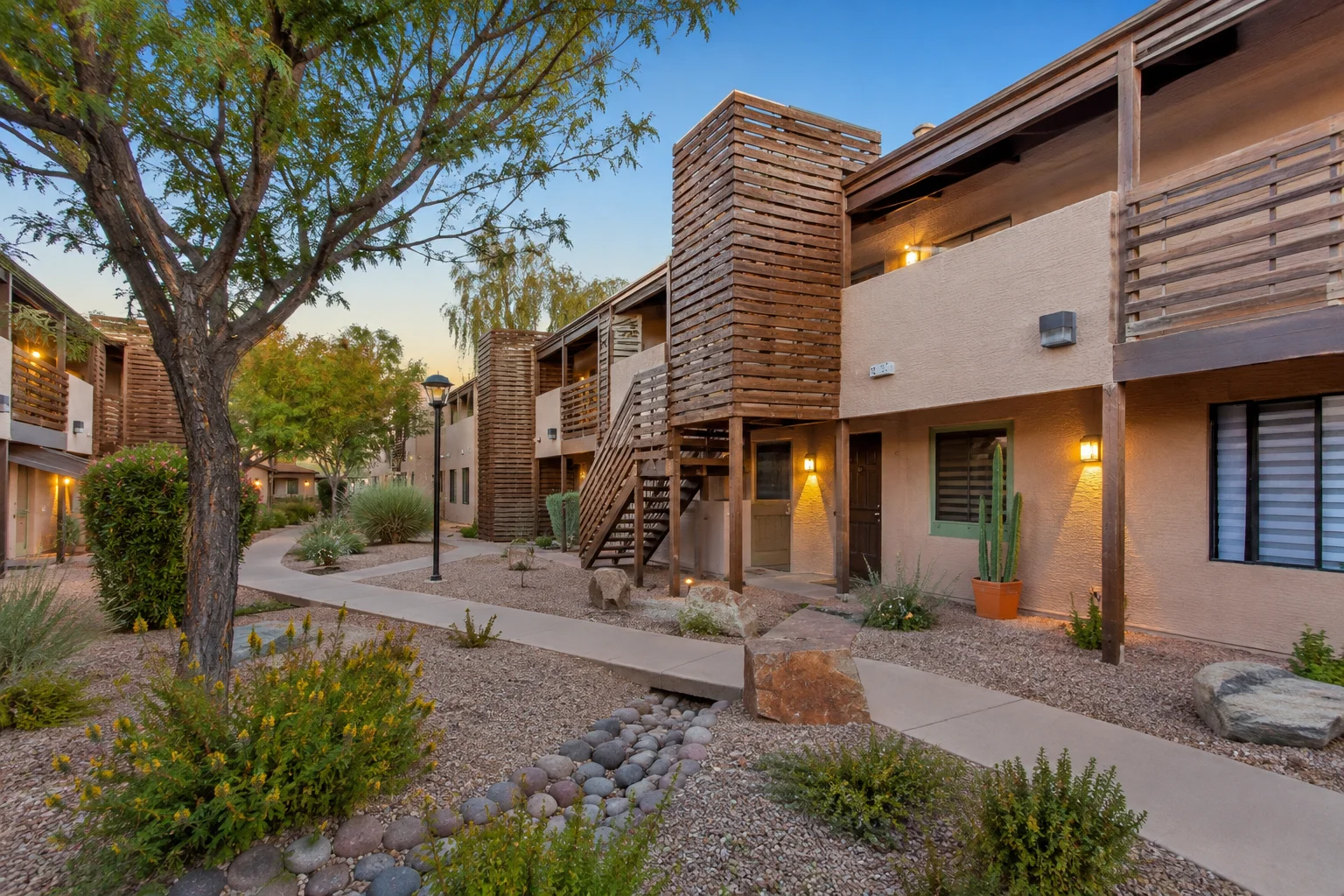
Have you searched “Treehouse Apartments” recently? If so, you probably noticed something confusing. There isn’t just one.
“Treehouse” (sometimes styled “Tree House”) is one of the most commonly reused apartment community names in the country. In fact, independent owners run properties in cities like St. Paul, Richmond, Oklahoma City, San Antonio, Pittsburgh, Portland, Schaumburg, Longview, and Tucson. And that’s just a partial list.
This is actually useful information for you. After all, it means “Treehouse Apartments” isn’t one national brand with a single pricing structure. Instead, each property has its own local management, rent range, floor plans, amenities, and resident experience. So, I pulled current data from major rental listing sites to show you what renting at a Treehouse-named property really looks like in 2026. Below, I’ll also show you how to vet the specific one in your city.
Why So Many Apartment Communities Are Named “Treehouse”
Names like Treehouse, The Oaks, or Willow Creek show up across the country for a simple reason. Namely, they evoke a feeling — nature, comfort, a sense of retreat. Because of this, they don’t reference one specific address or developer.
As a result, this matters for you as a renter in two ways:
- Reviews and pricing you find online may not apply to your local property. For example, a five-star Treehouse in Tucson and a budget Treehouse in Oklahoma City are completely unrelated businesses.
- Search by city and street address, not just the property name. Otherwise, you risk pulling up the wrong community entirely.
So, keep this in mind as you read the pricing data below. Overall, it shows a national range, not one fixed number.
Treehouse Apartments Rent Prices Across the U.S. (2026 Snapshot)
Rent at Treehouse-named properties varies by market, unit size, and building age. Specifically, here’s what current listings show:
- St. Paul, MN — This newer 55+ affordable community offers studio and one-bedroom units. Here, rent runs from about $971 to $1,088 per month. Plus, base rent includes water, heat, and trash.
- Richmond, VA — This larger community offers one- to three-bedroom units. Meanwhile, rent ranges from roughly $1,150 to $3,250 per month, and units run from about 586 to 1,003 square feet.
- Oklahoma City, OK — This is one of the more affordable options. Here, studio to two-bedroom units cost about $655 to $825 per month, and units range from 450 to 800 square feet.
- Pittsburgh, PA — This smaller, budget-friendly property offers one-bedroom apartments around $875 per month in a 409-square-foot layout.
- Portland, OR — By contrast, this higher-cost market starts studios around $1,311, one-bedrooms around $1,511, and two-bedrooms around $2,475 per month.
- Schaumburg, IL — This community offers 715- to 974-square-foot units, and one- to two-bedroom rent runs from about $1,420 to $1,900 per month.
- Tucson, AZ — Here, pricing varies widely by unit type. Overall, studios through two-bedrooms run roughly $867 to $1,899 per month.
So, here’s the takeaway: rent at a Treehouse-named property can run anywhere from the high $600s in an affordable metro to over $3,000 for a larger unit in a pricier market. In other words, your actual cost depends almost entirely on the city and the specific property, not the name.
Typical Floor Plans You’ll Find
Overall, most Treehouse-branded communities offer a few common layouts:
- Studios — These compact, single-room spaces are usually the most affordable option. For instance, you’ll often find them in age-restricted or budget-focused communities.
- One-bedroom units — This is the most widely available floor plan across nearly every Treehouse property. Typically, sizes run from 400 to 700 square feet.
- Two-bedroom units — Larger family-oriented communities commonly offer these, and they often run 700 to 1,000-plus square feet.
- Three-bedroom units — Fewer properties offer this layout. Instead, you’ll usually find it at larger communities marketed to families or roommates splitting rent.
However, don’t just compare square footage when you evaluate floor plans. Also, check whether utilities like water, trash, heat, or sewer are bundled into rent, since this detail can meaningfully change your real monthly cost. For example, the St. Paul community includes water, heat, trash, and sewer in base rent. By contrast, other properties leave residents to set up utilities separately.
What Resident Reviews Actually Say
Overall, reviews for Treehouse-named properties vary widely, since each community operates independently. Still, a few themes repeat across cities.
Positive patterns:
- First, renters often mention responsive, helpful on-site staff.
- Also, proximity to nature, parks, or walkable areas comes up often, especially near rivers, bluffs, or forested areas.
- In addition, renters frequently praise move-in specials and flexible lease terms.
Common complaints:
- On the other hand, maintenance response times, especially for HVAC and plumbing issues, appear often in negative reviews.
- Similarly, parking availability frustrates renters at older or higher-density properties.
- Finally, rent increases at renewal time bother many residents, especially after a management change.
So, are you seriously considering a specific Treehouse property? If so, read the most recent 10 to 15 reviews instead of relying on the overall star rating. After all, management changes hands often in multifamily housing, so a property with great reviews three years ago may have a very different reputation today.
How to Evaluate a Treehouse Apartment Near You
Below, follow these steps no matter which city you’re searching in.
1. Confirm the exact address before comparing prices
First, search “Treehouse Apartments” plus your city, then cross-reference the street address on at least two listing platforms. This way, you avoid comparing prices or reviews from an unrelated property in another state.
2. Check the true cost per square foot
Next, divide the monthly rent by the unit’s square footage. As a result, this number lets you compare a Treehouse property fairly against other nearby communities, rather than judging value on rent price alone.
3. Ask directly about utility inclusions
Additionally, some properties bundle water, trash, and heat into rent, while others include nothing. Because of this, the difference can shift your real monthly housing cost by $100 to $250.
4. Read reviews from the last 6–12 months
Also, sort reviews by date whenever the platform allows it. That’s because recent reviews predict your experience far better than older ones, especially after an ownership or management change.
5. Ask about current move-in specials
Furthermore, many properties, including several Treehouse communities, run seasonal promotions. These can include reduced deposits or a free month of rent on longer leases. However, properties don’t always advertise these specials online, so call the leasing office directly.
6. Visit in person if possible
Finally, remember that photos and floor plans only tell part of the story. Instead, judge noise levels, parking realities, and common-area upkeep in person, ideally on both a weekday and a weekend.
Are you comparing a Treehouse property against other nearby options? If so, our guide on what to look for during an apartment tour covers the exact questions to ask a leasing agent before you sign anything.
Local Considerations by Region
Since Treehouse properties sit in very different markets, it helps to think regionally as you search.
- Midwest markets (like Oklahoma City or Schaumburg) tend to offer more affordable rent relative to square footage. However, older buildings here may need closer attention to maintenance history.
- Mid-Atlantic and Southeast markets (like Richmond) often show a wider price spread between entry-level and premium units in the same community.
- Pacific Northwest markets (like Portland) generally carry higher base rents, reflecting overall cost of living. Still, these markets often offer stronger walkability and transit access in return.
- Southwest markets (like Tucson) frequently emphasize outdoor amenities like courtyards and pools, given the climate. That said, management quality varies widely here, so check recent reviews closely.
Meanwhile, the U.S. Department of Housing and Urban Development offers a helpful benchmark: spend no more than 30% of your gross household income on rent. This rule applies whether you’re considering a Treehouse property or any other apartment. For more detail, you can review current national housing cost data directly through HUD.gov, a reliable government source for fair housing and rental guidance.
Final Thoughts
Ultimately, “Treehouse Apartments” isn’t one company. So, treat every search result as a lead worth verifying, not a fixed answer. After all, rent prices, floor plans, and resident satisfaction vary enormously between a Treehouse in Pittsburgh and one in Portland — sometimes by more than $1,500 a month for a similar unit size.
Therefore, before you sign a lease, confirm the exact address. Also, check recent reviews and ask about utility inclusions. Finally, call the leasing office directly for current specials.
Frequently Asked Questions
1. Is Treehouse Apartments a national apartment brand? No. Instead, “Treehouse” is a commonly reused property name. In fact, independently owned and managed communities use it in many cities, including St. Paul, Richmond, Oklahoma City, Pittsburgh, Portland, and Tucson. So, each one is a separate business with its own pricing and management.
2. How much does it cost to rent at a Treehouse Apartments community? Overall, rent varies significantly by city. For example, you’ll find rates from roughly $655 per month for a studio in a lower-cost market up to $3,250 per month for larger units in higher-cost metro areas. So, always check pricing for the specific property near you.
3. What floor plans are typically available at Treehouse Apartments? Generally, most Treehouse properties offer studios, one-bedroom, and two-bedroom units. Additionally, some communities also offer three-bedroom layouts. Overall, square footage runs from around 400 to over 1,000 square feet, depending on the floor plan.
4. Are utilities included in rent at Treehouse Apartments? It depends on the property. For instance, some communities include water, heat, trash, and sewer in base rent, while others require residents to set up and pay for all utilities separately. Either way, confirm this directly with the leasing office before you sign a lease.
5. Are Treehouse Apartments pet-friendly? Again, pet policies vary by property. Typically, many Treehouse communities allow cats and dogs with breed and weight restrictions, plus additional fees. However, some don’t allow pets beyond service animals. So, check the specific property’s pet policy before you apply.
6. How do I find reviews for the Treehouse Apartments near me? First, search apartment review platforms using both the property name and the exact city or street address, since reviews for a Treehouse in one state won’t reflect a different property with the same name elsewhere. Then, prioritize reviews from the last 6 to 12 months.
7. Do Treehouse Apartments offer move-in specials? Yes, many do, especially on longer lease terms. For example, specials can include reduced deposits, waived application fees, or a free month of rent. That said, these promotions change by season and property, so confirm current offers directly with the leasing office.
8. What should I check before signing a lease at a Treehouse Apartments property? First, confirm the exact rent and included utilities. Next, review recent resident feedback and verify the pet policy if you have one. Also, ask about parking availability. Finally, tour the property in person if you can, and check maintenance quality and noise levels before you commit to a lease.