

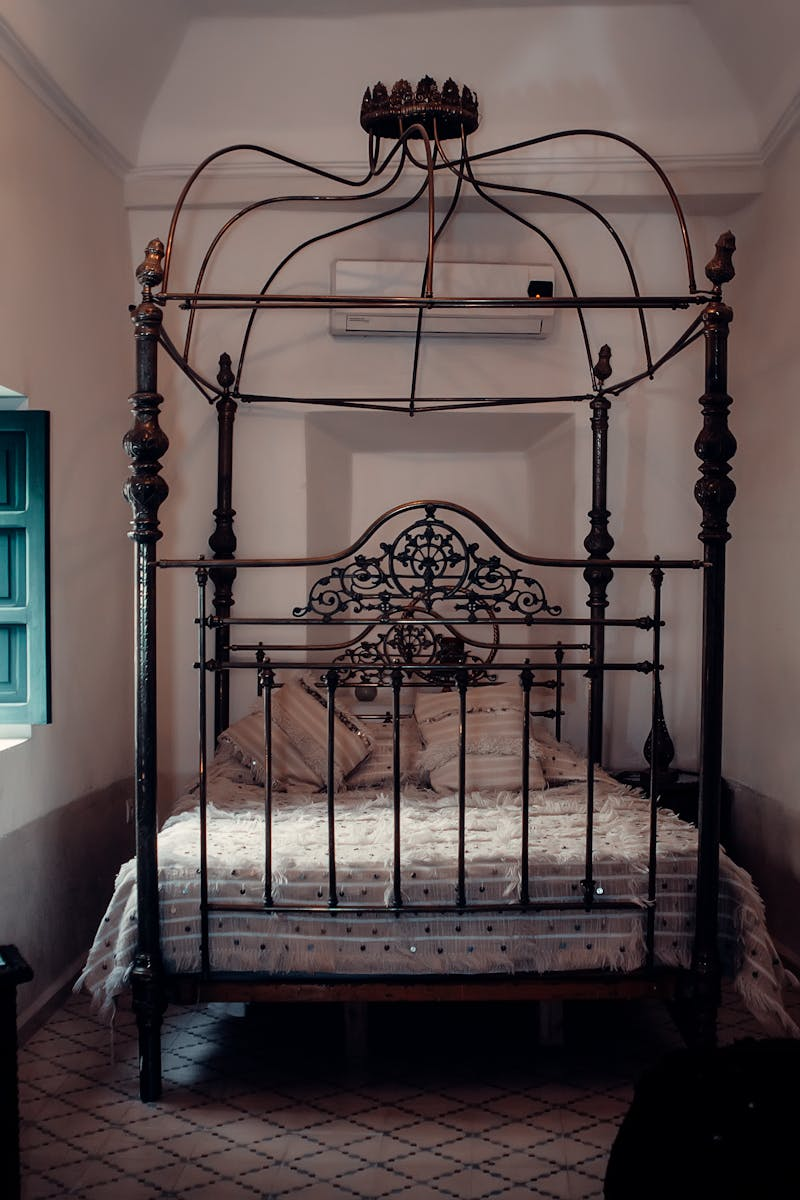
Some furniture pieces exist purely for function. Others exist purely for beauty. And then there are the rare ones — the pieces that deliver both so completely that a room feels unfinished without them.
An iron canopy bed is exactly that kind of piece.
It commands a bedroom the way a fireplace commands a living room — not by competing with the other elements, but by giving them something to organize around. Its height, its frame, its presence — all of it signals that this room was designed with intention.
In 2026, iron canopy beds are having a genuine design moment across the USA. From romantic master suites in Charleston, SC to minimalist loft bedrooms in Seattle, WA and maximalist retreats in New Orleans, LA, the iron canopy bed fits more styles and spaces than most homeowners realize.
This guide explains exactly why — and how to get it right in your own bedroom.
What Makes an Iron Canopy Bed Different From Other Bed Frames
Most bed frames disappear into a room. An iron canopy bed does the opposite.
Its four vertical posts rise well above the mattress — typically 72 to 84 inches or higher — and connect at the top with horizontal rails that create a defined, architectural overhead frame. That frame transforms a bed from a piece of furniture into a room within a room.
The material matters too. Wrought iron and steel bring a weight and permanence that wood simply doesn’t replicate. The lines are clean, the joints are tight, and the finish — whether matte black, antique bronze, or brushed gunmetal — carries a depth that improves with age.
No other bed frame style delivers that combination of structure, height, and material character at the same level.
The Top Reasons an Iron Canopy Bed Works in Stylish Bedrooms
1. It Creates an Instant Focal Point
A bedroom without a focal point feels aimless. The eye has nowhere to land, no hierarchy to follow, no moment of visual satisfaction.
An iron canopy bed solves that problem completely. The moment it enters a room, everything else — nightstands, lighting, artwork, textiles — arranges itself in relationship to it. It provides the anchor that every well-designed bedroom needs.
Interior designers frequently cite the bed as the most important investment in a bedroom for exactly this reason. A strong bed frame sets the tone for every other decision in the space.
2. It Works Across Multiple Design Styles
One of the most common misconceptions about iron canopy beds is that they only suit one type of bedroom — typically imagined as heavily romantic, draped in velvet, and steeped in Victorian atmosphere.
The reality is far more versatile.
Romantic and traditional: Deep, ornate iron scrollwork, flowing linen or velvet drapes, and layered bedding in jewel tones. Classic in historic homes throughout Savannah, GA, New Orleans, LA, and Charleston, SC.
Modern minimalist: A sleek, straight-line iron frame with no draping, simple bedding in white or cream, and negative space used deliberately. Works beautifully in contemporary homes in Los Angeles, CA and Chicago, IL.
Industrial modern: Raw, matte black iron with exposed welds, concrete floors, and Edison-bulb lighting. A defining aesthetic in urban lofts across Brooklyn, NY, Detroit, MI, and Denver, CO.
Bohemian: Layered textiles, macramé canopy panels, rattan and woven accents paired with an aged iron frame. Popular in eclectic interiors in Austin, TX, Portland, OR, and Asheville, NC.
Coastal and cottage: A lighter, thinner iron frame in white or weathered gray with breezy linen drapes and natural textures. Perfect for beach homes in Florida, the Carolinas, and Cape Cod, MA.
Few furniture pieces cross that many design vocabularies without looking forced. An iron canopy bed does it naturally.
3. It Makes Any Bedroom Feel Larger and Taller
This may seem counterintuitive — a tall, substantial bed frame making a room feel larger — but it’s one of the most consistent observations among interior designers who work with canopy beds regularly.
The vertical posts draw the eye upward, emphasizing ceiling height and creating a sense of volume that low-profile bed frames never achieve. In rooms with standard 8-foot ceilings, the posts reach close enough to the ceiling that the room feels more proportionate and intentional.
In rooms with 9 or 10-foot ceilings — common in new construction homes across the Southeast and Southwest — an iron canopy bed fills the vertical space in a way that eliminates that common problem of furniture that looks dwarfed by the room around it.
4. It Adds Architectural Character to Builder-Grade Rooms
Many American homes — particularly those built in the last 20 to 30 years — have bedrooms that are perfectly functional but architecturally plain. No crown molding, no wainscoting, no built-in detail. Just four flat walls, carpet, and a ceiling.
An iron canopy bed introduces architectural character that the room itself doesn’t have. The frame creates vertical lines, overhead geometry, and a defined spatial zone that makes the bedroom feel intentionally designed rather than simply furnished.
It’s one of the highest-impact single changes a homeowner can make to a plain bedroom — and it requires no construction, no contractors, and no permits.
5. It Invites Layering With Textiles and Draping
One of the most enjoyable aspects of decorating around an iron canopy bed is the creative opportunity it provides through draping.
The horizontal top rails are purpose-built for textile layers — sheer linen panels for softness and light filtration, heavier velvet drapes for drama and warmth, macramé panels for bohemian texture, or simple cotton sheers for a casual, breezy effect.
You can change the character of the entire bedroom simply by swapping the canopy fabric. That flexibility is rare in furniture design.
Many homeowners start with no draping at all — allowing the clean iron geometry to stand on its own — and add textiles gradually as their design vision develops. Both approaches work.
6. It Photographs Exceptionally Well
In 2026, the way a bedroom looks in photos matters — whether for real estate listings, short-term rental platforms like Airbnb and VRBO, or simply the personal satisfaction of a well-documented home.
Iron canopy beds are extraordinarily photogenic. Their vertical lines give photographers natural framing opportunities. The overhead structure creates depth and layering in images. And the combination of strong metal geometry with soft bedding textiles produces the kind of visual contrast that makes a room memorable in a photograph.
Homeowners in short-term rental markets — Nashville, TN, Scottsdale, AZ, Palm Springs, CA, Savannah, GA — regularly report that a well-styled iron canopy bed is one of the most commented-upon features of their listing photos.
7. It Is Built to Last
Iron and steel bed frames are among the most durable furniture investments available in residential design.
A quality iron canopy bed doesn’t warp, crack, or deteriorate the way wood frames can. It doesn’t loosen at the joints with seasonal humidity changes. It doesn’t require refinishing or repainting every few years to maintain its appearance.
With basic care — occasional tightening of hardware, a quick wipe-down to prevent surface dust from combining with moisture — an iron canopy bed maintains its structure and appearance for decades. It’s a genuine heirloom piece.
Types of Iron Canopy Beds: Finding the Right Style
Scrollwork and Ornate Wrought Iron
The classic iron canopy bed. Elaborate scrolls, curves, and decorative motifs worked into the posts and rails create a romantic, Victorian-influenced aesthetic.
This style suits traditional and maximalist bedrooms most naturally. It pairs beautifully with rich textiles, antique furniture, and deeply layered bedding in warm, saturated colors.
Straight-Line Minimalist Iron
Clean, geometric, and contemporary. Straight vertical posts connected by simple horizontal rails with no decorative ornamentation.
This style suits modern, Scandinavian, and industrial interiors. Its simplicity lets the material itself — the weight and finish of the iron — do the design work.
Arch-Top Canopy Frames
Rather than a flat rectangular top rail, arch-top frames curve upward at the center — sometimes dramatically, sometimes subtly — creating a softer, more romantic silhouette.
Popular in transitional and romantic bedroom designs, this style softens the industrial quality of iron while maintaining its structural presence.
Mixed Iron and Fabric Panel Beds
Some contemporary iron canopy designs incorporate fabric panels within the frame itself — either as upholstered headboard inserts or as integrated textile elements woven into the metalwork.
These hybrid designs offer a softer, more layered look that suits transitional and eclectic interiors particularly well.
Low-Profile Modern Canopy
A variation where the canopy posts are shorter — reaching 60 to 72 inches rather than the full ceiling-height proportions of traditional designs. The footprint is lighter, the visual weight is reduced, and the overall effect is more casual and approachable.
Works well in smaller bedrooms and in design styles where a full-height canopy would feel overwhelming.
How to Style an Iron Canopy Bed
Choosing the right frame is only the first step. How you dress and decorate around it determines whether the finished bedroom feels like a considered design or a furniture-store floor sample.
Keep Bedding Elevated
An iron canopy bed deserves bedding that matches its presence. That doesn’t mean expensive — it means considered. A well-pressed white duvet with layers of textured throw pillows, a linen coverlet folded at the foot of the bed, and a chunky knit throw draped casually over the frame create the layered, inviting look that makes a bedroom photograph and feel like a boutique hotel.
Avoid thin, flat bedspreads on a canopy bed. The frame demands volume and layering to look its best.
Choose Nightstands That Respect the Scale
A tall iron canopy bed needs nightstands with enough visual weight to hold their own alongside it. Very small, delicate nightstands will look lost.
Look for pieces at least 26 to 28 inches tall — ideally matching or exceeding mattress height — with some material substance, whether solid wood, stone, metal, or rattan.
Use Lighting Intentionally
Canopy beds and pendant lighting are a natural pairing. Hanging pendants from the ceiling on either side of the bed — rather than relying on table lamps — frees up nightstand surface space and creates an intimate, hotel-suite atmosphere.
For iron frames in particular, an Edison-bulb pendant or an articulating metal arm sconce reinforces the material palette of the room in a cohesive way.
Don’t Overcrowd the Room
An iron canopy bed needs breathing room. Resist the urge to fill every corner of the bedroom with furniture.
A large area rug anchoring the bed, two nightstands, a dresser or single upholstered chair, and thoughtful lighting are typically sufficient. The canopy frame itself provides enough visual presence that additional furniture can be kept minimal.
Work With the Wall Behind It
The wall behind an iron canopy bed is a prime design opportunity. Options that work particularly well include:
Limewash or textured paint — adds depth and old-world character that complements iron beautifully.
Board and batten or shiplap — creates horizontal or vertical architectural texture that grounds the vertical lines of the frame.
Wallpaper with a bold pattern — especially effective with minimalist iron frames, where the wallpaper provides the visual richness and the clean iron geometry provides structure.
A large-scale piece of art — a single oversized canvas or framed print centered above the headboard creates a gallery-quality moment.
Iron Canopy Beds by Room Size: What Works Where
Small Bedrooms (Under 150 sq ft)
In a smaller bedroom, opt for a low-profile canopy frame with a slim, straight-line design. Keep the footprint of the bed proportionate — a full or queen in most cases — and choose bedding in light, neutral tones to avoid visual heaviness.
The vertical lines of even a modest canopy frame will work to the room’s advantage, drawing the eye upward and making the ceiling feel taller.
Mid-Size Bedrooms (150–250 sq ft)
The sweet spot for iron canopy beds. A queen or king-size frame with moderate post height works beautifully, and there’s enough surrounding space to add nightstands, a chair, and a rug without crowding.
Most standard bedroom canopy frames are designed with this room size in mind.
Large Master Bedrooms (Over 250 sq ft)
Large bedrooms need large frames to avoid looking underfurnished. A full-height, ornate or arch-top iron canopy in king size suits these rooms naturally. Consider adding a seating area and multiple lighting sources to complement the scale of the bed.
In high-end master suites in markets like Miami, FL, Dallas, TX, Atlanta, GA, and Los Angeles, CA, an iron canopy bed in a large primary bedroom is increasingly the default choice among interior designers working at the luxury level.
What Does an Iron Canopy Bed Cost in 2026?
Price points vary considerably based on construction quality, size, and finish. Here’s a general guide for the U.S. market:
Entry-level iron canopy beds (online retailers, standard finishes): $400–$900 for queen size.
Mid-range iron canopy beds (quality construction, more finish options): $900–$2,500 for queen or king size.
High-end and custom iron canopy beds (artisan or designer quality, custom sizing): $2,500–$8,000+ depending on complexity.
For most homeowners, the $900–$2,500 range delivers excellent construction quality and design options without moving into custom-order territory.
According to Architectural Digest, the bedroom is increasingly the room Americans invest in most intentionally — a reflection of how central rest, comfort, and personal sanctuary have become in how people think about home design. Explore bedroom design trends and ideas at architecturaldigest.com.
How to Care for an Iron Canopy Bed Frame
Iron canopy beds are low-maintenance by nature, but a few simple habits keep them looking their best.
Dust regularly with a soft cloth or duster. Iron frames — especially those with scrollwork and textured surfaces — collect dust in their details quickly.
Wipe down with a damp cloth occasionally to remove any buildup. Dry the frame thoroughly afterward to prevent moisture from sitting on the surface.
Check hardware periodically — typically every six months. Tighten any loose bolts or connectors at the joints. This is standard maintenance for any metal bed frame.
Touch up minor scratches with a small amount of matching touch-up paint or wax. Most manufacturers include touch-up products or provide guidance for their specific finish.
Avoid harsh chemical cleaners that could strip the finish or cause surface corrosion over time.
Actionable Tips Before You Buy an Iron Canopy Bed
- Measure your ceiling height first — a full-height iron canopy frame in a room with 8-foot ceilings can feel oppressively tall. Know your clearance before selecting a frame height.
- Check the room’s floor plan with the full bed footprint — canopy beds require adequate clearance on all sides. Allow at least 24 inches between the bed frame and adjacent walls or furniture.
- Confirm mattress compatibility — most iron canopy frames use standard platform or slat bases. Verify whether a box spring is required or if a platform base is included.
- Read assembly reviews carefully — iron canopy beds are typically heavier and more complex to assemble than standard frames. Check user reviews specifically for assembly experience before purchasing.
- Order fabric samples before draping — if you plan to add canopy panels, order fabric samples and test them in your bedroom’s natural light before committing. Sheers that look perfect online can read very differently in your specific room.
- Consider the finish in relation to your existing hardware — door handles, light switch plates, and mirror frames all carry metal finishes. A cohesive relationship between the bed frame finish and other metals in the room creates a more polished result.
Related: How to Design a Master Bedroom That Feels Like a Luxury Hotel
Final Thoughts
There are bedroom furniture choices that are safe, sensible, and forgettable. And then there is the iron canopy bed — a piece that asks something of the room it enters, and rewards that ask with a presence no other furniture can replicate.
It doesn’t suit every style or every space. But for homeowners willing to lean into its character — to dress it thoughtfully, give it room to breathe, and let it do the design work it was built to do — it delivers a bedroom that feels genuinely exceptional.
In 2026, with natural materials, strong forms, and intentional design leading the conversation in American homes, the iron canopy bed is exactly the right piece at exactly the right moment.