

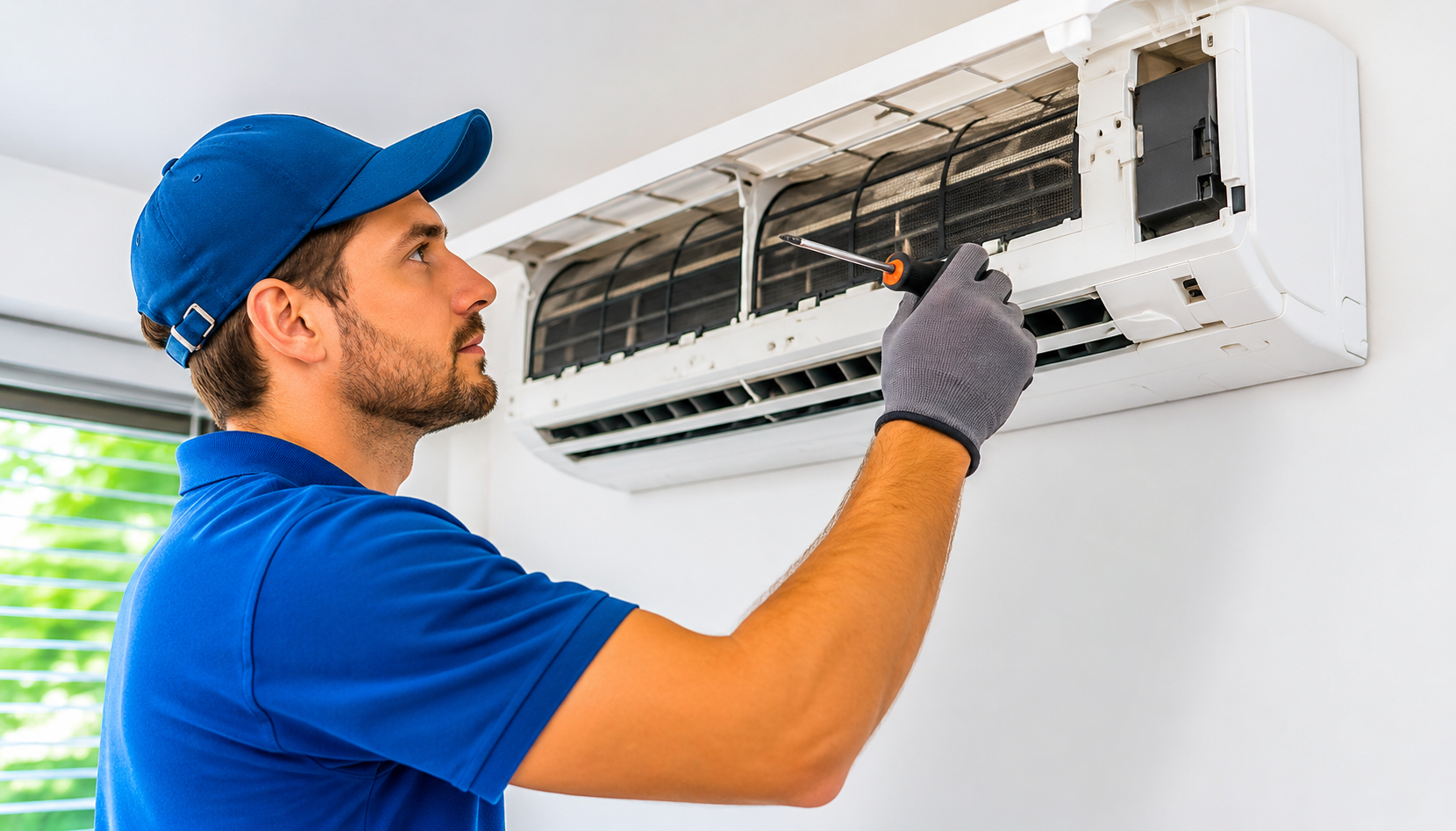
Nothing ruins a July afternoon faster than realizing your air conditioner is blowing warm air. You flip the thermostat down, you wait, and still nothing changes. Before you panic and call a technician, it helps to know that most home AC problems fall into a short list of common culprits, and many of them are fixable in under an hour with tools you already own.
This guide walks through ten practical troubleshooting steps, explains what changed in the HVAC industry heading into 2026, and tells you exactly when it’s time to stop tinkering and call a licensed pro. Whether you’re in humid Houston, dry Phoenix, or a mild Pacific Northwest summer, the fundamentals of “AC not cooling” repair are the same.
Why Your AC Runs But Doesn’t Cool
An air conditioner that runs constantly but never actually cools the house usually points to one of a few issues: restricted airflow, a dirty or blocked component, low refrigerant, or an electrical fault. Sometimes the fix is as simple as swapping a filter. Other times, the problem is buried inside the compressor, and that’s a job for a licensed technician.
The good news is that homeowners can rule out roughly 70% of common causes themselves. Consequently, working through this checklist in order can save you a same-day service call and, often, a few hundred dollars in labor.
1. Start With the Thermostat
It sounds obvious, but thermostat errors are one of the most frequent reasons for a “broken” AC that isn’t actually broken. First, confirm the system is set to “Cool,” not “Fan” or “Auto” in a way that isn’t triggering the compressor. Next, check the batteries if you have an older, non-smart thermostat, since dying batteries can cause erratic readings.
If you recently installed a smart thermostat, double-check the wiring configuration. Many smart thermostats require a common wire (C-wire), and a miswired unit can cause the AC to run without ever calling for cooling. Additionally, make sure nothing is blocking the thermostat itself, such as direct sunlight or a nearby lamp, because that can trick the sensor into thinking the room is already cool.
2. Replace or Clean the Air Filter
A clogged air filter is, by a wide margin, the single most common reason for weak or absent cooling. When airflow is restricted, the evaporator coil can’t absorb heat properly, and in humid climates this often leads to the coil freezing over entirely.
Most manufacturers recommend replacing a standard filter every 30 to 90 days, though homes with pets or in dusty regions like the Southwest may need monthly changes. Therefore, if you can’t remember the last time you swapped it, that’s probably your answer. A fresh filter costs under $20 and takes less than five minutes to install, making it the highest-value fix on this list.
3. Clear Debris Around the Outdoor Condenser Unit
Your outdoor condenser needs open airflow on all sides to release heat effectively. Over a season, grass clippings, leaves, pollen, and even overgrown shrubs can choke off that airflow. As a result, the system struggles to reject heat, and indoor cooling suffers.
Turn off power to the unit, then clear at least two feet of space around it. Gently hose down the fins from the inside out to avoid bending them, and trim back any vegetation. This is especially important in the South and Southeast, where fast-growing landscaping can crowd a condenser within a single summer.
4. Check the Circuit Breaker and Power Disconnect
If the outdoor unit isn’t running at all, check your electrical panel for a tripped breaker before assuming a bigger issue. AC units also have a separate disconnect box, usually mounted on the wall near the condenser, that can accidentally get switched off or knocked loose.
Reset the breaker once, and if it trips again immediately, stop. A breaker that keeps tripping usually signals an electrical fault, such as a failing capacitor or motor, and that’s not a DIY repair.
5. Inspect and Clean the Condenser Coils
Even with clear space around the unit, the coils themselves can accumulate a layer of grime over time, which insulates them and reduces heat transfer. Consequently, your system works harder while cooling less effectively.
You can use a soft brush or a coil-cleaning spray from a hardware store to remove buildup. However, avoid high-pressure washing, since it can bend the delicate aluminum fins. If the coils look heavily corroded or damaged rather than just dirty, that’s a sign of age-related wear that a technician should evaluate.
6. Look for a Frozen Evaporator Coil
If you notice ice on the indoor unit or refrigerant lines, turn the system off immediately and switch the thermostat fan to “On” so it can thaw completely, which may take several hours. Running a frozen system continuously can damage the compressor.
Frozen coils are typically caused by restricted airflow (a dirty filter, closed vents, or a failing blower motor) or low refrigerant. Once thawed, check the filter and vents first. If the coil freezes again shortly after restarting, low refrigerant is the more likely cause, and that requires a licensed technician, since refrigerant handling is federally regulated.
7. Clear the Condensate Drain Line
Modern AC systems remove a significant amount of humidity from your home, and that moisture has to go somewhere. If the condensate drain line clogs with algae or debris, many systems will shut down cooling automatically to prevent water damage, a built-in safety switch called a float switch.
You can often clear a clogged line yourself using a wet/dry vacuum at the outdoor drain exit, or by flushing it with a mixture of water and vinegar. This is a particularly common issue in humid states like Florida, Louisiana, and coastal Texas, where condensate lines clog faster due to higher moisture loads.
8. Understand the 2026 Refrigerant Situation Before You Assume It’s a Leak
Low refrigerant is a classic cause of weak cooling, but this is one repair you cannot legally do yourself, and 2026 has made the refrigerant landscape more complicated than usual. As of January 1, 2026, the EPA’s AIM Act rules prohibit new residential installations using high-GWP refrigerants like R-410A, pushing the industry toward lower-impact alternatives such as R-454B and R-32.
If your existing system still uses R-410A, don’t worry. Existing systems can still be serviced, topped off, and repaired with R-410A for the foreseeable future, so a working unit doesn’t need to be replaced just because of the regulation change. That said, because production has slowed, R-410A prices have climbed noticeably compared to a few years ago, and a refrigerant leak repair in 2026 may cost more than it would have in 2023 or 2024. If your technician suspects a leak, ask for a leak-detection test before agreeing to a full recharge, since refilling a leaking system without fixing the leak first just wastes refrigerant and money.
9. Check for Duct Leaks or Closed Vents
Sometimes the AC itself is working fine, but the cooled air never reaches the rooms that need it. Walk through your home and make sure vents aren’t blocked by furniture, rugs, or curtains. Then, if you have access to your attic or crawlspace, look for visibly disconnected or torn ductwork.
According to the U.S. Department of Energy, duct leaks can waste a significant share of the air moving through a system, particularly in homes with ductwork running through unconditioned attics or crawlspaces, which is common across much of the Sun Belt. Sealing accessible leaks with mastic sealant or metal-backed tape (not standard duct tape, which degrades quickly) can meaningfully improve cooling performance.
10. Rule Out Capacitor or Compressor Failure
If you’ve worked through the previous nine steps and the system still isn’t cooling, the issue is likely electrical or mechanical, specifically a failing run capacitor, contactor, or the compressor itself. A humming outdoor unit that won’t start, or a fan that spins but no cooling occurs, often points to a bad capacitor, which is a relatively inexpensive and common repair.
Compressor failure, on the other hand, is the most expensive AC repair a homeowner can face, and it’s not something to attempt without licensing and specialized tools, especially with A2L refrigerant equipment now requiring updated safety handling procedures. If your system is more than 10 to 15 years old and facing a compressor failure, replacement is often more economical than repair, particularly given current SEER2 efficiency standards.
When to Call a Professional
Some situations call for a licensed HVAC technician immediately, rather than continued troubleshooting:
- Refrigerant leaks or low refrigerant levels
- A tripped breaker that trips again after resetting
- Burning smells or visible electrical damage
- Compressor or motor failure
- A system under warranty (DIY repairs can void coverage)
If you’re unsure, most licensed contractors offer a diagnostic visit for less than $150, and that’s a reasonable investment compared to risking further damage to an expensive system.
What This Costs in 2026
Repair costs vary by region and by the specific problem, but general ranges for 2026 look like this:
- Capacitor replacement: $150 to $350
- Condensate drain clearing: $75 to $250
- Refrigerant leak repair plus recharge: $400 to $1,500, depending on refrigerant type and leak location
- Compressor replacement: $1,500 to $3,500 or more
Homeowners in hotter regions, including Texas, Arizona, Florida, and the broader Southeast, tend to see higher lifetime repair costs simply because their systems run longer hours each year. If you’re weighing repair versus replacement on an aging unit, it’s worth comparing that cost against a full guide on how to lower your home cooling costs before making a final decision, since a new high-efficiency system can sometimes pay for itself faster than expected.
Preventive Maintenance That Actually Prevents Breakdowns
Once your AC is cooling again, a little regular maintenance goes a long way toward avoiding a repeat visit:
- Replace filters on a consistent schedule, more often during peak summer months
- Schedule a professional tune-up each spring, before the heavy-use season begins
- Keep the outdoor unit clear of debris year-round
- Flush the condensate line every few months in humid climates
- Track any unusual noises, smells, or performance drops early, rather than waiting for total failure
Ultimately, most catastrophic AC failures don’t happen overnight. They build slowly, through small inefficiencies that go unnoticed until the hottest week of the year arrives.
Final Thoughts
An AC that isn’t cooling is frustrating, but it’s rarely a mystery once you work through the possibilities methodically. Start simple, with the thermostat and filter, then move toward the outdoor unit, drain line, and ductwork. If none of that solves it, you’re likely dealing with an electrical or refrigerant issue that genuinely needs a licensed technician, and that’s fine. Knowing when to stop DIY troubleshooting is just as valuable as knowing how to start it.
For further reading on seasonal HVAC efficiency and safety standards, the U.S. Department of Energy’s guide to air conditioning maintenance is a solid, authoritative resource worth bookmarking.
Frequently Asked Questions
Why is my AC running but not blowing cold air? This is usually caused by a dirty filter, a frozen evaporator coil, low refrigerant, or a failing capacitor. Start with the filter and thermostat settings before assuming a bigger mechanical issue.
How do I know if my AC is low on refrigerant? Signs include hissing sounds near the lines, ice buildup on the coil or refrigerant lines, and cooling that gradually weakens over days or weeks. Refrigerant checks and recharges must be performed by a licensed technician.
Can I still use R-410A in 2026? Yes. Existing R-410A systems can still be serviced, repaired, and recharged. The 2026 EPA rules affect new equipment manufacturing and installation, not the servicing of systems already in homes.
How often should I change my AC filter? Every 30 to 90 days generally, though homes with pets, allergies, or high dust exposure often need monthly changes, especially during peak summer cooling season.
Why does my AC freeze up? Frozen coils typically result from restricted airflow or low refrigerant. Turn the system off, let it fully thaw, check the filter and vents, and call a technician if it refreezes.
Is it worth repairing an older AC unit, or should I replace it? If your system is over 10 to 12 years old and facing a major repair, such as compressor failure, replacement is often more cost-effective, particularly given the efficiency gains in newer 2026 models.
How much does an AC repair cost in 2026? Minor repairs, like capacitor replacement, typically run $150 to $350. Major repairs involving refrigerant leaks or compressors can range from $400 to well over $3,000.
What’s the difference between R-410A and R-454B? R-454B is a newer, lower-GWP refrigerant now used in new equipment as of 2026, replacing R-410A in manufacturing. It performs similarly but requires updated equipment and technician training due to its mild flammability classification.