

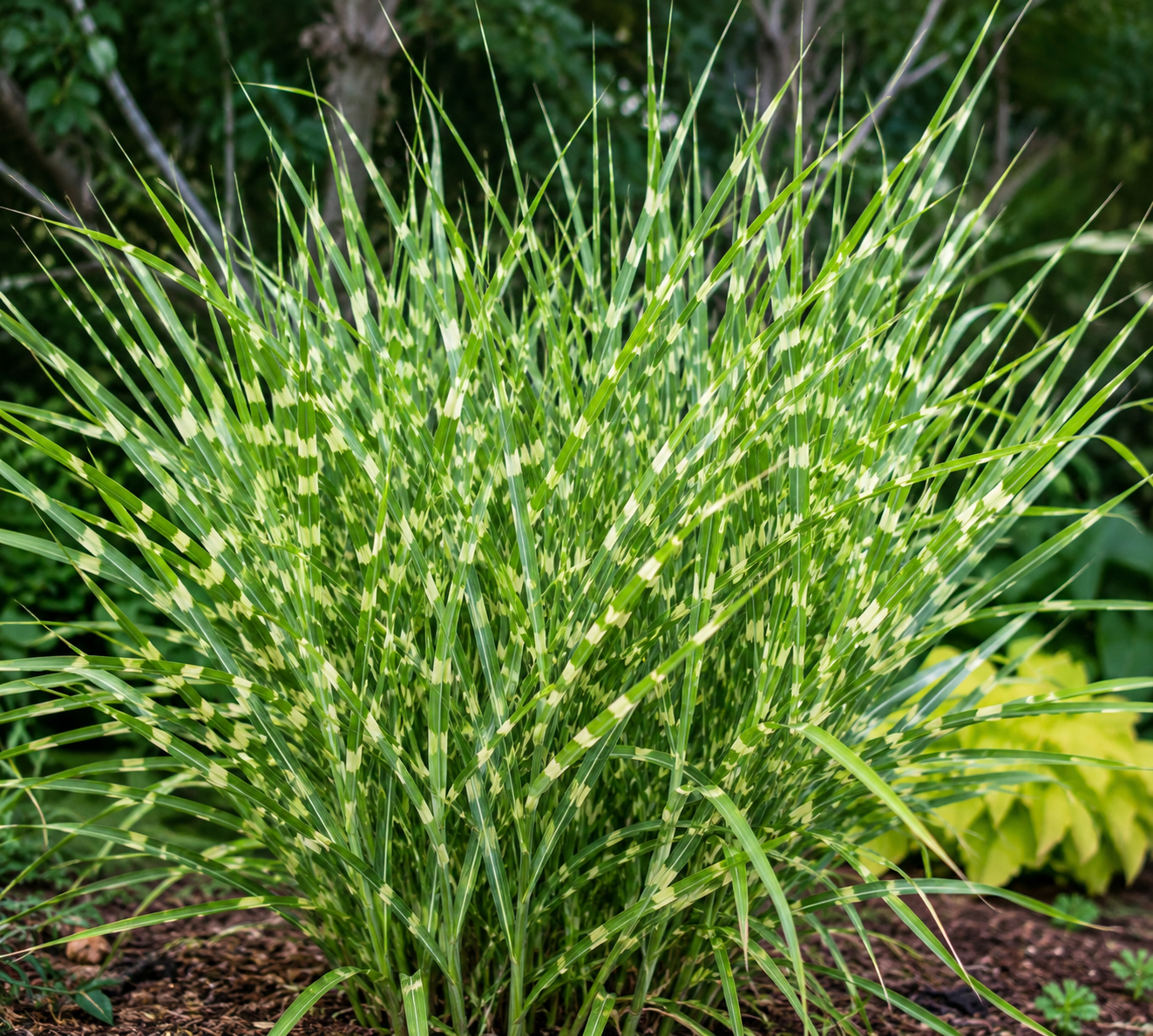
Do you want a dramatic, low-maintenance accent plant for your garden? Zebra grass might be exactly what you’re looking for. Its horizontal gold bands and tall, arching form make it one of the most recognizable ornamental grasses you can grow. It’s also remarkably easy to care for once it settles in.
This guide covers everything you need to know about zebra grass in 2026. You’ll learn where it grows best. You’ll learn how to plant it and keep it healthy through every season. We’ll also cover pruning, common problems, and an important note on invasive plant concerns.
Quick Answer
Zebra grass (Miscanthus sinensis ‘Zebrinus’) is a clump-forming ornamental grass. It’s known for its horizontal golden-yellow banding. It typically grows 5 to 8 feet tall, including flower stalks. Its spread runs about 4 to 6 feet. This grass thrives in full sun and well-drained soil. It generally grows well across USDA zones 5 through 9. It’s drought tolerant once established. It also resists both deer and most common pests. Prune it back hard in late winter or early spring, before new growth appears, to keep it looking its best.
What Is Zebra Grass?
Zebra grass gets its name from an obvious feature. Horizontal golden-yellow bands run across its otherwise dark green blades. Those bands don’t line up in a perfectly uniform pattern, either. Some leaves show more striping than others. That variation gives each clump a slightly wild, organic look.
This plant belongs to the Miscanthus sinensis species. Gardeners commonly call it Chinese silver grass or Japanese silver grass. ‘Zebrinus’ is a specific cultivar within that species. Growers selected and named it for its distinctive variegation. The foliage forms a dense, arching clump. By mid-September, tall flower stalks emerge with coppery-pink plumes. Those plumes gradually fade to a silvery buff color as they age. They often last well into winter, adding real structure when most other plants have gone dormant.
Zebra grass earned the Royal Horticultural Society’s Award of Garden Merit. That award recognizes plants that perform reliably well in garden settings. It reflects decades of real-world use across different climates, not just a marketing claim.
Where Zebra Grass Grows Best
Zebra grass performs well across a wide swath of the United States. It generally thrives in USDA Hardiness Zones 5 through 9. That range stretches from the upper Midwest and New England down through much of the South. Gardeners in a huge number of states have a realistic shot at growing this plant successfully.
Sun exposure matters more than almost anything else with this grass. Give it full sun, ideally at least six hours of direct light daily. You’ll get the tightest form and the boldest variegation that way. Does your planting spot only get partial shade? The plant will likely survive. However, expect weaker, leggier growth and less vivid banding on the leaves. In heavier shade, established clumps also tend to flop over. They often need staking to stay upright.
Soil preferences run fairly flexible, which is part of why this grass fits so many garden styles. According to the Missouri Botanical Garden’s Plant Finder, zebra grass tolerates a wide range of soil types. It performs best in evenly moist, well-drained conditions, though. Avoid consistently wet or poorly draining spots. Standing water can stress the root system over time.
Planting Zebra Grass: Step-by-Step
Spring offers the best planting window for zebra grass. This timing lines up with the plant’s natural growth cycle. It’s a warm-season grower, and it waits for soil temperatures to rise before pushing out fresh foliage. Planting in spring gives the roots a full season to establish before winter arrives.
Choose a location with full sun. Make sure it has enough room for the plant’s mature size. Remember, this grass can reach 5 to 8 feet tall. It can spread 4 to 6 feet wide, too. It needs real space, not a cramped corner of a small bed. Many gardeners place it toward the back of a border. Its height provides a natural backdrop for shorter, more colorful plants in front.
Dig a hole roughly twice the width of the root ball. Set the plant so its crown sits level with the surrounding soil. Backfill the hole, then water thoroughly. This settles the soil and eliminates air pockets around the roots. A layer of mulch around the base helps retain moisture and suppress weeds while the plant establishes.
Give new plantings consistent moisture throughout that first growing season. Established zebra grass tolerates drought reasonably well. Young plants need steadier watering, though, until their root systems mature and spread.
Watering and Fertilizing
During the first year, water zebra grass regularly, especially during dry spells. Consistent moisture helps the root system develop fully. That early investment makes a real difference in how quickly the plant fills out. It also affects how well the plant handles stress in later years.
Once established, zebra grass becomes genuinely drought tolerant. Mature clumps generally only need supplemental watering during extended dry periods. This resilience is one reason the plant works so well in low-maintenance landscaping. It also suits xeriscaping projects across drier regions of the country.
Fertilizing needs stay light for this grass. A single application of balanced, general-purpose fertilizer each spring is typically enough. Avoid heavy or frequent feeding. Overly rich soil can actually cause the plant to grow floppy and less structurally sound. That undermines the tidy, upright look most gardeners want from this plant.
Pruning Zebra Grass
Pruning plays a bigger role in zebra grass care than many gardeners expect. Getting the timing right matters, too. Cut the entire clump back hard in late winter or early spring, before new growth emerges. Most gardeners cut down to about 6 to 10 inches above the ground. Cutting all the way to the base also works well.
Why does this timing matter so much? Leaving the old, dried foliage standing through winter actually benefits the plant and the garden. Those dormant stalks and seed heads add visual interest during the coldest months. Little else provides structure in the landscape at that time of year. They also offer some habitat value for overwintering insects and birds. Cutting too early, in fall or early winter, sacrifices that seasonal benefit for no real gain.
Come spring, though, don’t delay the cleanup too long. New green shoots can start emerging from the base fairly quickly. If you wait too long, cutting back becomes trickier. You risk damaging the fresh growth in the process. Aim to finish your pruning before you see much new growth pushing up through the old foliage.
Use sharp shears or hedge trimmers for this job. The tough, fibrous stalks can dull regular scissors quickly. Some gardeners tie the clump together with twine before cutting. This makes disposal easier and keeps the yard tidier during the process.
Common Problems and How to Handle Them
Zebra grass earns its reputation as a relatively trouble-free plant. Most established clumps go years without serious issues. That said, a few problems do show up occasionally. Knowing what to watch for helps you catch them early.
Flopping ranks among the most common complaints from gardeners. This usually traces back to insufficient sunlight or overly rich soil. Does your clump keep falling open in the middle, or leaning over? First, check whether it’s getting enough direct sun. If sunlight looks adequate, ease up on fertilizer next season. See if the structure improves from there.
Pests rarely cause major damage to this plant. Aphids, mealybugs, and spider mites occasionally show up, particularly during hot, dry stretches. Minor leaf damage from chewing insects like grasshoppers or earwigs can also occur. This damage is usually cosmetic rather than a real threat to the plant’s health. Foliar rust appears from time to time as well. It shows up especially in humid climates, or when air circulation around the clump stays poor.
Wet soil poses a more serious risk than pests do. Standing water or consistently soggy conditions can stress the root system. That stress can lead to decline over time. Does your planting site tend to collect water after rain? Improve drainage before you plant, or choose a different spot entirely.
A Note on Invasive Plant Concerns
This is an important consideration before you plant zebra grass, and it’s worth taking seriously. The straight species form of Miscanthus sinensis is classified as invasive in several U.S. states. It can self-seed aggressively and spread into natural areas. That spread can displace native vegetation over time.
Here’s some good news, though. Many ornamental cultivars, including some Miscanthus varieties, carry a lower invasive risk. Some are even sterile. That said, invasive plant regulations vary significantly by state, and sometimes even by county. Don’t assume zebra grass gets a blanket pass everywhere just because it’s a named cultivar.
Before you plant, check your state’s invasive species list. You can also contact your local extension office to confirm zebra grass fits your specific region. Gardeners in the Mid-Atlantic, Southeast, and parts of the Midwest should pay particularly close attention here. Miscanthus sinensis has established invasive populations in several of these areas already. Do local regulations discourage planting it where you live? Consider a native ornamental grass alternative instead. Many native options provide similar visual impact with far less ecological risk.
Is Zebra Grass Safe for Pets?
Yes, zebra grass poses no known toxicity risk to dogs, cats, or other common household pets. That makes it a solid choice for gardens that need to stay safe around curious animals. Its coarse, fibrous texture also makes it fairly unappealing to chew on. That texture helps in practice, beyond its non-toxic status alone.
Best Uses for Zebra Grass in the Landscape
Zebra grass works beautifully as a specimen plant. It especially shines when you want a bold focal point that draws the eye from across the yard. Its height and dramatic banding make it stand out even from a distance. That’s exactly why so many gardeners place it as a centerpiece, rather than tucking it into a mixed border.
It also performs well at the back of a flower bed. Its height provides a natural, textured backdrop for shorter, more colorful perennials planted in front. The contrast between zebra grass’s bold vertical lines and softer, rounded blooms creates real visual depth in a garden design.
Coastal and urban gardeners appreciate zebra grass, too. It tolerates a range of challenging conditions reasonably well once established. Are you looking to round out your landscape with more ornamental grasses? Our complete guide to ornamental grasses for American gardens covers several other options. Some pair well with zebra grass, and others work as lower-risk alternatives where invasive concerns apply.
A Note on Cost and Sourcing in 2026
Nursery pricing for zebra grass stays fairly accessible compared to many landscape plants. Small potted starts typically cost the least, and they establish just as well as larger, more expensive specimens over time. Given how quickly this grass fills out once established, buying smaller plants often makes more financial sense than paying a premium for instant size.
Local nurseries within your hardiness zone often carry plants already acclimated to regional conditions. That acclimation can give your zebra grass an easier start compared to plants shipped in from a very different climate. If a local nursery can’t confirm the exact cultivar, ask before you buy, since several similar-looking Miscanthus varieties exist on the market.
Frequently Asked Questions
How tall does zebra grass get?
Zebra grass typically reaches 5 to 8 feet tall, including its flower stalks. The foliage clump itself generally stays in the 4 to 6 foot range. Mature plants also spread about 4 to 6 feet wide, so give them plenty of room to grow.
When should I cut back zebra grass?
Cut zebra grass back in late winter or early spring, before new growth emerges. Leaving the dried foliage standing through winter adds visual interest and some habitat value. Avoid cutting it back in fall for this reason.
Is zebra grass invasive?
The straight species of Miscanthus sinensis is considered invasive in several U.S. states. Named cultivars like ‘Zebrinus’ generally carry lower risk. Still, check your local invasive species regulations before planting, since rules vary significantly by region.
Does zebra grass need full sun?
Yes, zebra grass performs best with at least six hours of direct sunlight daily. It can tolerate partial shade, but expect weaker growth and less vivid banding. It also tends to flop over more in lower-light conditions.
Is zebra grass drought tolerant?
Yes, once established, zebra grass handles drought reasonably well. It generally only needs supplemental watering during extended dry spells. Newly planted specimens need more consistent watering during their first growing season, though.
Is zebra grass toxic to dogs or cats?
No, zebra grass is considered non-toxic to common household pets. Its tough, fibrous texture also makes it fairly unappealing to chew. That adds a practical layer of safety beyond its non-toxic status.
How do I stop my zebra grass from flopping over?
Flopping usually results from insufficient sunlight or overly rich soil. Make sure your plant gets adequate direct sun. Avoid over-fertilizing, too, since overly fertile soil tends to produce weaker, floppier growth in this grass.
What USDA zones work best for zebra grass?
Zebra grass generally grows well across USDA Hardiness Zones 5 through 9. That range covers a large portion of the continental United States. Always confirm your specific zone before planting to set realistic expectations for winter survival.
Final Thoughts
Zebra grass earns its popularity honestly. It delivers dramatic, eye-catching structure with relatively little ongoing effort once it settles into your garden. The tradeoffs stay manageable, too. Give it full sun, well-drained soil, and one solid pruning session each year. It will reward you with striking foliage and long-lasting winter interest in return.
Just remember to check your local invasive plant regulations before you plant. That’s the one real caveat separating this grass from a completely worry-free addition to your landscape. Handle that step responsibly, and zebra grass can anchor your garden beautifully for years to come.