

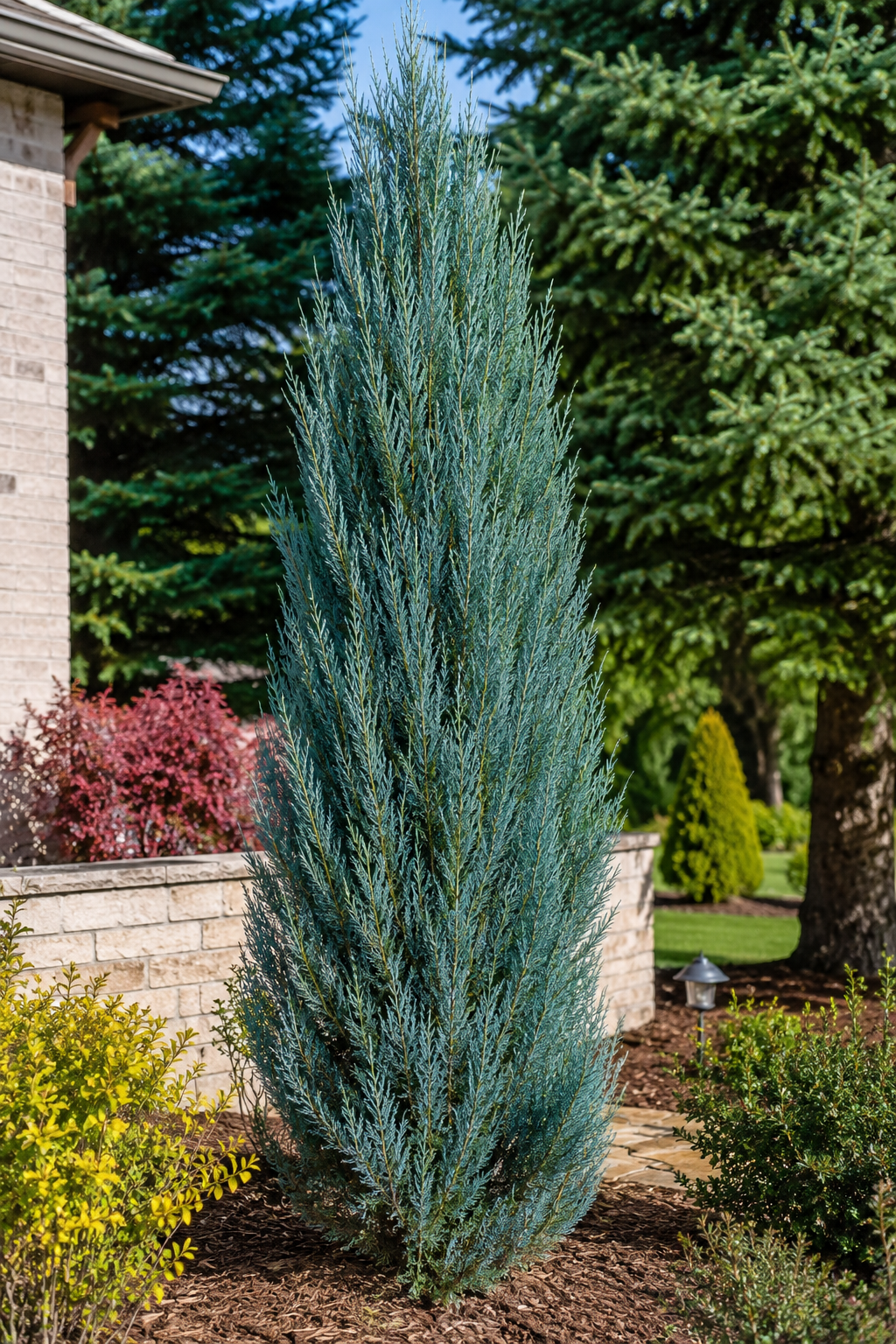
Walk through almost any newly landscaped yard in the U.S. right now, and you’ll spot them. Tall, narrow, blue-green spires stand at attention along a fence line or flank a front door. That’s the Blue Arrow Juniper. It’s become one of the most requested evergreens at nurseries across the country. Homeowners love it because it delivers the same dramatic vertical look as an Italian cypress. But it actually survives a Midwest winter.
Still, plenty of new owners run into trouble. Browning needles. Slow growth. A juniper that just doesn’t take off the way the nursery tag promised. Most of these problems trace back to a handful of care basics that get overlooked at planting time. This guide walks through exactly what Blue Arrow Juniper needs. You’ll learn how fast it really grows and how to plant it so it thrives for decades, not just a few seasons.
What Is Blue Arrow Juniper?
Blue Arrow Juniper, botanically known as Juniperus scopulorum ‘Blue Arrow,’ is a cultivar of Rocky Mountain Juniper. Growers originally selected it as a seedling in 1949 at Pine Grove Nurseries in Pennsylvania. It has only grown in popularity since. Its defining feature is an extremely narrow, columnar shape packed with dense, rope-like blue-green foliage. Many landscapers treat it as a hardier alternative to Italian cypress, since cypress struggles badly north of USDA Zone 7.
The species won the Royal Horticultural Society’s Award of Garden Merit in 2012. That award goes to plants that perform reliably across a wide range of garden conditions. It still carries weight with landscape designers today. That’s part of why Blue Arrow shows up so often in privacy screens, foundation plantings, and formal garden designs across the U.S.
Blue Arrow Juniper Growth Rate: What to Actually Expect
This is where a lot of new owners get frustrated. Nursery tags sometimes oversell the speed. Confused buyers end up thinking their tree is struggling when it’s actually right on schedule.
Under good growing conditions, Blue Arrow Juniper typically adds 6 to 12 inches of height per year. Some sources cite a slightly narrower range of 8 to 10 inches annually. Either way, this puts Blue Arrow in the “moderate” growth category, not the fast-growing category. At that pace, expect a tree to reach roughly 5 to 10 feet after ten years. Soil quality, sun exposure, and watering consistency all affect the final number.
At full maturity, Blue Arrow Juniper generally reaches 12 to 15 feet tall. It stays just 2 to 4 feet wide, though. That narrow footprint is exactly why it works so well in tight side yards or along property lines. A wider evergreen simply wouldn’t fit there. If your goal is a privacy screen, patience matters. A newly planted specimen won’t provide real screening for the first two to three years. Plan your timeline accordingly.
USDA Hardiness Zones and Regional Suitability
Blue Arrow Juniper thrives across USDA Hardiness Zones 4 through 9. Some sources extend that range down to Zone 3b, or even Zone 2 for particularly cold-hardy stock. That range covers an enormous swath of the country. It runs from Minnesota and North Dakota down through Texas and into the warmer parts of the Southeast.
Remember, though, that USDA zones only measure winter cold tolerance. They don’t account for humidity, summer heat, or rainfall patterns. That distinction matters quite a bit with this particular plant. Blue Arrow does not perform well in high humidity or in regions with consistently high nighttime temperatures. Homeowners in the humid Gulf Coast states sometimes see more fungal issues and needle browning. Gardeners in drier climates report fewer problems overall. If you live in coastal Louisiana, Florida, or similarly humid pockets of the Southeast, plan for extra airflow around each plant. Stay vigilant about drainage, too.
In colder Northern states, from the Dakotas through New England, Blue Arrow generally performs beautifully. It’s also worth noting that this juniper is intolerant of ice accumulation. Homeowners in regions prone to heavy ice storms, like parts of the Ohio Valley and the Southern Plains, should watch for ice buildup on the narrow canopy during winter storms. Gently brush it off when it’s safe to do so.
Sunlight, Soil, and Water Requirements
Blue Arrow Juniper needs full sun to look and perform its best. Aim for at least 6 to 8 hours of direct sunlight daily. It can tolerate a bit of light shade. Too much shade leads to sparse, leggy growth and a duller blue color, though, which defeats the whole point of planting this variety in the first place.
Soil matters just as much as sunlight. This juniper adapts to a wide range of soil types, but it absolutely needs good drainage. Heavy clay soil that holds water is one of the most common reasons Blue Arrow Junipers struggle or die. Root rot develops quickly in soggy conditions. If your yard has dense clay, amend the planting hole generously with compost or coarse sand. You might also consider planting on a slight mound to improve drainage.
Watering follows a similar theme: don’t overdo it. Water deeply right after planting to help the root system establish. Continue regular watering through the first growing season. Once established, usually after 12 to 18 months, Blue Arrow becomes quite drought-tolerant. It needs only occasional deep watering during extended dry spells after that. Overwatering an established plant causes far more problems than underwatering does. Resist the urge to run your sprinkler system daily.
Planting Tips for 2026
Timing and spacing make a bigger difference than most people expect. Here’s how to set your Blue Arrow Juniper up for a strong start.
Best planting season: Early spring or early fall works best across most of the U.S. Both give roots time to establish before extreme summer heat or winter cold sets in. Gardeners in the Deep South can also plant successfully in late fall or winter, when temperatures are milder.
Spacing for a privacy screen: Plant Blue Arrow Junipers 2 to 3 feet apart if your goal is a dense, continuous hedge. Because the mature width stays narrow, tighter spacing works better here than it would for a wider evergreen variety.
Spacing for individual accents: If you’re using Blue Arrow as a standalone focal point or foundation planting, allow at least 3 to 4 feet of clearance. Keep that distance from structures, walkways, and other plants to accommodate its mature spread.
Planting depth: Dig a hole roughly twice the width of the root ball. Keep it no deeper than the root ball itself, though. Planting too deep is a common mistake that stresses the root crown and slows establishment.
Mulching: Add 1 to 2 inches of mulch around the base after planting to retain moisture and suppress weeds. Keep mulch pulled an inch or two away from the trunk. Mulch piled against the bark invites rot and pest issues.
For anyone planning a full privacy border rather than a single accent tree, check out our broader evergreen privacy screening guide before committing to spacing and layout. Mixing juniper varieties with other screening evergreens can add texture and reduce disease risk across the row.
Companion Plants for Blue Arrow Juniper
Because Blue Arrow has such a narrow, vertical shape, it pairs beautifully with plants that fill out horizontal space around its base. Popular companion choices include Russian sage, lavender, and Shasta daisies for seasonal color. Dwarf spruces, viburnums, and cotoneasters add extra structure. Low-growing ground covers like creeping phlox, creeping thyme, and sedums work well too. They share the same sun and drainage preferences without competing for space overhead.
Pruning and Maintenance
Good news for busy homeowners: Blue Arrow Juniper needs minimal pruning. Its naturally tidy columnar shape rarely requires heavy shaping. When pruning is necessary, stick to removing stray, damaged, or discolored branches. Do this in late winter or early spring, once the risk of extreme cold has passed.
One rule matters more than any other here: avoid heavy pruning into old wood. Junipers don’t regenerate new growth from bare, woody stems, unlike many flowering shrubs. Cutting back too aggressively can leave permanent bare patches that never fill back in. Always prune conservatively, and only remove what’s necessary.
Light fertilization in spring can support healthy growth, particularly during the first few years of establishment. A balanced, slow-release fertilizer formulated for evergreens works well. Avoid heavy nitrogen applications, though. Excessive fertilizer can push weak, leggy growth that’s more vulnerable to winter damage.
Common Problems and How to Fix Them
Browning needles: Some browning is completely normal. Junipers naturally shed older, inner foliage as part of their growth cycle, and that seasonal drop shouldn’t worry you. Widespread or sudden browning usually points to something else, though. Overwatering, poor drainage, or root rot are the likely culprits. Check soil moisture first, and improve drainage if the area stays soggy.
Yellowing foliage: Similar to browning, occasional yellowing of old inner needles is normal aging. If new growth turns yellow, or the whole plant changes color at once, suspect a problem. Overwatering or a nutrient deficiency are the most likely causes. Adjust your watering schedule before reaching for fertilizer.
Pest and disease pressure: Blue Arrow Juniper is fairly resistant to pests and disease overall. Deer generally avoid it, too, in favor of tastier plants. Spider mites occasionally show up during hot, dry summers. Watch for fine webbing or stippled, dull-looking foliage. Treat promptly with insecticidal soap if you spot an infestation.
Slow or stunted growth: If your juniper seems stuck well below the expected 6 to 12 inches of annual growth, check sun exposure first. Even partial shade can noticeably slow this variety down. Compacted or waterlogged soil is the second most common culprit.
According to the University of Minnesota Extension, proper site selection and drainage are the two biggest factors determining long-term juniper health in Northern climates. Getting those two details right at planting time prevents the majority of problems that show up later.
Regional Planting Considerations Across the U.S.
Blue Arrow performs differently depending on where you garden. A bit of regional awareness goes a long way.
In the Upper Midwest and Northern Plains, from Minnesota through the Dakotas, this juniper handles winter cold exceptionally well. Ice storms pose the bigger risk in these regions. Gently knock heavy ice off branches after a storm to prevent limb splitting.
In the Southwest, including much of Arizona, New Mexico, and inland California, Blue Arrow tolerates heat and drought impressively well once established. That makes it a smart, low-water landscaping choice for xeriscape-style yards.
In the humid Southeast, success depends heavily on drainage and airflow. Space plants slightly wider than the standard recommendation in these regions. Avoid low-lying areas where water tends to collect after storms, too.
In the Pacific Northwest, consistent rainfall means drainage deserves extra attention. These junipers strongly prefer soil on the drier side, not the consistently damp conditions common west of the Cascades.
Final Thoughts
Blue Arrow Juniper earns its popularity honestly. It combines a striking, formal silhouette with genuine cold hardiness and low-maintenance care. That combination is hard to beat for narrow spaces and privacy screens. Give it full sun, well-draining soil, and restrained watering. This juniper will reward you with steady, moderate growth and that signature blue-green color for decades. Most problems trace back to just two issues: too much water and not enough sun. Get those two details right, and the rest tends to fall into place on its own.
Frequently Asked Questions
How fast does Blue Arrow Juniper grow? Blue Arrow Juniper grows at a moderate rate. It typically adds 6 to 12 inches of height per year under good conditions. That translates to roughly 5 to 10 feet of growth over the first decade after planting.
How tall and wide does Blue Arrow Juniper get at maturity? At full maturity, Blue Arrow Juniper typically reaches 12 to 15 feet tall. It stays just 2 to 4 feet wide, which is why it’s such a popular choice for narrow spaces and vertical accents.
What USDA zones is Blue Arrow Juniper hardy in? Blue Arrow Juniper is hardy in USDA Zones 4 through 9. Some particularly cold-hardy stock performs well down into Zone 3b. Always pair your zone information with local humidity and rainfall considerations, since zones alone don’t tell the whole story.
Why is my Blue Arrow Juniper turning brown? Some inner-needle browning is a completely normal part of the plant’s seasonal cycle. Widespread or sudden browning across the whole plant usually signals something else, though. Overwatering, poor drainage, or root rot are common causes. Check soil moisture and drainage first.
How far apart should I plant Blue Arrow Junipers for a privacy screen? Plant them 2 to 3 feet apart for a dense, continuous privacy screen. If you’re planting a single accent specimen instead, allow 3 to 4 feet of clearance from structures and other plants.
Does Blue Arrow Juniper need a lot of water? No. It needs regular watering during the first 12 to 18 months to establish. Once established, it becomes quite drought-tolerant. It only needs occasional deep watering during extended dry periods after that. Overwatering causes more problems than underwatering with this plant.
Is Blue Arrow Juniper deer resistant? Yes, deer generally leave Blue Arrow Juniper alone in favor of more palatable plants. That makes it a reliable choice for landscapes in areas with heavy deer pressure.
Can Blue Arrow Juniper replace an Italian cypress? Yes, and that’s actually one of its most common landscaping uses. Blue Arrow offers a similar narrow, formal silhouette. But it tolerates much colder winters than Italian cypress can handle, making it a popular substitute in USDA Zones 4 through 7.