

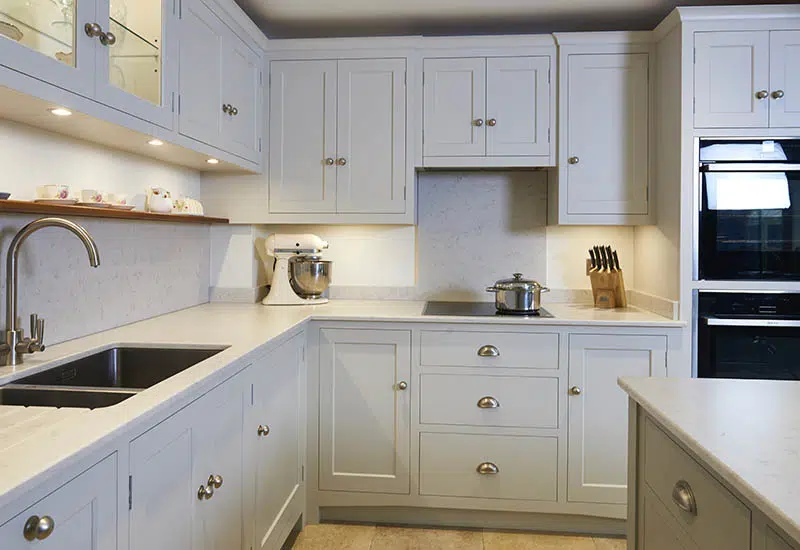
If you’ve ever crouched down to study the base of a well-finished kitchen, you’ve already noticed the plinth — even if you didn’t know what to call it. That slim strip running along the bottom of your base cabinets does more work than most homeowners give it credit for. It hides the toe kick area, covers cabinet legs, ties the whole kitchen together visually, and even helps keep pests and moisture away from under your units.
In 2026, with kitchen remodeling costs rising across the US — the National Kitchen and Bath Association (NKBA) reports that a mid-range kitchen renovation now averages between $35,000 and $70,000 — getting the details right matters more than ever. The plinth is one of those details. Choose the wrong type, install it poorly, or skip it altogether, and your otherwise stunning kitchen will look unfinished.
This guide covers everything: what a plinth actually is, the different types available, how to install one yourself, what to look for when buying, and how much to budget in 2026. Whether you’re doing a full gut renovation or refreshing a tired kitchen on a budget, this is the resource you need.
What Is a Kitchen Cupboard Plinth?
A kitchen cupboard plinth — also called a toe kick, kickboard, or base board in different parts of the US — is a panel that runs along the bottom front of your base cabinets, between the floor and the underside of the cabinet carcass. Typically, it sits about 4 to 6 inches tall and recessed a few inches back from the cabinet face, creating a small recess for your feet to slide under while you’re working at the counter.
Without a plinth, you’d see the cabinet legs or the raw underside of each unit, along with whatever dust, crumbs, and debris collect underneath. It’s not a glamorous component, but it’s essential — both functionally and aesthetically.
A few key terms to know before you shop:
- Plinth – The board itself (most common term in the UK and increasingly used in the US)
- Toe kick – American term for the same component, emphasizing the recess for your foot
- Kickboard – Another common American term
- Plinth clip – The small plastic or metal bracket used to attach the plinth to the cabinet leg
- Plinth support leg – The adjustable leg the plinth clips onto, usually hidden inside the cabinet base
Why the Plinth Matters More Than You Think
Before diving into types and installation, it’s worth understanding what a plinth actually does for your kitchen — because the answer goes well beyond appearances.
1. It creates a finished look. Raw cabinet bases look incomplete and cheap. A well-fitted plinth brings the whole room together and signals quality craftsmanship.
2. It hides adjustable legs. Most modern American base cabinets use adjustable plastic legs, which allow you to level the cabinets on uneven floors. The plinth hides all of that hardware.
3. It reduces dust and pest entry. A fitted plinth seals the space under your cabinets, making it harder for insects and rodents to make a home there — a real concern in warmer US states like Texas, Florida, and the Southeast.
4. It protects against moisture. In kitchens near the sink or dishwasher, a plinth acts as a modest barrier to splashes and humidity.
5. It adds architectural character. Depending on the material and finish, the plinth can enhance or anchor the design language of the whole kitchen.
Types of Kitchen Cupboard Plinths
Not all plinths are the same. The type you choose will depend on your cabinet style, your floor surface, your budget, and how much flexibility you need during installation.
1. Solid Panel Plinths
The most common type in American kitchens. A solid panel plinth is a flat board — usually MDF, particleboard, or solid wood — cut to fit the width of your cabinet run and clipped or glued into place. These are included with most stock and semi-custom cabinetry from brands like IKEA, KraftMaid, and Merillat.
Best for: Standard flat-floor installations, traditional and Shaker-style kitchens.
Pros: Affordable, widely available, easy to paint or wrap in matching laminate.
Cons: Not ideal for very uneven floors; requires precise cutting.
2. Flexible or Contour Plinths
Flexible plinths are made from a pliable PVC or thin layered material that can bend to follow the contours of an uneven or wavy floor. They’re relatively new to the mainstream American market but have been popular in European kitchens for years.
Best for: Older homes with uneven stone, tile, or wooden floors — common in craftsman and colonial-era American homes.
Pros: Eliminates unsightly gaps at the bottom; no need for scribing.
Cons: Limited finish options; can look slightly rippled on very uneven floors if not installed carefully.
3. Plinth with Integrated LED Lighting
One of the fastest-growing trends in kitchen design in 2025 and into 2026, LED-lit plinths add a strip of low-profile lighting under the cabinets. The effect is both practical — guiding your path in a dark kitchen at night — and atmospheric, giving kitchens a modern, upscale look.
Best for: Contemporary and transitional kitchens; open-plan homes where the kitchen is visible from living areas.
Pros: Dramatic visual effect; increases perceived space; can be motion-activated.
Cons: Higher cost; requires a power source; more complex installation.
4. Vented Plinths
Some base cabinet runs — particularly those near dishwashers or integrated refrigerators — use plinths with built-in ventilation grilles to allow airflow to the compressor or motor. Skipping these can cause appliances to overheat.
Best for: Runs containing dishwashers, refrigerators with bottom grilles, or wine coolers.
Pros: Protects appliances; required by some appliance manufacturers.
Cons: Can look slightly industrial if not chosen carefully; limited design options.
5. Tiled Plinths
Popular in contemporary kitchens, particularly those with dramatic tile work, a tiled plinth uses the same tile as the floor or backsplash to extend the visual field downward. This works especially well in Mediterranean, Spanish Revival, or modern minimalist kitchens.
Best for: High-end custom kitchens where the tile plays a starring design role.
Pros: Seamless, luxury look; highly durable; water-resistant.
Cons: Expensive; permanent; very unforgiving if tiles are misaligned; grout maintenance.
6. Open or Furniture-Leg Plinths
This is technically the absence of a traditional plinth — increasingly popular in 2025–2026 as the “furniture kitchen” trend takes hold. Instead of concealing the base, some kitchen designers are elevating base cabinets on visible furniture-style legs with open space beneath. Ikea’s SEKTION system and several custom cabinet makers now offer this option.
Best for: Scandinavian, farmhouse, and unfitted kitchen aesthetics.
Pros: Distinctive, airy look; makes cleaning underneath easier.
Cons: Collects dust and debris; not suited to all kitchen configurations.
Materials: What Are Plinths Made From?
The material affects durability, appearance, cost, and how easy the plinth is to install and finish.
MDF (Medium-Density Fiberboard): The most common material for painted kitchens. Smooth, easy to paint, takes a crisp edge. Vulnerable to water damage at the bottom edge — use a water-resistant MDF in kitchens with stone or tile floors.
Particleboard with Laminate: Usually the default option supplied with flat-pack and stock cabinetry. Affordable and available in a wide range of colors and wood-grain finishes. Less robust than MDF but perfectly functional.
Solid Wood: Premium option for bespoke and semi-custom kitchens. Can be painted or stained. More dimensionally stable than MDF but significantly more expensive.
PVC / Rigid Vinyl: Common in high-moisture environments, commercial kitchens, and laundry rooms. 100% waterproof, durable, easy to wipe clean. Limited aesthetic options.
Aluminum: Used in ultra-modern or industrial kitchen designs. Expensive, highly durable, looks striking against dark cabinets.
Kitchen Cupboard Plinth Sizing: Standard US Dimensions
Getting the size right is the first practical challenge. US standard dimensions differ slightly from European ones, so if you’re ordering online from international suppliers, double-check before buying.
| Measurement | US Standard | European Standard |
|---|---|---|
| Height | 4–4.5 inches (100–115mm) | 150mm (≈ 6 inches) |
| Depth recess | 2.5–3 inches | 50–60mm |
| Panel thickness | ¾ inch (19mm) | 18mm |
| Length (standard board) | 96 inches (8 feet) | 2400mm |
Tip: Always measure the actual floor-to-cabinet-underside gap before ordering. Floors are rarely exactly level, and even a ¼-inch discrepancy can create a visible gap on one side.
How to Install a Kitchen Cupboard Plinth: Step-by-Step
Installing a plinth is a realistic DIY project for most homeowners comfortable with basic tools. That said, kitchens with highly irregular floors — particularly those with slate, flagstone, or older hardwood — may benefit from professional installation.
Tools You’ll Need
- Tape measure
- Pencil
- Jigsaw or hand saw (circular saw for long straight cuts)
- Miter saw (for angled corners)
- Plinth clips (usually 2–3 per panel)
- Rubber mallet
- Level
- Caulk and caulk gun (optional but recommended)
- Touch-up paint or edge tape
Step 1: Measure and Calculate
Measure the full length of each run of cabinets where plinth will be fitted. Take measurements at three points — left end, middle, right end — to check for floor variation. Note any pipes, cables, or obstructions that run through the plinth zone.
Step 2: Attach Plinth Clips to Cabinet Legs
Snap plinth clips onto the adjustable legs at the front of each cabinet. Most clips come in two parts — one hooks onto the leg, the other hooks onto the back of the plinth board. Position clips every 18 to 24 inches for a secure hold.
Step 3: Cut Plinth Boards to Length
Use a jigsaw or circular saw to cut boards to the measured length. For inside corners (where two cabinet runs meet at 90 degrees), cut a simple butt joint — one panel runs the full depth, the other butts up against it. For outside corners, use a 45-degree miter cut for a cleaner, more professional look.
Step 4: Scribe for Uneven Floors (If Needed)
If your floor is uneven, you’ll need to scribe the bottom edge of the plinth to follow the floor contour. Use a compass set to the maximum gap, run it along the floor while the other leg marks the board, then cut along the scribed line. This takes patience but produces a professional result.
Step 5: Snap Plinths into Place
Press each board firmly into the clips until you feel it click. Use a rubber mallet to tap stubborn sections into position. Step back and check the visual line — the top of the plinth should be consistent and flush with the cabinet base.
Step 6: Seal and Finish
Apply a thin bead of color-matched caulk along the top edge of the plinth where it meets the cabinet base. This prevents crumbs from falling behind the plinth and gives a cleaner finished look. Touch up any cut edges with paint or matching edge tape.
What to Look for When Buying a Kitchen Plinth in 2026
With dozens of options available online and in stores — from Home Depot and Lowe’s to specialty suppliers — here’s what to prioritize.
Match the finish to your cabinets. Most major US cabinet brands offer matching plinth panels. If you’re replacing existing plinths, bring a sample piece to compare. Slight variations in color or texture will be obvious once installed.
Check moisture resistance. Look for “moisture-resistant MDF” or “WR MDF” if your kitchen floor gets wet or if you live in a humid climate. This is especially important in Southern states.
Buy 10–15% extra. Offcuts and measurement mistakes are inevitable. Order more than you think you need.
Verify the height. US and European heights differ (see table above). European-height plinths may create a gap or require shimming in American kitchens.
Consider integrated options. If you’re planning a full kitchen renovation, this is the time to spec in LED plinth lighting or vented sections — retrofitting later is much harder.
Ask about warranty. Reputable suppliers offer a minimum 2-year warranty on materials. Some manufacturers, like Aristokraft and Kraftmaid, include matching plinth panels in their overall cabinet warranty.
Kitchen Cupboard Plinth Cost: What to Expect in 2026
Costs vary considerably depending on material, length, finish, and whether you’re installing yourself or hiring out.
| Option | Estimated Cost (2026 US) |
|---|---|
| Basic laminate plinth (per linear foot) | $3–$6 |
| Painted MDF plinth (per linear foot) | $5–$10 |
| Solid wood plinth (per linear foot) | $12–$25 |
| LED-integrated plinth (per linear foot) | $20–$45 |
| PVC/vinyl plinth (per linear foot) | $4–$8 |
| Professional installation (labor only) | $150–$400 per kitchen |
For a typical 12-foot kitchen with a U-shaped or L-shaped layout, expect to spend $80–$200 on materials alone for a standard painted MDF plinth. Add $150–$250 if you hire a carpenter or kitchen installer to fit it.
Common Mistakes to Avoid
Even experienced DIYers make these errors with plinth installation. Knowing about them in advance saves time and money.
Skipping the scribe on uneven floors. Gaps at the bottom of the plinth look terrible and are impossible to hide afterward. If your floor isn’t level, scribe — don’t skip.
Forgetting vented sections near appliances. Check your dishwasher and refrigerator manuals before installing solid plinth panels across the full run. Many require vented access.
Using standard MDF on stone or tile floors. The bottom edge of an MDF plinth sitting on a cold, occasionally wet tile floor will swell and delaminate within a year. Use moisture-resistant MDF or PVC in these situations.
Not accounting for transitions between rooms. If your kitchen opens into a dining room or living room and the flooring changes, the plinth needs to terminate cleanly at the transition. Plan this before cutting.
Installing before flooring is complete. Always install flooring first, then fit the plinth. Fitting plinth over unfinished subfloor and then tiling or laying hardwood up to it is much harder and often looks messy.
Plinth vs. Toe Kick: Is There a Difference?
In practice, most American contractors, retailers, and homeowners use “toe kick” and “plinth” interchangeably. If you’re searching online or at a US retailer, “toe kick” will return more results. If you’re shopping at a European-style kitchen brand — IKEA, Howdens US, or similar — “plinth” is more commonly used.
Some purists in the cabinetry industry distinguish between the two: the “toe kick” refers specifically to the recessed area, while the “plinth” is the board that fills it. For the purposes of buying and installing, the terms mean the same thing.
Trending Plinth Styles in 2026
Design trends in kitchen plinths have evolved noticeably over the last 12–18 months. Here’s what’s gaining momentum in American kitchens right now.
Contrast plinths: Painting the plinth a different color from the cabinets — often a deep charcoal or black under white or cream cabinets — adds visual weight and grounds the kitchen.
Fluted detail plinths: Vertical fluting applied to the plinth face echoes the popular fluted cabinet door trend and adds texture and architectural interest.
Seamless floor-to-cabinet continuity: Using the same material on both the floor and plinth (matching tile or stone-look vinyl) creates a sleek, continuous flow.
Handleless recessed plinths: In handleless kitchen designs, a deeper-than-standard toe kick recess is built in at counter height as well as the base, keeping the whole kitchen hardware-free.
For design inspiration and professional guidance, the National Kitchen and Bath Association (NKBA) regularly publishes trend reports and consumer design guides — a reliable resource if you’re planning a full renovation.
DIY or Hire a Pro?
For most homeowners with a basic toolkit and a flat or near-flat floor, fitting a plinth is a manageable weekend project. The skills required are modest: accurate measuring, straight cutting, and snapping clips into place.
You should seriously consider hiring a professional if:
- Your floor has significant variation (more than ½ inch across a 10-foot run)
- You’re fitting plinths in an L-shaped or U-shaped kitchen with multiple inside and outside corners
- You’re integrating LED lighting or electrical components
- Your kitchen features custom millwork that needs to match exactly
A good kitchen installer or finish carpenter in the US typically charges $50–$90 per hour, and a standard plinth job should take 2–4 hours for most kitchens.
If you’re planning a larger renovation alongside your plinth upgrade, our guide to planning your kitchen remodel from scratch walks through the full process, including how to sequence trades so your installation goes smoothly from demo to the final coat of paint.
Quick-Reference Buying Checklist
Before you order or head to the store, run through this checklist:
- [ ] Measured total linear footage of plinth needed (add 15% for waste)
- [ ] Confirmed floor-to-cabinet height at multiple points
- [ ] Checked for vented sections near dishwasher or refrigerator
- [ ] Chosen material based on floor type and moisture exposure
- [ ] Confirmed finish matches or complements existing cabinet doors
- [ ] Ordered or sourced plinth clips (typically 2–3 per panel)
- [ ] Planned corner treatments (butt joint vs. miter)
- [ ] Decided on LED integration or standard solid panel
- [ ] Verified measurements match US standard dimensions if ordering internationally
Final Thoughts
The kitchen cupboard plinth doesn’t get the design press that backsplashes and countertops do, but it plays an outsized role in how finished and professional your kitchen looks. Get it right — the right material, the right height, properly fitted and sealed — and it disappears into the background the way good design should. Get it wrong, and it’s the first thing every visitor’s eyes drift to.
With the options available in 2026, from basic laminate panels to custom LED-lit solid wood, there’s a plinth solution for every kitchen style and budget. Use this guide as your starting point, take your time with the measurements, and don’t rush the scribing process if your floor needs it. The result — a clean, seamless base to your cabinetry — is absolutely worth the effort.
Last updated: May 2026 | Category: Kitchen Design & Renovation | Reading time: 12 minutes