

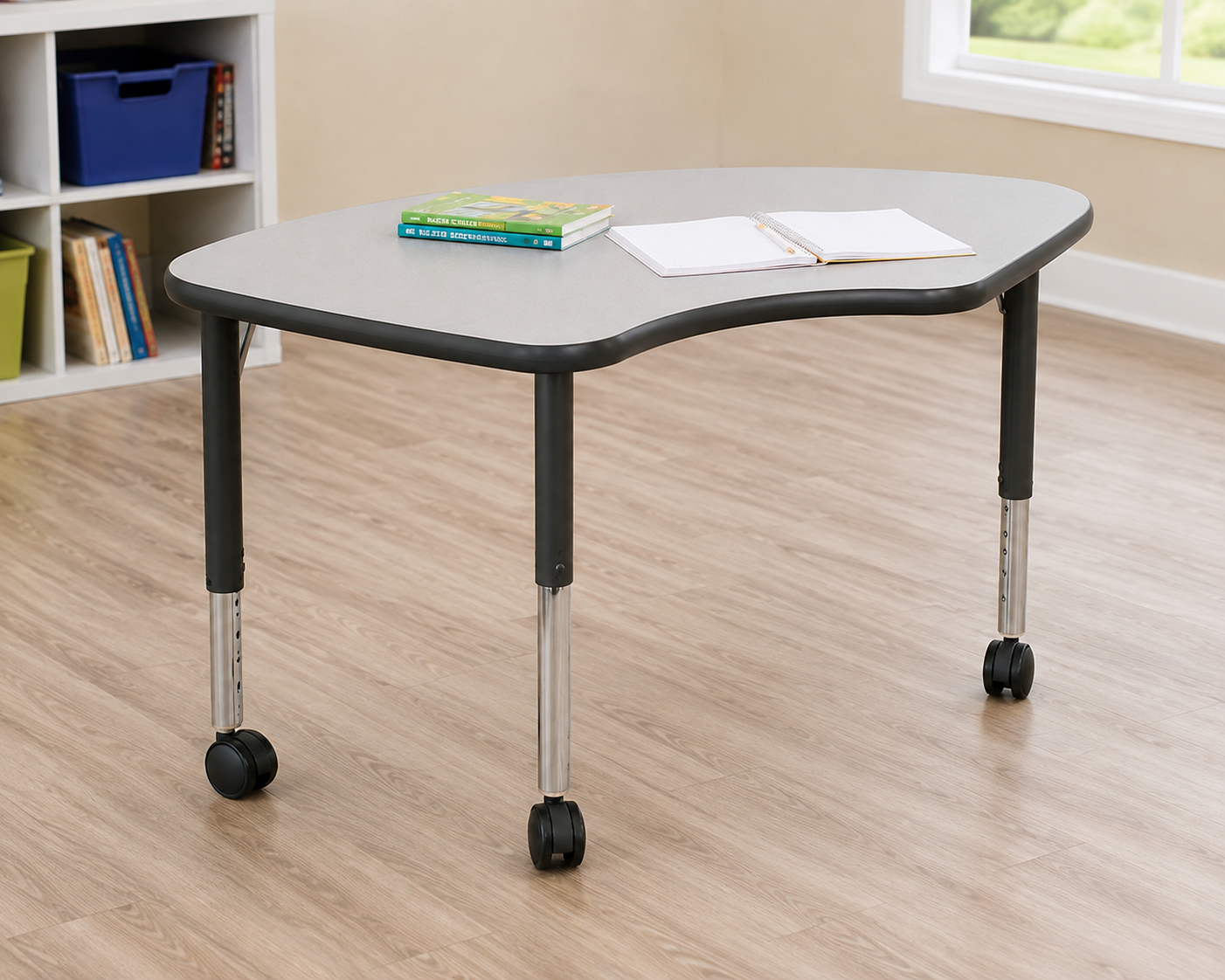
Classroom furniture shopping usually comes down to one core question. Does it actually hold up to daily use by dozens of kids over multiple school years? The AmTab FishDesk2433 answers that question directly. It’s part of AmTab’s collaborative learning desk line. The company built it specifically for the wear and tear of real classrooms, not a showroom display.
This guide covers what makes the FishDesk2433 worth considering for your school or classroom. You’ll learn how it compares to other desks in AmTab’s collaborative line. You’ll also find out what to check before placing an order. We’ll cover practical guidance on classroom layout and purchasing logistics too, since institutional furniture purchases work a bit differently than a typical retail order.
About AmTab as a Manufacturer
AmTab has built its reputation specifically around institutional furniture. It serves the educational, hospitality, healthcare, banquet, and industrial markets. The company is best known for cafeteria tables and lunchroom furniture. Its classroom and collaborative learning desk lines carry those same manufacturing standards.
That manufacturing pedigree matters when you’re buying furniture built to survive years of heavy daily use. AmTab makes its products 100% in the USA. The company also holds LEED 2009, ANSI/BIFMA x7.1, and MAS Green certifications. These speak to both build quality and environmental manufacturing standards. For school districts navigating procurement requirements, those certifications often matter as much as the desk’s actual design.
FishDesk2433 Specifications
The FishDesk2433 measures 22.5 inches wide by 33 inches long. Its adjustable height range spans 22 to 34 inches. That range covers a wide span of student ages and sizes, from younger elementary students up through older students who need a taller working surface. The desk weighs approximately 44 pounds. That gives it enough heft to stay stable during use, without becoming difficult for staff to reposition when rearranging a classroom.
The desktop uses a high-pressure laminate surface with a Dyna-Rock edge. That’s a detail that matters more than it might seem at first glance. This edge treatment resists chipping and denting far better than a standard laminate edge. That matters a lot given how much abuse classroom furniture edges take from backpacks, chairs, and general daily contact.
The Fish Shape Design
As the name suggests, the FishDesk2433 uses a distinctive fish-shaped top rather than a standard rectangle. That shape isn’t just a stylistic choice. Engineers specifically designed it to support flexible classroom configurations. Multiple fish-shaped desks can push together to form larger collaborative work surfaces for group projects. Teachers can then pull them apart again for individual, private study when a lesson calls for it.
This flexibility gives teachers real day-to-day control over classroom layout. Schools don’t need separate furniture sets for group versus individual work. A single desk investment covers both use cases. That matters a lot for schools working within tight furniture budgets.
Adjustable Height Functionality
The adjustable height insert system lets the desk grow with a classroom’s changing needs across a wide 22 to 34 inch range. That’s particularly valuable for schools that reassign classrooms across different grade levels from year to year. The same desk can serve a room of younger students one year and older students the next. No new furniture required.
Powder-coated upper legs house the adjustable height mechanism. This adds both durability and a clean, finished appearance that holds up visually over years of use. According to the Occupational Safety and Health Administration, properly fitted seating and work surfaces play a meaningful role in reducing discomfort. They also support healthy posture during extended periods of sitting. That principle applies to classroom furniture design just as directly as it does to office ergonomics. For classrooms following ergonomic best practices around student seating, adjustable height desks like this one make it considerably easier to fit desk height to individual students, rather than forcing a one-size-fits-all setup.
How the FishDesk2433 Compares to Other AmTab Collaborative Desks
AmTab offers several shapes within its collaborative learning desk line. Understanding how they differ helps you choose the right mix for your specific classroom needs.
The Cascade desk, at 20 inches wide by 27 inches long, offers a more compact footprint. It suits tighter classroom spaces or younger student populations well. The Wing desk comes in larger configurations, including a 24-by-36-inch and an even larger 24-by-42-inch option. These suit older students, or classrooms prioritizing more individual desktop space, better. The Diamond desk, at 30 by 34 inches, and the Sequence desk, at 23 by 31 inches, round out the collection with additional shape options. Schools mixing multiple desk types can use these to create varied collaborative arrangements.
Compared to these alternatives, the FishDesk2433 sits in a solid middle range for size. Its distinctive fish shape offers a genuinely different visual and functional profile, too. That sets it apart from the more geometric Cascade, Wing, and Diamond options. Many schools mix multiple shapes within the same classroom specifically to maximize configuration flexibility, since different shapes interlock and combine in different ways.
Durability Features for Institutional Use
A few construction details set institutional furniture like the FishDesk2433 apart from consumer-grade classroom furniture. The high-pressure laminate top resists daily scuffs, spills, and general wear. It handles what a typical classroom desk endures across a full school year. It’s genuinely easy to clean, too, which matters for teachers managing quick turnarounds between classes or lunch periods in multi-purpose spaces.
The Dyna-Rock edge treatment specifically targets one of the most common failure points on classroom furniture: the desk edge itself. This edge takes constant contact from students, backpacks, and chairs throughout daily use. Reinforced edges like this one meaningfully extend the desk’s usable lifespan. That’s compared to furniture with standard laminate edging alone.
Delivery and Logistics Considerations
Ordering institutional furniture involves a few logistics details that differ from a typical retail furniture purchase. It’s worth planning around them ahead of time. Delivery for products like the FishDesk2433 typically arrives via freight. The driver unloads onto your loading dock or from the end of the truck, rather than carrying pieces directly inside. School staff generally handle moving the desks from the truck or dock to their final classroom location. Plan accordingly for the labor and equipment that might require, especially for larger bulk orders.
Confirm your receiving door width before your order arrives. Deliveries typically require a minimum door width of 52 inches. That lets you bring these desks inside without needing to break down packaging in an awkward location. For schools ordering multiple desks at once, coordinate a delivery window when custodial or facilities staff are available to help unload. That makes the process considerably smoother.
If you’re planning a broader classroom furniture refresh, check out our complete guide to designing a flexible, collaborative classroom layout. It covers additional furniture pairing and spatial planning considerations worth reviewing before finalizing your full order.
Purchasing Through School Procurement
Schools and districts purchasing through official channels can often use a purchase order rather than a credit card at checkout. Many educational furniture retailers support this option. It simplifies the procurement process considerably for institutional buyers working within standard budget approval workflows. Confirm this option directly with your chosen retailer before finalizing an order, since availability can vary depending on which specific vendor you’re purchasing through.
Furniture purchases for schools often need to align with specific budget cycles or grant funding timelines. Because of that, request a formal quote well ahead of your target delivery date. This matters most for larger bulk orders, which may involve better pricing or freight terms than a single-unit purchase would.
Is the FishDesk2433 Right for Your Classroom?
This desk suits classrooms specifically prioritizing flexible, reconfigurable seating over fixed traditional desk rows. If your teaching approach regularly shifts between group collaboration and individual work, this design adds real value. The fish shape’s ability to combine and separate easily goes beyond just aesthetics.
Classrooms with a wide range of student heights also benefit meaningfully from the desk’s adjustable height range. This applies whether the range comes from mixed-age groupings or year-to-year grade reassignment. Some schools prioritize pure cost-efficiency for large bulk orders of standard rectangular desks instead. If your school doesn’t need the collaborative shape functionality, a simpler, non-adjustable desk option might be more budget-friendly. That depends on your specific classroom needs and furniture budget, though.
Final Thoughts
The AmTab FishDesk2433 delivers genuine institutional-grade durability combined with real functional flexibility. Its fish-shaped, adjustable-height design makes that possible. AmTab builds it in the USA and backs it with recognized industry certifications. It holds up to the demands of daily classroom use. At the same time, it gives teachers the flexibility to reconfigure their space for both group and individual work. For schools planning a collaborative classroom setup, confirm your specific space dimensions first. Plan for freight delivery logistics, too, and consider mixing desk shapes across AmTab’s collaborative line to maximize configuration options throughout your classroom.
Frequently Asked Questions
What are the dimensions of the AmTab FishDesk2433? The FishDesk2433 measures 22.5 inches wide by 33 inches long, with an adjustable height range of 22 to 34 inches. It weighs approximately 44 pounds.
Is the AmTab FishDesk2433 made in the USA? Yes, AmTab manufactures the FishDesk2433 entirely in the USA. The company also holds LEED 2009, ANSI/BIFMA x7.1, and MAS Green certifications.
Can multiple FishDesk2433 units be combined for group work? Yes. Engineers specifically designed the fish shape so multiple desks can push together to form larger collaborative work surfaces. Teachers can then separate them again for individual study.
What age range of students can use this desk? The 22 to 34 inch adjustable height range accommodates a wide span of student ages and sizes. That includes younger elementary students up through older students needing a taller working surface.
How is the FishDesk2433 delivered? It typically ships via freight, and the driver unloads it onto a loading dock or from the end of the truck. School staff generally handle moving the desks to their final classroom location. Delivery requires a minimum 52-inch door width for bringing desks inside.
Can schools purchase this desk with a purchase order instead of a credit card? Many educational furniture retailers allow schools to pay with a purchase order number rather than a credit card. It’s still worth confirming this option directly with your specific retailer before ordering.
How does the FishDesk2433 compare to other AmTab collaborative desk shapes? It sits in a mid-range size compared to the more compact Cascade desk and the larger Wing desk options. Its distinctive fish shape also offers a different visual and functional profile than AmTab’s more geometric desk shapes.
What makes the desktop durable for classroom use? The desktop uses a high-pressure laminate surface with a Dyna-Rock edge. This edge resists chipping and denting significantly better than standard laminate edging. That’s an important feature given how much daily contact classroom furniture edges endure.