

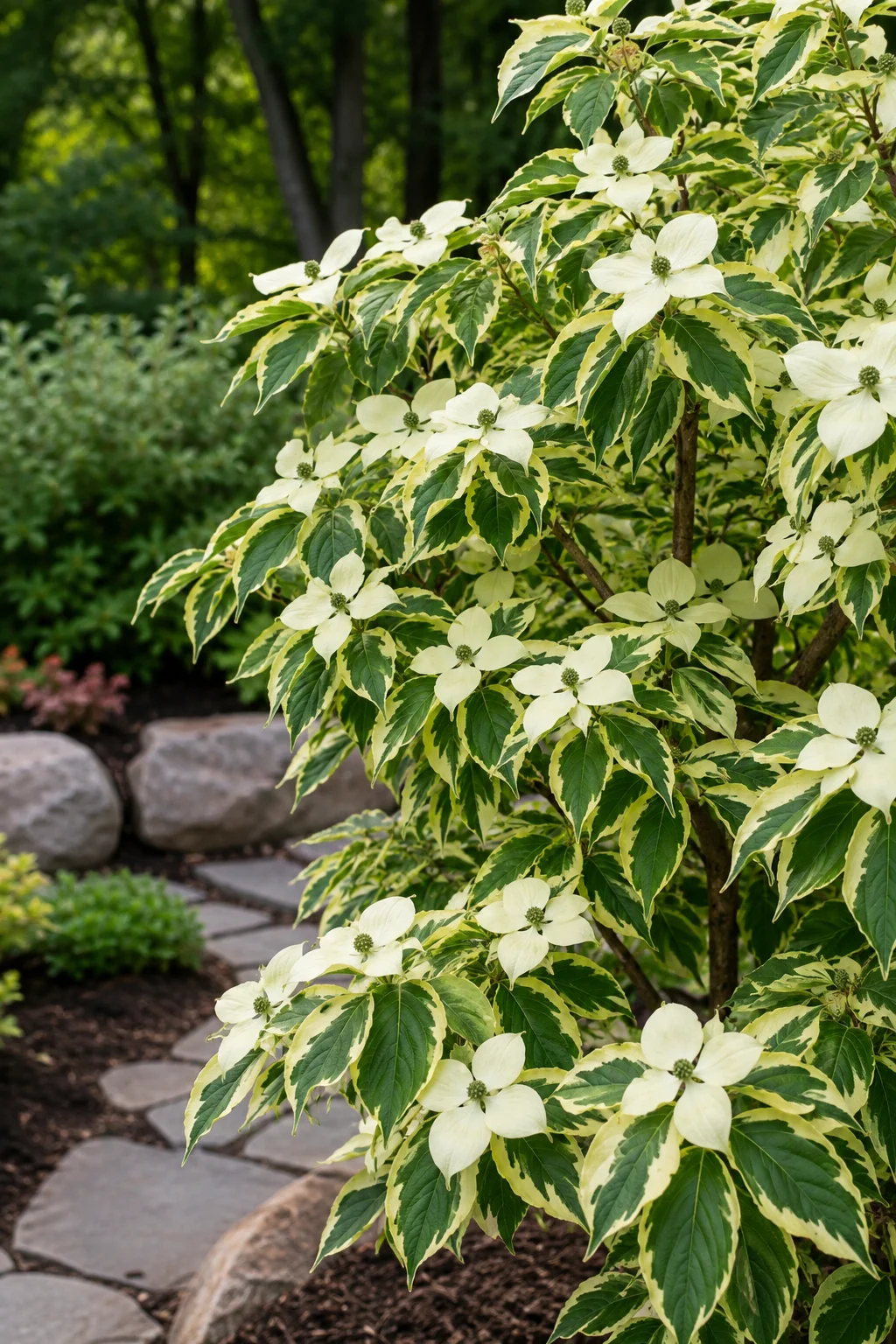
Have you ever driven past a yard in the dead of winter and spotted a shrub glowing with bright coral-red stems against the snow? There’s a good chance you were looking at an Ivory Halo dogwood. I’ve planted this shrub in three different gardens across the Midwest and Northeast over the past decade. Each time, it earned its spot as one of the most rewarding four-season shrubs a home gardener can grow. It’s not fussy. It’s not boring. And it genuinely looks like a different plant every three months.
In this guide, we’ll walk through everything you need to know to plant and grow Ivory Halo dogwood (Cornus alba ‘Bailhalo’) successfully. That includes advice for gardeners in Minnesota, Ohio, Virginia, and the Pacific Northwest alike. We’ll also cover common problems, pruning strategy, and the questions homeowners search for most often.
What Is Ivory Halo Dogwood?
Ivory Halo dogwood is a compact, deciduous shrub. It’s prized for two very different features. In spring and summer, the leaves are variegated in soft green with creamy white edges. This gives the plant a cool, almost frosted look, even during the hottest weeks of July. Then autumn strips the leaves away, and the stems take over the show. They turn a deep, glossy red that seems to intensify as temperatures drop. That timing matters, since most other plants in the landscape have already gone dormant and dull.
Botanically speaking, this shrub is a cultivar of Cornus alba. It’s also known as tatarian dogwood or red-twig dogwood. Unlike the classic dogwood tree most Americans picture, this is a multi-stemmed shrub rather than a flowering tree. According to the Missouri Botanical Garden, Cornus alba is a rapid-growing, multi-stemmed, suckering, deciduous shrub native to eastern and central Asia. Ivory Halo was selected specifically for its compact size. Its variegation also stands out compared to the species.
Thanks to its manageable size and year-round appeal, this shrub has become a go-to choice for American landscapes. You’ll see it in foundation plantings, mixed borders, and winter gardens throughout much of the country.
Why Gardeners Love Growing Ivory Halo Dogwood
Every gardener eventually learns something important. Flashy spring bloomers often leave a landscape feeling empty the rest of the year. Ivory Halo solves that problem in a way few shrubs can. As a result, it shows up again and again in professional landscape designs. This is especially true in cold-winter regions where color is scarce for months.
Here’s what makes it worth the space in your yard:
- Four-season interest. Spring flowers, summer variegation, fall color shifts, and winter stem color all show up in one plant.
- Compact, manageable size. Most sources report a mature height and width of roughly four to six feet. That fits nicely into smaller suburban landscapes.
- Cold hardiness. It thrives across a wide range, generally USDA zones 3 through 7. Some suppliers even list it as tolerant to zone 8 in milder spots.
- Adaptability. It tolerates clay soil, wet soil, and average garden soil. That makes it forgiving for gardeners without perfect loam.
- Deer resistance. In neighborhoods where deer browsing causes constant frustration, this shrub is generally left alone.
Where Ivory Halo Dogwood Grows Best in the USA
Hardiness and heat tolerance vary a lot across the country. So, it helps to think regionally before you plant.
Northern and Upper Midwest States
Gardeners in Minnesota, Wisconsin, Michigan, and upstate New York tend to get the best results. Cold winters actually intensify the red stem color. Meanwhile, the plant handles freezing temperatures with ease. If you live in one of these regions, plant it where you’ll see it from a window in winter. That’s when it truly shines.
Mid-Atlantic and Transitional Zones
In states like Pennsylvania, Ohio, Virginia, and Maryland, Ivory Halo generally performs well. Just make sure it gets consistent moisture during summer dry spells. These transitional climates offer enough winter chill for good stem color. At the same time, they still support healthy summer growth.
Southern and Hot-Summer Regions
This is where extra care matters most. As the Missouri Botanical Garden notes, plants become stressed and more vulnerable to diseases such as canker in hot summer climates south of USDA Zone 7. So, if you garden in the Deep South or hot, humid Texas or Oklahoma, choose your site carefully. Look for afternoon shade, and prioritize soil drainage to reduce stress on the shrub.
Pacific Northwest and West Coast
Because of its wide adaptability, Ivory Halo also does well in Washington, Oregon, and coastal California. It particularly thrives in cooler microclimates. Consistent rainfall in these regions often means less supplemental watering is needed.
How to Plant Ivory Halo Dogwood
Planting correctly at the outset saves you years of struggle later. So, it’s worth slowing down during this step. Fall is widely considered the ideal planting time. That’s because it allows roots to establish before summer heat arrives. That said, early spring planting also works well in most climates.
Step 1: Choose the right location. Ivory Halo tolerates everything from full sun to partial shade. However, stem color and overall density improve significantly with more sunlight. Aim for at least four to six hours of direct sun daily for the most vivid winter red.
Step 2: Test and prepare your soil. This shrub prefers organically rich, well-drained soil. Still, it’s remarkably tolerant of both clay and sandy conditions, as long as drainage is adequate. Work a couple of inches of compost into the planting area first. This gives young roots an easier environment to spread into.
Step 3: Dig a proper hole. Dig a hole roughly twice as wide as the root ball. Keep it no deeper than the root ball itself. Planting too deep is one of the most common mistakes homeowners make. Over time, it can lead to stem rot.
Step 4: Space plants generously. Ivory Halo tends to spread wider than it grows tall. So, give each shrub at least four to six feet of breathing room from structures or other plants. If you’re planting a hedge, three to four feet between plants creates a fuller look over time.
Step 5: Water thoroughly and mulch. After planting, water deeply to eliminate air pockets around the roots. Then add two to three inches of mulch around the base. Keep it a few inches away from the stems to prevent rot.
If you’re considering other shrubs for winter interest, check out our guide to cold-hardy shrubs for four-season gardens. It covers several additional options that pair beautifully alongside dogwoods in a mixed border.
Ongoing Care and Maintenance
Watering
Ivory Halo dogwood prefers consistently moist soil. This matters most during its first two growing seasons, while roots are still establishing. Once mature, it becomes fairly drought-tolerant. Even so, it performs best with regular watering during extended dry spells, especially in hotter climates. A deep soak once a week generally beats frequent shallow watering. That’s because it encourages roots to grow downward instead of staying near the surface.
Sunlight
While this shrub tolerates shade, full sun consistently produces the best results. Gardeners who plant it in heavy shade often notice weaker stem color. The growth habit can also turn leggier over time. If your yard only offers partial shade, that’s still workable. Just expect slightly less dramatic winter color.
Fertilizing
Ivory Halo doesn’t demand heavy feeding. A balanced, slow-release fertilizer applied once in early spring is typically enough. Over-fertilizing, particularly with high-nitrogen products, can backfire. It tends to push soft, weak growth that’s more susceptible to disease. So, moderation matters here.
Mulching
A consistent layer of mulch helps regulate soil temperature and moisture. This proves especially valuable during hot summer stretches. It also reduces soil splashing onto lower leaves, which can contribute to fungal issues.
Pruning: The Secret to Vibrant Winter Color
This is the step most homeowners skip. Honestly, it’s the one that makes the biggest visual difference. Here’s the key fact to understand: the brightest red stem color always appears on new growth, not on older, woodier stems. Over time, older stems fade to a duller brownish-red. That’s why an unpruned Ivory Halo can start to look tired after several years.
There are two accepted approaches, and both work well depending on your goals.
Renewal pruning. Each early spring, remove roughly one-quarter to one-third of the oldest stems at the base. This encourages fresh growth throughout the plant. At the same time, it keeps some structure intact year to year.
Coppicing. Every two to three years, cut all stems back to about six to eight inches from the ground. Do this in late winter or very early spring. This method is more dramatic, and it leaves a bare-looking shrub for several weeks. However, it results in vigorous new growth with outstanding stem color the following winter.
Either method works well. So, the choice mostly comes down to your priorities. Do you want a consistently full shrub, or are you comfortable with a temporary bare period in exchange for maximum color impact? One more thing to note: flowers and berries only form on second-year wood. Because of this, heavy pruning does reduce blooming somewhat. Still, the flowers on this variety are fairly small and secondary to the overall appeal anyway.
Common Problems and How to Solve Them
Even a tough, adaptable shrub like this one can run into trouble. This happens particularly when growing conditions aren’t ideal.
Leaf scorch or browning edges. This usually points to insufficient water combined with too much direct afternoon sun. It’s especially common in hot southern climates. Moving forward, increase watering frequency during heat waves. Consider providing afternoon shade if scorch becomes a recurring issue.
Canker and dieback. As mentioned earlier, this is more common in hot, humid climates south of zone 7. Prune out affected stems promptly. Sanitize your pruning tools between cuts, and improve air circulation around the plant.
Leaf spot or blight. Overhead watering and poor air circulation are frequent culprits here. Water at the base of the plant instead of overhead. Also, space shrubs adequately so air can move freely between them.
Suckering and spreading. Because this shrub naturally suckers, it can spread wider than expected over time. If you want to control this, remove unwanted suckers as soon as they appear. It’s easiest while they’re still small.
Reverted green growth. Occasionally, a branch will revert to solid green foliage instead of the variegated pattern. When this happens, prune that branch out completely. Reverted growth tends to grow more vigorously than variegated portions. Left alone, it can eventually overtake the plant.
Landscape Design Ideas
Ivory Halo works beautifully in several different garden styles. That’s part of why it remains so popular among American homeowners and landscape designers alike.
- Winter garden focal point. Plant it where it’s visible from indoor windows. That way, you can enjoy the stem color without stepping outside during cold months.
- Mixed shrub border. Pair it with evergreens for structure. Add other dogwood varieties, like yellow-twig dogwood, for a layered, multicolor winter display.
- Foundation planting. Its compact size makes it a solid choice near entryways. Just account for its mature spread when placing it.
- Rain garden or wet-soil areas. Since it tolerates consistently moist or even boggy soil, it’s a practical option for low spots in the yard.
- Privacy hedge. Planted in a row with adequate spacing, it forms an attractive informal screen. Its character changes with every season.
Propagating Ivory Halo Dogwood
Would you like to expand your planting without buying more shrubs? Propagation is fairly straightforward. Hardwood cuttings taken in late winter, while the plant is fully dormant, root reliably in most cases. Simply cut a healthy stem section. Insert it into moist, well-drained soil or a rooting medium. Keep it consistently damp until roots develop the following growing season. This is also a great way to share plants with neighbors. A single mature shrub can supply plenty of cuttings during routine spring pruning.
Frequently Asked Questions
Does Ivory Halo dogwood need full sun to thrive? Not necessarily, since it tolerates everything from full sun to partial shade. That said, full sun consistently produces the most vibrant red winter stems. It also supports the healthiest, most compact growth. So, it’s worth prioritizing sunlight if you have a choice of locations.
How fast does Ivory Halo dogwood grow? Under good growing conditions, this shrub can add up to twelve inches of new growth per year. That makes it a relatively fast-growing option compared to slower shrubs.
When is the best time to prune Ivory Halo dogwood? Early spring, just before new growth emerges, is the ideal window. Pruning at this time removes older, faded stems. It also gives the plant a full growing season to produce vibrant new red stems before winter.
Why are the leaves on my Ivory Halo dogwood turning solid green? This is called reversion. It happens when a branch reverts back to the plant’s non-variegated form. Reverted branches tend to grow more aggressively than variegated ones. Because of this, it’s best to prune them out completely as soon as you notice them.
Is Ivory Halo dogwood deer resistant? Generally, yes. No plant is completely deer-proof, of course. Still, this shrub is commonly listed among deer-resistant options. That makes it a practical choice for yards in suburban and rural areas.
Can Ivory Halo dogwood grow in wet or clay soil? Yes, and this is actually one of its biggest advantages. It adapts well to clay soil and even consistently moist areas. That said, it still performs best when drainage is at least adequate rather than completely waterlogged year-round.
How far apart should I space Ivory Halo dogwood shrubs? For a hedge or mass planting, space plants three to four feet apart. This typically creates a fuller look as they mature. For standalone specimens, allow at least four to six feet of clearance from structures or other plants.
Why doesn’t my Ivory Halo dogwood have bright red stems in winter? This usually relates to plant age and pruning habits. The most vivid color develops on young stems, not old wood. If your shrub hasn’t been pruned in several years, try a renewal or coppicing prune this spring. You should notice better color by next winter.
Final Thoughts
Ivory Halo dogwood earns its popularity honestly. It asks for relatively little. It also adapts to a wide range of soil and climate conditions across the United States. In return, it rewards that modest effort with a genuinely dramatic seasonal transformation. Whether you’re filling a bare winter border in Minneapolis or adding texture to a mixed shrub bed in Virginia, this shrub delivers. Give it decent sun, consistent moisture while it’s establishing, and a proper spring pruning each year. It will reliably reward you for many years to come.
For additional botanical details and growing information, the Missouri Botanical Garden’s Plant Finder offers a thorough, research-backed reference worth bookmarking.