

If you’re replacing an old garage door, the choices can feel overwhelming. Width, height, material, insulation, smart features. Every decision affects your budget. It also shapes your daily experience. This guide breaks it all down in plain language. It’s based on current 2026 pricing and product trends across the United States.
I’ve spent years researching home improvement projects. I’ve also talked with installers along the way. One thing is consistent: most homeowners overpay. Usually, it’s because they don’t know what “standard” actually means. So let’s fix that. By the end of this article, you’ll know exactly what size fits your garage. You’ll also know what it should cost. And you’ll know which options genuinely hold up over time.
Standard 2 Car Garage Door Sizes in 2026
The most common two-car garage door size is 16 feet wide by 7 feet tall. This single measurement covers roughly two-thirds of all double garages built this year. It fits two mid-size sedans or small SUVs side by side. There’s also just enough clearance to open doors without dinging your neighbor’s paint job.
That said, “standard” doesn’t mean one size fits all. Depending on your vehicles, you’ll typically see three width options. Here they are:
- 14 feet wide — a tighter fit, best for compact cars or narrow lots
- 16 feet wide — the national baseline, ideal for most sedans and small trucks
- 18 feet wide — increasingly popular as SUVs and pickups get wider
Height follows a similar pattern. Seven feet remains the standard for most homes. It works fine for the vast majority of vehicles. However, some drivers need more room. If you own a lifted truck or an SUV with a roof rack, consider an 8-foot-tall door. Some newer builds even push to 9 or 10 feet. Those usually require a special order rather than an off-the-shelf purchase.
Before you settle on a size, measure your actual opening first. Don’t just assume it matches the “standard.” Older homes sometimes have nonstandard openings. That changes both the price and the lead time.
How to Choose the Right Width and Height
Choosing a door size isn’t just about today’s fit. It’s also about what will still work in five years. Consequently, it helps to ask a few practical questions first.
First, measure your widest vehicle, mirrors included. Then add at least three feet of buffer on each side. This prevents the frustrating scrape-and-wince moment every time you pull in. Second, think about storage needs. Many garages double as workshops or storage space. If you store bikes, tools, or lawn equipment, a slightly wider door helps. It gives you room to maneuver without constant shuffling.
Third, consider resale value. Real estate agents often note that garage condition matters to buyers. This is especially true in markets with harsh winters. A door that’s too small for modern vehicles can hurt your resale appeal. Meanwhile, a properly sized, well-maintained door is a quiet advantage.
Finally, don’t ignore headroom and side room. Torsion spring systems typically need 10 to 12 inches of clearance above the opening. Side room for tracks usually runs 3.5 to 5 inches on each side. If your garage lacks this space, you’ll need low-headroom hardware. That adds cost, but it solves the problem.
2 Car Garage Door Cost in 2026: What You’ll Actually Pay
Now for the number everyone wants: the cost. As of 2026, a fully installed double garage door typically ranges from $1,300 to $3,700. That’s for standard insulated steel. Premium materials push well beyond that range. <cite index=”10-1″>Non-insulated steel sits at the low end, around $1,300 to $2,800. Insulated steel runs $1,700 to $3,700 installed.</cite>
Here’s a general breakdown by material. This is where most of the price variation comes from:
- Steel (standard): roughly $1,300–$2,800 installed, uninsulated
- Steel (insulated): roughly $1,700–$3,700 installed
- Fiberglass: roughly $2,400–$5,500 installed
- Aluminum and glass: roughly $3,100–$6,800 installed
- Wood or wood composite: roughly $2,500–$8,400 installed, depending on species
These figures usually include the door panel, tracks, springs, and labor. A new opener typically adds $180 to $600 on top. Hauling away your old door usually costs around $100. So, if your current opener still works, keeping it saves money right away.
Installation itself isn’t a quick swap, either. A standard two-person crew usually needs three to six hours. Add a new opener, and expect closer to a full day. That labor time is baked into the estimates above. Still, it’s a good reminder: this project involves real skill, not just bolting on a panel.
Cost by Material: Which One Actually Makes Sense?
Material choice shapes more than the sticker price. It also affects maintenance, lifespan, and climate performance. Let’s walk through the main options.
Steel remains the most popular choice nationwide, and for good reason. It’s affordable, durable, and low-maintenance. That makes it the default pick for most families. Additionally, steel handles daily wear well and rarely warps. The main downside is dents. Basic steel dents fairly easily, though thicker gauges reduce this risk.
Aluminum is lightweight and naturally rust-resistant. That makes it a smart pick for coastal homes near salt air. On the other hand, it dents even more easily than steel. It also insulates poorly on its own. Pairing it with a solid insulation layer usually helps.
Wood offers unmatched curb appeal. If you want a craftsman or farmhouse look, nothing else quite matches it. However, wood needs ongoing staining or sealing, typically every two to five years. That adds to the long-term cost. If you love the look but not the upkeep, consider composite steel instead. It mimics wood’s appearance with far less maintenance.
Fiberglass sits somewhere in the middle. It mimics wood grain while resisting moisture and cracking. That makes it a solid choice for humid regions, like the Gulf Coast.
Ultimately, the “best” material depends on your climate and budget. It also depends on how much upkeep you’re willing to do. For most homeowners, insulated steel remains the sweet spot. It balances cost, durability, and performance well.
Insulation and Energy Efficiency: Is It Worth the Upgrade?
If your garage is attached to your home, insulation matters more than most people realize. An uninsulated door lets outdoor temperatures bleed inside. That, in turn, affects any adjoining living space. Bedrooms and laundry rooms are especially vulnerable.
Insulated doors cost several hundred dollars more upfront. However, they pay off through comfort and noise reduction over time. According to the U.S. Department of Energy, sealing and insulating garage doors helps reduce air leakage. This is particularly true for attached garages. If you want to dig deeper, the Department of Energy’s official energy-saving guidance is a reliable, government-backed resource.
That said, detached garages are a different story. If yours is used purely for parking, you likely don’t need premium insulation. A basic non-insulated steel door works fine there. The money saved can go toward a better opener instead.
Best 2 Car Garage Door Options for 2026
So, what should you actually buy? A few standout categories stand out this year.
Insulated steel sectional doors remain the safest all-around choice. They balance cost, durability, and energy performance well. No specialty maintenance is required, either. Brands like Clopay, Amarr, and Wayne Dalton still dominate this category. They’re widely available and backed by solid warranties.
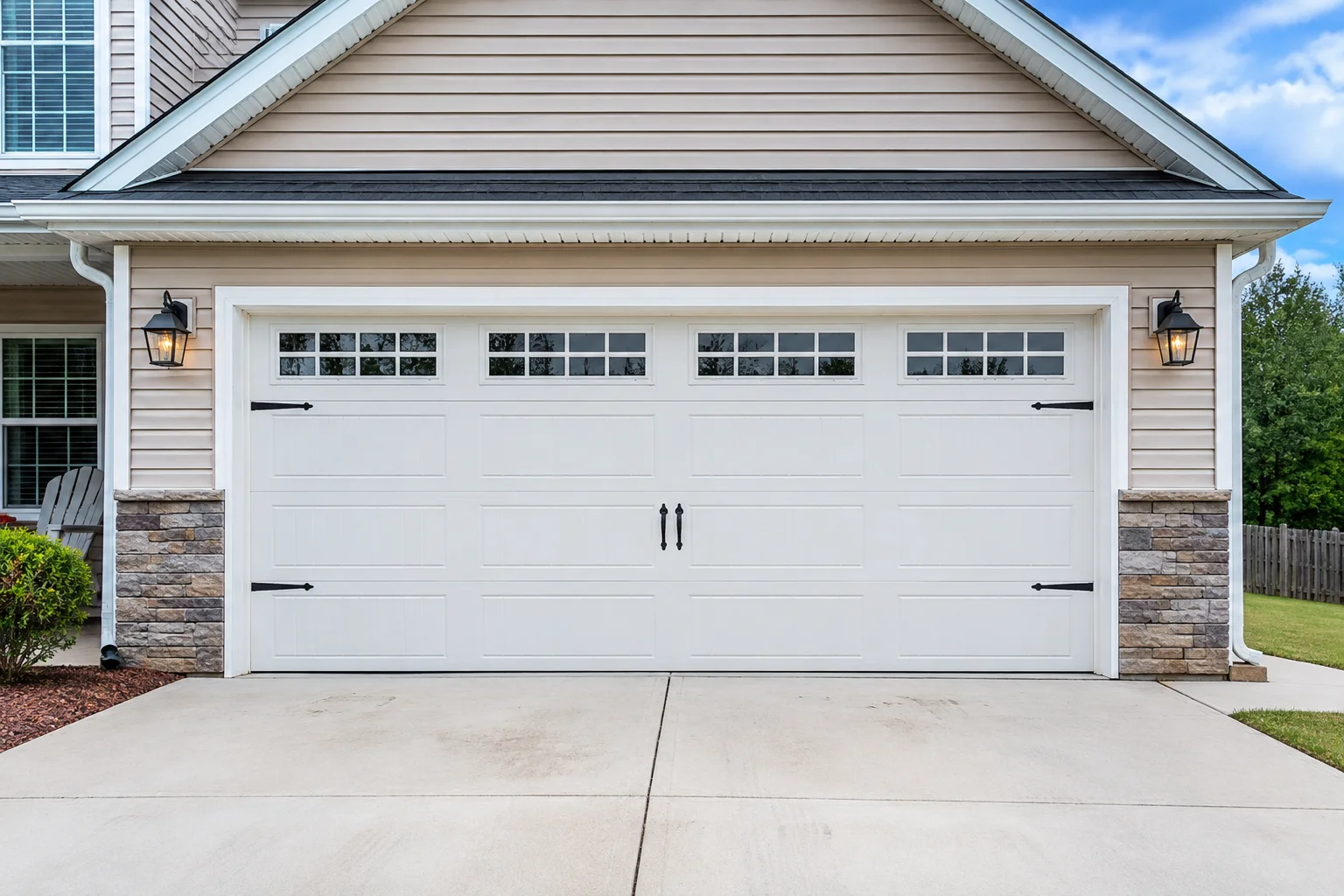
Carriage-house style doors have grown in popularity recently. Homeowners increasingly want traditional, high-curb-appeal aesthetics. These doors often use steel or composite construction. Decorative hardware gives them a wood-like look, minus the wood maintenance.
Full-view aluminum and glass doors suit modern architectural styles. They work especially well in warmer climates, like Arizona or Florida. Natural light and a sleek exterior often matter more there than insulation. They’re pricier, but they make a striking visual statement.
Smart garage door openers deserve a mention too. Wi-Fi-enabled openers now include smartphone control and camera integration. Battery backup has become close to standard on new installs. This upgrade typically adds $400 to $600 to the project. Given how often people worry about an open garage door, it’s often worth it.
Installation Timeline and What to Expect
Once you’ve chosen a door, installation is fairly predictable. A same-size replacement usually takes three to six hours. A full opening modification takes longer. It may also involve additional framing work.
One thing matters here: garage door springs are dangerous. Torsion springs, specifically, hold significant tension. They can cause serious injury if handled incorrectly. For that reason, professional installation is strongly recommended. This holds true even for confident, handy homeowners. The Door and Access Systems Manufacturers Association is an industry authority on safety standards. It similarly recommends trained technicians for spring service. You can review general safety guidance on the DASMA website.
After installation, reputable companies test the balance and alignment. They should also check the safety reversal sensors. If yours doesn’t do this automatically, ask for it directly.
Regional Considerations Across the USA
Where you live genuinely affects which door makes sense. Hurricane-prone regions like Florida and Texas often require impact-resistant doors. Building codes there demand specific wind-pressure ratings. This adds cost, but it’s non-negotiable for compliance.
Meanwhile, colder states like Minnesota and Michigan face different pressures. Insulation becomes far more important there. An uninsulated door can noticeably raise heating costs in an attached garage.
In hot, sun-heavy states like Arizona, lighter-colored doors help. They reflect heat and reduce warping over time. On the other hand, coastal areas benefit from aluminum’s rust resistance. It’s a genuine advantage there, not just a nice-to-have feature.
If you’re unsure what your area requires, ask before buying. Your installer or local building department can confirm wind-load rules. They can also confirm insulation requirements specific to your region.
Keeping Your New Door in Good Shape
Once your new door is installed, routine care matters. A little upkeep goes a long way toward avoiding early repairs. Lubricate the rollers and hinges twice a year. Check the weatherstripping for gaps regularly, too. Listen for unusual noises during operation as well. These simple habits extend the door’s lifespan significantly. For a more complete walkthrough, see our garage door maintenance checklist. It covers seasonal upkeep steps in more detail.
Frequently Asked Questions
What is the standard size for a 2 car garage door? The standard size is 16 feet wide by 7 feet tall. This fits most sedans and smaller SUVs comfortably. That said, 14-foot and 18-foot widths are also common.
How much does a 2 car garage door cost installed in 2026? Most homeowners pay between $1,300 and $3,700. That’s for a fully installed insulated steel door. Premium materials can push the total to $5,000 or more.
Is it worth paying extra for an insulated garage door? Yes, if your garage is attached to your home. Insulation improves comfort and reduces noise. It can also modestly lower energy costs. For detached garages, insulation is optional.
Can I install a garage door myself to save money? It’s not recommended. Torsion springs carry high tension. They can cause serious injury if mishandled. Professional labor typically costs $250 to $600. That’s a reasonable trade-off for safety.
What’s the best material for a 2 car garage door? Insulated steel is the best all-around choice for most people. It balances durability, affordability, and low maintenance well. Wood offers the best curb appeal, but needs more upkeep.
How long does it take to replace a 2 car garage door? A standard replacement usually takes three to six hours. Adding a new opener extends the timeline. Expect closer to a full day in that case.
Do I need a bigger door if I drive an SUV or truck? Possibly, yes. An 18-foot wide, 8-foot tall door gives extra clearance. It makes daily parking noticeably easier. This is especially true with two larger vehicles.
Does my region affect what kind of garage door I need? Yes, it does. Hurricane-prone states often require impact-rated doors by code. Colder regions benefit more from insulation. Always check local building requirements first, since rules vary by state.
Choosing the right two-car garage door comes down to a few things. Match size, material, and insulation to your actual lifestyle. Don’t just chase the lowest sticker price. Take time to measure your space accurately. Factor in your regional climate, too. Then lean toward insulated steel, unless you have a specific reason not to. Done right, this is a project you’ll only think about once every couple of decades.