

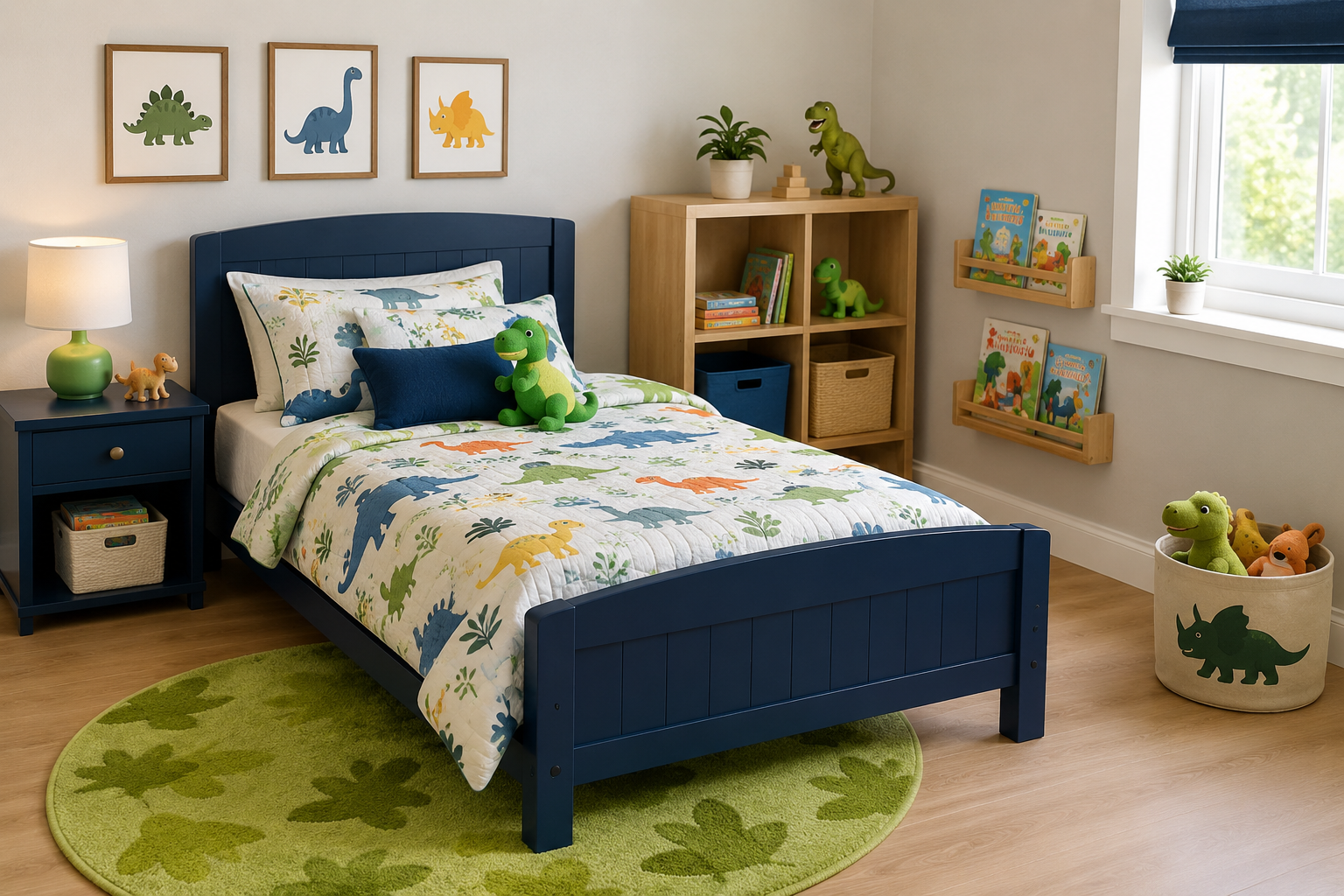
Moving a preschooler from a crib or toddler bed into their first real twin bed is a milestone moment — exciting for them, and honestly a little nerve-wracking for you. Will they roll out? Is the mattress safe? Will this thing survive the next five years of jumping, pillow forts, and the occasional juice spill?
I get it. I spent weeks researching this exact transition for my four-year-old, testing several options firsthand and consulting pediatric sleep guidelines along the way. As a result, this guide pulls together everything I learned: the beds that genuinely held up, the safety specs that actually matter, and the honest breakdowns you won’t find in a product description.
Whether you’re shopping on a tight budget, looking for something that can grow with your child, or hunting for a low-profile option that won’t turn nighttime bathroom trips into a gymnastics event, there’s a right pick on this list for you.
Why Preschoolers Have Specific Twin Bed Needs
Most kids transition to a twin bed somewhere between ages 3 and 5. At this stage, they’re not just small adults — they have genuinely different sleep safety requirements, physical limitations, and behavioral quirks that should shape your bed choice.
Height matters more than you think. A standard twin bed frame sits about 16–18 inches off the ground. For a three-year-old, that’s a significant drop. As a result, low-profile frames (10–14 inches) or platform beds without a box spring are far safer for this age group, and many pediatric sleep experts recommend keeping the mattress close to the floor during the transition period.
Weight capacity is often overlooked. Budget frames sometimes cap out at 150–175 lbs — which sounds like plenty until you factor in that two kids and an adult frequently pile onto a preschooler’s bed for storytime. For that reason, look for frames rated to at least 200 lbs.
Slat spacing is a genuine safety issue. Specifically, the U.S. Consumer Product Safety Commission (CPSC) recommends slat spacing of no more than 3.5 inches to prevent entrapment hazards. Always verify this spec before purchasing, particularly with imported frames sold on large marketplaces.
Material finish and off-gassing deserve attention too. Young children spend a significant portion of their lives in bed. Therefore, frames with low-VOC (volatile organic compound) finishes — or better yet, solid wood that’s been naturally finished — are worth prioritizing for indoor air quality.
What We Evaluated and How
Before diving into the picks, it helps to understand the criteria used. Each bed on this list was evaluated against the following:
- Safety certifications (ASTM F1427-21, CPSC slat guidelines, Greenguard Gold or similar)
- Ease of assembly (Can one adult do it in under 90 minutes?)
- Frame sturdiness (Wobble test, joint quality, hardware robustness)
- Bed height (Floor to top of slat deck)
- Weight capacity
- Longevity signals (Warranty length, brand reputation, replacement part availability)
- Value for money (Not just price, but how long it’s likely to last per dollar spent)
The Best Twin Beds for Preschoolers in 2026
1. IKEA HEMNES Bed Frame – Best Overall Value
Price: ~$279 | Height (to slat deck): 10.25 inches | Weight Capacity: 330 lbs | Material: Solid pine with stain finish
IKEA’s HEMNES has been a reliable staple for years, and the 2025 refresh tightened up the joinery while adding a new low-VOC finish option. For a preschooler, it hits the sweet spot: low enough to the ground to be safe, sturdy enough to handle years of active use, and simple enough that one parent can assemble it in about an hour.
The solid pine construction is the real selling point here. Unlike MDF or particleboard frames that tend to chip and fail at the screw joints over time, pine has genuine structural integrity. Furthermore, it’s available in white and several stained finishes that will look at home in a child’s room for years — well past the preschool phase.
What parents in the US love about it: It’s available for in-store pickup at over 30 US locations. In addition, replacement slats and hardware are easy to order online, so there’s no hunting for proprietary parts down the road.
Potential drawback: Slats are sold separately ($20–$30). Make sure to budget for this addition before checkout.
2. Pottery Barn Kids Fillmore Twin Bed – Best for Longevity
Price: ~$699 | Height (to slat deck): 9.5 inches | Weight Capacity: 350 lbs | Material: Solid birch, Greenguard Gold Certified
If you’re willing to invest upfront for something that will genuinely last a decade or more, Pottery Barn Kids’ Fillmore is worth the premium. The solid birch construction is noticeably more robust than pine alternatives. Moreover, the Greenguard Gold certification means it’s been independently tested for chemical emissions — an important consideration for a preschooler’s sleeping environment.
The Fillmore’s design is deliberately understated: a simple panel headboard, clean lines, and a finish that doesn’t scream “little kid room.” That’s actually useful, because it means your 10-year-old won’t be embarrassed to have their friends see it. In other words, you’re buying a bed your child can grow into, not just through.
Assembly instructions are clear and well-organized. Additionally, Pottery Barn Kids offers a white-glove delivery option (for a fee) if you’d rather not deal with the build yourself.
Worth knowing: Pottery Barn Kids regularly runs 20–30% off sales, particularly around Memorial Day, Labor Day, and back-to-school season. As a result, setting a price alert before you buy is a smart move.
3. Delta Children Epic Platform Bed – Best Low-Profile Option
Price: ~$149 | Height (to slat deck): 8 inches | Weight Capacity: 250 lbs | Material: Engineered wood, JPMA certified
For families in the thick of the crib-to-bed transition, Delta Children’s Epic is the safest clearance-to-floor option on this list. At just 8 inches from floor to slat deck, a fall from this bed is genuinely low-risk. Moreover, Delta Children has built a strong reputation in the US market specifically for safety-first children’s furniture, and their JPMA (Juvenile Products Manufacturers Association) certification carries real credibility.
The trade-off for the lower price point is material quality — this is engineered wood, not solid. It’s durable enough for 5–7 years of typical use, but don’t expect it to become a family heirloom. That said, the pre-drilled holes align reliably (a genuine problem with some budget competitors), and assembly typically takes under 60 minutes.
Great for: Families in apartments or homes with hardwood floors, where fall risk is a bigger concern than multi-decade longevity.
4. Roots & Branches by DaVinci Birdie Twin Bed – Best Eco-Friendly Pick
Price: ~$349 | Height (to slat deck): 11 inches | Weight Capacity: 300 lbs | Material: Sustainable New Zealand pine, non-toxic finish
DaVinci’s parent company Million Dollar Baby Co. has long been a leader in non-toxic children’s furniture, and the Birdie bed lives up to that reputation. The pine is sourced from sustainably managed New Zealand forests. In addition, the finish is ASTM-tested for lead and phthalates — something not all manufacturers can say.
The design is playful without being juvenile: a gentle arched headboard and a clean silhouette that works equally well in modern, Scandinavian, or traditional-style bedrooms. It arrives in a single box and can realistically be assembled solo in about 75 minutes.
US-specific note: This bed qualifies for California Prop 65 compliance. As a result, it’s a particularly strong choice for California families who want additional chemical safety assurance — though parents in every state will benefit from the same standard.
5. Thuma The Bed (Twin) – Best Premium Investment
Price: ~$845 | Height (to slat deck): 6.5 inches | Weight Capacity: 1,000 lbs | Material: Upcycled Japanese ash wood, natural oil finish
Thuma’s platform bed wasn’t designed specifically for children, but it has nonetheless become a favorite in the parenting community for good reason. The weight capacity is exceptional — you will never stress about the whole family piling in. Furthermore, the bed sits just 6.5 inches off the ground, making it among the safest options for young children. The upcycled Japanese ash wood with natural oil finish is genuinely beautiful and, importantly, free of synthetic chemical coatings.
The assembly is tool-free — a genuine differentiator — and takes roughly 15 minutes. Beyond that, the bed is whisper-quiet, with no creaking or squeaking, which parents of light sleepers will especially appreciate.
The honest caveat: $845 is a significant investment for a twin bed. However, Thuma’s lifetime warranty and the fact that many owners have used this bed across multiple children and into adulthood makes the per-year cost surprisingly reasonable over time.
Quick Comparison Table
| Bed | Price | Height | Weight Cap | Material | Best For |
|---|---|---|---|---|---|
| IKEA HEMNES | ~$279 | 10.25 in | 330 lbs | Solid pine | Best overall value |
| PBK Fillmore | ~$699 | 9.5 in | 350 lbs | Solid birch | Long-term investment |
| Delta Epic | ~$149 | 8 in | 250 lbs | Eng. wood | Low-profile safety |
| DaVinci Birdie | ~$349 | 11 in | 300 lbs | Sustain. pine | Eco-conscious families |
| Thuma Twin | ~$845 | 6.5 in | 1,000 lbs | Japanese ash | Premium/lifetime use |
Mattress Safety: What Goes On the Bed Matters Too
No guide to preschooler twin beds is complete without a note on mattresses. The American Academy of Pediatrics (AAP) recommends a firm, flat sleep surface for young children — a guideline that extends beyond infancy well into the preschool years. For that reason, avoid pillow-top mattresses that allow children to sink in deeply. Also, ensure that the mattress fits the frame with no more than 2 inches of gap on any side.
For a deeper dive into mattress safety standards and recommendations, the Sleep Foundation’s guide to mattresses for children is an excellent starting point backed by sleep medicine expertise.
You might also find it useful to read our related guide on transitioning toddlers to big-kid beds for tips on making the change smoother for both parent and child.
Red Flags to Avoid When Shopping
Not every twin bed marketed toward young children deserves your money. Therefore, here are the warning signs to watch for before you buy.
No slat spacing specification listed. If a product listing doesn’t mention the distance between slats, that’s an immediate red flag. The answer should be ≤3.5 inches, and manufacturers who build safe products are usually proud to say so.
Warranty under 1 year. Quality children’s furniture should come with at least a 1-year warranty. Anything less suggests the manufacturer doesn’t expect the product to hold up.
No country of origin or safety certification listed. ASTM, JPMA, and Greenguard are the primary certifications to look for. In particular, generic imported beds without these markings may not meet US safety standards.
Reviews mentioning alignment issues. Pre-drilled holes that don’t line up correctly are a sign of poor manufacturing tolerances. Over time, this often leads to loosening joints and frame instability — which is a safety issue, not just a minor annoyance.
Frequently Asked Questions
What age is appropriate for a twin bed for a preschooler? Most pediatric sleep experts suggest the transition from a toddler or crib mattress to a twin bed typically happens between ages 3 and 5. However, the key readiness markers aren’t strictly age-based — they include the child consistently staying in bed through the night, showing awareness of falling hazards, and physically being too large or active for their current sleep setup. There’s no universal rule, but most families in the US make the switch before kindergarten.
How low should a twin bed be for a 3-year-old? For a three-year-old, a bed where the sleeping surface sits no higher than 20–22 inches from the floor is a reasonable target. That typically means a platform frame with a 6–11 inch deck height paired with a mattress 8–10 inches thick. Moreover, if your child is a restless sleeper or recently transitioned from a floor mattress, going even lower — closer to 14–18 inches total — is worth considering.
Do I need a bed rail for a preschooler in a twin bed? Many parents find a bed rail helpful during the first 3–6 months of the transition, particularly for kids who roll during sleep. The CPSC recommends portable bed rails that fit snugly under the mattress without gaps. Furthermore, they should be removed once your child demonstrates they can sleep safely without them — typically by age 5 or 6. Always follow the specific rail manufacturer’s weight and age guidelines.
Is a box spring necessary for a preschooler’s twin bed? No — and in most cases, it’s better to skip it entirely. A box spring raises the bed height significantly, which in turn increases fall risk. Most modern platform frames and low-profile bases provide adequate mattress support without a box spring. If a frame requires a box spring for structural integrity, that’s often a signal the frame itself isn’t the right choice for a young child.
What’s the difference between a twin and a twin XL for a preschooler? A standard twin mattress measures 38 inches wide by 75 inches long. A twin XL, on the other hand, is the same width but 5 inches longer (80 inches). For a preschooler, the extra length of a twin XL is completely unnecessary and typically not worth the added cost. In fact, a standard twin will comfortably accommodate most children well into middle or even high school.
Are bunk beds or loft beds safe for preschoolers? The CPSC specifically advises against children under 6 sleeping in the top bunk of a bunk bed. Similarly, loft beds carry comparable risks for this age group. For preschoolers, therefore, a low-profile floor-level twin is the safest configuration. If you’re planning ahead for siblings sharing a room, purchasing a bunk bed and having your preschooler sleep on the lower bunk is a safer intermediate approach.
How do I know if a twin bed frame is truly non-toxic? Rather than taking manufacturer claims at face value, look for third-party certifications. Greenguard Gold (certified by UL) is the most rigorous standard for children’s products and tests for over 10,000 chemicals. In addition, ASTM-compliant finishes indicate testing for lead and heavy metals, and California Prop 65 compliance is another meaningful marker. By contrast, the phrase “non-toxic” without a supporting certification is essentially unverified marketing language.
How long should a quality preschooler twin bed last? A well-made solid wood twin bed should comfortably last 10–15 years or more with normal use — easily carrying your child from preschool through high school and potentially beyond. Engineered wood frames, however, typically hold up for 5–8 years under typical conditions. The deciding factors are joint quality, hardware robustness, and whether the manufacturer offers replacement parts. In short, a bed your child will use for a decade is a very different value proposition than furniture you’ll replace in three years.
Final Thoughts
The right twin bed for your preschooler doesn’t have to be complicated — but it does require paying attention to a few non-negotiable details: low height, verified slat spacing, appropriate weight capacity, and ideally a finish that’s been independently tested for chemical safety.
If I had to pick one recommendation for most families, the IKEA HEMNES offers the best combination of proven safety, solid construction, and accessible pricing. On the other hand, if budget isn’t a constraint and you want something truly built to last, both the Pottery Barn Kids Fillmore and the Thuma bed are investments you won’t regret.
Most importantly, whatever you choose, give your child a few weeks to adjust. The physical bed certainly matters, but the transition period — consistent bedtime routines, a familiar sleep environment, and patience — matters just as much.