

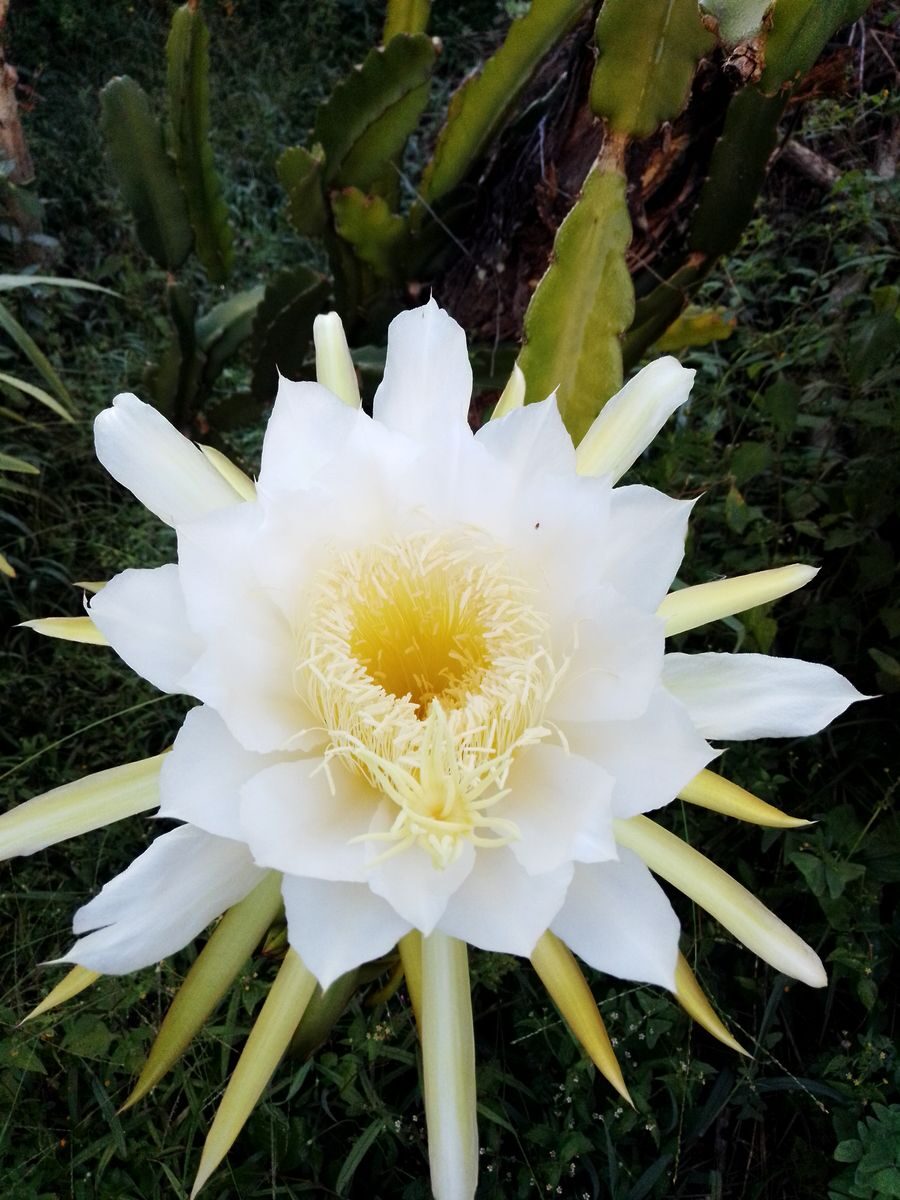
There are plants you grow for their foliage. There are plants you grow for their color. And then there is the night blooming cactus — a plant you grow for one single, extraordinary moment that most people never even know exists.
Once a year, sometimes twice if you’re lucky, this remarkable plant opens a flower that can measure up to 12 inches across. Pure white, intensely fragrant — filling an entire room with a scent that gardeners often compare to jasmine or gardenia — the bloom unfolds after dark and is completely gone by sunrise. If you blink, you miss it.
That fleeting drama is exactly why gardeners across the United States have been growing night blooming cacti for generations, passing cuttings from neighbor to neighbor, grandparent to grandchild, in a quiet tradition that spans cultures and continents.
But here’s what most beginners don’t realize: despite the name “cactus,” this plant behaves nothing like the spiky desert plants you’re picturing. Getting it to thrive — and more importantly, getting it to actually bloom — requires understanding its tropical origins, its seasonal rhythms, and a handful of care details that make all the difference.
This guide covers everything you need to know, from the different types and how to tell them apart, to soil mixes, watering schedules, bloom triggers, and propagation. Whether you’re a first-time grower or someone who has owned one of these plants for years without ever seeing it bloom, you’re in the right place.
What Is a Night Blooming Cactus?
The term “night blooming cactus” is actually an umbrella name that covers several different plant species — all of which share the magical trait of flowering only after dark. The confusion around naming is real and long-standing, so it’s worth clearing up before anything else.
The two primary groups you’ll encounter are:
Epiphyllum oxypetalum is the most commonly grown species. You’ll hear it called the Queen of the Night, Princess of the Night, Dutchman’s Pipe Cactus, Night Lotus, or simply night blooming cereus — though technically it isn’t a cereus at all. It’s an epiphytic cactus native to the tropical rainforests of Central and South America, where it grows on tree trunks and branches rather than in soil. Its stems are flat, broad, and leaf-like, with wavy or lobed edges. The flowers are white, waterlily-shaped, and can reach up to 12 inches long and 8 inches wide.
Selenicereus species are the true night blooming cereus group and include plants like Selenicereus grandiflorus (princess of the night) and Selenicereus anthonyanus (ric rac cactus). These are more vine-like in growth habit and also produce spectacular nocturnal white flowers.
For the purposes of this guide, we’ll focus primarily on Epiphyllum oxypetalum — the species most commonly sold and grown in the U.S. — while noting where care requirements differ for other types.
One thing these plants all share: they are emphatically not desert cacti. They evolved in humid tropical forests, not arid landscapes, and their care requirements reflect that entirely.
Types of Night Blooming Cactus: A Quick Guide
Understanding which variety you have helps you give it exactly the right care. Here are the most common types you’ll find in the USA:
Epiphyllum oxypetalum (Queen of the Night) The most widely grown night bloomer. Flat, spineless, leaf-like stems with wavy edges that can reach 16 inches long. Produces the largest flowers of any commonly grown houseplant — pure white, intensely fragrant, and spectacular. Blooms once or twice a year, typically in late spring to early summer. Houseplants may bloom more sporadically. This is the plant most people are referring to when they say “night blooming cactus.”
Selenicereus grandiflorus (Princess of the Night) A climbing, vine-like cactus with ribbed, angular stems and prominent spines — more reminiscent of a traditional desert cactus than Epiphyllum. Produces large white flowers with a golden-yellow center. Historically used in homeopathic medicine. Requires similar care to Epiphyllum but tolerates slightly drier conditions.
Selenicereus anthonyanus (Ric Rac Cactus / Fishbone Cactus) Named for its deeply lobed, zigzag-edged flat stems that resemble the bones of a fish. One of the more striking foliage plants in the group. Produces pink-centered white flowers at night. Closely resembles certain Epiphyllum varieties — the easiest way to tell them apart is flower color (white for Epiphyllum, pink or cream for Selenicereus anthonyanus).
Selenicereus chrysocardium (Fern Leaf Cactus) Features dramatic, deeply notched flat stems that look more like fern fronds than anything cactus-like. Grown primarily for foliage, though it does produce nocturnal blooms. A striking architectural plant for interiors.
Hylocereus undatus (Dragon Fruit Cactus) Best known as the plant that produces dragon fruit, this night bloomer is grown commercially across tropical regions and increasingly as an ornamental in warm U.S. climates. Produces large white flowers that open a single night, followed by the distinctive pink-skinned fruit. Hardy in USDA zones 10–12.
Night Blooming Cactus Care: The Complete Breakdown
Here is the full care picture, covering everything your plant needs to not just survive, but to eventually reward you with that once-a-year bloom.
Light Requirements
This is the most commonly misunderstood aspect of night blooming cactus care, and getting it wrong is the single biggest reason these plants fail to bloom.
Night blooming cacti are not sun lovers. In their natural habitat they grow as understory plants beneath a forest canopy, receiving dappled, filtered light — never direct midday sun. Indoors, that translates to bright, indirect light for most of the day.
Place your plant near a bright window — east or west-facing windows are ideal. A north-facing window works if it’s large and unobstructed. South-facing windows can work too, but use a sheer curtain to filter the intensity, especially from late spring through summer when the sun is strongest.
Direct afternoon sun will scorch the flat stems, turning them yellow or pale. If you notice this happening, move the plant further from the glass or reposition it to a shadier spot.
During the pre-bloom season — roughly late summer into early fall — your plant benefits from 10 to 12 hours of bright filtered light daily. This light exposure, combined with the temperature and watering cues described below, is what signals the plant to start forming buds.
Outdoor growing in summer: Many growers in the USA move their night blooming cacti outdoors during warm months, which can dramatically improve growth and bloom production. Choose a spot with morning sun and afternoon shade, or use 30–50% shade cloth during peak summer. Bring the plant back inside before nighttime temperatures drop below 50°F.
Soil and Potting Mix
Standard potting soil is too dense and holds too much moisture for these plants. Standard cactus mix, on the other hand, drains too quickly and lacks the organic matter these tropical epiphytes need.
The ideal mix sits between those two extremes — well-draining but with enough organic content to retain a little moisture between waterings.
A reliable homemade blend:
- 50% cactus potting mix
- 30% orchid bark (coarse)
- 20% perlite
This combination mimics the loose, airy organic matter these plants grow on in nature — the decomposed bark and leaf litter that collects in the crevices of tropical trees. It drains freely, allows roots to breathe, and retains just enough moisture to hydrate the plant between waterings without risking root rot.
Pot selection matters too. Terracotta or unglazed clay pots are the best choice. The porous walls wick away excess moisture that plastic containers would trap. Since these plants can become top-heavy with their trailing stems, choose a pot that’s heavy enough to provide stability.
One counterintuitive but important tip: night blooming cacti actually bloom more willingly when their roots are slightly crowded. Don’t rush to repot into a larger container. Repot every 2–3 years in spring, moving up only one pot size at a time.
Watering
Watering is where most growers go wrong — usually in the direction of too much. Root rot from overwatering is the most common cause of plant death in this species.
The plant’s watering needs change significantly with the seasons:
Spring and Summer (Active Growing Season) Water deeply when the top 1–2 inches of soil feel dry to the touch — roughly every 7 to 10 days depending on your climate, pot size, and light conditions. When you water, soak the soil completely and allow the excess to drain freely from the bottom. Never let the pot sit in standing water.
Fall and Winter (Rest Period) Reduce watering significantly. Allow the top half of the soil to dry out between waterings — every 2 to 4 weeks is typical. This seasonal reduction in watering is not neglect; it’s a critical part of triggering the bloom cycle. The plant needs this dry rest period to prepare for flowering.
Signs of overwatering: Soft, mushy stems at the base, yellowing, or a sour smell from the soil. If you catch it early, remove the plant from its pot, cut away any rotted roots, let the cut surfaces dry for several days, and repot in fresh dry mix.
Signs of underwatering: Shriveled, wrinkled, or thin stems. Increase watering frequency and the plant typically recovers quickly.
Temperature and Humidity
Night blooming cacti are tropical plants that prefer warmth and moderate humidity — conditions that align well with most U.S. homes.
Ideal temperature range: 50°F to 80°F (10°C to 27°C). These plants are not frost-tolerant. Even a brief exposure to freezing temperatures can cause serious damage, so keep them well away from drafty windows in winter and bring any outdoor plants inside well before the first frost.
Temperature cycling for blooms: One of the most effective bloom triggers is a consistent temperature differential between day and night. Aim for daytime temperatures of 75–85°F and nighttime temperatures of 60–70°F. This 15–20°F swing mimics the natural cycle of tropical environments and signals the plant to prepare for flowering.
Winter rest temperature: During the 6–8 week dormancy period in late fall and early winter, cooler temperatures of 55–65°F encourage bud initiation. An unheated spare room, a cool basement, or a spot near (but not in front of) a drafty window can work well for this purpose.
Humidity: These plants prefer moderate to high humidity — ideally 40–60%. Most U.S. homes are on the drier side, especially in winter when heating systems run constantly. Mist the stems occasionally, place a pebble tray filled with water beneath the pot, or run a humidifier nearby. Avoid placing the plant near heating or air conditioning vents, which create harsh, drying airflow.
Fertilizing
Feeding your night blooming cactus at the right time — and with the right formula — can significantly increase flowering success.
During the growing season (spring through summer): Feed monthly with a low-nitrogen, high-phosphorus fertilizer. A formula like 10-30-20 is ideal. Phosphorus supports flower and root development, while too much nitrogen pushes the plant toward leafy green growth at the expense of blooms.
Late summer: Switch to a potassium-rich fertilizer as buds begin to form. Potassium supports strong bud development and intensifies bloom quality.
Fall and winter: Stop fertilizing entirely during the rest period. Feeding a dormant plant disrupts the cycle it needs to set buds for the following season.
How to Get Your Night Blooming Cactus to Actually Bloom
This is the question every grower eventually asks — and the answer comes down to replicating the plant’s natural seasonal triggers with consistency.
Many people own a night blooming cactus for years without ever seeing it flower. The plant looks healthy. It grows. But it never blooms. In almost every case, one or more of these triggers is missing:
Trigger 1: The Plant Needs to Be Mature Young plants propagated from cuttings typically need 3 to 4 years before they bloom reliably. If your plant is young, patience is genuinely the answer. Keep providing good care and the blooms will come.
Trigger 2: The Winter Rest Period Is Non-Negotiable A rest period of 6–8 weeks in late fall is essential for bud initiation. During this time, reduce watering dramatically, stop fertilizing, move the plant to a cooler spot (55–65°F), and reduce light slightly. Without this rest, the plant has no seasonal signal to begin the process of forming flowers.
Trigger 3: Temperature Differential As mentioned above, a consistent 15–20°F difference between daytime and nighttime temperatures is one of the most reliable bloom triggers. If your home maintains a very even temperature year-round, the plant may simply not receive the cue it needs.
Trigger 4: Root-Bound Conditions Counter-intuitively, a slightly pot-bound plant blooms more willingly than one with lots of room to expand its roots. If your plant is in a large pot with lots of loose soil, it may be focusing energy on root expansion rather than flowering. Try holding off on repotting for a season.
Trigger 5: Light Exposure Ensure the plant receives 10–12 hours of bright, filtered light daily during the pre-bloom period. Insufficient light is a very common reason healthy plants fail to flower.
Trigger 6: Correct Fertilizer Timing Using a high-nitrogen fertilizer during spring and summer encourages lush growth but suppresses blooming. Switch to a phosphorus-heavy formula during the growing season and a potassium formula in late summer as bud season approaches.
Watch for bud signs: Small, pointed buds form along stem edges or margins. They develop slowly over several weeks before opening. Once buds appear, do not move or rotate the pot — even a change in light direction can cause bud drop. Maintain consistent watering and avoid any sudden temperature changes during this period.
Seasonal Care Calendar
Following a consistent seasonal rhythm is the single most effective thing you can do to keep your night blooming cactus healthy and blooming year after year.
Spring (March–May) Resume regular watering as new growth appears. Begin monthly fertilizing with a phosphorus-heavy formula. Move the plant to a brighter spot or outdoors if temperatures allow. Repot if needed — only every 2–3 years and only one pot size up.
Summer (June–August) Continue regular watering, allowing the top inch or two of soil to dry between sessions. Maintain monthly feeding. If the plant is outdoors, provide afternoon shade. Watch for pests during this active growth period. Begin watching for buds in late summer.
Fall (September–November) Switch to potassium-rich fertilizer in early fall as buds form. Bring outdoor plants inside before temperatures drop below 50°F. Once buds are visible, stop moving the plant. After blooming, reduce watering and stop fertilizing. Begin the transition to the rest period.
Winter (December–February) Rest period. Reduce watering to every 2–4 weeks. No fertilizer. Move to a cooler location (55–65°F) if possible. This 6–8 week rest period is what sets the stage for the following year’s blooms. Resume normal care in spring.
Propagating a Night Blooming Cactus
Propagating from stem cuttings is straightforward and is the most reliable way to expand your collection or share plants with friends. The best time to propagate is in early spring, just before the active growing season begins.
Step 1: Take the Cutting
Select a healthy stem segment that is mature but not old or woody. For Epiphyllum oxypetalum, aim for a cutting 6–12 inches long. Use clean, sharp pruning shears or scissors — sterilize the blades with rubbing alcohol before cutting to avoid introducing bacteria.
Step 2: Let It Callous
This step is essential and skipping it is the most common propagation mistake. Lay the cutting in a cool, dry, shaded spot for 3 to 5 days. During this time the cut end will form a dry, sealed callous. Planting before callous formation almost always results in stem rot.
Step 3: Prepare the Pot
Fill a small pot with your well-draining mix (cactus soil, orchid bark, and perlite). Moisten it lightly — just damp, not wet.
Step 4: Plant the Cutting
Insert the calloused end about 1–2 inches into the soil, upright. You can use a small stick or skewer to hold it in place if needed.
Step 5: Early Care
Place the pot in bright, indirect light. Avoid watering for the first week to allow the callous to remain intact. After the first week, mist lightly every few days. Roots typically develop within 2 to 4 weeks — you’ll know they’ve formed when you see new growth appearing.
Step 6: Transition to Normal Care
Once roots are established, transition to a normal watering routine. Be patient — propagated plants generally take 2 to 4 years before they produce their first bloom. The wait is completely worth it.
Common Problems and How to Fix Them
No blooms despite healthy growth The most common cause is insufficient temperature differential or too much nitrogen in the fertilizer. Review the bloom triggers above and adjust accordingly. Also confirm the plant is receiving its 6–8 week winter rest.
Bud drop before opening Sudden temperature changes, drafts, or inconsistent watering are the usual culprits. Once buds form, keep the plant in a stable environment — no moving, no repositioning, no sudden changes.
Yellow or pale stems Usually caused by too much direct sun. Move the plant away from intense afternoon light or use a sheer curtain to filter intensity.
Soft, mushy stems at the base Root rot from overwatering. Act quickly — remove the plant from its pot, cut away all affected tissue until you reach firm, healthy material, let the cuts dry for several days, and repot in fresh dry mix. Hold off watering for at least a week after repotting.
Shriveled or wrinkled stems Underwatering. Increase watering frequency slightly and the stems should plump back up within a few days.
Small or weak flowers Inadequate light during bud development is the most common cause. Ensure 10–12 hours of bright filtered light daily during the pre-bloom period. Also check that you haven’t been over-fertilizing with nitrogen.
Pests Watch for mealybugs (white cottony clusters in stem joints), spider mites (fine webbing on stems), and scale insects (small brown bumps on stems). Treat with insecticidal soap or neem oil, applying carefully to affected areas and repeating every 7–10 days until the infestation clears.
Growing Night Blooming Cactus Outdoors in the USA
In warmer U.S. climates, night blooming cacti can thrive outdoors year-round or be moved outside for the summer season to accelerate growth and bloom production.
USDA Zones 10–12 (Southern Florida, Hawaii, coastal Southern California): These plants can live outdoors year-round in frost-free climates. Plant in a sheltered spot with morning sun and afternoon shade. Ensure excellent drainage — never plant in low spots where water collects.
USDA Zones 7–9 (Much of the South, Pacific Northwest, moderate climates): Move plants outdoors after the last frost date and bring back inside when nighttime temperatures drop toward 50°F. Summer outdoor growing dramatically improves plant vigor and can trigger more reliable blooming.
Zones 6 and below: Treat strictly as a houseplant with summer outdoor visits when temperatures allow.
For outdoor and indoor growers alike, the University of Florida’s IFAS Extension maintains an excellent resource on tropical and subtropical plants including care guidance for epiphytic cacti suited to North American conditions.
Watching the Bloom: What to Expect
If you’ve done everything right and your plant has matured sufficiently, one evening you’ll notice buds that have been growing for weeks begin to swell noticeably. By late evening — often after 8 or 9 PM — the flower will begin to slowly unfurl.
The process of opening takes several hours. By midnight, the bloom is typically fully open: a spectacular, multi-petaled white flower that can span a dinner plate, surrounded by slender outer tepals that may have a soft yellow or pinkish tinge. The fragrance intensifies as the night progresses.
By the time the sun rises, it will be over. The flower closes and begins to wilt, collapsing back on itself as morning light arrives. Some gardeners set alarms. Some host “bloom parties” — gathering friends and family to witness the event together. However you choose to mark it, it’s a moment worth staying up for.
After the bloom fades, gently remove it from the plant. Continue normal watering and feeding to support recovery and encourage future bud development.
You can also explore our complete indoor plant care guide for more tips on creating the right environment for tropical houseplants year-round.
FAQ: Night Blooming Cactus
1. How often does a night blooming cactus bloom?
Most mature night blooming cacti bloom once or twice a year, typically in late spring to early summer. Houseplants may bloom more sporadically depending on care conditions. The key to more frequent blooming is providing a consistent winter rest period, proper temperature cycling, and the right fertilizer formula. Young plants propagated from cuttings generally need 3 to 4 years of growth before they produce their first bloom.
2. Why is my night blooming cactus not blooming?
The most common reasons are a missing or insufficient winter rest period, lack of temperature differential between day and night, too much nitrogen fertilizer, a pot that is too large, or a plant that is simply too young. Work through the bloom triggers described in this guide — most non-blooming issues can be traced to one of these factors. Also confirm the plant is receiving 10–12 hours of bright, filtered light daily during the pre-bloom season.
3. How long does the night blooming cactus flower last?
The flower opens after dark — usually between 8 PM and midnight — and is completely wilted by the following morning. The entire bloom lasts approximately one night, typically 6 to 8 hours. This fleeting quality is a large part of what makes the plant so captivating and so memorable for gardeners who witness it.
4. Can I grow a night blooming cactus indoors?
Absolutely. Night blooming cacti are excellent houseplants and are most commonly grown indoors across the USA. Place them near a bright, east or west-facing window where they receive indirect light throughout the day. Keep them away from heating and air conditioning vents. Maintain moderate humidity and follow the seasonal watering and fertilizing schedule described in this guide.
5. What is the difference between night blooming cereus and Queen of the Night?
These names are often used interchangeably but technically refer to different plants. “Night blooming cereus” most accurately refers to Selenicereus species — climbing cacti with ribbed, spine-bearing stems. “Queen of the Night” most commonly refers to Epiphyllum oxypetalum — a flat-stemmed, spineless epiphytic cactus. Both produce large, white, intensely fragrant flowers that open only at night. Their care requirements are very similar, though Selenicereus varieties tend to tolerate slightly drier conditions.
6. How do I know when my night blooming cactus is about to bloom?
Watch for small, pointed buds forming along the edges or margins of the flat stems. These buds develop slowly over several weeks, gradually elongating and swelling. In the final days before blooming, the bud will grow noticeably larger and begin to develop its long, tubular flower tube. On the day of blooming, the bud will be plump and the outer petals will begin to loosen slightly by late afternoon. Once you see this, plan to stay up — the show begins after dark.
7. Is the night blooming cactus toxic to pets?
Epiphyllum oxypetalum is generally considered non-toxic to cats and dogs, according to most horticultural references. However, all plants can cause mild gastrointestinal upset if ingested in large quantities, and individual animals may react differently. If you have curious pets that tend to chew on houseplants, place the plant out of reach as a precaution and consult your veterinarian if you have specific concerns.
8. Can I grow a night blooming cactus from seed?
Yes, but it’s rarely done because stem cuttings are so much faster and more reliable. Growing from seed requires fresh seeds (they lose viability quickly), a consistently warm and humid environment, and significantly more patience — seedlings can take 5 or more years to reach blooming maturity. Stem cutting propagation, as described in this guide, is the strongly preferred method for home growers.
Final Thoughts
The night blooming cactus is one of those plants that asks something of you in return for what it gives. It needs a particular kind of attention — seasonal, patient, tuned to its rhythms rather than your schedule. In exchange, it offers something no other houseplant can quite match: a single night of extraordinary beauty that feels genuinely earned.
The care isn’t complicated once you understand the plant’s tropical origins and its need for seasonal cues. Bright indirect light, a well-draining soil mix, seasonal watering adjustments, a proper winter rest, and the right fertilizer at the right time — these are the pillars of success.
If you’ve never seen a night blooming cactus open its flower, find one, grow it, and wait. When the night finally comes, you’ll understand immediately why gardeners have been passing these plants down through generations for centuries.