

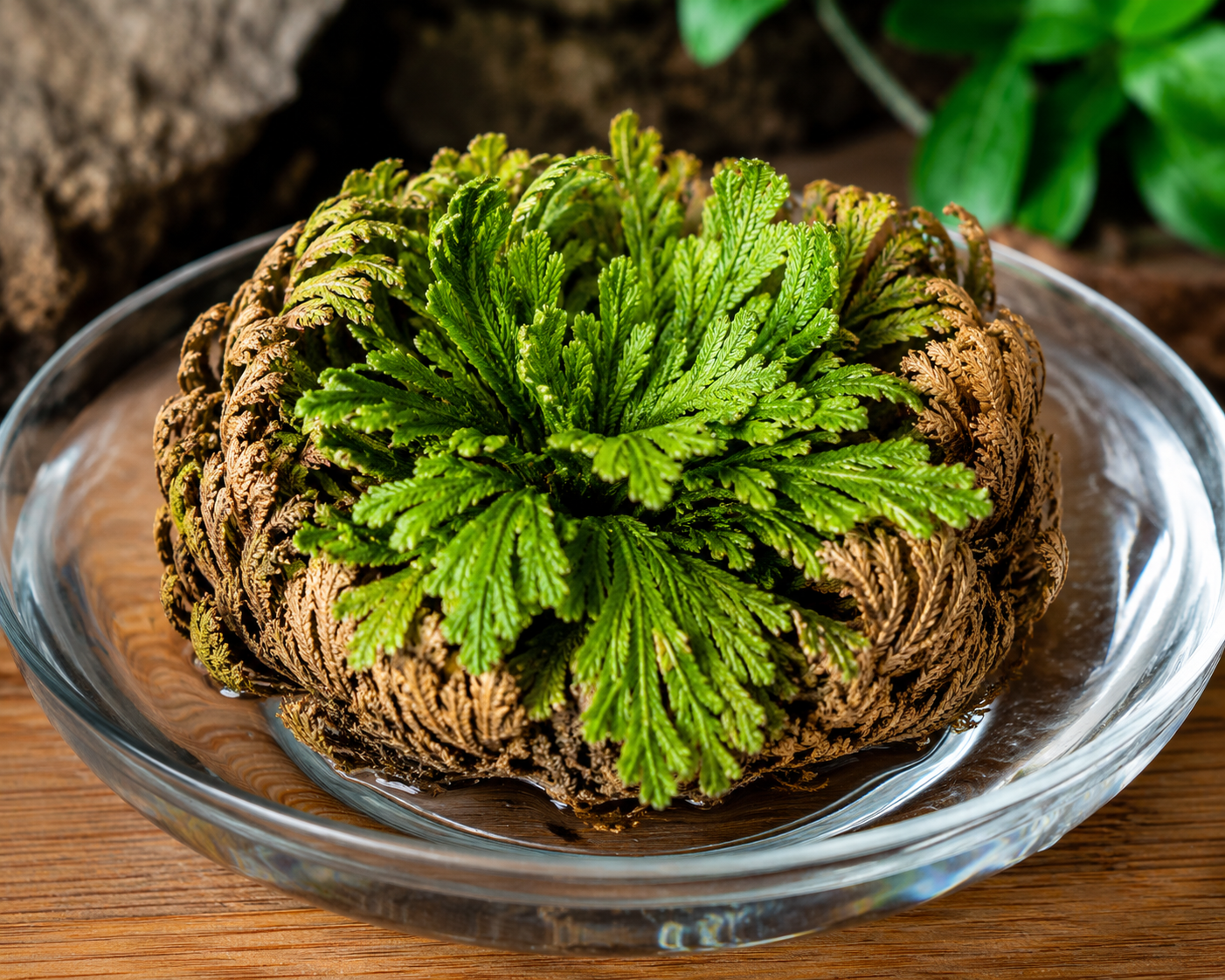
I picked up my first resurrection plant at a farmers market in Tucson a few years back. It looked like a dead clump of twigs. The vendor swore it would “come back to life” with a little water. I was skeptical. Twenty minutes after I got it home, I dropped it in a saucer of water. It unfurled into a small green rosette right in front of me. That moment explains why this plant has such a devoted following. It also explains why so many people are searching for it again in 2026, as low-maintenance, conversation-piece houseplants keep trending.
This guide covers everything you need to grow, revive, and care for a resurrection plant (Selaginella lepidophylla) long-term. It also explains the science behind how the plant pulls off its disappearing act.
What Exactly Is a Resurrection Plant?
The resurrection plant goes by several names: Rose of Jericho, dinosaur plant, stone flower, and siempre viva. It’s a spikemoss in the Selaginellaceae family. It grows natively in the Chihuahuan Desert, the arid region that stretches across the southwestern United States and northern Mexico, including parts of Texas, New Mexico, and Arizona.
One thing is worth clearing up. This houseplant isn’t the same species as the “true” biblical Rose of Jericho (Anastatica hierochuntica). That plant is a flowering desert species from the Middle East. The two share a nickname and a survival trick, but they aren’t botanically related. If a seller doesn’t specify, you’re almost certainly buying Selaginella lepidophylla. It’s the variety most U.S. nurseries and online shops sell.
How Does It “Come Back to Life”?
This is the part that gets people hooked. In drought conditions, the plant loses up to 95–97% of its internal water content. It curls into a tight brown ball to protect its core from sun and heat. Botanists at Washington State University’s Marion Ownbey Herbarium have studied this process closely. They found that the plant’s cells suffer almost no permanent damage during dormancy. Once rehydrated, the plant rebuilds the chloroplasts and enzymes it needs for photosynthesis within hours. It essentially restarts its own food production from scratch. You can read more about the science on the Washington State University Herbarium’s plant profile.
In its native desert habitat, a fully dried-out plant can also detach its roots. It then tumbles across the ground like a tumbleweed until it lands somewhere wetter. You won’t see that part as a houseplant owner. But it explains why the plant can survive being bone-dry for extended stretches.
How to Revive a Dried Resurrection Plant
If yours arrived as a dry brown ball, follow these steps:
- Place it root-side down in a shallow dish or saucer.
- Add room-temperature distilled, filtered, or rainwater until it just reaches the base of the plant. Don’t fully submerge it.
- Wait. The fronds usually start to relax and unfurl within a few hours. Full revival can take one to two days.
- Once it’s green and open, pour off any excess standing water. Don’t let the base sit in a puddle indefinitely.
Tap water works in a pinch. But resurrection plants can be sensitive to chlorine and mineral buildup over time. Choose distilled or rainwater for consistent long-term results.
Ongoing Care: Light, Water, and Soil
Light: Give it bright, indirect light. An east- or west-facing windowsill works well for most U.S. homes. Avoid harsh, direct midday sun, especially through glass. It can scorch the fronds once they’re hydrated.
Water: This is a feast-or-famine plant by design. Skip the fixed watering schedule. Instead, let it cycle between full hydration and near-complete dryness. Soak an indoor plant every 10 to 21 days as a general rule. Water more often, every 3–7 days, if your home runs warm and dry. Water less often in cooler, humid conditions. Always leave at least one fully dry day between waterings. This keeps the base from sitting in moisture and rotting.
Soil: You don’t need soil at all. A shallow dish of pebbles or gravel works fine if you wet it periodically. The plant absorbs moisture directly through its tissue. If you’d rather pot it, use a fast-draining mix. Try 40% coarse perlite or orchid bark, 30% peat or coir, and 30% coarse sand. This mimics its native desert soil and prevents waterlogging.
Humidity: A light misting between waterings helps. This matters most if you run a heater or AC, which dries out indoor air. That’s common across much of the U.S. in both summer and winter.
Fertilizer: You barely need it. If you want to feed your plant, use a very dilute, water-soluble fertilizer at about one-tenth strength. Do this once or twice during the growing season.
Where Resurrection Plants Fit in U.S. Growing Zones
Want to grow one outdoors instead of as a houseplant? It does best in USDA Hardiness Zones 8 through 10. Think parts of the Southwest, Texas, and the Gulf Coast, where it handles heat and drought but not hard freezes. Outside those zones, it thrives as an indoor specimen year-round. That’s how most people in the U.S. actually grow it.
Common Mistakes That Kill Resurrection Plants
- Leaving it submerged in water permanently. The plant needs dry-down periods. Continuous standing water causes rot at the base.
- Using hard tap water long-term. Mineral and chlorine buildup can stress the plant over repeated cycles.
- Exposing it to direct sun while hydrated. A dried, dormant plant handles more light than a freshly revived, water-saturated one.
- Assuming it’s dead when it’s just dormant. A truly dead resurrection plant looks brittle and won’t unfurl, even after hours in water. A dormant one just needs time and proper hydration.
Propagating a Resurrection Plant
Resurrection plants don’t produce seeds or flowers. You propagate them through division instead. Use a clean, sharp tool to cut a healthy section, around 3–4 inches, from a dormant mother plant. Do this ideally in spring or late fall. Set the cutting on gravel or a well-draining mix. Saturate it with water, then let the excess drain fully. New growth typically appears within a few days. After that, treat it like a mature plant.
A Quick Word on Pet and Family Safety
Selaginella lepidophylla is generally non-toxic. That makes it a reasonably safe pick for households with curious pets or kids. Still, keep any houseplant out of reach and discourage chewing, since individual sensitivities can vary.
Building out a broader low-maintenance plant collection? Check our guide to drought-tolerant houseplants for other species that pair well with a resurrection plant’s care routine. It’s a solid way to build a windowsill that mostly takes care of itself.
Frequently Asked Questions
Is a resurrection plant the same as the biblical Rose of Jericho? No. U.S. retailers commonly sell Selaginella lepidophylla as “Rose of Jericho.” This spikemoss grows natively in the Chihuahuan Desert. The actual biblical Rose of Jericho is a different, unrelated species called Anastatica hierochuntica, native to the Middle East.
How long can a resurrection plant survive without water? In its dormant, curled state, it can survive for months and sometimes several years without water. It loses up to 95–97% of its internal moisture without permanent cellular damage.
How long does it take for the plant to “come back to life”? Most plants start unfurling within a few hours of contact with water. Full revival usually finishes within 24 to 48 hours.
Can I grow a resurrection plant in soil instead of water? Yes. Sellers often display it bare-root in a dish of water and pebbles. But you can also pot it in a fast-draining mix of perlite, peat, and coarse sand. Just make sure the container has drainage. Avoid letting the soil stay constantly wet.
Why isn’t my resurrection plant turning fully green? Partial greening usually means uneven water coverage. It can also mean some older fronds have reached the end of their revival capacity. Try a more thorough soak. Check that the entire base makes contact with water.
Does a resurrection plant need fertilizer? Rarely. A very diluted, balanced liquid fertilizer once or twice during the growing season is plenty. Overfeeding isn’t necessary and can actually do more harm than good.
Is the resurrection plant safe for pets and kids? It’s generally non-toxic. Still, keep it out of reach and supervise pets and small children around it, as you would with any houseplant.
What’s the difference between a resurrection plant and a resurrection fern? They share a similar drought-survival trick, but they’re different plants. The resurrection fern (Pleopodium aureum) is a true fern. It often grows on tree bark in the southeastern U.S. The resurrection plant (Selaginella lepidophylla) is a spikemoss from the desert Southwest. They aren’t closely related botanically.