

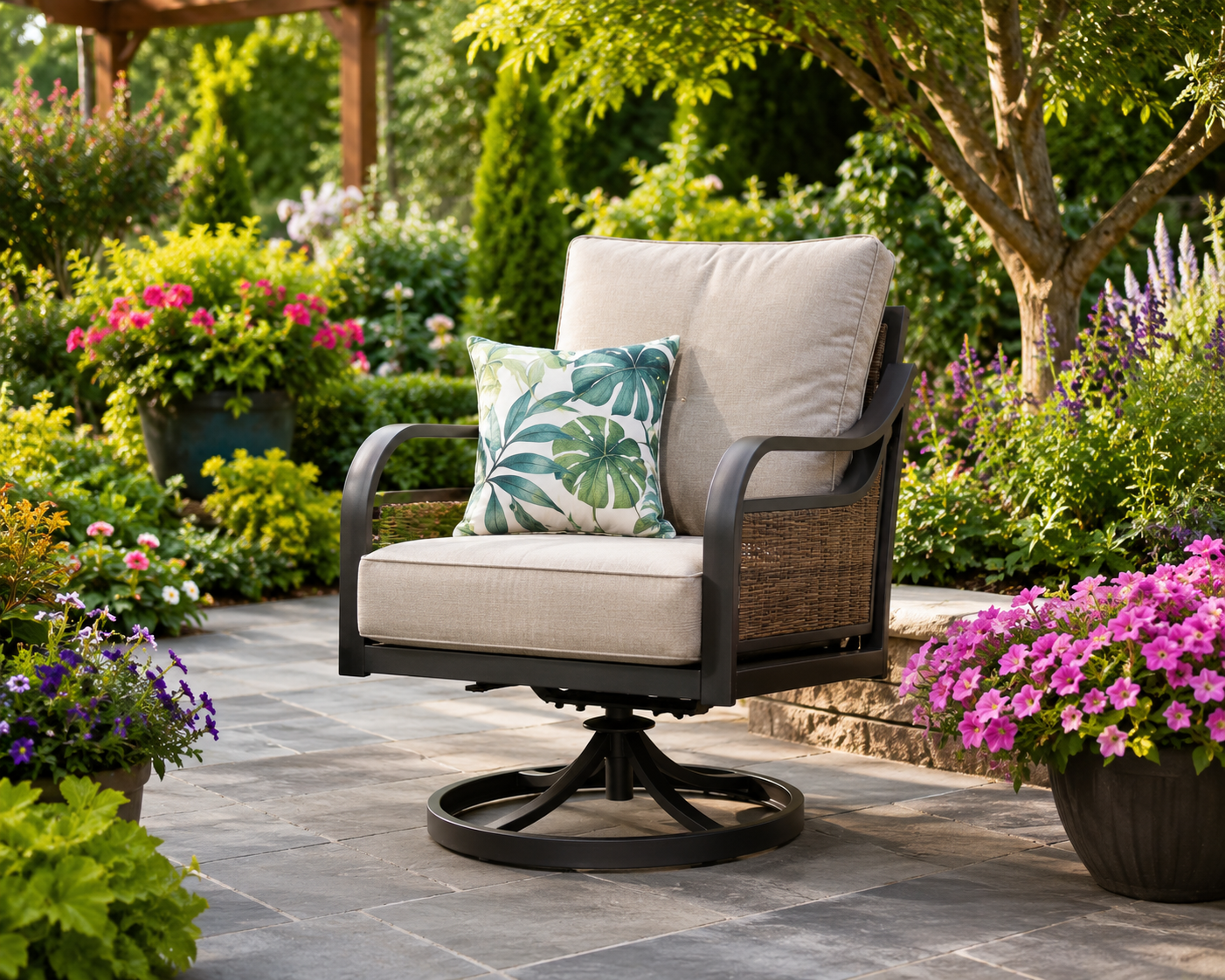
Walk into almost any well-designed garden this year, and you’ll likely spot a swivel chair near the flower beds or beside a fire pit. It’s not just a furniture trend. It’s become one of the easiest ways to make a garden feel like an actual living space. Otherwise, it’s just something you look at from the kitchen window. I’ve spent a good amount of time researching outdoor design this year. I’ve also talked with landscape stylists about what actually works in real backyards. So I put together this practical guide for choosing and placing swivel chairs in your own garden.
Why Gardens Specifically Benefit From Swivel Seating
Gardens are different from patios in one important way. They’re rarely symmetrical, and the view changes depending on where you sit. One direction might face a rose bed. Another might face a vegetable patch. Another might face the sunset over the fence line. A fixed chair locks you into whichever view it happens to face. A swivel chair, though, lets you rotate toward whatever draws your attention that day. That could be a conversation, a blooming hydrangea, or the kids playing on the lawn.
There’s also a practical layout benefit here. Garden seating areas often sit on uneven ground, gravel, or stepping-stone patios. Furniture can’t easily be dragged around in those spots. Since the swivel base stays fixed while the seat rotates, you get flexibility without moving anything. That matters more in a garden than almost anywhere else outdoors.
Matching Swivel Chairs to Your Garden Style
Cottage and English Garden Style
Some gardens are filled with layered flower beds, climbing roses, and a slightly wild feel. For these, a wrought-iron or rattan-style swivel chair tends to fit best. Soft floral or striped cushions in muted tones complement this look. Sleek modern lines simply don’t work as well here. A slightly weathered or matte finish actually enhances the cottage aesthetic. It doesn’t detract from it at all.
Modern Minimalist Gardens
Some gardens lean toward clean hardscaping, ornamental grasses, and simple planting schemes. For these, a slim aluminum-frame swivel chair keeps the look uncluttered. Black, charcoal, or white tones work especially well here. Solid-colored cushions in neutral tones beat patterned fabric in this setting. Patterns can feel visually busy against an already simple layout.
Coastal and Tropical-Inspired Gardens
Gardens featuring palms, hardy hibiscus, or ornamental grasses pair naturally with woven resin or teak swivel chairs. Natural or driftwood tones work especially well in this style. These materials echo the relaxed, breezy feel that coastal gardens aim for. They also tend to handle the humidity that often comes with lush, tropical planting.
Desert and Xeriscape Gardens
Some gardens center around succulents, gravel beds, and drought-tolerant plants. A powder-coated metal swivel chair in warm terracotta or sand tones blends naturally into that palette. These gardens often see intense, direct sun throughout the day. Because of that, fade-resistant cushion fabric matters even more here than in shadier settings.
Sizing Swivel Chairs for Different Garden Spaces
Garden dimensions vary enormously, so scale is worth thinking through before you buy.
For small courtyard or balcony gardens, a single compact swivel chair works best. Look for a narrower base footprint here. Bulkier lounge-style chairs can quickly overwhelm a tight space. Models under about 30 inches wide tend to fit comfortably, even in smaller planted courtyards.
For mid-sized backyard gardens, a pair of swivel chairs near a shared side table strikes a nice balance. You get comfort and flexibility without dominating the planting areas around it.
Larger gardens often include multiple zones, such as a dining area, a lounge nook, and a fire pit. Oversized deep-seated swivel chairs make sense specifically in the lounge area. Smaller swivel chairs, or dining-height versions, work better near the table itself.
Choosing Materials That Hold Up in Garden Conditions
Gardens present a slightly different durability challenge than open patios. This mainly comes down to soil moisture, mulch, and closer contact with plants and irrigation systems.
Aluminum frames resist rust exceptionally well. They hold up even with regular exposure to damp mulch or sprinkler overspray. This makes aluminum a strong default choice for garden settings. Teak and eucalyptus wood naturally resist rot and insects. That’s particularly useful in gardens, where furniture often sits close to soil, compost, or planting beds. HDPE resin wicker handles humidity and splashback from garden watering far better than older synthetic wicker. It also won’t warp the way lower-grade plastics can after repeated wet-dry cycles. Performance cushion fabrics, such as Sunbrella or olefin, matter enormously in gardens. Pollen, dirt, and moisture from nearby plants tend to accumulate on outdoor cushions faster than they would on a clean patio surface.
Placement Tips for Garden Swivel Chairs
Positioning matters just as much as the chair itself. A few placement principles tend to work well across most garden styles.
Position chairs a few feet back from planting beds. This way, swiveling won’t knock against nearby shrubs or flowers. Choose a spot with partial afternoon shade if possible. Direct, all-day sun accelerates cushion fading, regardless of fabric quality. Anchor the seating area with a small side table or a nearby planter. This helps the chairs feel intentionally placed rather than randomly dropped onto the lawn. Finally, leave enough clearance around each chair, generally two to three feet. Otherwise, the swivel motion can feel cramped against nearby furniture or garden edging.
Regional Garden Climate Considerations Across the U.S.
Garden climates vary widely across the country. This affects both plant choices and furniture durability.
In the humid Southeast, including Georgia, South Carolina, and much of Florida, garden furniture faces near-constant moisture. This comes from both weather and irrigation. Aluminum and teak outperform steel and lower-grade wicker in this climate. Cushions also benefit from being brought inside during particularly wet stretches.
In the arid Southwest, covering Arizona, New Mexico, and inland Southern California, intense UV exposure is the bigger concern. Fade-resistant fabrics and lighter cushion colors hold up noticeably longer than darker tones here.
In the Pacific Northwest, frequent rain and cooler temperatures shift the priority toward mildew resistance rather than heat resistance. Furniture with good cushion drainage helps considerably. Breathable covers during the rainiest months help too.
In colder northern regions, like the Upper Midwest and New England, seasonal storage becomes part of garden planning. Many gardeners move cushions indoors from late fall through early spring. Aluminum and teak frames, on the other hand, can generally stay outside year-round without much issue.
For more on choosing plants and hardscaping that pair well with outdoor seating, Better Homes & Gardens’ guide to garden design basics offers helpful groundwork. It’s worth reviewing before you start shopping for furniture.
What Garden Swivel Chairs Typically Cost in 2026
Pricing depends heavily on materials and brand reputation. Entry-level resin or steel swivel chairs generally start between $120 and $280 per chair. These suit smaller gardens or first-time buyers testing out the style. Mid-range aluminum or woven resin options with performance cushions typically run $280 to $550. These offer a solid balance of durability and design. Premium teak or designer collections usually land between $550 and $1,000 or more per chair. These often feature reinforced swivel mechanisms and Sunbrella upholstery.
Garden furniture tends to sit closer to soil, moisture, and plant debris than patio furniture on a raised deck. Because of that, it’s often worth prioritizing frame durability over cushion pattern when working within a tighter budget.
If you’re comparing broader furniture options beyond garden-specific placement, our outdoor patio furniture buying guide covers frame materials, cushion fabrics, and pricing in more depth.
Maintaining Swivel Chairs in a Garden Setting
Gardens introduce more organic debris than a clean patio does. So, a slightly different care routine helps keep chairs looking their best. Brush off pollen, leaves, and dirt weekly during peak growing season. These accumulate faster near planting beds than on open hardscape. Check the swivel base periodically for soil or mulch buildup. This buildup can interfere with smooth rotation over time. Rinse cushions with a garden hose after particularly dusty or pollen-heavy weeks. Then let them dry fully in the sun before placing them back on the frame. If your garden uses sprinklers, angle them away from seating areas when possible. Direct water contact speeds up wear on both fabric and metal finishes.
Accessorizing Your Garden Swivel Chair Setup
A swivel chair rarely stands alone in a well-planned garden. The right accessories pull the whole seating area together and make it feel finished rather than temporary.
A small side table is almost essential. It gives you somewhere to set a drink, a book, or gardening gloves without reaching across the chair. Look for weather-resistant materials that match your frame, such as teak with teak or aluminum with aluminum, so the pairing feels cohesive rather than mismatched.
Outdoor rugs also make a noticeable difference. They anchor the seating area visually and add warmth underfoot, especially on gravel or stone surfaces. Choose a flat-weave, quick-drying rug designed for outdoor use, since standard indoor rugs trap moisture and mildew quickly in a garden setting.
Lighting extends how long you can actually enjoy the space. Solar lanterns, string lights woven through nearby trellises, or a small tabletop lamp all work well near swivel seating. They’re especially useful for gardens used in the evening, when swiveling toward a softly lit corner feels far more inviting than facing total darkness.
Throw pillows and lap blankets add comfort during cooler months or breezy evenings. Choose fade-resistant, quick-drying fabrics here too, since these accessories face the same sun and moisture exposure as the main cushions. A woven basket nearby for storing blankets or extra cushions also keeps the area tidy between uses.
Finally, consider a small potted plant or two placed near the chair itself. This softens the transition between furniture and garden bed, and it helps the seating area feel like a natural extension of the landscape rather than something dropped in afterward.
Frequently Asked Questions
What’s the best swivel chair material for a garden with sprinklers or irrigation? Aluminum and teak both handle regular moisture exposure far better than steel or lower-grade wicker. Both resist rust and rot, even with frequent contact with sprinkler overspray or damp mulch nearby.
How far should a swivel chair sit from garden beds? A few feet of clearance, generally two to three feet, prevents the chair from swiveling into nearby plants or flower beds. This also gives roots and soil around the bed room to stay undisturbed.
Do garden swivel chairs need more maintenance than patio versions? Slightly, yes. Gardens introduce more pollen, dirt, and organic debris than a clean patio surface. Because of that, more frequent brushing and occasional rinsing helps keep cushions and frames looking fresh.
Can swivel chairs be left in the garden through winter? Aluminum and teak frames generally handle winter weather well in most regions. Still, cushions should be stored indoors or covered during freezing or heavy snow conditions to prevent moisture damage.
What size swivel chair works best for a small garden or courtyard? Compact models under roughly 30 inches wide tend to fit small courtyard or balcony gardens without overwhelming the planted space. A single chair or a narrow pair usually works better than a bulkier lounge-style option.
Are woven resin swivel chairs a good choice for humid garden climates? Yes. Modern HDPE resin wicker resists humidity, mildew, and warping far better than older synthetic wicker materials. It holds up especially well in the humid Southeast and Gulf Coast regions.
How do I keep the swivel base from getting stiff in a garden setting? Check periodically for soil, mulch, or plant debris buildup around the base, and clear it away as needed. A silicone-based lubricant applied occasionally helps keep the rotation smooth despite outdoor debris.
Should garden swivel chairs match the planting style, or can they contrast? Either approach works. Still, chairs that echo the garden’s overall tone, whether that’s cottage, modern, coastal, or desert, tend to feel more intentional. A strong contrast can work too, as long as it’s a deliberate design choice rather than an afterthought.
Prices and product details mentioned in this guide reflect general 2026 market ranges and may vary by retailer, region, and season.