

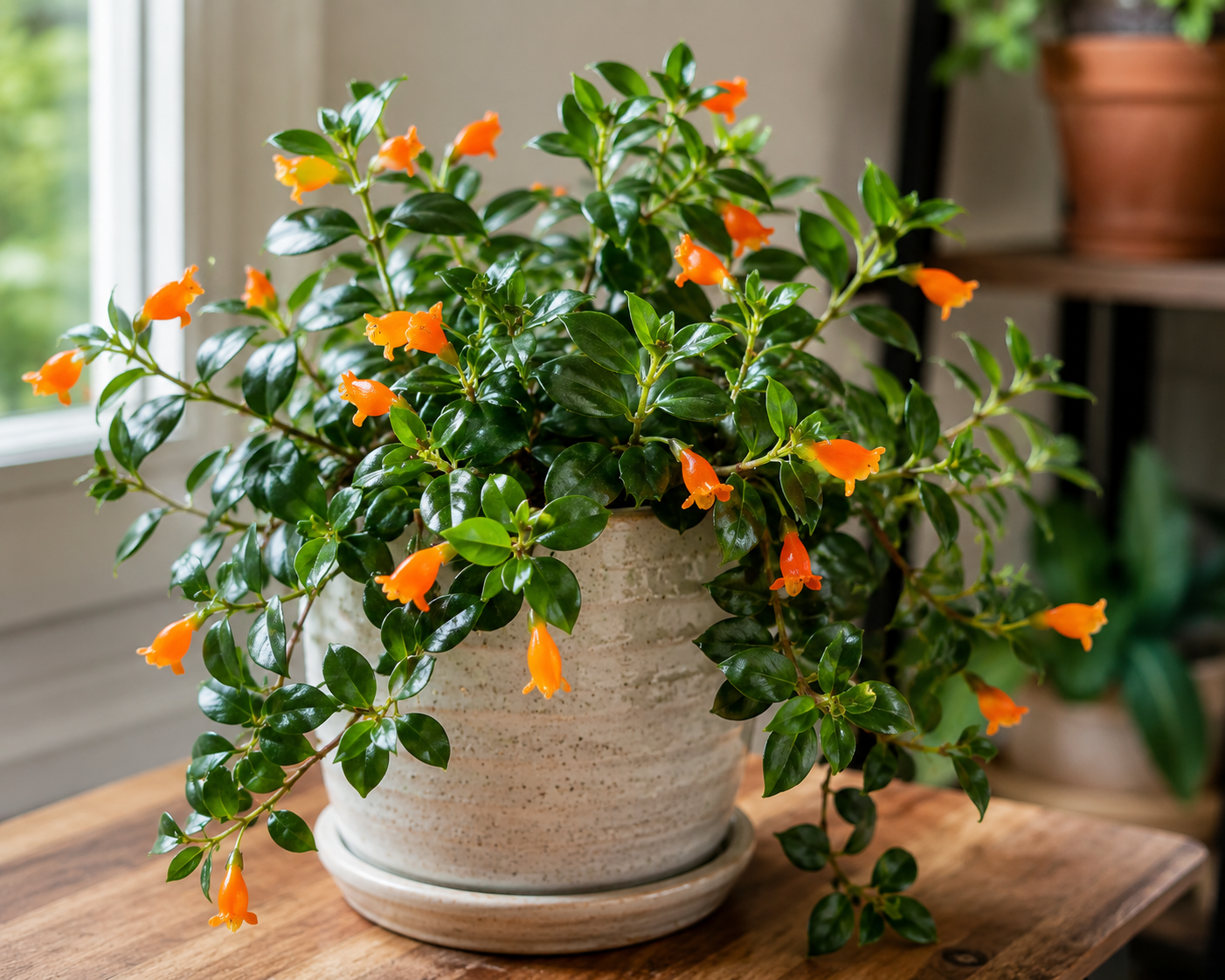
Have you spotted a trailing houseplant covered in tiny orange, fish-shaped flowers? That is almost certainly a goldfish plant. Its botanical name is Nematanthus gregarius, and it has become one of the most popular hanging houseplants across American homes in 2026. The whimsical blooms explain most of its appeal. Still, this plant offers more than good looks. It is also fairly forgiving for beginners, once you understand its basic needs.
In this guide, we will walk through everything you need to know to grow a healthy, blooming goldfish plant indoors. We will cover light, water, soil, humidity, and fertilizing. We will also share tips for encouraging more blooms, propagating new plants, and troubleshooting common problems. By the end, you should feel confident growing this charming plant in your own home.
What Is a Goldfish Plant?
The goldfish plant belongs to the Gesneriad family, the same family that includes African violets. It grows natively in the rainforests of Brazil, where it typically clings to trees as an epiphyte rather than growing in soil directly. This origin explains a lot about its indoor care needs, since epiphytic plants generally prefer excellent drainage and bright, indirect light rather than heavy, wet soil.
Its glossy, dark green leaves trail attractively over the edge of a hanging basket. When conditions are right, small orange or red flowers emerge along the stems. Each bloom really does resemble a tiny goldfish, complete with a puckered “mouth” shape. That resemblance is exactly how the plant earned its common name. According to the North Carolina State Extension Gardener Plant Toolbox, the goldfish plant cannot tolerate temperatures below 50°F and is best grown indoors in bright, filtered light away from direct afternoon sun. This university-backed profile is a great resource to bookmark if you ever want a quick refresher on the plant’s core needs.
Quick Care Summary
Before we dive into details, here is a fast overview for anyone who wants the essentials right away.
- Light: Bright, indirect light
- Water: Allow the top inch of soil to dry between waterings
- Soil: Well-draining, slightly acidic potting mix
- Humidity: Moderate to high
- Temperature: 65°F to 80°F
- Fertilizer: Balanced liquid fertilizer every two to four weeks during active growth
- Bloom season: Spring through fall, though some plants flower nearly year-round indoors
Now, let’s break each of these down further.
Light Requirements for a Goldfish Plant
Bright, indirect light works best for this plant. An east-facing or west-facing window usually provides the right balance. Direct afternoon sun, however, can scorch the leaves, especially during the hottest summer months across the southern United States.
If your home does not offer much natural light, a goldfish plant can still thrive under a grow light. Aim for around 12 hours of light daily if you go this route. Low light will not necessarily kill the plant, but it will likely stop blooming altogether, which defeats much of the appeal.
Watering Your Goldfish Plant
Consistency matters more than frequency here. Let the top inch of soil dry out before watering again. Because this plant evolved as an epiphyte, it does not tolerate soggy roots well. Overwatering remains one of the most common reasons goldfish plants decline indoors.
During winter, reduce watering frequency slightly, since growth naturally slows down. During the active growing season, typically spring through early fall, you may need to water more often, especially if your home runs warm or dry. Always check the soil with your finger rather than watering on a fixed schedule, since indoor conditions vary widely from home to home.
Choosing the Right Soil and Pot
A well-draining potting mix makes a real difference for this plant’s long-term health. Many growers use a blend designed for African violets, since the two plants share similar soil preferences. Alternatively, you can mix standard potting soil with perlite or orchid bark to improve drainage.
Choose a pot with drainage holes, without exception. Hanging baskets work particularly well, since they showcase the plant’s natural trailing habit while also promoting good airflow around the roots. Terra cotta pots can help excess moisture evaporate faster, which benefits growers who tend to water a bit too generously.
Humidity and Temperature Needs
Because the goldfish plant hails from tropical rainforests, it appreciates moderate to high humidity. Average household humidity usually works fine, though homes in drier climates, such as parts of Arizona, Nevada, or Colorado, may need a humidity boost. A pebble tray or small humidifier placed nearby can help significantly.
Temperature-wise, aim for a range between 65°F and 80°F. This plant does not tolerate cold drafts well, so keep it away from drafty windows or exterior doors during winter. If you live somewhere with mild summers, you can even move your goldfish plant outdoors to a shaded porch during the warmest months. Just remember to bring it back inside before nighttime temperatures drop below 55°F.
Fertilizing for Healthy Growth
Feed your goldfish plant with a balanced, water-soluble fertilizer every two to four weeks during spring and summer. Dilute the fertilizer to roughly half strength to avoid burning the roots, since this plant tends to be sensitive to overly concentrated feeding.
During fall and winter, growth slows considerably. Because of this, you can reduce fertilizing to once a month or pause it entirely. Resuming a regular feeding schedule in early spring will help kickstart new growth and, eventually, new blooms.
How to Encourage More Blooms
Getting a goldfish plant to bloom consistently comes down to a few key factors working together. First, bright, indirect light plays the biggest role. Without enough light, the plant may grow lush foliage but produce very few flowers.
Second, a slight temperature drop at night can actually help trigger blooming, mimicking natural outdoor conditions. Third, avoid over-fertilizing with high-nitrogen products, since this tends to encourage leafy growth at the expense of flowers. Look instead for a fertilizer with a more balanced or slightly higher phosphorus ratio during bloom season.
Finally, be patient. Newly propagated or recently repotted plants often need several months to settle in before they start flowering reliably.
Pruning and Shaping Your Goldfish Plant
Light, regular pruning keeps your goldfish plant looking full rather than leggy. Pinch back the growing tips every few months to encourage bushier growth. This is especially helpful for younger plants that have not yet filled out their hanging basket.
After a big bloom cycle, you can trim back any stems that look sparse or overly long. Do not worry about cutting too aggressively, since this plant typically bounces back quickly from pruning. In fact, many growers use the trimmed cuttings to propagate entirely new plants, which brings us to our next section.
Propagating Goldfish Plants from Cuttings
Propagation is refreshingly simple with this species. Start by snipping a healthy stem section, roughly four to six inches long, just below a leaf node. Remove the lower leaves, leaving just a few at the top.
You can root the cutting in water or directly in moist potting mix. If you choose water propagation, change the water every few days to prevent bacterial buildup. Roots typically appear within two to four weeks. Once roots reach about an inch long, transplant the cutting into a small pot with well-draining soil.
Spring and early summer tend to offer the best propagation success, since the plant’s natural growth cycle is already ramping up during that time.
Common Pests and Problems
Like most houseplants, goldfish plants can attract a few common pests. Mealybugs and aphids show up most frequently, often hiding along stems or in leaf joints. Wipe them away with a cotton swab dipped in rubbing alcohol, or treat the plant with insecticidal soap if the infestation spreads.
Yellowing leaves usually point to overwatering, while crispy, browning leaf edges often signal low humidity or too much direct sun. Dropped flower buds, meanwhile, frequently result from sudden changes in light, temperature, or watering routine, since this plant does not love abrupt shifts in its environment.
Repotting Your Goldfish Plant
Goldfish plants generally do not need frequent repotting, since they tend to prefer being slightly root-bound. Repot roughly every two years, or whenever you notice roots circling tightly at the bottom of the pot.
Choose a new pot just one size larger than the current one. Going too large can hold excess moisture around the roots longer than necessary, which increases the risk of root rot. Spring offers the ideal repotting window, since the plant can recover and establish new roots during its active growing season.
Where to Find Goldfish Plants in the U.S.
Goldfish plants have become increasingly easy to find across the country in 2026. Many local nurseries and garden centers now stock them regularly, particularly in hanging basket form during spring and early summer. Big-box retailers with garden sections also carry them seasonally, especially in regions with strong indoor plant markets like the Pacific Northwest, California, and the greater New York area.
If your local selection feels limited, online specialty plant shops offer a wider variety of Nematanthus cultivars, including some less common color variations beyond the classic orange bloom.
If you are building out a broader indoor plant collection, our houseplant care guide covers general watering, lighting, and potting tips that apply across most common indoor species.
Final Thoughts
The goldfish plant rewards a little consistency with genuinely delightful blooms. Once you dial in the right light, watering rhythm, and humidity level, this plant tends to settle into an easy, low-maintenance routine. Whether you are growing your first hanging houseplant or adding to an already thriving collection, Nematanthus gregarius brings color, texture, and a bit of playful charm to any indoor space.
Frequently Asked Questions
1. Why is my goldfish plant not blooming? Insufficient light is the most common cause. Move your plant to a brighter spot with indirect sunlight, and avoid over-fertilizing with high-nitrogen products, which can encourage leaves over flowers.
2. How often should I water a goldfish plant? Water once the top inch of soil feels dry, rather than following a fixed schedule. This usually works out to once every one to two weeks, depending on your home’s humidity and temperature.
3. Can goldfish plants tolerate direct sunlight? Not well. Direct afternoon sun can scorch the leaves. Bright, indirect light produces the best growth and blooming results.
4. Is the goldfish plant toxic to pets? Nematanthus gregarius is generally considered non-toxic to cats and dogs, though it is still wise to discourage pets from chewing on any houseplant.
5. How do I make my goldfish plant bushier? Pinch back the growing tips regularly, especially while the plant is young. This encourages branching and a fuller, more compact shape over time.
6. Can I grow a goldfish plant outdoors during summer? Yes, in most U.S. regions, as long as you place it in a shaded or partially shaded spot. Bring it back indoors before nighttime temperatures drop below 55°F.
7. Why are my goldfish plant’s leaves turning yellow? Yellowing leaves most often signal overwatering. Let the soil dry out more between waterings, and double-check that your pot has adequate drainage.
8. How long do goldfish plant blooms last? Individual flowers typically last one to two weeks, though a healthy plant will continue producing new blooms in cycles throughout the growing season.