

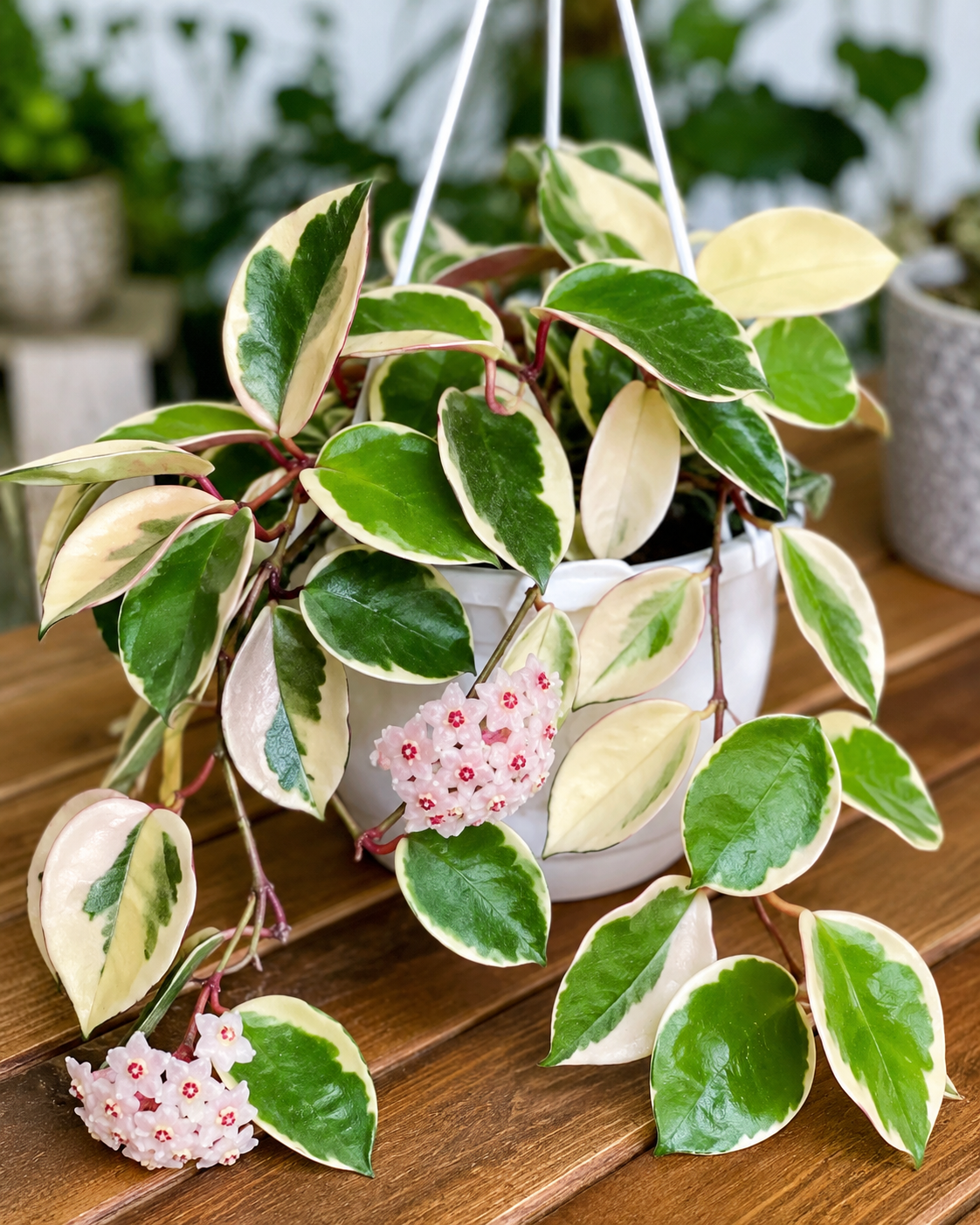
If you have ever scrolled through a plant lover’s Instagram feed, you have probably stopped on a photo of the Hoya Krimson Queen. Those thick, waxy leaves catch the eye instantly. They are edged in creamy white and blushed with pink. But here is the thing: this plant looks fancy, yet it is surprisingly forgiving. Once you understand what it wants, it settles in easily.
I have grown several Hoyas over the years. The Krimson Queen remains one of my favorites because it rewards patience. It is not a fast grower. And it will test your restraint when it comes to watering. However, once it settles into your home, it becomes a low-maintenance showstopper. It can live for decades with the right care.
This guide walks through everything you need to know. We will cover light, watering, common problems, and propagation. Maybe you just brought one home from a local nursery. Or perhaps you have been nursing yours for months without much progress. Either way, you will find practical, real-world advice here.
What Is a Hoya Krimson Queen?
The Hoya Krimson Queen is a variegated cultivar of Hoya carnosa. This is one of the most popular species in the Hoya family. Its leaves are thick and succulent-like. That makes sense, since Hoyas are epiphytes native to tropical Asia and Australia. In their natural habitat, they grow on trees. They absorb moisture from humid air and occasional rainfall, rather than sitting in soggy soil.
What sets the Krimson Queen apart is its variegation. Each leaf typically shows a pink or cream border around a green center. However, the exact pattern can vary from leaf to leaf. Interestingly, new growth often emerges pink. It then mellows into a softer cream shade as the leaf matures. Because of this, many growers notice their plant looks slightly different every few months. That keeps things interesting.
One common point of confusion is the name itself. Some nurseries label this plant Hoya carnosa ‘Rubra.’ Others simply call it Hoya carnosa variegata. Naming can get messy depending on the supplier. If your tag says ‘Krimson Queen,’ ‘Tricolor,’ or even ‘Krimson Princess,’ do not worry. These are closely related variegated forms of the same species. Their care needs are nearly identical.
Light Requirements: Getting the Balance Right
Light is where most Krimson Queen problems start. So it deserves real attention. This plant thrives in bright, indirect light. Honestly, the variegation depends on it. Without enough light, the pink and cream coloring fades. The plant then reverts to mostly green leaves, as it tries to maximize its access to chlorophyll.
A spot near an east-facing window works beautifully. It gets gentle morning sun without harsh afternoon heat. South or west-facing windows can also work. But you will want to filter the light with a sheer curtain. This matters most during summer afternoons, when the sun is strongest. Direct, intense sun for hours on end can scorch the leaves. This leaves brown, crispy patches that never fully heal.
If natural light is limited in your home, try a simple LED grow light. Position it about a foot above the plant. Many growers notice a difference within a few weeks. This is especially true across the northern United States. Winter daylight hours shrink dramatically there. Many growers rely on supplemental lighting from October through March. This keeps their Hoyas from stalling out completely.
Watering: Less Is Genuinely More
Hoya Krimson Queen stores water in its thick leaves. So it does not need frequent watering. In fact, overwatering is the single biggest cause of death for this plant. The roots are sensitive to sitting in wet soil. Root rot can set in within just a few days of soggy conditions.
The best approach is simple. Let the soil dry out almost completely between waterings. Stick your finger about two inches into the pot. If it still feels damp, wait a few more days. During spring and summer, the plant grows actively. You might water every ten to fourteen days. In fall and winter, that stretch often extends to three or four weeks. This depends on your home’s humidity and temperature.
When you do water, soak the soil thoroughly. Water should run from the drainage holes. Then let the pot drain completely before setting it back on its saucer. This mimics the natural cycle the plant would experience in the wild. Heavy tropical rain is usually followed by a dry spell there.
Tap water works fine for most households. However, if your water is heavily chlorinated or softened with salt, let it sit out overnight before use. This simple step can prevent mineral buildup on the leaves over time.
Soil and Potting: Think Chunky, Not Dense
A regular bag of potting mix from the store is usually too dense for a Hoya. It holds too much moisture. Instead, aim for a chunky, well-draining mix. This allows air to reach the roots. A blend of standard potting soil, perlite, and orchid bark works well. Use roughly equal parts of each. This creates the airy structure the plant prefers.
Terracotta pots are a great choice. The porous material wicks away excess moisture. This helps prevent the soggy conditions that lead to rot. Whatever container you choose, make sure it has drainage holes. Consequently, avoid decorative pots without drainage. You can still use them as a cache pot around a nursery container.
Hoyas generally like being slightly root-bound. So there is no need to rush into repotting. Every two to three years is usually sufficient. You will know it is time when roots peek out of the drainage holes. Another sign is if the plant dries out unusually fast after watering.
Humidity and Temperature Preferences
Hoya Krimson Queen originates from tropical climates. So it appreciates moderate to high humidity. Aim for somewhere between 40 and 60 percent. That said, it adapts better than many tropical houseplants. It can tolerate the drier air of a typical American home. This is especially true during winter, when indoor heating kicks on.
If your home tends to run dry, take action. This applies especially in regions like the Southwest or upper Midwest during colder months. A small humidifier placed nearby can help. Your plant will thrive rather than merely survive. Grouping it with other plants also raises humidity naturally. Plants release moisture through their leaves in a process called transpiration.
Temperature-wise, this Hoya is happiest between 65 and 85 degrees Fahrenheit. It does not tolerate frost or cold drafts well. Keep it away from drafty windows in winter. Avoid placing it near air conditioning vents in summer, too. Sudden temperature swings can cause leaf drop. This happens even when every other care factor is spot on.
Feeding Your Hoya for Healthy Growth
The growing season typically runs from spring through early fall. During this time, feed your plant regularly. Use a balanced liquid fertilizer diluted to half strength. Apply it every four to six weeks. This supports steady growth and encourages blooming. Look for a fertilizer formulated for flowering houseplants. It usually contains a phosphorus and potassium ratio that favors blooms.
Hold off on fertilizing during late fall and winter. Growth naturally slows during this time. Feeding a dormant plant does little good. It can actually stress the roots. Unused salts build up in the soil instead.
Pruning and Maintenance
Hoya Krimson Queen does not require aggressive pruning. But a little maintenance goes a long way. Trim away any yellowed or damaged leaves as you notice them. Feel free to shape the vines, too. This helps if they are growing lopsided or unruly.
Here is an important tip that trips up many new growers. Never cut off the small, leafless stubs left after a flower cluster fades. These are called peduncles. Hoyas rebloom from the same peduncle year after year. Removing them means starting the blooming process over from scratch. This can delay flowers by a full season or longer.
Understanding the Blooms
One reward stands out for mature Hoya Krimson Queen growers. It is the fragrant, star-shaped flower clusters the plant can produce. The blooms are typically pale pink or white. They often feature a deep red or burgundy center. They release a sweet, almost candy-like scent. This is especially noticeable in the evening.
Do not expect flowers right away, though. Most Hoyas need a couple of years of consistent care first. They need to mature enough to bloom. Adequate light helps encourage flowering. A slightly root-bound pot helps, too. Patience really is the name of the game here. Many longtime growers say the wait is worth it. Those clusters are stunning once they finally open.
Common Problems and How to Fix Them
Even experienced plant parents run into occasional issues with Hoyas. So do not be discouraged if yours shows a few symptoms along the way.
Yellowing leaves usually point to overwatering. Check the roots for mushy, brown sections. Trim away affected areas. Then adjust your watering schedule going forward.
Loss of variegation typically means the plant needs more light. Move it to a brighter spot. New growth should start showing that signature pink and cream coloring again.
Wrinkled or shriveled leaves often signal underwatering. Less commonly, root damage prevents water uptake instead. Give the plant a thorough soak. Monitor how it responds over the following week.
Sticky residue on leaves frequently signals mealybugs or aphids. Wipe the leaves down with a cotton swab dipped in rubbing alcohol. Follow up with an insecticidal soap if the infestation persists.
Sudden leaf drop can result from cold drafts or temperature shock. A recent move to a new environment can cause it, too. Hoyas can be a bit dramatic about relocation. Give yours a few weeks to adjust. Do not assume something is seriously wrong right away.
Propagating Hoya Krimson Queen
Propagation is one of the most satisfying parts of growing this plant. It is easier than many people expect, too. Take a stem cutting with at least two to three leaves. Include one or two nodes as well. Roots form at the nodes, not randomly along the stem.
You can root the cutting in water. Change the water every few days. Or place it directly into a well-draining soil mix. Keep the mix lightly moist throughout. Rooting can take anywhere from three to eight weeks. Resist the urge to tug on the cutting to check progress. This can damage fragile new roots.
For best results, propagate during spring or summer. The plant’s natural growth cycle supports faster root development then. If you are new to propagating houseplants in general, check out our complete guide to propagating houseplants from cuttings. It covers additional techniques that apply across many popular species, not just Hoyas.
Seasonal Care Tips Across the USA
Growing conditions vary a lot across the country. So it helps to think regionally. In the Pacific Northwest, natural light drops during fall and winter. This often calls for supplemental grow lights. In the humid Southeast, growers usually water less often. Ambient moisture keeps soil from drying out as quickly there. Meanwhile, dry climates like Arizona or Nevada need extra humidity support. Pebble trays or a humidifier keep leaves from crisping at the edges.
Regardless of where you live, consider moving your Hoya outdoors for summer. This can boost growth significantly. Just introduce it to direct sunlight gradually. Bring it back inside before nighttime temperatures dip below 50 degrees Fahrenheit.
According to horticultural guidance from North Carolina State University Extension, Hoya carnosa varieties adapt well to typical indoor conditions. They are considered relatively low-maintenance houseplants once their light and watering needs are understood. This lines up closely with what most home growers experience firsthand.
Final Thoughts
The Hoya Krimson Queen proves that a plant can be both beautiful and easygoing. Dial in the right light first. Master the art of underwatering, rather than overwatering, next. Give it a chunky, breathable soil mix, too. Once you do, this plant tends to take care of itself. Sure, it grows slowly. And yes, you might wait a couple of years for those fragrant blooms. But few houseplants offer the same striking color payoff. The effort required stays refreshingly manageable throughout.
If you are just starting your Hoya collection, this variety is a wonderful place to begin. It teaches patience while still rewarding you with visible progress along the way.
Frequently Asked Questions
How often should I water my Hoya Krimson Queen? Water only when the soil has dried out almost completely. This is usually every ten to fourteen days in spring and summer. In fall and winter, stretch it to every three to four weeks. Always check the soil with your finger first. Do not stick to a strict calendar instead.
Why is my Hoya Krimson Queen losing its pink and white variegation? Fading variegation almost always points to insufficient light. Move the plant to a brighter spot with indirect sunlight. New leaves should gradually regain their color. This usually happens within a few weeks.
Is Hoya Krimson Queen toxic to pets? Hoyas are generally considered non-toxic to cats and dogs. Still, it is wise to keep any houseplant out of reach. Chewing on leaves can occasionally cause mild stomach upset, regardless of toxicity level.
How long does it take for a Hoya Krimson Queen to bloom? Most plants need at least two to three years of maturity first. Then they can produce flowers. Bright indirect light encourages earlier blooming. A slightly root-bound pot helps, too.
Can I grow Hoya Krimson Queen in low light? It can survive in lower light conditions, technically speaking. But growth will slow considerably. The variegation will likely fade as well. For the best color and healthiest growth, choose bright indirect light instead.
What is the difference between Hoya Krimson Queen and Hoya Krimson Princess? Both are variegated forms of Hoya carnosa. Their care requirements are nearly identical. The main difference lies in the variegation pattern. Krimson Queen typically shows cream edges around a green center. Krimson Princess often has variegation running through the center instead.
Should I mist my Hoya Krimson Queen? Occasional misting can offer a short-term humidity boost. But it is not a substitute for consistent ambient humidity. A humidifier or pebble tray works better instead. Either option provides more reliable, long-term moisture support.
Why are my Hoya’s leaves turning yellow and falling off? Yellowing and leaf drop are most commonly linked to overwatering. Poor drainage causes similar issues, too. Check the root system for rot first. Trim away any damaged sections you find. Then adjust your watering routine going forward. Let the soil dry out more thoroughly between waterings.