

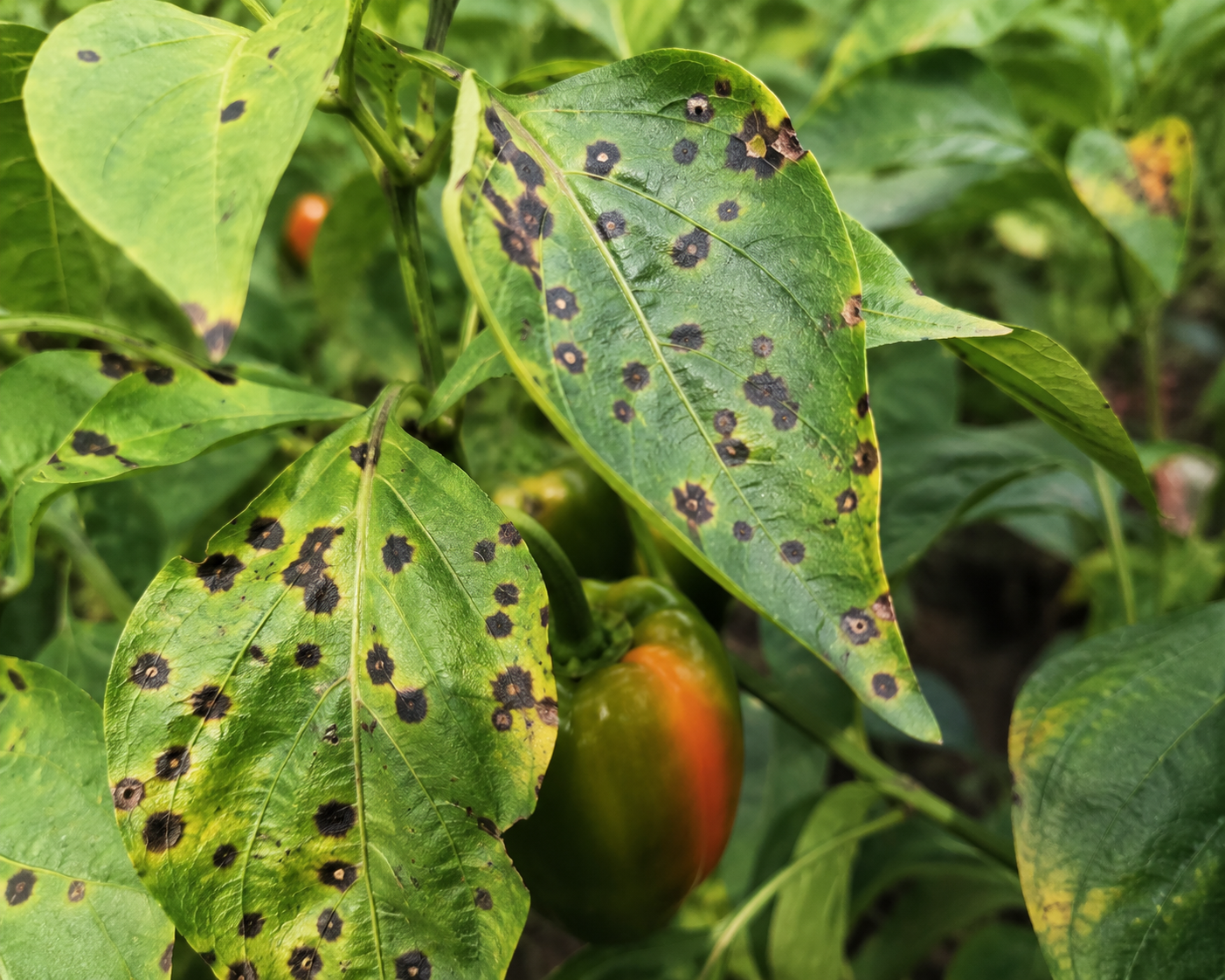
If you’ve walked out to your garden and noticed dark, sunken spots creeping across your pepper leaves or fruit, you’re not alone. I’ve grown peppers for years, in raised beds, containers, and in-ground plots across different climates, and black spots are one of the most common issues gardeners message me about every summer. The good news is that most cases are fixable, especially if you catch them early.
This guide breaks down exactly why black spots show up on pepper plants, how to tell one cause from another, and what to do about it in 2026, using methods that work whether you’re gardening in humid Georgia, dry Arizona heat, or a shorter-season Midwest backyard. Let’s dig in.
Why Black Spots Show Up on Pepper Plants
Black spots are rarely random. They almost always point to one of a few specific issues: a fungal or bacterial disease, calcium deficiency, sunscald, or environmental stress from overwatering. Because peppers are sensitive to humidity and soil consistency, even small changes in your watering routine or weather patterns can trigger symptoms fairly quickly.
Understanding the root cause matters because the fix for a fungal spot is completely different from the fix for blossom end rot. Treating the wrong problem often wastes time and can even make things worse. So, before reaching for a spray bottle, it helps to look closely at where the spots are and what they look like.
Common Causes of Black Spots on Pepper Plants
1. Bacterial Leaf Spot
Bacterial leaf spot is one of the most frequent culprits, particularly in warm, humid regions. It typically appears as small, dark, water-soaked spots on leaves that eventually turn brown or black with a yellow halo. Because bacteria spread through splashing water, this issue tends to worsen after heavy rain or overhead watering.
2. Anthracnose
Anthracnose shows up mainly on the fruit rather than the leaves. It creates sunken, dark, circular lesions that can spread quickly in warm, wet conditions. This fungal disease survives in plant debris, so it often returns year after year if old material isn’t cleaned up at the end of the season.
3. Blossom End Rot
Blossom end rot isn’t actually a disease at all. Instead, it’s a calcium deficiency issue, usually caused by inconsistent watering rather than a true lack of calcium in the soil. It appears as a dark, leathery spot at the bottom of the pepper, opposite the stem, and tends to worsen during hot, dry stretches followed by sudden heavy watering.
4. Sunscald
Sunscald happens when peppers are suddenly exposed to intense direct sunlight, often after pruning removes too many leaves at once. The affected area turns pale first, then darkens and can develop black, papery patches as the tissue breaks down.
5. Cercospora Leaf Spot
This fungal disease creates small, circular spots with gray centers and dark brown or black edges, sometimes described as a “frogeye” pattern. It thrives in humid conditions and spreads through wind and water splash, similar to bacterial leaf spot, though the appearance is slightly different once you know what to look for.
How to Identify Which Problem You Have
Because treatment differs so much between causes, identification is the most important step. Here’s a quick way to narrow it down.
- If spots are on the fruit only, with a leathery, dark bottom, it’s likely blossom end rot.
- If spots are on leaves with a yellow halo, bacterial leaf spot is the probable cause.
- If fruit has sunken, dark circular lesions, anthracnose is likely.
- If pale patches appear first and darken later, sunscald is probably to blame.
- If leaves show a frogeye pattern with gray centers, cercospora is a strong candidate.
Once you’ve identified the likely cause, you can move on to fixing it quickly and preventing it from spreading further.
7 Steps to Fix Black Spots on Pepper Plants Fast
Step 1: Remove Affected Leaves and Fruit Immediately
First, prune away any visibly infected leaves or fruit using clean, sanitized shears. This step matters because diseased tissue continues spreading spores or bacteria even after symptoms appear. Dispose of the debris in the trash rather than the compost pile, since many pathogens survive composting temperatures in home systems.
Step 2: Adjust Your Watering Routine
Next, switch to consistent, deep watering rather than sporadic heavy soaking. Inconsistent moisture is the leading cause of blossom end rot, so keeping soil evenly moist, not soggy, addresses the problem at its root. A drip irrigation system or soaker hose works particularly well here because it delivers water directly to soil rather than splashing onto leaves.
Step 3: Water at the Base, Not Overhead
Overhead watering spreads bacterial and fungal spores onto healthy plant tissue, so switching to base-level watering significantly reduces new infections. Morning watering is best because it allows any residual moisture on leaves to dry before evening humidity sets in.
Step 4: Apply a Copper-Based Fungicide for Bacterial or Fungal Spots
If you’re dealing with bacterial leaf spot, anthracnose, or cercospora, a copper-based fungicide labeled for vegetable gardens can help slow the spread. Apply according to label instructions, typically every seven to ten days during active outbreaks. However, copper products work best as prevention and early treatment, not as a cure for severe, established infections.
Step 5: Add Calcium Support for Blossom End Rot
For blossom end rot specifically, adding a calcium supplement, such as crushed eggshells worked into the soil or a foliar calcium spray, can help. That said, the more effective long-term fix is usually consistent watering, since most garden soils already contain adequate calcium.
Step 6: Improve Airflow Around Plants
Because fungal and bacterial issues thrive in still, humid air, spacing plants properly and pruning excess foliage improves airflow considerably. This single change often reduces recurring leaf spot issues more than any spray treatment.
Step 7: Rotate Crops and Clean Up Debris Each Season
Finally, avoid planting peppers in the same spot where diseased plants grew the previous year. Many pathogens overwinter in soil and old plant debris, so rotating pepper plants to a new bed every one to two years, combined with removing all old plant material in fall, significantly lowers disease pressure going into the next season.
Regional Considerations Across the U.S.
Climate plays a major role in which black spot issues you’re most likely to encounter. In humid Southeastern states like Georgia, Alabama, and Florida, bacterial leaf spot and anthracnose are especially common due to consistent moisture and warmth. Meanwhile, gardeners in drier Southwestern climates, such as Arizona and New Mexico, more often deal with sunscald and blossom end rot because of intense sun exposure and rapid soil drying between waterings.
In cooler Northern and Midwest regions, shorter growing seasons combined with sudden temperature swings can also trigger blossom end rot, particularly during early-summer heat waves. Understanding your regional risk factors ahead of time makes it easier to adjust watering and spacing before problems even start. For more detailed, science-based guidance specific to your area, your local Cooperative Extension office, many of which are affiliated with USDA land-grant universities, is an excellent resource. For example, Cornell University’s Cooperative Extension offers detailed disease identification guides that apply well beyond New York State.
Preventing Black Spots Before They Start
Prevention is always easier than treatment, so a few habits early in the season go a long way.
- Space plants at least 18 to 24 inches apart to improve airflow
- Use mulch to reduce soil splash onto lower leaves
- Water early in the day at the base of the plant
- Choose disease-resistant pepper varieties when available
- Rotate planting locations each year
- Test soil periodically to confirm calcium and pH levels are balanced
If you’re also managing related issues in your vegetable garden, our guide on identifying and treating tomato blight covers several overlapping fungal and bacterial concerns, since tomatoes and peppers are closely related and often share the same pathogens.
Frequently Asked Questions
What causes black spots on pepper leaves specifically? Black spots on leaves are most often caused by bacterial leaf spot or cercospora leaf spot, both of which spread through water splash and humid conditions. Removing affected leaves and improving airflow usually helps control the spread.
Can black spots on peppers be reversed once they appear? Existing spots on leaves or fruit typically won’t disappear, but you can stop the problem from spreading further by removing affected material and adjusting watering and airflow. New growth should come in healthy if the underlying cause is addressed.
Is it safe to eat peppers with black spots? Peppers with blossom end rot or minor anthracnose lesions are generally safe to eat once you cut away the affected area, as long as the rest of the fruit looks and smells normal. However, if you notice soft rot, mold, or an unusual odor, it’s best to discard the fruit.
How do I stop blossom end rot from spreading to more peppers? Focus on consistent, even watering rather than adding excessive calcium, since inconsistent moisture is usually the real cause. A layer of mulch also helps regulate soil moisture between waterings.
What’s the difference between sunscald and anthracnose? Sunscald starts as a pale, bleached patch from sun exposure and darkens over time, while anthracnose creates sunken, dark lesions directly, often with a slightly wet appearance. Sunscald is environmental, whereas anthracnose is a fungal infection.
Should I remove an entire pepper plant if it has black spots? Not necessarily. In most cases, removing the affected leaves or fruit and adjusting care is enough. Full plant removal is usually only necessary if the majority of the plant is infected or if a severe bacterial wilt is present.
Can black spots on pepper plants spread to other vegetables? Yes, in some cases. Bacterial leaf spot and anthracnose can affect tomatoes and other nightshade family plants, so it’s wise to monitor nearby crops and avoid overhead watering across your entire garden bed.
Final Thoughts
Black spots on pepper plants can look alarming at first, but in most cases, they’re manageable once you identify the actual cause. Start by inspecting where the spots appear and what they look like, then apply the relevant fix, whether that’s adjusting watering, improving airflow, or removing affected material. With a bit of attention early in the season, most pepper plants recover well and continue producing healthy fruit right through harvest.