

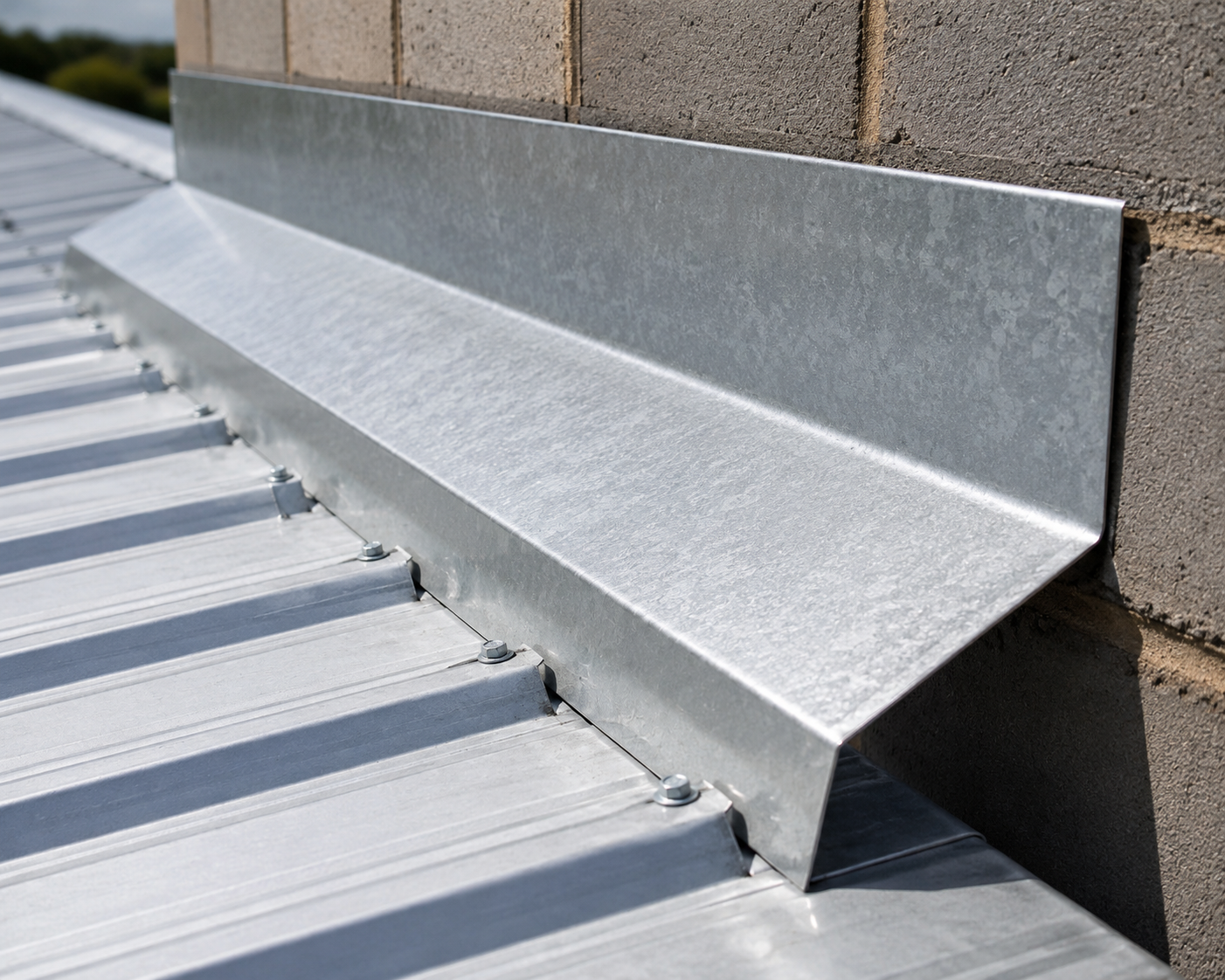
If you’ve ever dealt with a roof leak, chances are the real culprit wasn’t the shingles at all. It was the flashing. More specifically, it was probably GI flashing that had rusted through, pulled loose, or never got installed correctly in the first place.
GI flashing, short for galvanized iron flashing, is one of the most widely used materials in American roofing and construction. It’s affordable. It’s tough. And when a crew installs it the right way, it can keep water out of a home for decades. Most homeowners, though, only think about flashing after a leak has already caused damage.
This guide covers everything you need to know in 2026. We’ll look at what GI flashing actually is, the different types you’ll encounter, and where builders use it. We’ll also walk through installation and current U.S. pricing. Along the way, we’ll bring in real cost data, current industry standards, and practical advice so you can make an informed decision, whether you’re planning a new roof, a renovation, or a repair.
What Is GI Flashing?
GI flashing refers to thin sheets of steel that manufacturers coat in zinc through a process called hot-dip galvanization. The zinc layer acts as a sacrificial barrier. It corrodes before the steel underneath does, so the flashing resists rust far longer than bare steel would on its own.
Flashing itself is a simple concept. Builders install strips of metal at the points on a building where water is most likely to sneak in. Think roof valleys, chimneys, skylights, wall intersections, and window or door openings. Roofing manufacturers and contractors consistently point to poorly installed flashing as a leading cause of leaks. That’s exactly why this small detail matters so much.
Galvanized steel strikes a solid balance between cost, strength, and durability. That balance is why it remains one of the most popular flashing materials in the United States. It’s not the flashiest option on the shelf, but it’s dependable, and dependability is exactly what you want in a material whose entire job is keeping water out.
Common Types of GI Flashing
Flashing doesn’t look or function the same way everywhere. Depending on where it sits on a structure, GI flashing takes different shapes and serves different purposes. Here are the types you’ll most likely come across.
Step Flashing
Crews install step flashing where a sloped roof meets a vertical wall or chimney. Each piece overlaps the one below it. Together, they create a “stepped” pattern that channels water down and away from the joint. This is one of the most common flashing failures homeowners experience. A single misaligned piece can let water seep behind siding or brick.
Valley Flashing
Valley flashing runs along the internal angle where two roof planes meet, forming a V shape. Valleys collect a large volume of runoff during storms. Because of that, this flashing needs to be wide, well-secured, and free of gaps. Open valley systems tend to sit more exposed than closed valley designs, so they wear out faster.
Counter Flashing
Counter flashing works alongside step or base flashing, usually around chimneys or parapet walls. Installers embed it into the masonry or wall surface, then fold it down over the base flashing. That creates a two-layer defense against water intrusion. Most low-slope and commercial roofs rely on this layered approach as standard practice.
Drip Edge Flashing
Drip edge flashing runs along the eaves and rakes of a roof. It directs water away from the fascia and into the gutter system instead of letting it run down the side of the house. Most U.S. states now require drip edge on new roof installations, largely because it prevents fascia rot so effectively and cheaply.
Kickout Flashing
Kickout flashing sits at the bottom of a roof-to-wall intersection, where a sloped roof meets a wall and then stops. Its job is to “kick” water away from the wall and into the gutter instead of letting it run down behind the siding. Missing kickout flashing frequently causes hidden, and expensive, water damage inside exterior walls.
Chimney and Skylight Flashing
Chimneys and skylights penetrate the roof plane, so they need base flashing, step flashing, and counter flashing working together. These assemblies are among the most technically demanding parts of any roofing job. Precision matters more here than almost anywhere else on the structure.
Where GI Flashing Is Used
GI flashing shows up in far more places than most people realize. Beyond residential roofing, it plays a role in:
- Commercial and industrial roofing systems, especially low-slope membrane roofs
- HVAC curbs and rooftop equipment penetrations
- Gutters, downspouts, and drainage assemblies
- Window and door head flashing
- Parapet walls and coping caps
- Ductwork and light sheet metal fabrication
Contractors can cut, bend, and solder it easily, so many fabricators favor GI flashing for custom shapes built on-site. That flexibility is part of why it has remained a staple material for well over a century.
GI Flashing Gauge and Thickness Standards
One detail trips up a lot of homeowners: gauge. In sheet metal, a lower gauge number actually means a thicker, heavier sheet. The National Roofing Contractors Association sets minimum recommended thicknesses. These vary depending on where the flashing sits and what kind of weather it needs to withstand.
For most residential roofing, 26-gauge galvanized steel serves as a common baseline for counterflashing and valley metal. Builders often specify 24-gauge for areas facing greater exposure, such as commercial applications or regions with severe weather. Thinner 28- or 29-gauge material shows up in lighter residential work, but it dents, oil-cans, and punctures more easily, especially in hail-prone areas.
If you’re comparing bids from contractors, ask directly what gauge they plan to use. A lowball quote sometimes hides a thinner gauge of metal. That might save money upfront, but it could shorten the flashing’s lifespan considerably.
GI Flashing vs. Other Materials
Homeowners often ask how galvanized steel stacks up against other flashing materials. Here’s a quick comparison based on current 2026 industry pricing and performance data.
Aluminum is lightweight, resists corrosion naturally, and tends to be the cheapest option. It generally runs around $3 to $10 per 10 linear feet for drip edge applications. That said, it’s softer than steel and can react poorly against certain masonry surfaces.
Galvanized steel (GI) falls in the mid-range for both price and durability. It costs a bit more than aluminum, but it holds up better against physical impact and wind uplift. That makes it a common choice on asphalt shingle roofs across the Midwest and Northeast.
Galvalume is a steel sheet coated with an aluminum-zinc alloy. It offers improved corrosion resistance over standard galvanized steel, so it’s gaining popularity in coastal and humid regions.
Copper sits at the premium end. It often costs $15 to $25 per linear foot or more once installed, and it can last well beyond 50 years. Historic homes and upscale renovations frequently use it, though the higher price tag keeps it out of reach for many budgets.
Stainless steel offers excellent corrosion resistance, particularly in coastal or industrial environments. It comes at a cost premium similar to, or higher than, copper.
For most standard residential projects in the U.S., galvanized steel remains the practical middle ground. It costs less than copper but outlasts cheap aluminum.
GI Flashing Installation: What Homeowners Should Know
Installation quality matters just as much as material choice. In many cases, it matters more. A properly installed 26-gauge galvanized flashing job will consistently outperform a poorly installed premium copper one.
Step-by-Step Overview
- Surface preparation. The crew cleans and dries the roof deck or wall surface and clears away old sealant or debris before new flashing goes in.
- Measuring and cutting. Installers measure the flashing and cut it to fit the specific joint, valley, or penetration, usually with tin snips or a metal brake for larger runs.
- Layering. Crews install pieces in overlapping layers, working from the bottom of the roof upward, so water always flows downward and outward rather than getting trapped underneath.
- Fastening. Installers use corrosion-resistant fasteners to secure the flashing, since mixing incompatible metals can trigger galvanic corrosion over time.
- Sealing. A roofer applies roofing cement or a compatible sealant at joints and terminations to reinforce the water barrier. Still, sealant should never serve as the primary defense.
- Final inspection. A qualified installer checks for proper overlap, secure fastening, and unobstructed drainage paths before closing out the job.
DIY vs. Hiring a Professional
Some simple, low-risk repairs work fine as DIY projects. Resealing a lifted drip edge on an easily accessible single-story roof is a good example. Most contractors and cost guides agree, though, that chimneys, valleys, skylights, and steep or multi-story roofs need a licensed professional. Here’s why: mistakes in these areas are hard to spot from the surface. By the time a leak shows up inside the house, the underlying damage is often already extensive.
If you’re weighing your options, our guide to metal roofing costs and materials breaks down when a professional installation pays for itself compared to a DIY approach.
GI Flashing Cost in 2026
Pricing varies by region, roof complexity, and whether you need a small repair or a full replacement. Based on current national data, here’s what homeowners are seeing this year.
- Material only: Raw galvanized steel typically costs around $0.50 per linear foot before fabrication and labor.
- Installed cost per linear foot: Most installed flashing, including galvanized steel, falls between $10 and $30 per linear foot once labor gets added in.
- Drip edge installation: Galvanized steel drip edge generally costs about $5 to $12 per 10 linear feet in material, with total installed pricing landing higher once labor comes in.
- Single-area repairs: A localized repair, such as fixing flashing around a vent, skylight, or chimney, commonly costs between $200 and $600. Most homeowners pay closer to $350 to $450.
- Full flashing installation or replacement: Budget between $300 and $1,500 for a full residential project, depending on roof size and complexity. Many jobs average around $760.
Regional labor rates also play a meaningful role. Homeowners in higher cost-of-living metro areas can expect to pay noticeably more than those in smaller towns or rural communities, sometimes 20 to 40 percent more for comparable work. Steep rooflines, multiple stories, and difficult access push costs even higher, since safety equipment and slower working conditions add to labor time.
Regional Considerations Across the U.S.
Climate has a real impact on how GI flashing performs and how often it needs attention. This is where local context matters.
In the humid Southeast, from Florida up through the Carolinas, salt air and constant moisture speed up corrosion. Many contractors recommend Galvalume or coated steel over standard GI in coastal zones because of this.
In the Midwest and Northeast, freeze-thaw cycles pose the bigger concern. Water that seeps behind flashing can freeze, expand, and force joints apart. That’s why proper overlap and sealing matter so much in states like Ohio, Michigan, and New York.
In the Southwest, intense UV exposure and extreme temperature swings dry out and crack sealants faster. Flashing joints in Arizona, Nevada, and similar states often need more frequent inspection as a result.
In the Pacific Northwest, near-constant rainfall sends heavier water volume through valley and step flashing for longer stretches of the year. That makes correct installation especially critical in Washington and Oregon.
Local building codes, typically based on the International Residential Code with state-specific amendments, often set minimum requirements for drip edge and flashing gauge. Check with a local permitting office or a licensed contractor familiar with your area’s code before you start a project.
Signs Your GI Flashing Needs Attention
Flashing issues don’t always announce themselves loudly, so it helps to know what to watch for. Common warning signs include:
- Rust streaks running down siding, brick, or the roof surface itself
- Visible gaps, lifted edges, or separated seams
- Water stains on interior ceilings or walls near chimneys and skylights
- Peeling paint or soft drywall around window and door frames
- Granules or debris collecting in gutters near flashed areas
Catch these issues early. It’s one of the most cost-effective things you can do as a homeowner, since a small repair now almost always costs less than a full replacement later.
Maintenance Tips to Extend GI Flashing’s Lifespan
A little routine attention goes a long way. Inspect your flashing at least once a year, ideally in spring and after any major storm, so you catch small problems before they turn into expensive ones. Keep your gutters clear, too. Standing water sitting against flashing edges speeds up corrosion. It’s also worth checking whether sealant has dried out or cracked, since this often fails first.
When you repaint or recoat exterior surfaces, make sure you don’t damage or remove any protective coating on the flashing itself. And if you notice one section of flashing failing, have a professional check nearby areas too. Similar installation issues often show up in more than one spot.
Frequently Asked Questions
What does GI stand for in GI flashing? GI stands for galvanized iron, though in modern construction it almost always refers to galvanized steel sheet metal coated with a protective layer of zinc.
How long does GI flashing typically last? With proper installation and reasonable maintenance, galvanized steel flashing generally lasts 20 to 30 years. Harsh coastal or industrial environments can shorten that lifespan considerably.
Is GI flashing better than aluminum flashing? Neither one wins outright. Aluminum is lighter and resists corrosion naturally, while GI flashing holds up better under wind and hail. The right choice often depends on your climate and budget.
Can I install GI flashing myself? Simple repairs on easily accessible, low-risk areas can work as a DIY project. Chimneys, valleys, and steep or multi-story roofs, though, are best left to a licensed roofing contractor, since mistakes here stay hidden until real damage occurs.
How much does it cost to replace flashing on an average home? Most full flashing installation or replacement projects in 2026 range from $300 to $1,500, averaging around $760. Costs vary based on roof size, complexity, and regional labor rates.
What gauge of galvanized steel is best for roof flashing? For most residential applications, 26-gauge serves as a common standard. Contractors often recommend 24-gauge for areas with greater weather exposure or commercial use. Always confirm the specific gauge with your contractor before work begins.
Does homeowners insurance cover flashing damage? It depends on the cause. Insurance often covers sudden storm damage, while gradual wear or long-term neglect typically isn’t covered. Document your flashing’s condition with photos over time; that record can help if you ever file a claim.
What’s the difference between step flashing and counter flashing? Step flashing layers along a sloped roof-to-wall intersection. Counter flashing sits embedded into the wall or masonry above it, folding down to cover the step flashing and creating a second layer of water protection.
Final Thoughts
GI flashing may not be the most exciting part of a roofing project, but it’s arguably one of the most important. Get the material, gauge, and installation right, and you protect everything underneath it, from the roof deck to the interior walls of your home. Whether you’re planning a new roof, tackling a repair, or simply trying to understand a contractor’s estimate, understanding how GI flashing works puts you in a much stronger position to make a confident, cost-effective decision.
Not sure what your home currently has installed? A quick inspection from a licensed roofer is usually well worth the small upfront cost, especially compared to the price of repairing hidden water damage down the road.
[…] issues are a common culprit behind roof-related inspection findings — see this guide to GI flashing types, installation, and cost for what to check before a buyer’s inspector gets […]
[…] evaluating your home’s exterior as part of a larger sale or renovation plan, see this guide to GI flashing types, installation, and cost. Proper flashing protects wood siding from the moisture issues that cause the most […]