

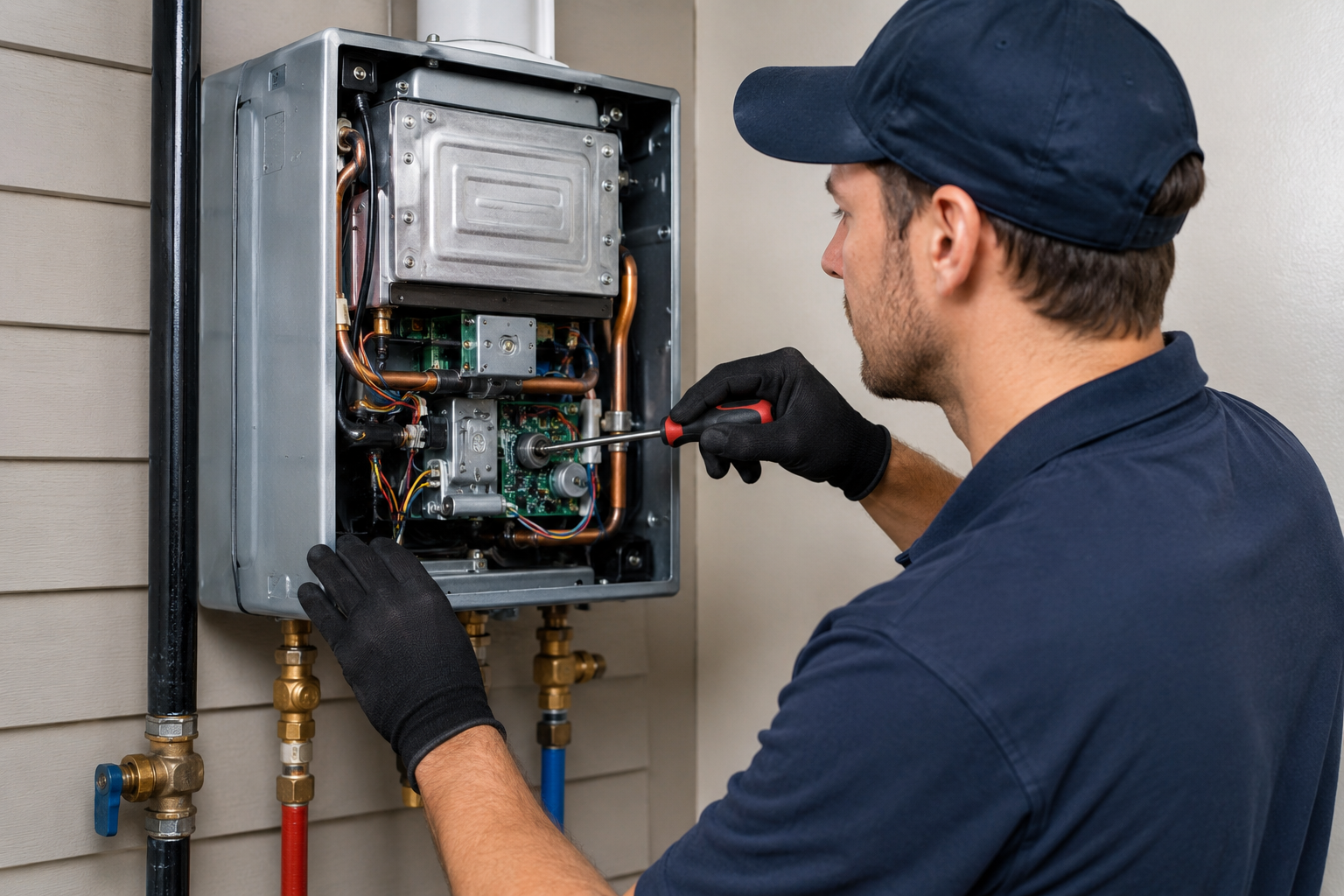
If your tankless water heater just started acting up, you’re probably standing in a cold shower right now. That’s a fair worry. Tankless units are more efficient than traditional tank heaters. However, they’re also more sensitive to hard water, dirty burners, and electrical hiccups. The good news? Most tankless repairs are fixable. Many are far cheaper than a full replacement.
This guide breaks down real 2026 repair costs. We’ll also cover the most common failure points. And we’ll walk through practical steps you can take before calling a plumber. Finally, we’ll explain when a repair simply isn’t worth it anymore.
Why Tankless Water Heaters Need Different Repair Knowledge
Tank water heaters are relatively simple machines. Tankless units, on the other hand, rely on flow sensors, heat exchangers, circuit boards, and ignition systems. All of these parts have to work together. Because of that complexity, a small issue in one part can trigger error codes that look scarier than the actual problem.
Consequently, homeowners often assume the worst. In reality, a simple descaling might solve everything. Understanding what’s actually happening inside the unit helps you avoid overpaying. It also gives you better footing when talking to a technician.
Average Tankless Water Heater Repair Costs in 2026
Nationally, tankless water heater repairs typically run between $150 and $1,300. Most homeowners pay around $600 for common fixes. The exact number depends on a few things. That includes whether you own a gas or electric unit, the brand, and how accessible the unit is for a technician.
Here’s a rough cost breakdown based on current 2026 pricing data:
- Fuse replacement: $50 to $200
- Pilot light or ignition repair: $100 to $300
- Sensor or thermostat repair: $150 to $400
- Pipe or fitting repair: $200 to $500
- Ignition or burner system repair: $200 to $800
- Heat exchanger replacement: $500 to $1,300
- Routine flush or descaling service: $150 to $350
Labor rates typically fall between $45 and $150 per hour. Rates run higher in states with a higher cost of living, such as California, New York, and Massachusetts. Most straightforward repairs take one to three hours. So labor alone can account for a large chunk of your bill.
Meanwhile, annual maintenance costs between $75 and $350. It’s one of the best ways to avoid expensive repairs altogether. Plumbers generally recommend flushing a tankless unit once a year. Homes with hard water may need it twice a year instead.
Common Tankless Water Heater Problems and Their Fixes
No Hot Water at All
This is usually the first sign something’s wrong. It also tends to get people calling a plumber fast. In tankless systems, this is often caused by a failed flow sensor, a tripped igniter, or a gas supply issue. Repairs for this typically range from $350 to $600. That said, a simple reset or blown fuse might solve it for under $100.
Before calling anyone, check your circuit breaker and gas shutoff valve. Sometimes the fix really is that simple.
Error Codes on the Display
Modern tankless units show error codes instead of just shutting off silently. That’s actually a helpful feature once you know how to read it. Each brand uses slightly different codes. So it’s worth pulling up your owner’s manual or searching the manufacturer’s website for your specific model.
Common triggers include a clogged air intake, insufficient gas pressure, or a dirty burner. Many of these are fixable without replacing major components. This is especially true if you catch them early.
Lukewarm or Inconsistent Water Temperature
If your water temperature fluctuates during a shower, mineral buildup is often the culprit. Specifically, buildup inside the heat exchanger causes this issue. Hard water regions across the U.S. see this problem far more often. That includes much of the Southwest, Texas, and parts of the Midwest.
A descaling flush usually resolves this. It costs between $150 and $350. However, if the buildup has gone untreated for years, the heat exchanger itself may need replacing. That’s a significantly bigger expense.
Strange Noises or Rattling
Popping, rattling, or humming sounds often point to mineral deposits or a failing pump. It might be tempting to ignore this. But doing so usually leads to more expensive repairs down the road. Addressing noise issues early tends to be far cheaper than waiting for full failure.
Leaks Around the Unit
Leaks are one of the few tankless issues that shouldn’t wait. Even a small drip can indicate a bigger problem. This includes a cracked fitting, a failing pressure relief valve, or condensation from poor venting. Pipe and fitting repairs generally cost between $200 and $500. But if left unaddressed, water damage can add thousands to the total bill.
Gas vs. Electric Tankless Repair Costs
Gas units involve combustion, ignition systems, and venting. Because of that, their repairs tend to be more complex. They’re also occasionally more expensive than electric models. Gas tankless water heater repairs generally run $150 to $650. Electric units typically fall between $100 and $600.
That said, electric units aren’t immune to problems either. They’re prone to issues with heating elements and circuit boards. This is particularly true in homes with older electrical panels or fluctuating voltage. If you’re dealing with an electrical short or a tripped breaker, get a licensed electrician to inspect the wiring too.
Regional Cost Differences Across the U.S.
Where you live plays a bigger role in your final bill than most people expect. According to wage data referenced by industry pricing guides, plumber wages in California run notably above the national median. As a result, homeowners in cities like Los Angeles, San Francisco, and Sacramento often pay more. The same repair costs less in, say, rural Ohio or Tennessee.
Hard water is another major regional factor. Areas with groundwater hardness above 120 mg/L see faster mineral buildup inside tankless units. This is common throughout Arizona, Nevada, and parts of Florida. Homeowners in these regions should plan on more frequent flushing. Twice yearly is often necessary to avoid premature heat exchanger failure.
Not sure how hard your local water is? Your municipal water utility usually publishes an annual water quality report. You can request it for free.
DIY Fixes vs. When to Call a Professional
There’s a limited set of things homeowners can safely handle themselves. Knowing where that line sits can save you both money and frustration.
Safe for most homeowners to try:
- Resetting the unit via the power switch or breaker
- Checking and clearing the air intake and exhaust vents
- Verifying the gas valve is fully open
- Cleaning or replacing the inlet water filter
- Checking the owner’s manual for the specific error code
Best left to a licensed plumber or technician:
- Anything involving the gas line or combustion chamber
- Heat exchanger inspection or replacement
- Electrical wiring or circuit board issues
- Descaling flushes, since these require specific pump equipment and solution
Working on gas lines or internal electrical parts without training isn’t just risky for the unit. It can also void your warranty. Worse, it can create a safety hazard in your home. When in doubt, it’s always safer to call a licensed professional.
Repair or Replace? How to Decide
This is the question that really matters once you’re staring down a repair estimate. As a general rule, if the repair cost exceeds 50% of a new unit’s price, replacement usually makes more sense.
New tankless water heater installation typically runs $1,400 to $5,600. The final number depends on the brand, capacity, and installation complexity. So if you’re quoted $1,300 for a heat exchanger on a 10-year-old unit, get a second opinion first. Compare that number against a new installation quote.
Other factors that tip the scale toward replacement include:
- Your unit is nearing or past its expected 15 to 20 year lifespan
- You’ve had multiple repairs within the past two years
- Your household’s hot water demand has increased significantly
- Your current unit is undersized for your home
On the other hand, some situations favor repair instead. If your unit is under warranty, still relatively new, and the issue is minor, repairing almost always makes more sense.
How to Extend the Life of Your Tankless Water Heater
Prevention really is cheaper than repair. This holds especially true for tankless systems. A few habits go a long way toward avoiding costly breakdowns.
First, schedule an annual descaling flush. Go twice yearly if you live in a hard water region. Second, install a water softener if your home doesn’t already have one. This single upgrade can dramatically reduce mineral buildup inside the unit. Third, keep the air intake and exhaust vents clear of debris. This matters most if your unit sits outdoors or in a garage.
Finally, don’t ignore early warning signs like inconsistent temperatures or unusual sounds. Addressing small issues early is almost always cheaper than waiting for full failure. For deeper guidance on choosing the right unit size before your next replacement, our complete guide to tankless water heater sizing walks through exactly how to calculate the right capacity for your home.
What Professional Plumbers Recommend
Licensed plumbers consistently point to the same advice. Don’t skip annual maintenance. And don’t wait until you’re out of hot water to address a warning sign. According to the U.S. Department of Energy, tankless water heaters can last significantly longer than tank models when properly maintained. That makes routine servicing one of the highest-value investments a homeowner can make. You can find more guidance on tankless efficiency and care through the Department of Energy’s water heating resources. It offers unbiased, government-backed information on efficiency standards and system care.
It’s also worth getting at least two repair quotes before committing, particularly for anything above $500. Prices vary significantly between companies, even within the same city. A second opinion rarely hurts and often saves you money.
Frequently Asked Questions
How much does it typically cost to repair a tankless water heater in 2026? Most homeowners pay around $600 for a typical repair. Costs can range anywhere from $150 to $1,300 depending on the specific issue, your unit’s brand, and whether it’s gas or electric.
Is it worth repairing an older tankless water heater? It depends on the age and repair cost. If the repair is under 50% of a new unit’s price and your system is younger than 10 years, repairing usually makes sense. Beyond that threshold, replacement is often the smarter choice.
Why does my tankless water heater keep showing an error code? Error codes usually point to a specific issue. That includes a clogged air intake, insufficient gas pressure, or a dirty burner. Check your owner’s manual for the exact code. Many of these issues are fixable without major part replacement.
How often should I flush my tankless water heater? Most manufacturers recommend flushing once a year. However, hard water areas often need more attention. This includes parts of Arizona, Nevada, and Texas. Twice a year is often necessary there to prevent mineral buildup.
Can I repair a tankless water heater myself? Some minor tasks are safe for most homeowners. That includes resetting the unit or cleaning the air intake. However, anything involving gas lines, the heat exchanger, or wiring should go to a licensed professional. This avoids safety risks and warranty issues.
What’s the difference in repair cost between gas and electric tankless units? Gas tankless water heater repairs typically range from $150 to $650. Electric units usually fall between $100 and $600. Gas systems tend to cost more due to added ignition and venting complexity.
How long do tankless water heaters usually last? With proper maintenance, tankless units typically last 15 to 20 years. That’s considerably longer than traditional tank water heaters, which usually last 8 to 15 years.
Does homeowners insurance cover tankless water heater repairs? Generally, no. Standard wear and tear, mineral buildup, and mechanical failure aren’t typically covered. However, sudden events like a burst pipe or flooding may be covered instead. It’s worth checking your specific policy details with your insurance provider.
Final Thoughts
Tankless water heater repairs don’t have to be a mystery. They don’t have to be a financial gut punch either. Most issues, from clogged sensors to mineral buildup, are predictable. They’re also preventable and relatively affordable to fix when caught early. Stay on top of annual maintenance. Learn your unit’s warning signs. Know when repair no longer makes financial sense. Do these three things, and you’ll get far more value out of your system.
If your unit is showing signs of trouble right now, start with the basics. Check the breaker. Inspect the vents. Look up your error code. From there, a qualified local plumber can give you an accurate diagnosis. They’ll also offer a fair price for getting your hot water back on track.