

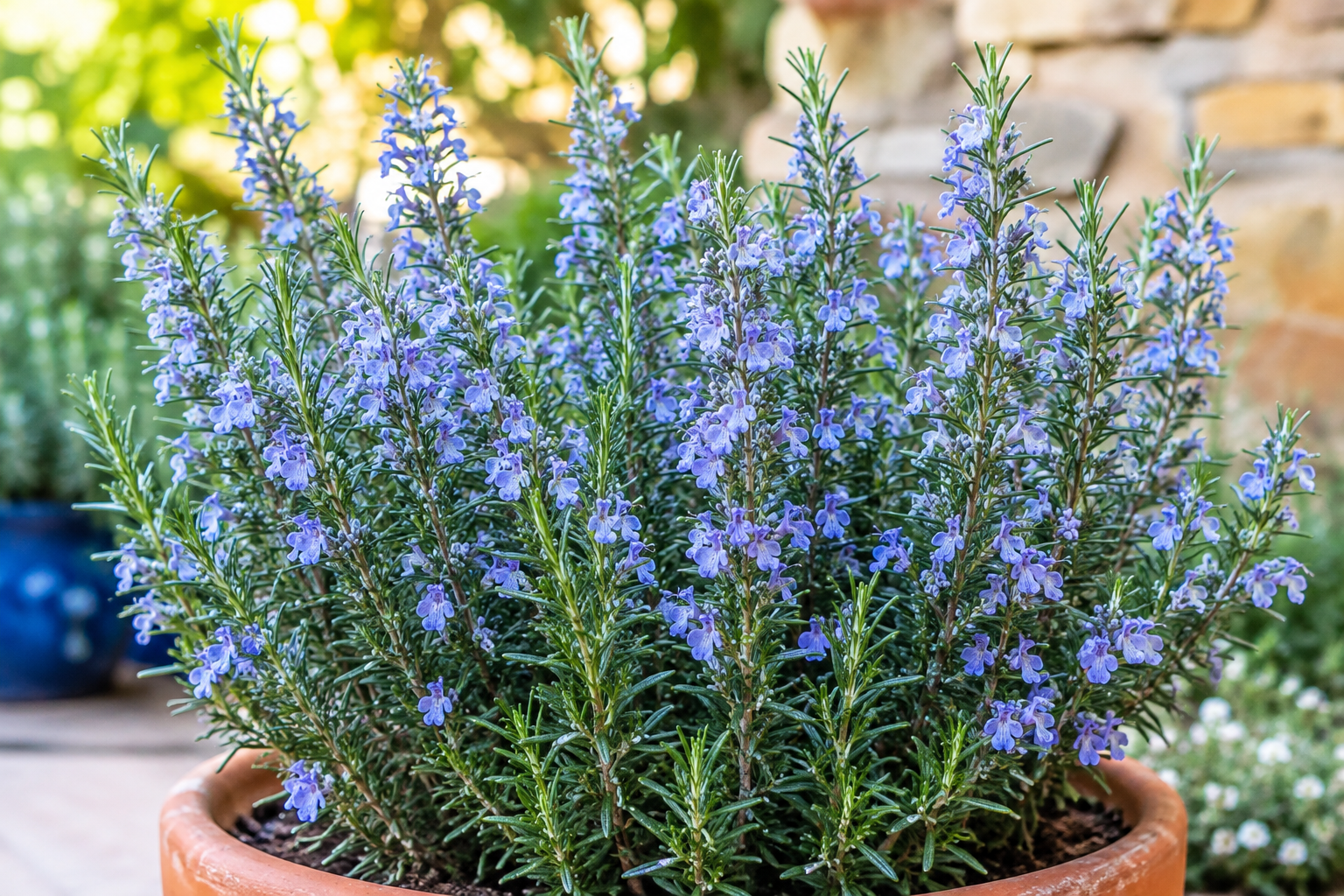
If you’ve ever admired a rosemary plant with tall, upright stems and deep blue flowers, chances are you were looking at Tuscan Blue. This striking variety has become one of the most popular choices for home gardeners, chefs, and landscapers alike — and for good reason. In this guide, you’ll learn everything you need to know to grow, care for, and use Tuscan Blue Rosemary successfully.
What Is Tuscan Blue Rosemary?
Tuscan Blue Rosemary (Rosmarinus officinalis ‘Tuscan Blue’) is a fast-growing, upright rosemary cultivar prized for its bold vertical growth habit, thick woody stems, and vivid blue-violet flowers. Unlike trailing rosemary varieties, Tuscan Blue grows tall and structured, often reaching up to 6 feet in height according to Gardenia.net, making it a favorite for hedging, topiary, and statement container plantings.
It’s also one of the more flavorful culinary rosemary varieties, with broad, aromatic leaves that hold up well in cooking. If you’re new to growing herbs in general, check out our beginner’s guide to starting an herb garden before diving in.
Why Choose Tuscan Blue Over Other Rosemary Varieties?
- Bold, upright growth — ideal for structure in garden beds or as a low hedge
- Strong aroma and flavor — favored by chefs for cooking
- Beautiful blue flowers — attracts pollinators like bees
- Fast growth rate — establishes quickly compared to other varieties
- Drought tolerant once established — a low-maintenance option for dry climates
Ideal Growing Conditions
Sunlight
Tuscan Blue Rosemary thrives in full sun, needing at least 6–8 hours of direct sunlight daily. Insufficient light leads to leggy growth and reduced flowering.
Soil
This variety prefers well-draining, slightly alkaline to neutral soil (pH 6.0–7.5). Heavy, waterlogged soil is one of the most common causes of root rot in rosemary. If your soil is dense clay, amend it with sand or grit, or grow in a raised bed or container instead.
Climate & Hardiness
Tuscan Blue is hardy down to about 15°F (USDA zone 8), per Gardening Know How. In colder climates, it’s best grown in containers that can be moved indoors during winter, since prolonged frost can damage or kill the plant. See our guide to overwintering container herbs for step-by-step instructions.
Water
Once established, Tuscan Blue Rosemary is quite drought tolerant. Water deeply but infrequently, allowing the soil to dry out between waterings. Overwatering is far more likely to harm this plant than underwatering.
How to Plant Tuscan Blue Rosemary
- Choose the right spot — full sun with good air circulation.
- Prepare the soil — mix in sand or perlite if your soil retains too much moisture.
- Dig a hole slightly larger than the root ball and set the plant so the crown sits level with the soil surface.
- Space plants 2–3 feet apart if planting multiple, since Tuscan Blue grows wide as well as tall.
- Water thoroughly after planting, then reduce watering frequency as the plant establishes.
If growing in containers, choose a pot with drainage holes and use a well-draining potting mix formulated for herbs or succulents.
Ongoing Care Tips
Pruning
Regular pruning keeps Tuscan Blue Rosemary full and prevents it from becoming woody and sparse. The University of Wisconsin-Madison Division of Extension notes that pruning after blooming encourages denser foliage growth. Avoid cutting into old, leafless wood, as it may not regrow. For a full walkthrough with photos, see our rosemary pruning guide.
Fertilizing
This variety doesn’t need heavy feeding. A light application of balanced, slow-release fertilizer in spring is usually enough. Over-fertilizing can reduce the intensity of its aromatic oils.
Pest & Disease Watch
Tuscan Blue Rosemary is relatively pest-resistant, though Gardenia.net notes it’s worth watching for thrips and rosemary beetle in addition to the more common issues below:
- Spider mites in hot, dry conditions
- Powdery mildew in overly humid or crowded plantings
- Root rot from poor drainage or overwatering
Good airflow and proper watering practices prevent most issues before they start. For organic treatment options, see our natural pest control guide for herbs.
Culinary and Practical Uses
Tuscan Blue Rosemary isn’t just ornamental — it’s a kitchen staple. Its strong, piney flavor works well in:
- Roasted meats and vegetables
- Homemade breads and focaccia
- Infused oils and vinegars
- Herbal teas and garnishes
Beyond the kitchen, its sturdy stems are often used as skewers for grilling, and the dried branches make fragrant additions to wreaths and potpourri. Looking for inspiration? Try our rosemary-infused olive oil recipe or herb-roasted potatoes with Tuscan Blue rosemary.
Frequently Asked Questions
How tall does Tuscan Blue Rosemary get? Typically 4–6 feet tall and 3–4 feet wide at maturity, though size varies based on climate and pruning.
Can Tuscan Blue Rosemary be grown indoors? Yes, but it needs a very bright, sunny window or supplemental grow lights, since indoor conditions often lack the intense light this variety craves.
Is Tuscan Blue Rosemary the same as regular rosemary? It’s a specific cultivar of common rosemary, bred for its upright form and deep blue flowers, but it shares the same culinary uses as other rosemary types.
Final Thoughts
Tuscan Blue Rosemary is a rewarding plant for gardeners who want both beauty and function. With the right sunlight, well-draining soil, and minimal fussing, this hardy Mediterranean herb will reward you with fragrant foliage, striking blue blooms, and a steady supply of fresh rosemary for your kitchen for years to come.
[…] a full landscape redesign around heat and drought tolerance rather than picking individual plants Our guide on Tuscan Blue Rosemary covers broader landscaping and outdoor living considerations for hot […]