

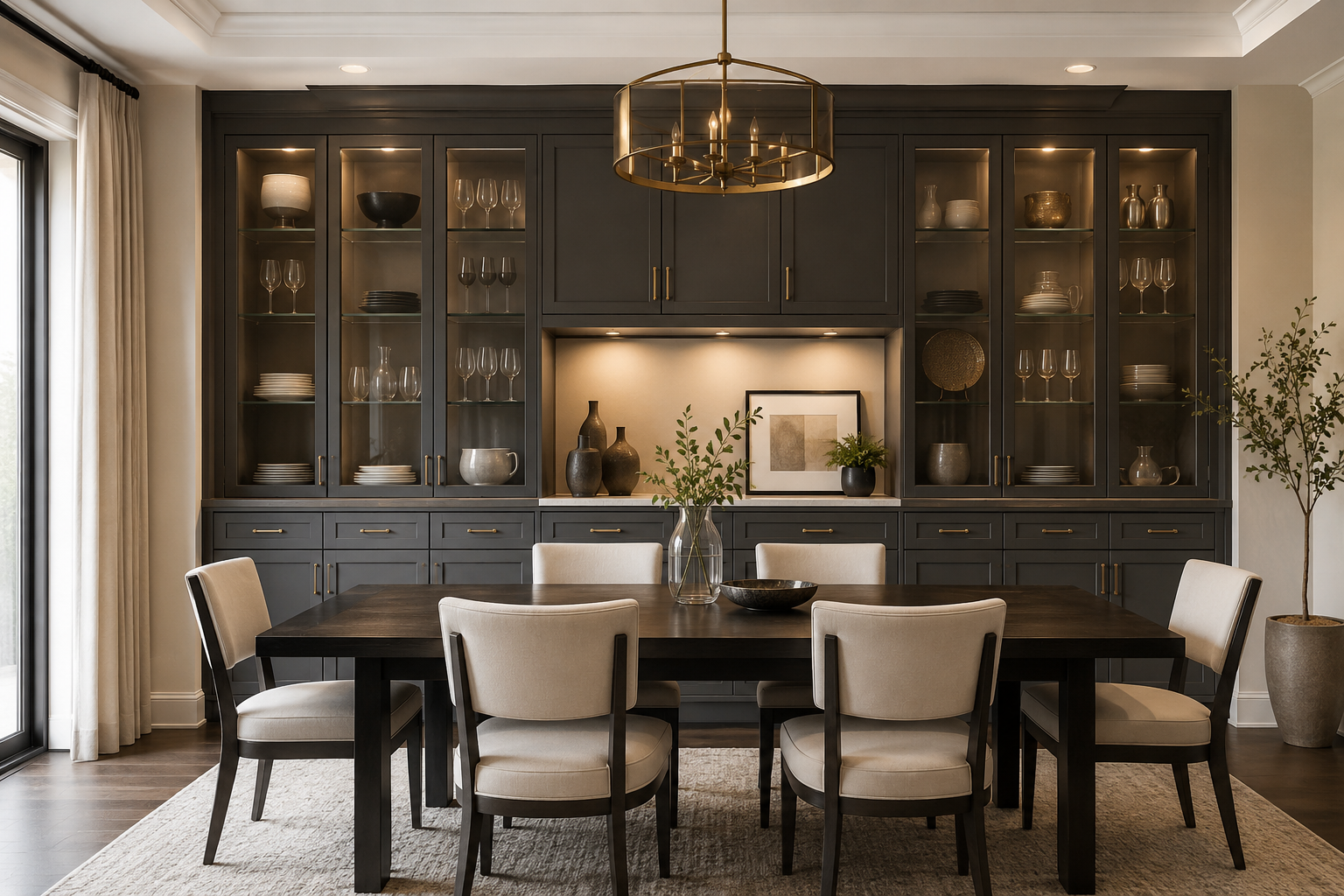
Is your dining room missing a place to store dishes, linens, and serving pieces? A well-chosen cabinet solves that problem instantly. It also becomes one of the most visible style statements in the room. Dining room cabinets have shifted significantly in 2026. Design has moved away from stark minimalism toward warmer, more expressive choices.
This guide covers everything you need to know before you buy. You’ll learn the different cabinet types, current style trends, and realistic pricing across every budget tier. We’ll also walk through 30 specific ideas to inspire your dining room. Practical buying tips will help you avoid common sizing and material mistakes.
Quick Answer
Dining room cabinets fall into several main categories. These include buffets, sideboards, china cabinets, hutches, corner cabinets, and credenzas. In 2026, design trends favor moody, saturated colors and curved silhouettes. Glass-front hutches are also making a strong comeback for open display. Budget options start around $100 to $300. Mid-range pieces run $300 to $1,500. Premium solid-wood designs reach $1,500 to $3,500 or more. Standard buffet height runs about 36 inches, with widths typically spanning 60 to 94 inches. Measure your space carefully, and prioritize solid wood or high-quality veneer if you want a piece that lasts for decades.
Understanding the Different Types of Dining Room Cabinets
Before you shop, it helps to understand exactly what you’re looking for. These terms often get used interchangeably, even though real differences exist between them.
A buffet traditionally serves food during meals and gatherings. It features a flat top surface designed for holding dishes. A sideboard evolved as a more general storage piece, though today’s designs blur this distinction considerably. Both typically share a long, low profile. Most buyers can use the terms somewhat interchangeably without much practical difference.
China cabinets and hutches add a vertical, upper display section on top of a lower cabinet base. This upper section usually features glass doors. You can show off dinnerware, glassware, or family heirlooms instead of hiding them behind solid panels. Corner cabinets and curio cabinets solve a different problem entirely. They fit into unused corner space. Many feature a tall, narrow profile with glass enclosures built specifically for displaying collectibles.
Credenzas offer a sleeker, more minimalist alternative. They often feature flush cabinet doors without ornate hardware or raised panel details. Bar cabinets specialize in drink storage. They frequently include built-in wine racks and glass storage. Some even include small refrigeration units for entertaining-focused households.
2026 Dining Room Cabinet Trends
This year marks a genuine shift in dining room style. The stark, all-white minimalism that dominated design for the better part of a decade is fading. Homeowners are embracing warmer, more expressive choices instead.
The hutch is making a real comeback in 2026. Modern versions look nothing like the bulky pine cabinets many of us grew up with, though. Today’s hutches feature slim profiles and reeded or fluted glass doors. Internal ambient lighting creates a soft, moody glow around displayed dishware. This trend puts your collection proudly on display, rather than hiding it away.
Color palettes have shifted dramatically toward deeper, richer tones. Deep truffle brown, burgundy, and glossy emerald are replacing the matte grays and stark whites of recent years. These moody colors pair especially well with brass or aged-metal hardware. Together, they create a warmer, more layered look throughout the dining room.
Silhouettes are softening too. Sharp, boxy edges are giving way to rounded corners and chunkier legs. Burl wood and walnut have become the materials of choice for buyers seeking warmth. Stone-topped designs are trending as well, particularly marble and travertine surfaces paired with wooden bases. These add durability alongside a distinctly upscale feel.
Functionality has expanded too. Many 2026 buffets now double as coffee or cocktail stations. This frees up kitchen counter space for entertaining. A smaller trend worth noting involves lighting. Homeowners are placing small, cordless rechargeable table lamps on either end of their buffet. This creates an intimate glow during dinner parties, rather than relying on overhead lighting alone.
Built-in cabinetry has also grown significantly more popular. Custom architectural buffets and floor-to-ceiling hutches add real value to a home. They create a permanent, tailored feature that ready-made furniture simply can’t replicate.
How Much Does a Dining Room Cabinet Cost?
Pricing varies enormously depending on materials, construction quality, and brand. Understanding these tiers helps you set realistic expectations before you start shopping.
Budget options generally run $100 to $300. These pieces typically use engineered wood or MDF construction. You’ll find them at retailers like Walmart, Amazon, and IKEA. They work well for renters, smaller spaces, or anyone furnishing on a tight timeline. That said, they may not hold up as well over decades of use compared to solid wood alternatives.
Mid-range cabinets typically fall between $300 and $1,500. This tier often includes better hardware and sturdier construction. You’ll find more design variety too, spanning retailers like Pottery Barn, West Elm, and various specialty furniture makers. Many buyers find this range offers the best balance between style, durability, and price.
Premium pieces run $1,500 to $2,500. Expect solid wood construction or high-quality veneers at this level. Soft-close hardware and timeless designs are standard here, built to avoid feeling dated within a few years. Luxury designs push past $2,500, sometimes reaching $3,500 or more. This top tier features premium materials like solid walnut or teak. Hand-applied finishes and exceptional joinery reflect genuine craftsmanship rather than mass production.
How to Choose the Right Size
Sizing mistakes rank among the most common dining room cabinet regrets. Measure carefully before you buy. Standard buffets and sideboards run about 36 inches high. Widths typically span 60 to 94 inches, depending on the specific design.
Depth matters more than many shoppers initially realize. Many buyers struggle to find cabinets deep enough to comfortably fit modern appliances. A microwave or coffee maker needs real clearance if you plan to use the top surface that way. Measure any items you plan to display or store on top before finalizing your choice.
Leave adequate clearance around the piece as well. Plan for at least 36 inches of walking space in front of any cabinet that sees regular foot traffic. Add more if the area doubles as a serving zone during gatherings. Does your dining room run on the smaller side? Consider a floating credenza instead. Lifting the unit off the floor visually opens up the space beneath it.
Materials Guide: What to Look For
Material choice affects both appearance and long-term durability. It’s worth understanding your options before committing to a specific piece.
Solid wood, particularly oak, walnut, and acacia, offers the most durability. It develops a rich patina over decades of use. It costs more upfront, but it holds up significantly better than engineered alternatives. Many solid wood pieces can even be refinished if they show wear years down the road. High-quality veneers over engineered wood cores provide a more affordable middle ground. They offer visual appeal and reasonable stability without the full cost of solid wood construction.
Glass doors, especially reeded or fluted styles, have become a defining feature of 2026 hutch designs. This texture obscures the contents just enough to create visual interest. It doesn’t fully hide your dishware collection, either. Metal accents and mixed-media construction, like stone tops paired with wood bases, add durability to high-touch surfaces. These combinations also contribute to the layered, upscale look currently trending.
30 Best Dining Room Cabinet Ideas for 2026
Here’s a curated collection of ideas spanning styles, colors, and functional layouts to inspire your own dining room.
Style and Silhouette Ideas
- A vertical glass-front hutch with reeded glass doors for a moody, obscured display
- A rounded-edge buffet with chunky, sculptural legs for a softer silhouette
- A built-in architectural buffet that spans an entire wall
- A floating credenza mounted above the floor to visually expand a small room
- A corner curio cabinet with tall glass panels for displaying collectibles
- A mid-century modern credenza with tapered wood legs and flat-panel doors
- A farmhouse-style cabinet with X-pattern door details and distressed finishes
- A bar cabinet with built-in wine storage and a fold-out serving surface
- A narrow server designed specifically for tight dining rooms or hallways
- A double-hutch configuration flanking a window or architectural feature
Color and Finish Ideas
- Deep truffle brown cabinetry paired with brass hardware
- Glossy emerald green as a bold dining room focal point
- Burgundy lacquer finish for a rich, jewel-toned statement piece
- Cerused wood with a whitewashed grain effect for texture without heaviness
- Burl wood veneer for dramatic, highly figured grain patterns
- Matte black cabinetry paired with warm wood dining chairs for contrast
- Two-tone designs combining a dark wood base with a lighter wood top
- Whitewashed oak for a lighter, coastal-inspired dining room
- Aged brass or antique bronze hardware for a vintage-modern hybrid look
- High-gloss lacquer finishes that reflect ambient light in darker rooms
Functional and Styling Ideas
- A stone-topped buffet doubling as a coffee and espresso station
- Small cordless table lamps placed on either end of a sideboard for ambient lighting
- Internal LED lighting inside a glass-front hutch to highlight displayed dishware
- Adjustable interior shelving to accommodate taller serving pieces
- A buffet used as a room divider in an open-concept layout
- Cable management cutouts if the piece doubles as a media console
- A mirrored backsplash inside a hutch to amplify light and depth
- Woven or rattan cabinet doors for a textured, organic look
- A marble or travertine top for a durable, upscale serving surface
- Mixed storage combining open shelving with closed cabinet doors for both display and concealment
Do you want to see more curated buffet and sideboard options across these styles? Houzz’s dining room ideas gallery offers a wide range of photos to browse for more inspiration.
Common Buying Mistakes to Avoid
A few recurring mistakes trip up first-time dining room cabinet buyers. Knowing them in advance can save you real frustration.
Buying too large for the room ranks among the most common issues. A sideboard should balance the room, not overpower it. Measure your available wall space carefully, and account for walking clearance before finalizing a purchase. Ignoring depth requirements causes problems too. This matters especially if you plan to use the top surface for appliances or serving pieces that need adequate clearance.
Choosing style over durability often leads to regret within a few years. Engineered wood and MDF pieces can look nearly identical to solid wood in photos. They generally don’t hold up as well to daily wear, moisture, or years of repeated use, though. Are you planning to keep the piece for a decade or more? Prioritize solid wood or high-quality veneer construction, even if it costs more upfront.
Finally, don’t overlook assembly requirements before you buy, especially for larger pieces. Many affordable cabinets ship flat-packed and require significant assembly time. Factor that into your purchase timeline if you’re working toward a specific move-in or event date. For more guidance on furnishing the rest of your dining space, see our mid-century modern dining table buying guide and our roundup of the best table tops for dining tables.
Care Tips to Keep Your Cabinet Looking Its Best
Once you’ve chosen the right cabinet, a little regular maintenance keeps it looking sharp for years. Dust wood surfaces weekly with a soft, dry cloth, and avoid harsh chemical cleaners that can strip natural finishes over time. For solid wood pieces, an occasional application of furniture polish or wax helps maintain the wood’s natural luster and protects against minor scratches.
Glass doors need a bit of extra attention, especially reeded or fluted styles where dust can settle into the grooves. A soft brush or a slightly damp microfiber cloth handles this cleanup without leaving streaks. Keep your cabinet away from direct sunlight where possible, since prolonged UV exposure can fade both wood finishes and any fabric or leather accents over time.
Frequently Asked Questions
What’s the difference between a buffet and a sideboard?
Traditionally, a buffet was designed specifically for serving food, while a sideboard evolved as a general storage piece. Today, the terms are used almost interchangeably, since most modern designs blur this distinction and serve both purposes equally well.
How tall should a dining room cabinet be?
Standard buffets and sideboards run about 36 inches high, which aligns comfortably with most dining table heights for serving purposes. Hutches and china cabinets with an upper display section run significantly taller, sometimes reaching 70 inches or more.
What’s the most durable material for a dining room cabinet?
Solid wood, particularly oak, walnut, and acacia, offers the best long-term durability and develops an attractive patina over decades of use. High-quality veneers over engineered wood cores provide a more affordable alternative, though they don’t match solid wood’s long-term resilience.
How much clearance do I need in front of a dining room cabinet?
Plan for at least 36 inches of walking space in front of any cabinet that sees regular foot traffic. Leave additional clearance if the area also functions as a serving zone during gatherings or holiday meals.
Are glass-front cabinets still in style for 2026?
Yes, glass-front hutches are experiencing a genuine revival in 2026, particularly with reeded or fluted glass styles that partially obscure the contents. This trend moves away from fully hiding dishware and instead treats it as an intentional design feature.
What’s a good budget for a mid-range dining room cabinet?
Mid-range cabinets typically fall between $300 and $1,500. This range offers better hardware and sturdier construction than entry-level options, without reaching premium solid-wood pricing. Many households find this tier the best overall balance of style, durability, and cost.
Can a dining room cabinet double as extra kitchen storage?
Yes, many homeowners use a buffet or sideboard positioned near the kitchen to hold overflow items like serving dishes, linens, or small appliances. Just confirm the interior depth and shelf configuration can accommodate what you plan to store before buying.
What color dining room cabinet is trending in 2026?
Deep, moody tones like truffle brown, burgundy, and glossy emerald are replacing the matte grays and stark whites that dominated recent years. These richer colors pair particularly well with brass or aged-metal hardware for a warmer, more layered dining room look.
Final Thoughts
Choosing the right dining room cabinet comes down to balancing style, function, and realistic durability expectations for your budget. The 2026 trends toward moody colors, glass-front hutches, and multifunctional buffets offer plenty of inspiration. Still, the fundamentals matter most. Measure your space carefully. Prioritize solid construction if you plan to keep the piece long-term. Choose a style that genuinely fits how you use your dining room day to day.
Are you drawn to a dramatic emerald hutch, or a simple, minimalist credenza? Taking the time to get the size, material, and layout right will pay off every time you sit down for a meal.
[…] you through the joinery before committing. If you’re furnishing the rest of the room too, our dining room cabinets guide covers styles and buying tips that pair well with any of these table […]
[…] you’re also shopping for storage to complete the room, our dining room cabinets guide covers styles that pair well with any of these chair […]