

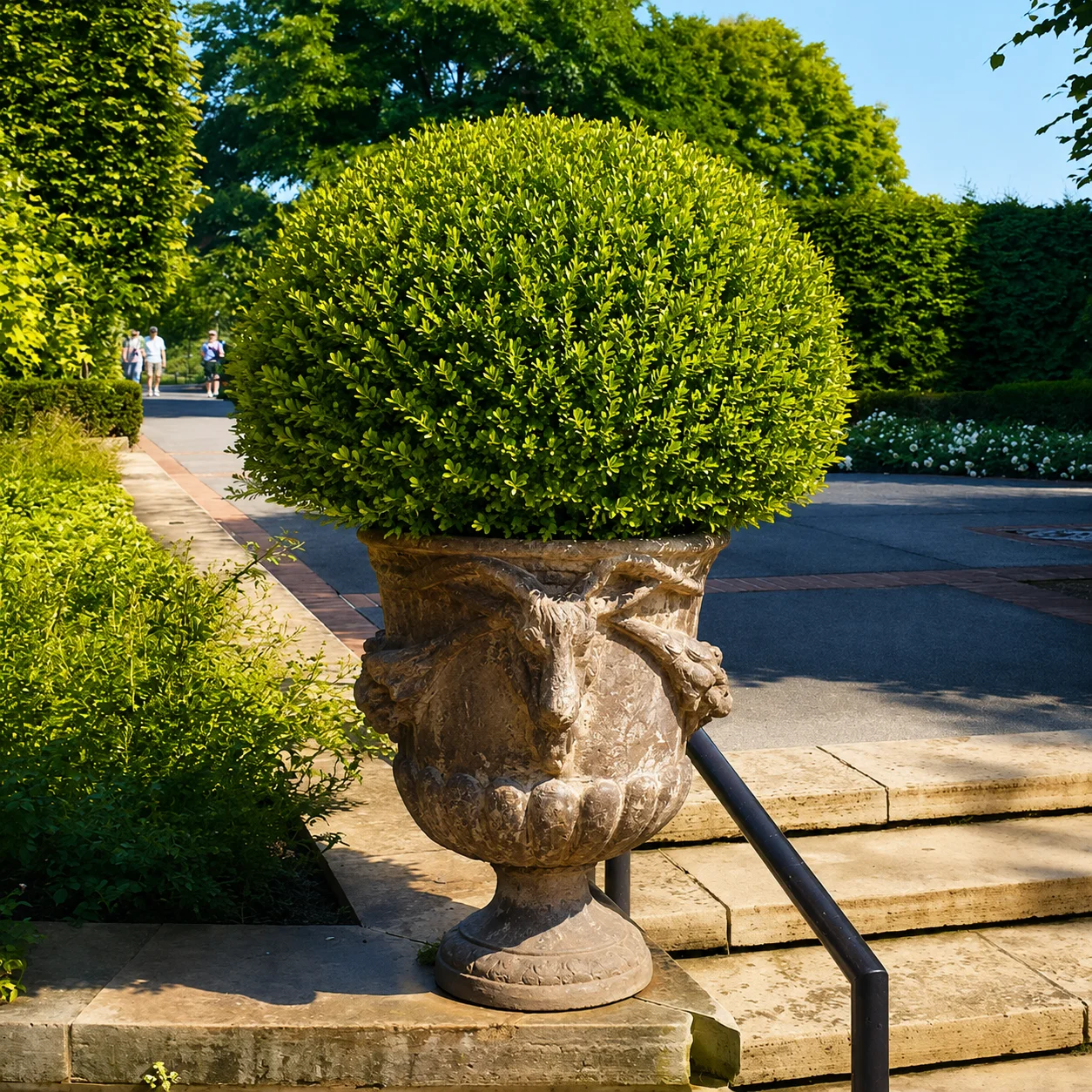
Drive through almost any established neighborhood in the U.S., and you’ll spot a boxwood hedge somewhere. Chances are good it’s Green Velvet. This compact, cold-hardy shrub has become one of the most planted landscape boxwoods in the country, and for good reason. It holds its deep green color all winter, tolerates a wide range of climates, and shapes beautifully into hedges, borders, or topiary.
I planted my first row of Green Velvet Boxwood along a front walkway several years ago. At the time, I assumed all boxwoods were basically the same. They’re not. Some varieties bronze badly in cold weather. Others struggle with humidity or need constant babying to stay dense. Green Velvet, on the other hand, just performs. That reliability is exactly why it’s earned a spot in so many American gardens.
This guide covers everything you need to plant, care for, and prune Green Velvet Boxwood successfully in 2026, with practical advice based on real growing conditions across U.S. climate zones.
What Is Green Velvet Boxwood?
Green Velvet Boxwood, botanically known as Buxus ‘Green Velvet’, is a hybrid shrub. Breeders crossed Buxus sempervirens with Buxus microphylla to create it. The goal was simple. Combine the cold hardiness of Korean boxwood with the dense, lush foliage of English boxwood.
The result checks both boxes. Green Velvet grows into a compact, rounded mound. Most mature plants reach 3 to 4 feet tall and equally wide. Its small, glossy leaves stay a rich forest green through winter, unlike some boxwood varieties that turn bronze or yellow in cold weather.
This shrub thrives across USDA hardiness zones 4 through 9. That range covers most of the continental United States, from cold Midwest winters to humid Southern summers. Because of that flexibility, it’s a genuinely reliable choice no matter where you garden.
Where to Plant Green Velvet Boxwood
Light exposure matters more than most gardeners expect. Green Velvet performs best in full sun to part shade. That said, it generally prefers a bit of afternoon shade in hotter southern climates, since intense sun can sometimes scorch the foliage during peak summer heat.
Soil conditions matter too. Choose well-drained soil whenever possible. Boxwoods dislike sitting in constantly wet, heavy clay. If your yard has drainage issues, consider amending the planting area with compost, or build a slightly raised bed instead.
Spacing depends on your goal. For a solid, seamless hedge, space plants roughly 2 to 3 feet apart. If you want more of an individual, mounded look instead, give each shrub 3 to 4 feet of breathing room. Proper spacing isn’t just aesthetic. It also improves airflow, which helps prevent fungal issues down the road.
How to Plant Green Velvet Boxwood
Fall and early spring are generally the best planting windows across most U.S. regions. These cooler seasons give roots time to establish before summer heat or winter freezes stress the plant.
Start by digging a hole roughly three times as wide as the root ball, but no deeper. The top of the root ball should sit level with, or just slightly above, the surrounding soil line. Planting too deep is a surprisingly common mistake, and it can smother the roots over time.
Once the shrub is in place, backfill with native soil mixed with a bit of compost. Water thoroughly right after planting to help settle the soil and eliminate air pockets around the roots. Then add a two- to three-inch layer of mulch around the base, keeping it a few inches away from the trunk itself.
During that critical first growing season, consistent watering matters most. Most new plantings benefit from watering two to three times per week, depending on rainfall and your local climate. Once established, usually after the first year, Green Velvet becomes considerably more drought-tolerant.
Watering and Feeding Established Plants
Mature Green Velvet Boxwood handles moderate drought reasonably well. Still, it performs best with consistent moisture, especially during particularly hot or dry stretches. A deep, infrequent watering schedule generally works better than frequent, shallow sprinkling, since it encourages deeper root growth.
Fertilizing needs are fairly light. A slow-release, balanced fertilizer applied once in early spring usually provides enough nutrition for the entire growing season. Avoid heavy nitrogen fertilizers, since they can push out soft, weak growth that becomes more vulnerable to pests and cold damage.
Mulching plays a bigger role than many gardeners realize. It regulates soil temperature, retains moisture, and reduces weed competition around the base. Refresh the mulch layer once or twice a year as it breaks down.
Pruning Green Velvet Boxwood
Pruning is where Green Velvet truly earns its reputation as a landscaper’s favorite. It responds exceptionally well to shaping, which makes it a popular choice for formal hedges, borders, and topiary work.
Late winter or early spring is generally the best time for structural pruning, right before new growth begins. Pruning during this window also reduces disease risk, since cooler, drier conditions limit fungal spread compared to pruning during humid summer months.
For hedges, use hedge shears to maintain a clean, even shape. Slightly taper the top narrower than the base. This small adjustment allows sunlight to reach the lower branches, which keeps the hedge full and green from top to bottom instead of thinning out near the base over time.
If you’re maintaining a topiary or a more sculptural shape, hand pruners offer better precision than shears. Regular, light trims throughout the growing season help maintain crisp detail without shocking the plant.
Occasional thinning cuts are also worth doing every year or two, even if you’re primarily shearing for shape. Removing a few interior branches improves airflow and light penetration throughout the shrub. That improved circulation genuinely helps prevent the fungal issues that dense, overly sheared boxwoods can otherwise develop.
Common Pests and Diseases
Green Velvet Boxwood is relatively low-maintenance, but a few issues are worth watching for.
Boxwood leafminers are among the most common pests. These tiny larvae tunnel inside leaves, causing blistered or discolored patches. Applying horticultural oil or neem oil in early spring, before adult flies emerge, generally provides effective control.
Spider mites can also become a problem, particularly during hot, dry summers. Look for fine webbing and stippled, faded leaves. A strong water spray or insecticidal soap usually resolves minor infestations.
Boxwood blight is the more serious concern gardeners should understand. This fungal disease spreads quickly in humid, wet conditions, and it can cause rapid leaf drop and dieback. Prevention matters more than treatment here. Proper spacing for airflow, avoiding overhead watering, and disinfecting pruning tools between plants all reduce the risk significantly. If you spot signs of blight, remove and dispose of infected material promptly, and avoid composting it on-site.
A Note on Pet and Livestock Safety
If you have pets, livestock, or small children around your landscaping, it’s worth knowing that boxwood shrubs are toxic if ingested. This applies to dogs, cats, and horses alike, since the plant contains alkaloids that can cause digestive upset. Most animals avoid eating boxwood on their own, since it isn’t particularly palatable. Even so, it’s smart to keep an eye on curious pets, especially young ones exploring a new yard.
For homeowners researching plant safety more broadly, the Missouri Botanical Garden’s Plant Finder database offers detailed, research-backed information on Buxus ‘Green Velvet’ and related boxwood cultivars, including toxicity notes and regional growing considerations.
What Green Velvet Boxwood Typically Costs
Pricing depends heavily on container size and where you’re buying. Small starter plants in 1-gallon containers typically run $15 to $25 at most garden centers and online nurseries in 2026. These work well for smaller borders or if you’re patient enough to let the shrubs fill in over a few seasons.
Larger, more established plants cost more upfront but save you years of waiting. A 3-gallon container often runs $30 to $50, while larger specimens intended for instant hedges can climb past $60 to $80 per plant. If you’re planting a long hedge row, buying smaller plants and spacing them properly is usually the more budget-friendly route, since Green Velvet fills in reliably within a few growing seasons.
Local nurseries sometimes offer better pricing and healthier stock than big-box retailers, since plants haven’t traveled as far or sat in less-than-ideal conditions. It’s also worth asking nursery staff about the specific growing conditions in your area, since local expertise often catches regional quirks that generic care labels miss.
Landscape Design Ideas With Green Velvet Boxwood
Beyond traditional hedges, Green Velvet works well in several design styles. Its compact, rounded form makes it a natural fit for foundation plantings along the front of a home, softening hard architectural lines without overwhelming the space.
It also pairs beautifully with flowering perennials. Many landscape designers use it as a structural, evergreen backdrop for seasonal color, letting hydrangeas, roses, or ornamental grasses take center stage while the boxwood provides year-round consistency underneath.
For a more formal look, consider low boxwood borders around garden beds or walkways. This classic technique, sometimes called a knot garden edge, creates clean visual structure even in the dead of winter when most other plants have gone dormant.
Regional Growing Notes for U.S. Gardeners
Climate genuinely shapes how this shrub performs, so it helps to think regionally.
In colder northern states, like Minnesota, Wisconsin, and much of the Upper Midwest, Green Velvet’s cold hardiness really shines. It holds its green color through winter far better than many other boxwood varieties, which makes it a dependable four-season landscape choice in these regions.
In hot, humid southern climates, such as the Gulf Coast or coastal Southeast, boxwood blight risk increases. Extra attention to spacing, airflow, and moisture management becomes especially important in these areas.
Drier western climates, including parts of the Southwest, generally see fewer fungal issues. That said, consistent irrigation becomes more critical there, since natural rainfall alone often isn’t enough to keep the shrub looking its best.
If you’re planning a broader boxwood hedge or comparing varieties for your landscape, our Green Mountain Boxwood care guide breaks down how that upright cultivar compares to Green Velvet’s rounder, more compact habit.
Final Thoughts
Green Velvet Boxwood earns its popularity honestly. It’s cold-hardy, relatively low-maintenance, and forgiving enough for beginner gardeners, yet refined enough for formal landscape design. Give it well-drained soil, reasonable sun exposure, and a yearly pruning session, and it will reward you with dense, year-round greenery for decades.
Take a little time before planting to consider your specific climate and yard conditions. A shrub that thrives effortlessly in one region might need slightly more attention in another. Once you understand what your Green Velvet needs, though, it becomes one of the easiest, most satisfying shrubs you can grow.
Frequently Asked Questions
How fast does Green Velvet Boxwood grow? Green Velvet has a moderate growth rate, typically adding around 2 to 4 inches per year. Because of this slower pace, it holds its shape well between prunings, making it especially popular for hedges and topiary work.
What’s the difference between Green Velvet and Green Mountain Boxwood? Green Velvet grows in a rounded, mounded shape, while Green Mountain has a more upright, pyramidal form. Gardeners often choose Green Velvet for low hedges and borders, and Green Mountain for taller accent plantings or natural pyramidal shapes.
How often should I water Green Velvet Boxwood? Newly planted shrubs need watering two to three times per week during their first growing season. Once established, usually after a year, they become fairly drought-tolerant and only need supplemental watering during extended dry spells.
When is the best time to prune Green Velvet Boxwood? Late winter or early spring is ideal for structural pruning, just before new growth emerges. Light touch-up trims can happen throughout the growing season as needed, though heavy pruning during hot, humid summer months increases disease risk.
Is Green Velvet Boxwood deer resistant? Yes, deer generally avoid boxwood in favor of more palatable plants. That said, no plant is completely deer-proof, and hungry deer in areas with limited food sources may still occasionally nibble on it.
Can Green Velvet Boxwood grow in containers? Yes, it adapts well to container growing, particularly on patios or in formal entryway plantings. Container-grown boxwoods do need more frequent watering than those in the ground, and in colder zones, extra winter protection helps prevent root damage.
What causes yellow or bronze leaves on boxwood? Bronzing is often a natural, mild winter response to cold and sun exposure, and it’s more common in other boxwood varieties than in Green Velvet specifically. If you notice sudden yellowing or significant leaf drop, it’s worth checking for pests, poor drainage, or early signs of boxwood blight.
Is Green Velvet Boxwood toxic to pets? Yes, boxwood contains compounds that are toxic to dogs, cats, and horses if ingested. Most pets avoid eating it due to its bitter taste, but it’s still wise to monitor curious animals around new plantings.